
You can make your bedroom a clearer signal for sleep with small, evidence-based changes that really add up. Tackle air quality, lighting, temperature, noise and clutter with practical steps you can try tonight, plus a few tech options if you want hands-off help. I’ll walk through 23 targeted hacks that improve comfort and physiology—start with one or two and you’ll see why layering them matters.
Use Air-Purifying Plants and Filters

Mechanical ventilation provides steady fresh air, but you can further improve bedroom air quality with a mix of air-purifying plants and mechanical filters.
Choose low-maintenance greenery—pothos benefits include toxin reduction and easy care—and pair with a HEPA unit that uses activated carbon to trap odors and VOCs.
Place plants safely, keep filters clean, and you’ll breathe freer and sleep better.
Block Blue Light in the Evening

Evening exposure to blue light—common from phones, tablets, and many LED bulbs—suppresses melatonin and can delay sleep onset, so limit screen time and switch to warmer lighting in the two hours before bed.
Try amber glasses or install screen filters on devices, dim smart bulbs, and create a device-free wind-down. These practical steps help you reclaim restful, unconstrained evenings.
Embrace Bright, Blue-Enriched Morning Light

You’ve reduced evening blue light to help melatonin rise — now harness morning light to reinforce your circadian rhythm.
Get outside or position blue enriched windows to let crisp, short-wavelength light signal wakefulness.
If outdoor access’s limited, use calibrated morning lightboxes for 20–30 minutes after waking.
This evidence-based, practical step boosts daytime alertness and helps you reclaim mornings with predictable energy.
Implement Circadian Lighting Controls

While you sleep and when you wake, the timing and quality of light shape your circadian rhythm, so set up lighting that changes across the day to support those cues. Use human centric fixtures with spectral tuning and gradual color shifts tied to your sleep-wake schedule. Automate shifts to reinforce circadian phase, reduce nighttime alerting light, and let you control timing for freedom and restoration.
Remove Electronics From the Bedroom
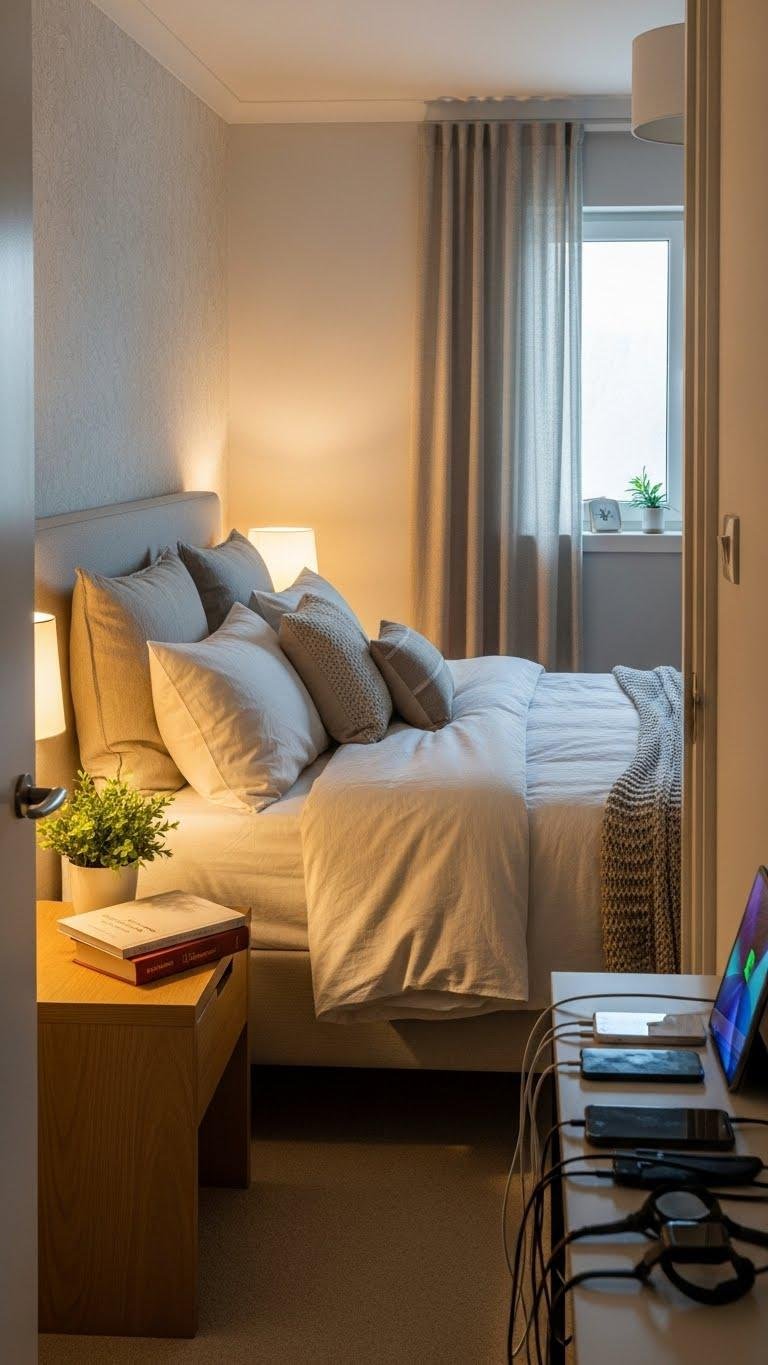
Kick devices out of your sleeping space to give your brain clearer cues that it’s time to rest. Commit to a device detox: remove TVs, phones, and tablets from your room so light, notifications, and temptation don’t hijack sleep.
Evidence shows reduced stimulation improves sleep quality. Embrace digital banishment compassionately—set alternative charging spots and rituals that free you to relax and reclaim restful nights.
Establish a Consistent Screens-Off Routine
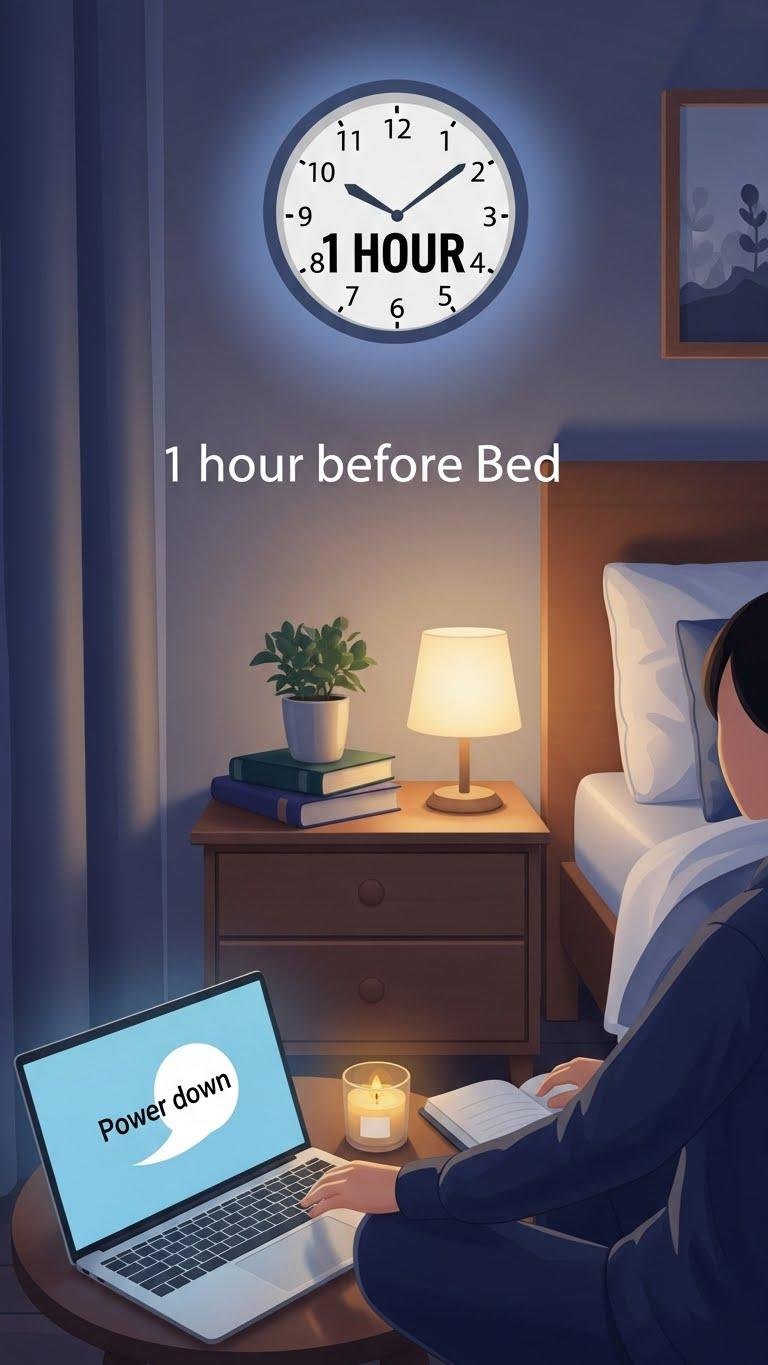
Regularly powering down screens an hour (or at least 30 minutes) before bed helps your brain shift into sleep mode by reducing blue light exposure and mental stimulation.
Create a simple digital sunset: set alarms, dim displays, and switch to low-stimulus activities. Treat it as a bedtime ritual you control.
Evidence shows consistency improves sleep onset; stick with it to reclaim restful nights.
Silence and Stow Devices Out of Sight
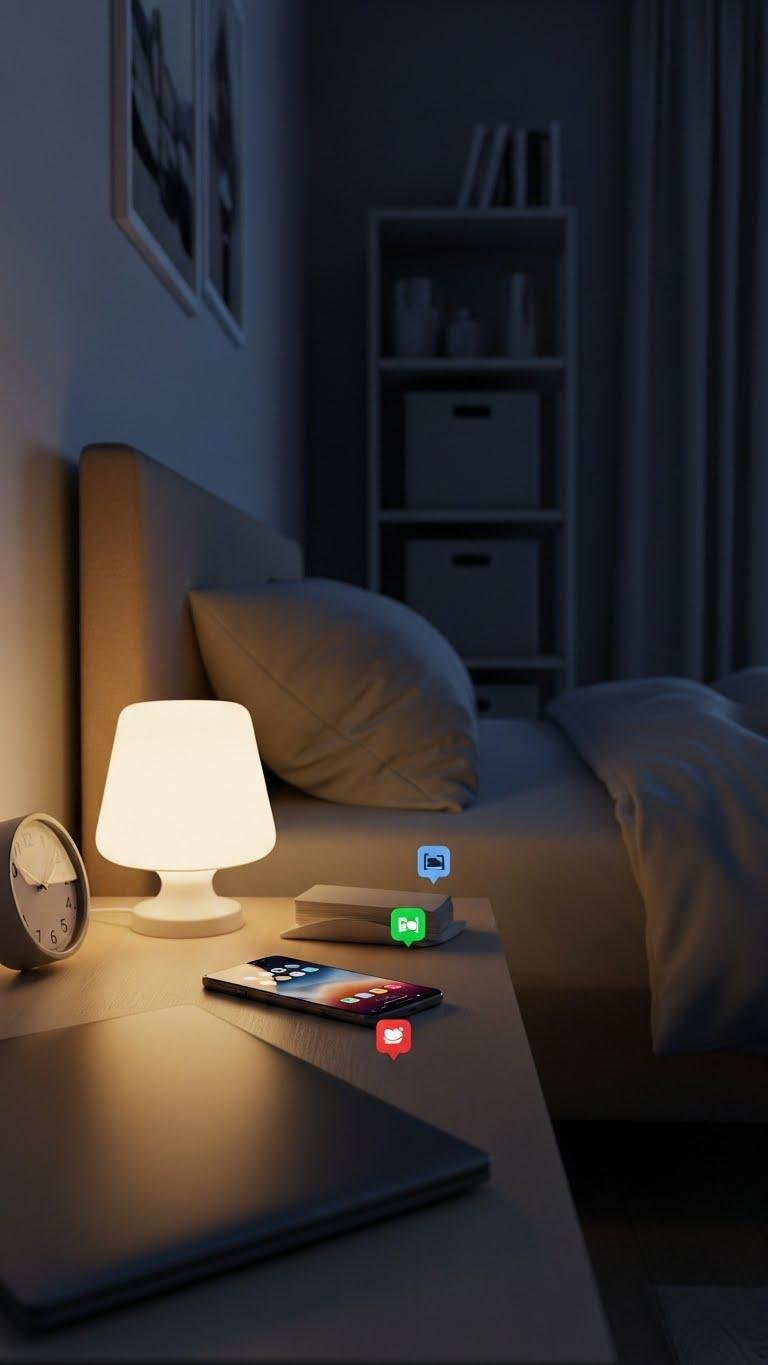
Because even faint alerts and glowing screens keep your brain on alert, silence incoming notifications and put devices out of sight well before bed. You’ll sleep better when you use soundproof storage or simple nighttime concealment to block distractions. Research shows reduced arousal and faster sleep onset when devices are removed.
Choose a routine that liberates you from constant pings and reclaims quiet.
Choose Calming, Pastel Color Schemes
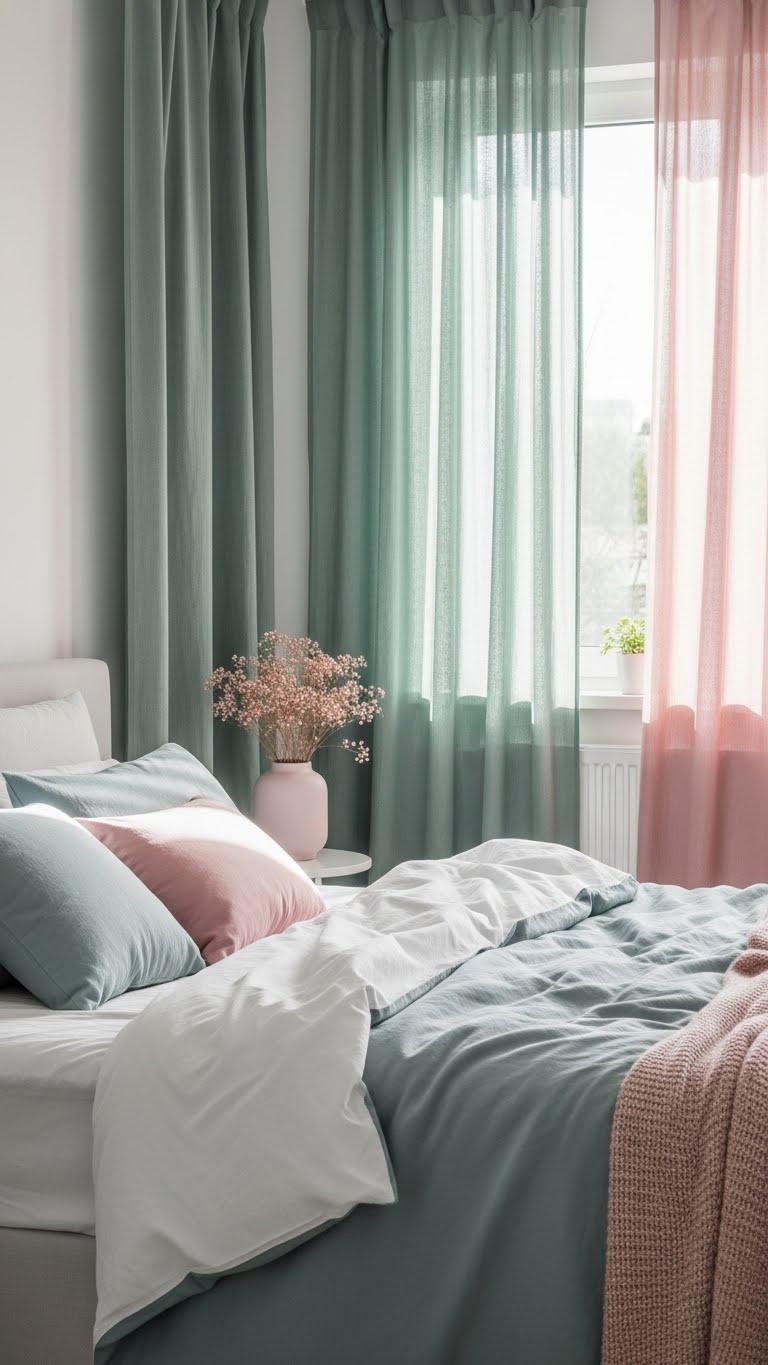
After you’ve quieted notifications and hidden devices, color becomes one of the next easiest ways to lower arousal and cue your body for rest. Choose soft, desaturated tones—sage, blush, powder blue—based on pastel psychology research showing calming effects.
Pair paints with tactile fabric pairing: linen curtains, cotton sheets, a soft throw. You’ll feel calmer, freer, and more ready to sleep.
Adopt a Minimalist, Clutter-Free Layout
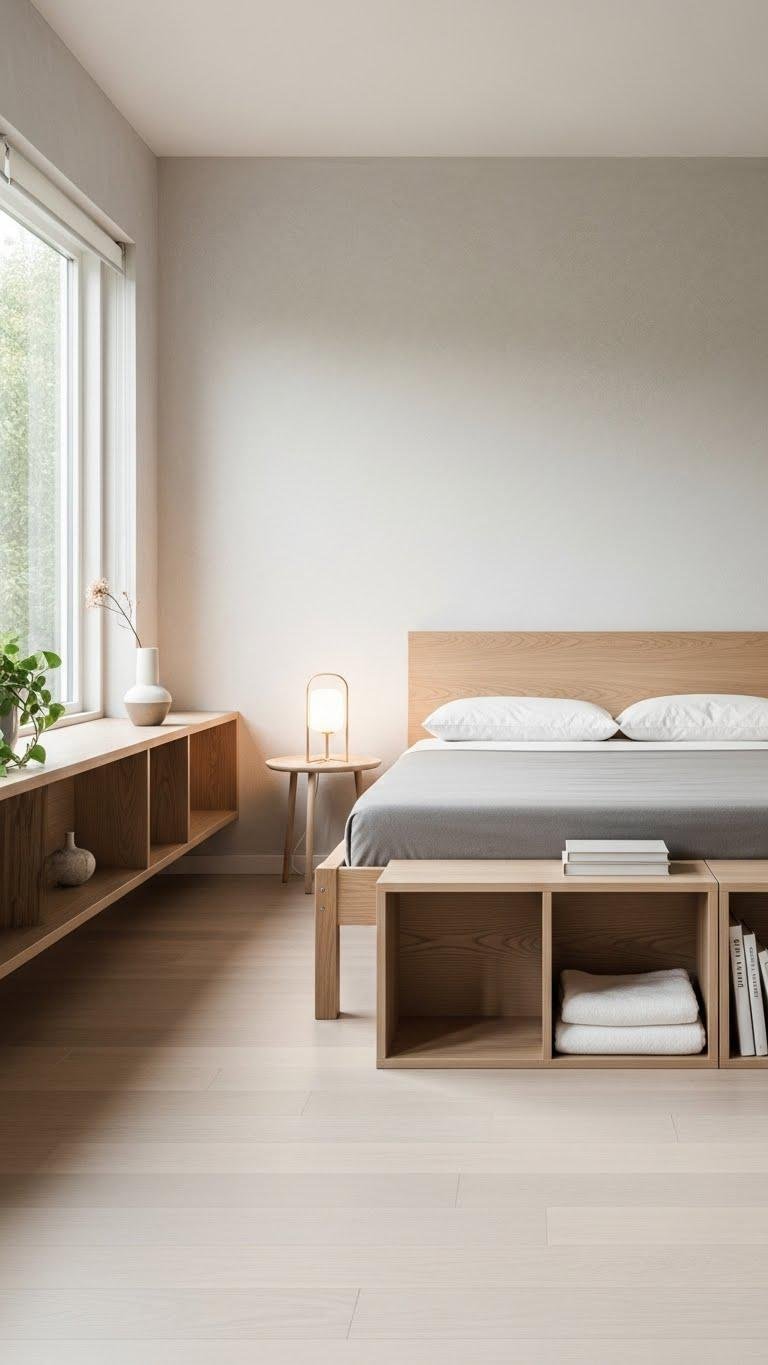
When you clear surfaces and limit visual distractions, your brain gets fewer cues to stay alert and can shift toward rest more easily.
Adopt a minimalist layout: keep open storage tidy, reduce furniture, and maintain floor clearance to simplify movement.
You’ll sleep better when visual clutter’s reduced, routines feel lighter, and the space supports calm recovery without feeling restrictive.
Use Natural Materials and Scandinavian Design Elements
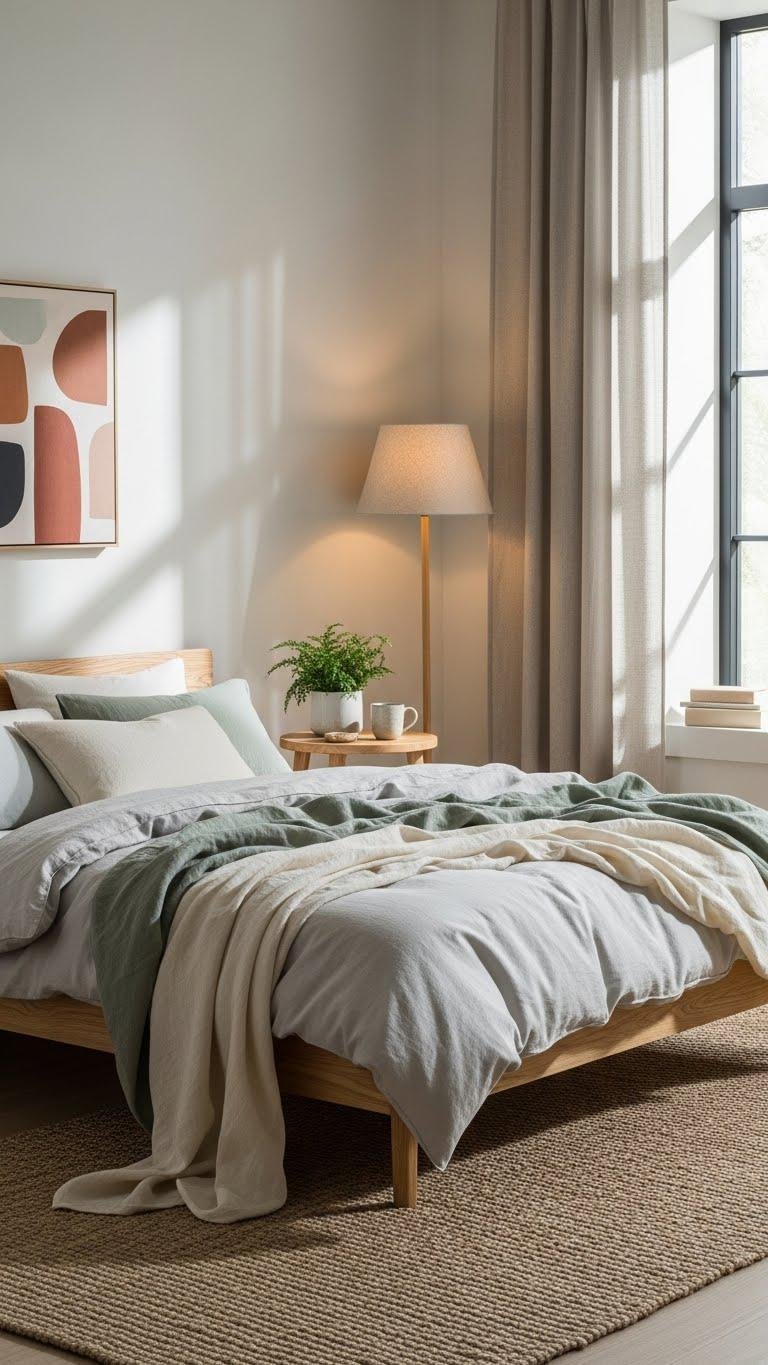
If you choose natural materials and Scandinavian design, you’ll create a bedroom that supports restful sleep through calm textures, muted tones, and breathable fabrics.
Choose natural textiles like linen and organic cotton to reduce irritants and improve airflow. Add timber accents and minimalist furniture to foster visual calm. These evidence-backed, practical choices help you reclaim restful nights while keeping space simple and freeing.
Maintain an Ideal Bedroom Temperature

Keeping your bedroom at the right temperature helps your body fall asleep faster and stay asleep longer, so aim for about 60–67°F (15–19°C) as a practical target supported by sleep research.
You can use temperature zoning—cooler near your head, warmer feet—and choose thermal bedding thoughtfully to regulate microclimate.
Adjust thermostats, fans, or vents so you feel free to tweak comfort nightly.
Use Breathable Bedding and Mattresses

Sleep better by choosing breathable mattresses and bedding that help wick away heat and moisture so your body can maintain a stable, cool microclimate through the night.
Pick moisture-wicking covers and a temperature-regulating topper to reduce night sweats and improve sleep continuity. You’ll feel more comfortable, fall asleep faster, and wake refreshed — practical changes that support your freedom to live well.
Create a Quiet, Distraction-Free Environment
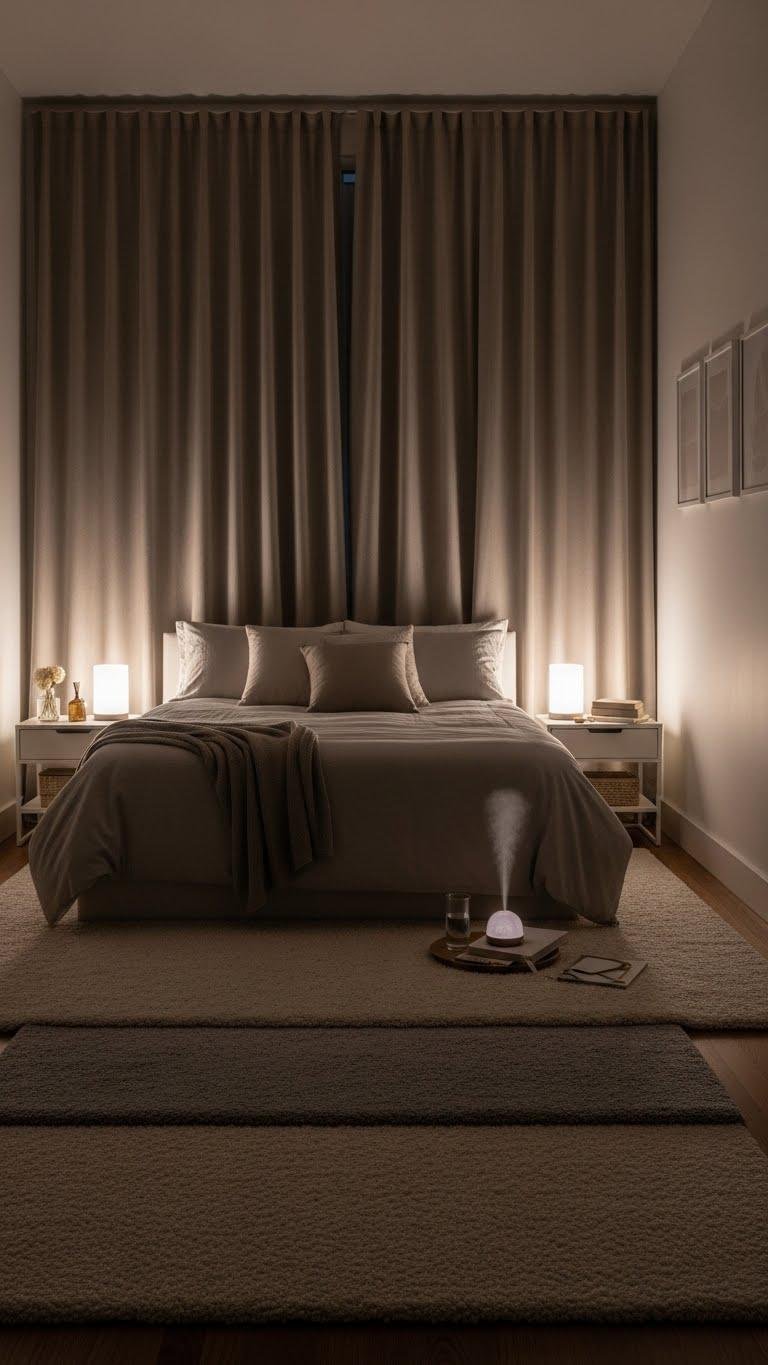
Although noise can feel unavoidable, you can meaningfully reduce its impact by creating a quiet, distraction-free bedroom that supports restorative sleep.
Use proven soundproofing techniques—seal gaps, add mass-loaded curtains, and layer rugs—to cut ambient noise. Choose window treatments options that block light and sound.
Declutter, silence devices, and set a simple nightly routine so you regain control and restful freedom.
Design Strategic Furniture Placement for Space
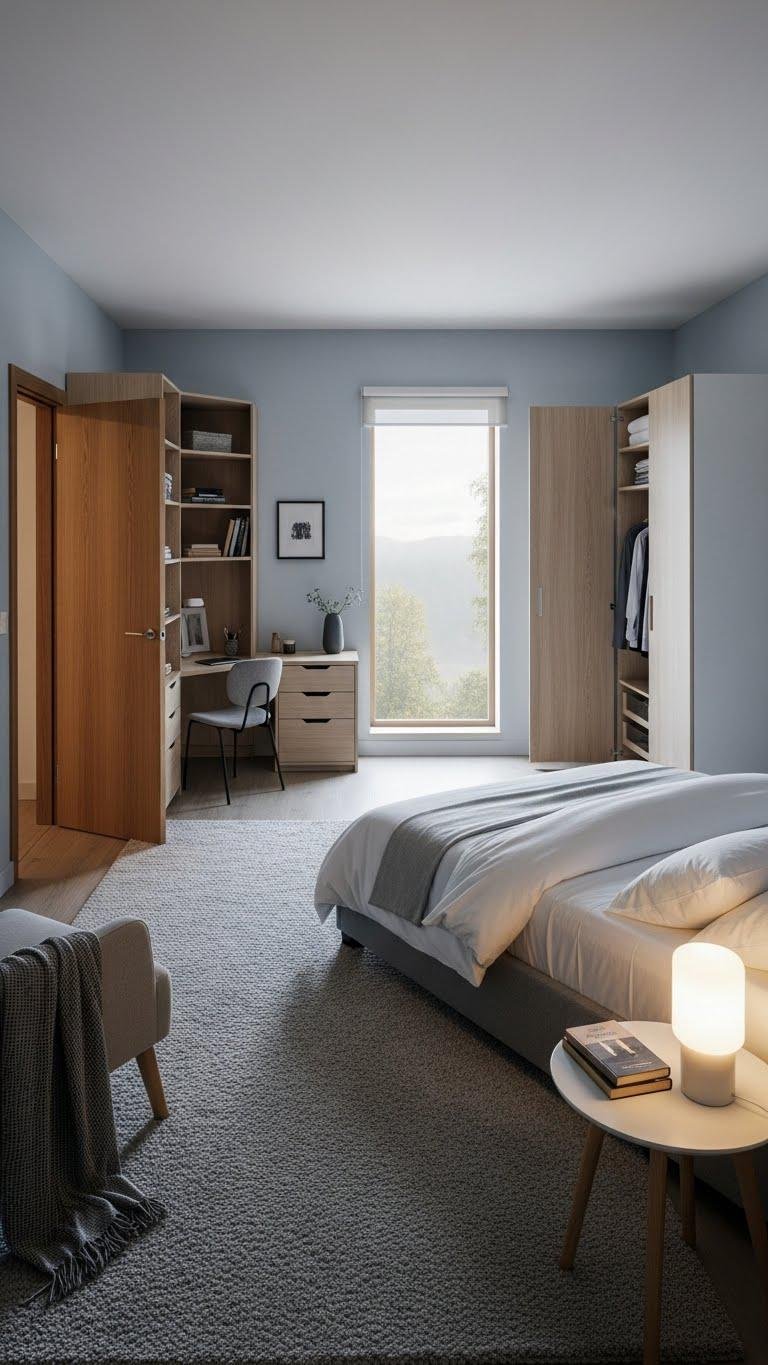
Reducing noise and clutter sets the stage for how you arrange furniture, because placement affects both flow and perceived space.
Use corner zoning to tuck storage and reduce visual weight, freeing central areas.
Create clear flow channels between bed, door, and windows so movement feels effortless.
Back choices with simple measurements and trial placements; you’ll sleep better when the room supports calm, autonomous living.
Schedule Daytime Bright Light Exposure for Entrainment

In the morning and throughout the day, get deliberate exposure to bright light so your internal clock aligns with the day-night cycle — this process, called entrainment, helps you fall asleep sooner and sleep more deeply.
Aim for a daily morning walk or sit by a bright window; prioritize consistent window timing, 20–60 minutes early each day.
You’ll feel more alert, free, and ready for restful nights.
Dim Lights and Reduce Stimuli Before Bedtime
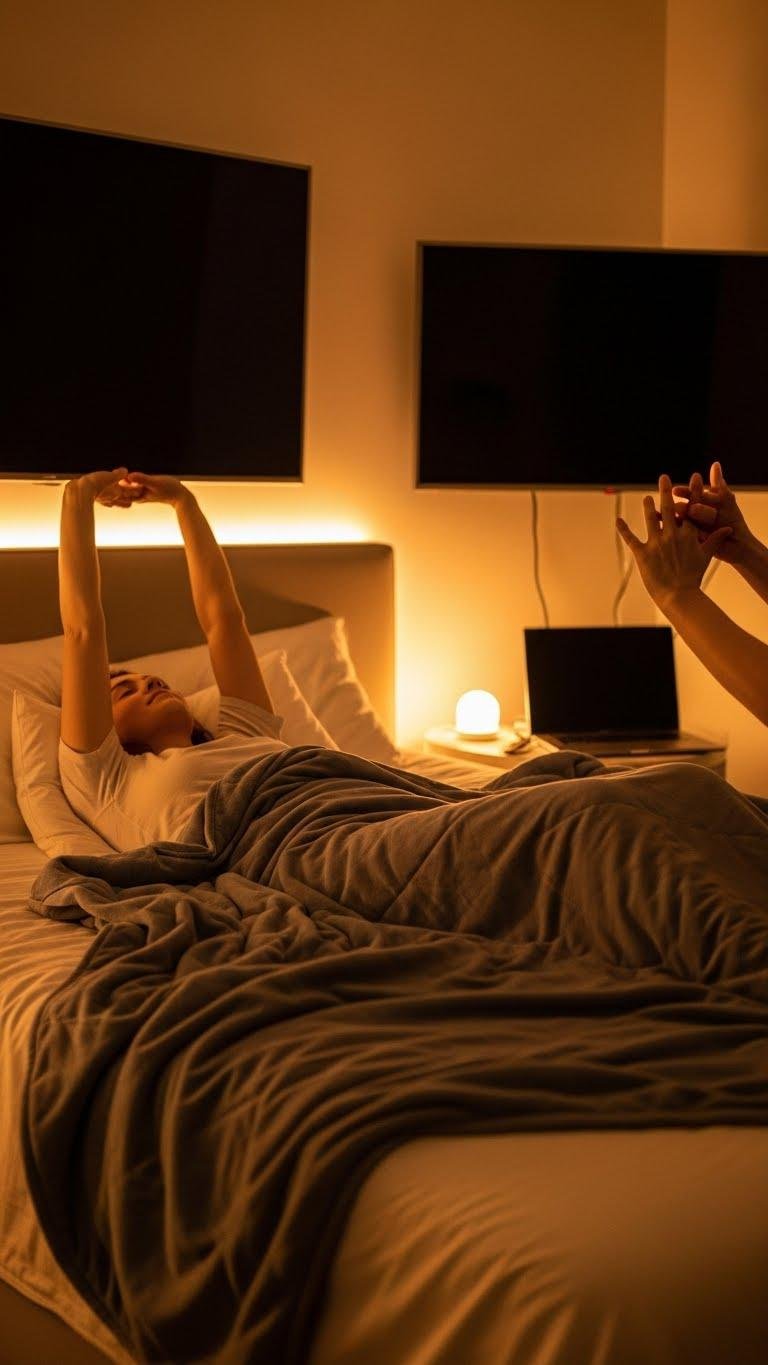
Often, dimming lights and cutting down on screens an hour or two before bed signals your brain to wind down by lowering alerting cues like blue light and loud noises.
You’ll benefit from soft dimming, warm bulbs, and removing devices; pair this with a tactile wind down — stretching, weighted blanket, or gentle hand massage.
These evidence-based steps help you reclaim calm and sleep more easily.