
You’ll find 22 practical DIY planters that make indoor greenery both stylish and healthy. Each idea focuses on appropriate drainage, waterproofing, and soil choice while offering varied materials—concrete, reclaimed wood, ceramics, tins, even cardboard—for different aesthetics and plant needs. You’ll get clear steps for construction and finishing, plus quick tips for matching plants to containers, so you can pick a project that fits your space and skill level—and start planning which plants to use next.
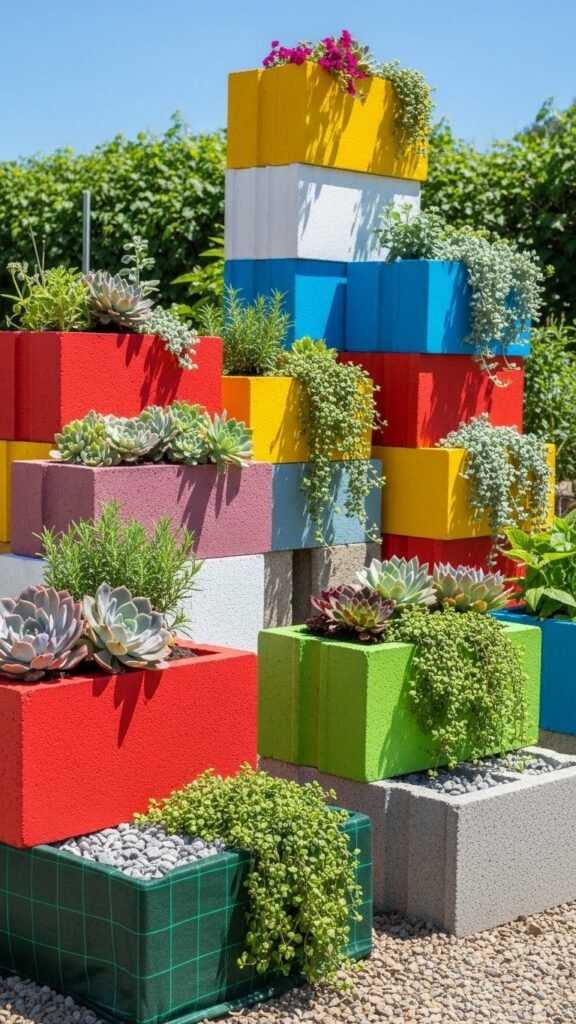
Painted Cinder Block Planters
Vintage Canister Succulent Pots

Vintage canister succulent pots make great mini-terrariums for dry-loving plants, and you can repurpose tins, ceramic jars, or enamel containers with a few simple steps.
You’ll drill drainage, layer gravel and gritty soil, and choose low-water succulents.
Preserve antique labelings or sand for a distressed patina.
Place near bright indirect light, water sparingly, and rotate for even growth.
Mason Jar Herb Garden

In a sunny kitchen windowsill, you can turn simple mason jars into a compact herb garden that gives you fresh basil, parsley, chives, and cilantro within reach.
You’ll drill drainage holes, add pebbles, quality potting mix, and set up mason jar irrigation with wicks or drip tubes.
Insert herb labeling stakes, prune regularly, rotate jars for even light, and harvest confidently.
Repurposed Boot Planter
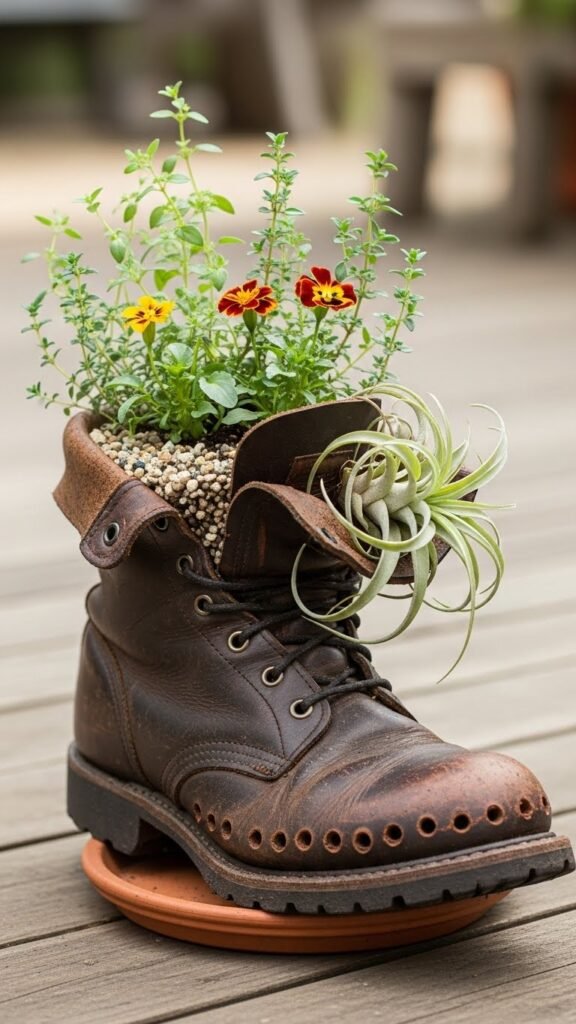
Grab an old boot, drill drainage holes through the sole, fill the toe with coarse gravel, then add a well-draining potting mix to create a compact container for shallow-rooted herbs and annuals.
You’ll treat a rubber soled boot as a plant stand or boot sculpture; position on a saucer, trim crowded roots, and tuck an air plant or thyme into the cuff for a liberated, botanical vignette.
Cardboard Hanging Planters
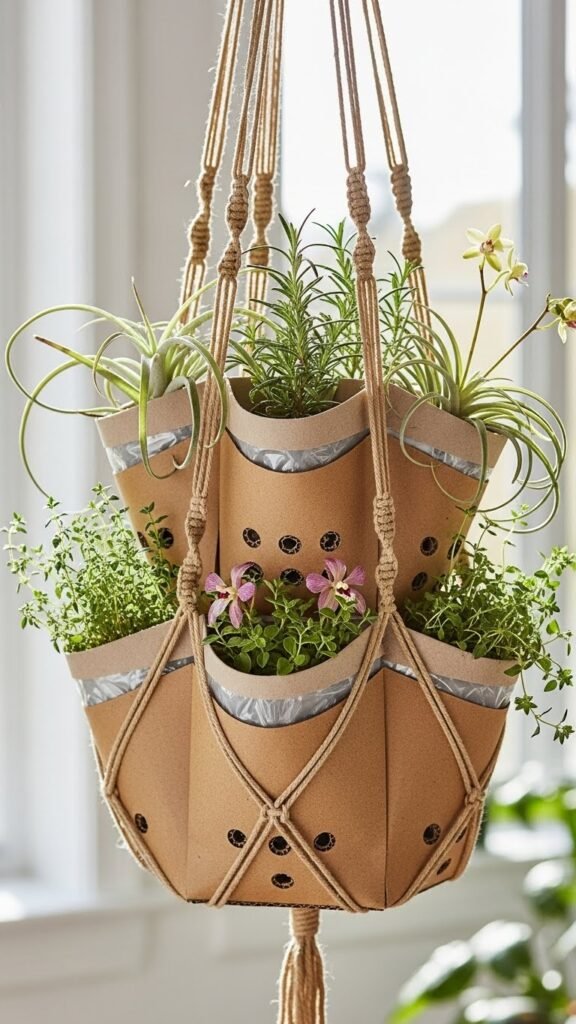
Think of cardboard as a short-term, lightweight frame for airy hanging gardens: you’ll reinforce it, waterproof it, and fit it with drainage before adding substrate and plants.
You’ll cut kraft pockets to size, line with recycled plastic, and add drainage holes.
Secure each pocket into hanging macramé, balance weight, and choose epiphytes or small trailing herbs for minimal soil and maximal liberty.
Wooden Plywood Planter Box

Build a sturdy wooden plywood planter box by selecting exterior-grade plywood, cutting panels to match your plant size and root depth, and assembling them with weatherproof glue and stainless-steel screws. You’ll line the interior, drill drainage, and use reclaimed plywood for character. Arrange modular compartments for separate species, allowing airflow and root room. Waterproofing and sanding finish keep your greens thriving indoors.
Stenciled Modern Planters With Modeling Paste
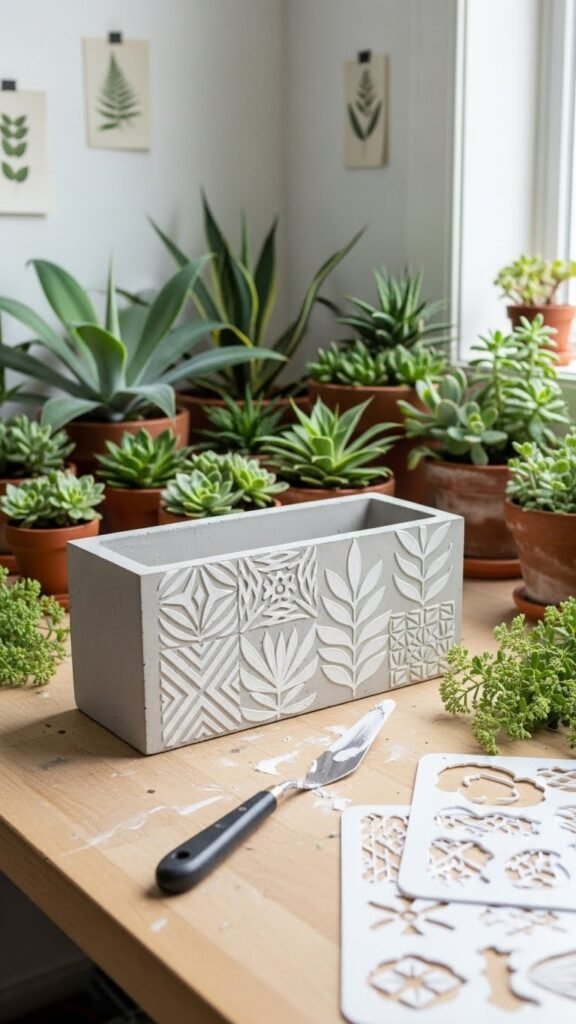
Layer raised stenciled patterns onto modern planters using modeling paste to add crisp, tactile motifs that won’t flake or peel with watering and handling.
You’ll align textured stencils, apply paste thinly with a palette knife, then remove the stencil cleanly. After curing, sand edges lightly, apply paste sealing to protect finish, and plant drought-tolerant greens. The process is deliberate, clean, and liberating.
Poured Paint Ceramic Pots

Poured Paint Ceramic Pots
Pouring fluid paint over a ceramic pot gives you crisp, organic marbling with minimal tools and cleanup. You’ll pour thin layers, tilt and rotate to guide fluid pours, then let gravity create veins. Choose water-resistant marbled glazes for durability. Mask rims to protect drainage. After curing, plant compact herbs or ferns.
The process’s freedom rewards precise, botanical presentation.
Tiled Square Planter Sides
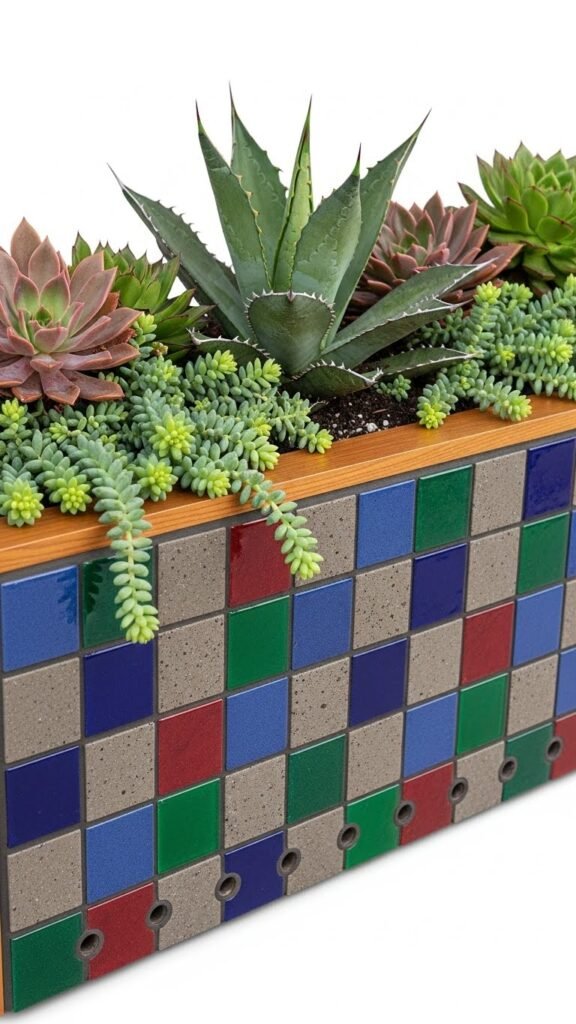
You’ll give a plain wooden or concrete box a crisp, architectural look by adhering square tiles to its sides, arranging grout lines to echo the geometric rhythm of your plants. Choose a glazed mosaic for contrast, cut tiles for snug joins, and apply textured grout to deepen shadow and grip.
Seal edges, allow drainage, then place resilient foliage that thrives in freer, sculptural arrangements.
Spray-Painted Basket Planter
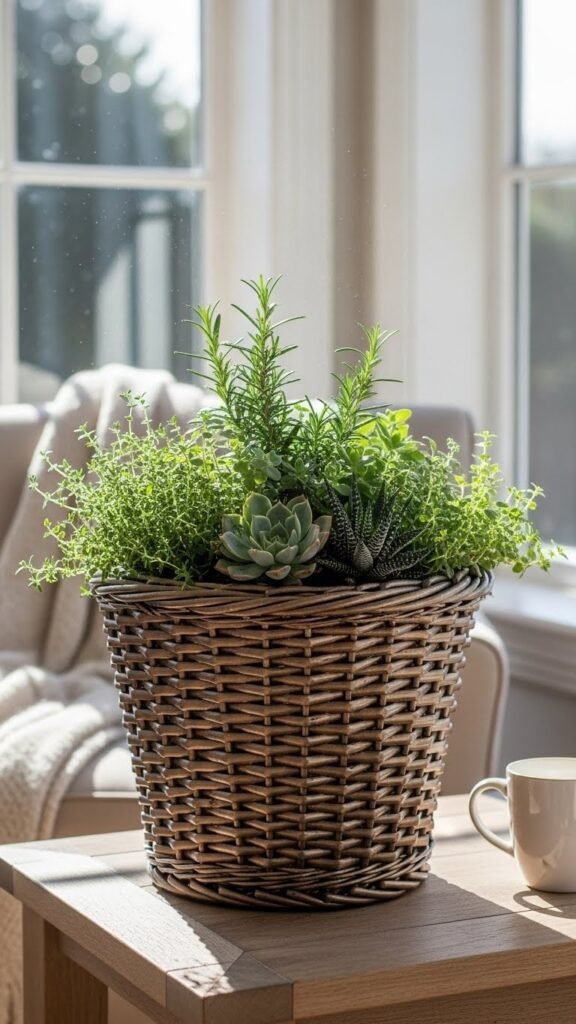
Give an old wicker basket new life by spraying it with weatherproof paint to create a durable, decorative planter you can use indoors or on a covered porch.
You’ll line the base, add drainage, and choose a metallic finish to highlight woven texture. Plant compact herbs or succulents, position for light, and enjoy portable, liberated greenery that’s both protective and stylish.
Multi-Compartment Repurposed Drawer Planter

Upcycle an old drawer into a multi-compartment planter by sealing the wood, creating drainage, and partitioning the interior to suit different root habits.
Choose shallow soils for drawer succulents and deeper cells for herbs; drill holes and add pebbles for reliable compartment drainage.
Line partitions with breathable fabric, plant according to root depth, and position for light to encourage independent growth and easy maintenance.
Mosaic Tile Indoor Planter
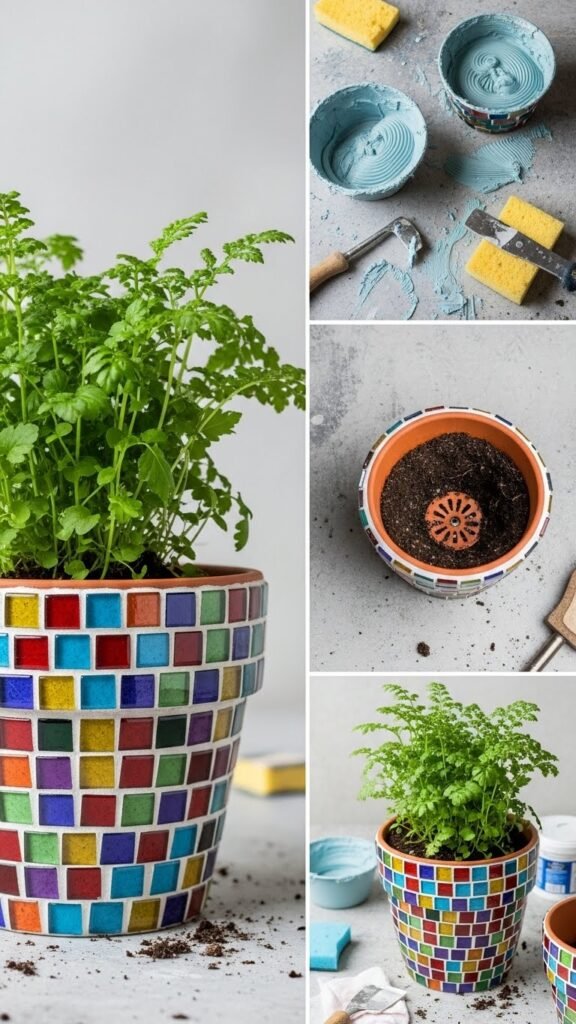
After arranging plants in a repurposed drawer, shift focus to a decorative indoor planter that combines function with pattern: a mosaic tile vessel. You’ll glue glass tesserae onto a sealed terracotta pot, plan drainage and soil for herbs or ferns, then grout carefully.
Learn grout care: wipe residue, seal joints, avoid harsh cleaners. Embrace bold patterns that free your botanical style.
Hoop Hanging Planters
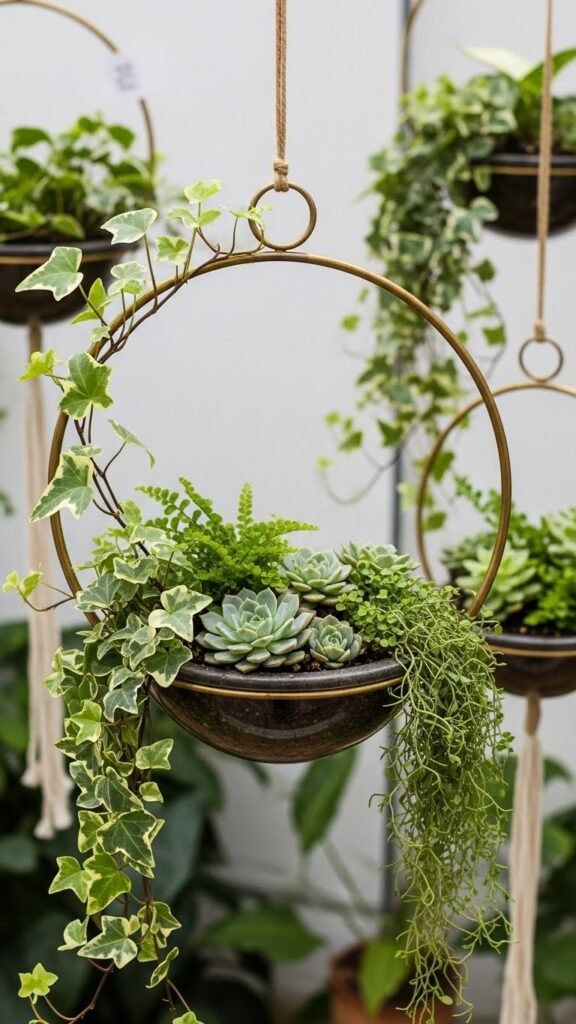
Swing a simple metal or wooden hoop into a lively display by mounting a shallow liner and a few compact plants—think trailing ivy, small ferns, or succulent rosettes—so the planter reads as both sculpture and habitat. You’ll use macramé hoops or brass rings, fix drainage, position light-tolerant species, and consider suspended terrariums for humidity control—trim roots, rotate, and enjoy airy freedom.
Rope-Wrapped Cylinder Planter

Wrap a simple cylinder—clay pot, tin can, or recycled PVC—in natural rope to give it texture and insulation for roots, then secure the ends with waterproof glue or tight knots so the covering won’t slip.
You’ll coil evenly, trimming for neat seams, leaving deliberate frayed accents for a nautical texture. Plant compact herbs or succulents, water sparingly, and let your space breathe free.
Upcycled Tin Can Herb Trio

Give three tin cans new life by turning them into a compact herb trio you can group or hang; you’ll remove labels, punch drainage holes, and line each can with gravel or a bit of landscape fabric before adding potting mix and seedlings.
Space herbs with mindful herb spacing, plant shallow-rooted basil, thyme, or chives, water sparingly, and make certain clear drainage holes to prevent rot.
Layered Terrarium in Glass Container

Start by choosing a clear glass container with a wide mouth so you can layer materials and access plants easily; the classic sequence is drainage stones, activated charcoal, a fine mesh or landscape fabric, potting mix, and then your plants. You’ll arrange low-light mosses, succulents, or ferns into a miniature landscape, creating a balanced, self-regulating closed ecosystem you can water sparingly and admire often.
Painted Terracotta Pot Sets
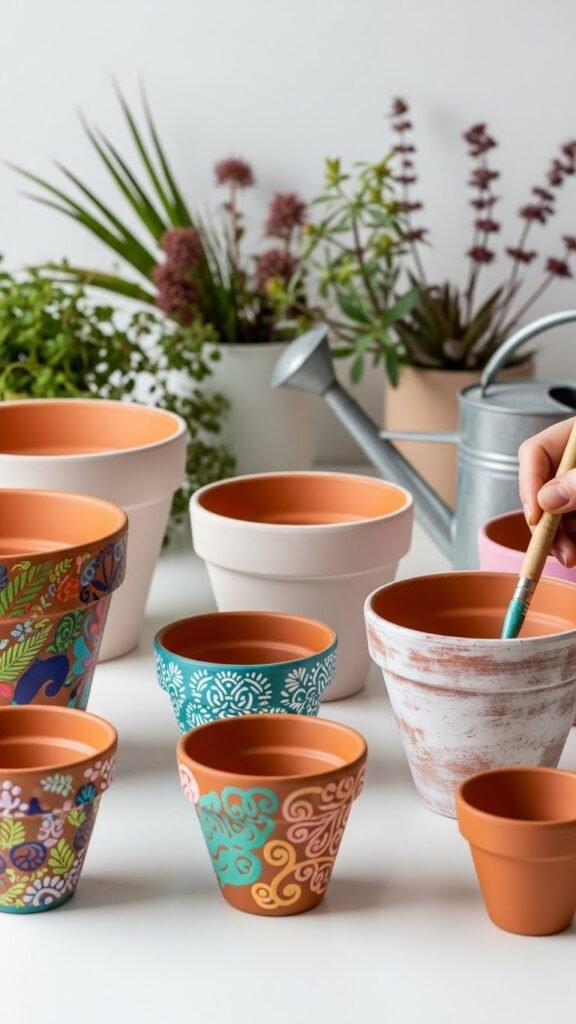
Pick a set of unglazed terracotta pots in varying sizes and clean them thoroughly before painting, because the porous surface soaks up primer and paint unevenly if it’s dusty or oily.
Choose breathable paint, tape for crisp color blocking, and acrylics for detail. Seal edges, then add a light distressed glazing for aged texture. Plant natives, arrange freely, and water with restraint.
Pallet Wood Vertical Planter
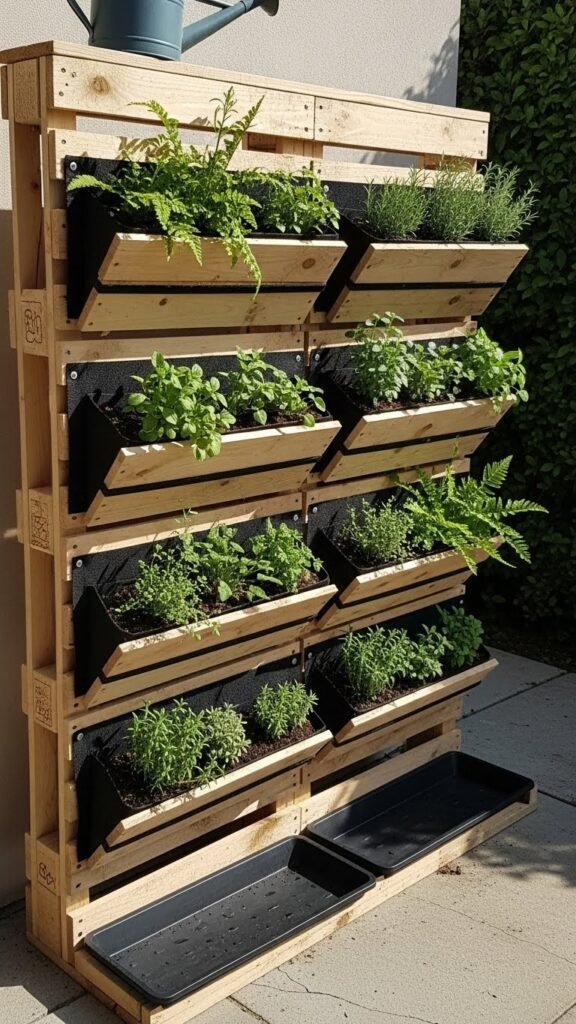
Repurpose a sturdy pallet into a space-saving vertical planter by removing loose slats, sanding rough edges, and reinforcing joints so the structure holds soil and moisture without sagging.
You’ll attach landscape fabric, create pockets between a vertical slat array, and secure trays. Plant compact herbs and ferns for a living wall.
Water from the top, let excess drain, and rotate for light.
Concrete Geometric Planters

Cast angular concrete molds to create sleek, modern planters that show off succulents and small houseplants.
You’ll measure, mix, and pour with careful timing, then demold to reveal crisp edges and faceted finishes.
Drill drainage, seal pores, and sand burrs.
Position plants with fast-draining soil, compact roots gently, and arrange freely—these geometric vessels let your indoor greens breathe and command space.
Reclaimed Window Box Planter
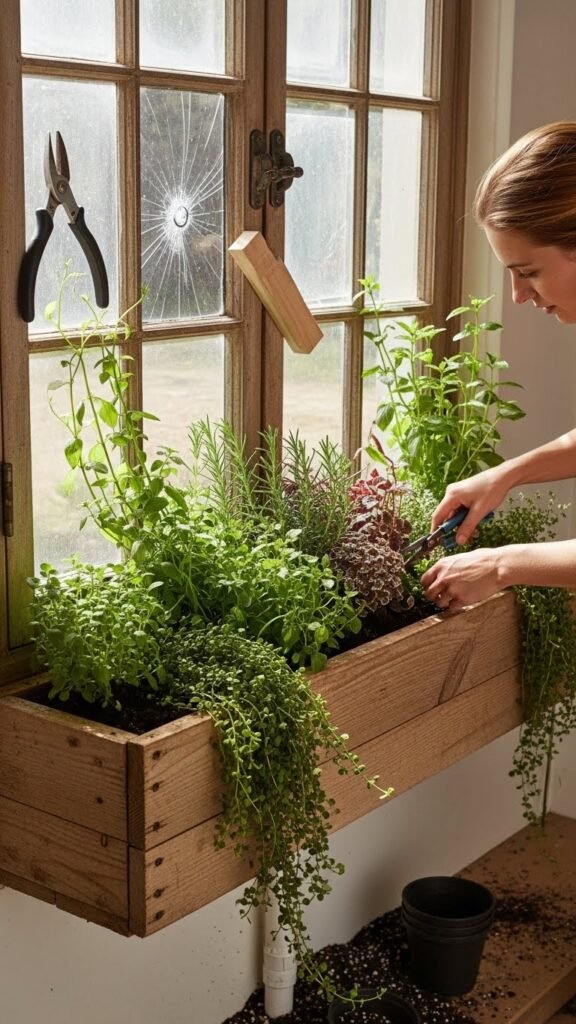
Sand the frame, seal any rot, and fit a liner so your reclaimed window becomes a watertight box planter that showcases herbs, trailing vines, or compact perennials. You’ll inspect panes for vintage glazing faults, perform careful glass restoration where needed, add drainage, sterile potting mix, and position sun-loving or shade-tolerant species. Tend roots, prune to shape, and rotate for freedom in growth.
Cardboard and Plastic Bottle Hybrid Planter
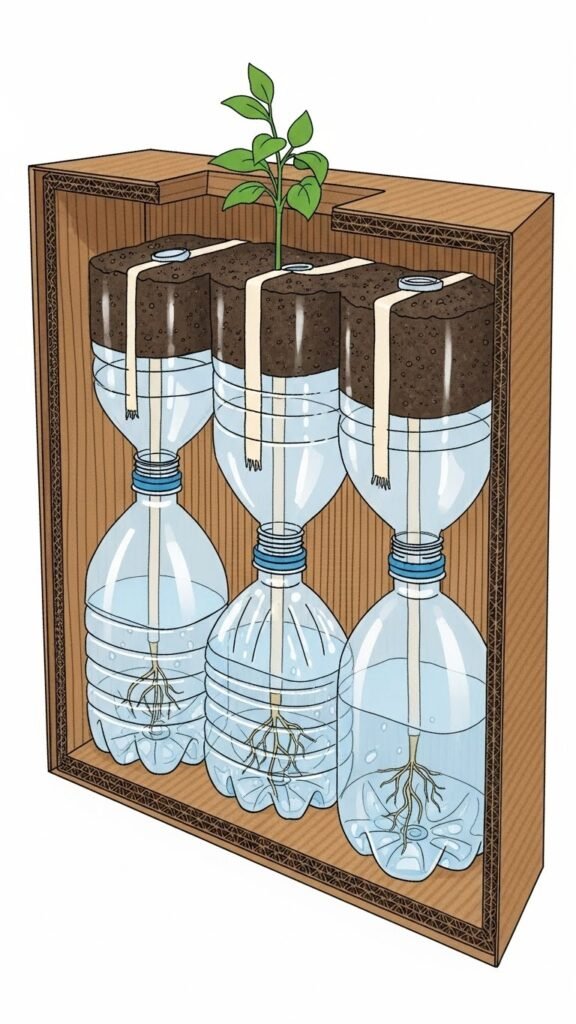
After repairing the window box, you can move to a lightweight, low-cost option: a cardboard and plastic bottle hybrid planter that balances breathability with waterproofing.
Cut bottles to form an internal reservoir, add an insulated liner to protect cardboard, and thread a wicking system into soil for passive watering.
Fill with well-draining mix, plant compact herbs, and position where air circulation supports healthy roots.
Decorative Miniature Fairy Garden Planters
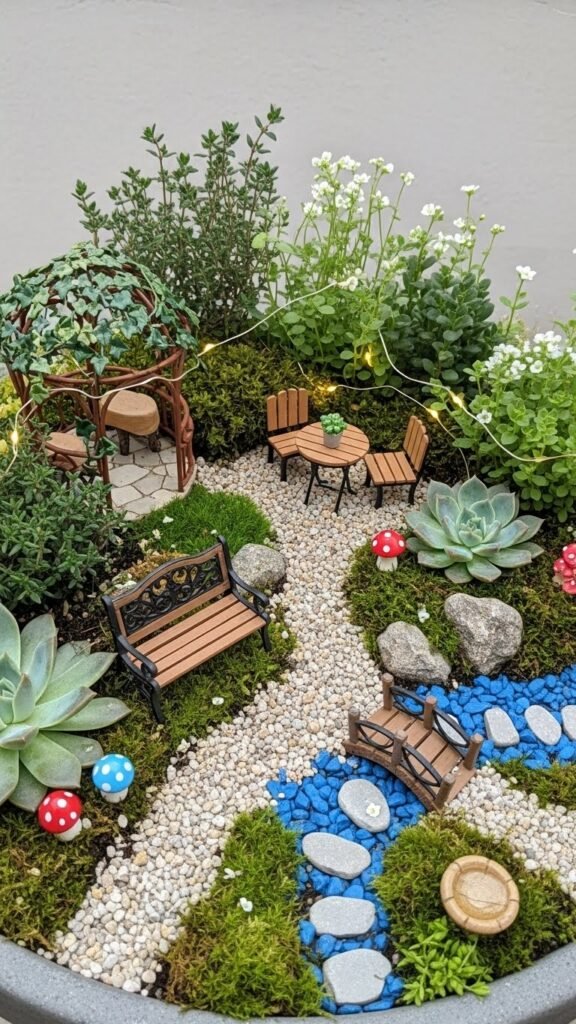
Create a compact fairy garden planter by selecting a shallow, well-draining container and arranging dwarf plants, mosses, and miniature accents to mimic a tiny landscape. You’ll position succulents, thyme or baby tears for scale, anchor miniature furniture, add gravel paths, and install subtle fairy lighting. Water sparingly, guarantee airflow, prune to maintain scale, and move freely to refresh scenes as you wish.