
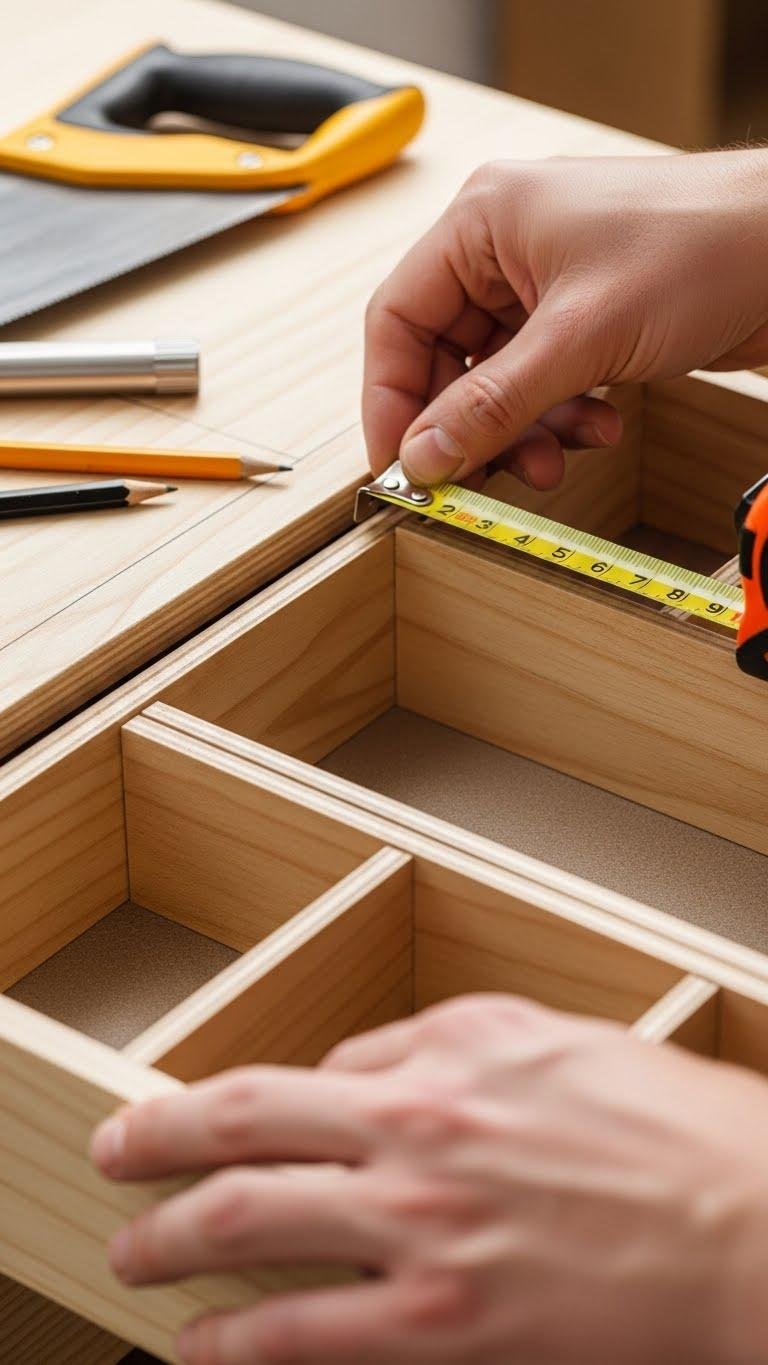
You’ll get drawers under control with 21 practical divider hacks that fit any space, budget, and skill level. Measure carefully, pick materials that grip or lock in place, and trim pieces so compartments stay snug; add non‑slip liners, labels, and cable clips where needed. These approaches keep things visible, washable, and reconfigurable — and once you see how simple a few tweaks are, you’ll want to try a couple of clever builds next.
Measure Once, Cut for a Snug Fit
Paragraphs
Adjustable Wooden Slats for Custom Compartments

When you want flexible storage that adapts to changing needs, adjustable wooden slats give you simple, sturdy dividers that slide into place and lock without tools. You’ll set slotted customization along the drawer base, choose slat spacing to match items, and shift compartments as tastes change. Cut or trim slats cleanly, sand edges, and fit them for friction hold that stays reliable.
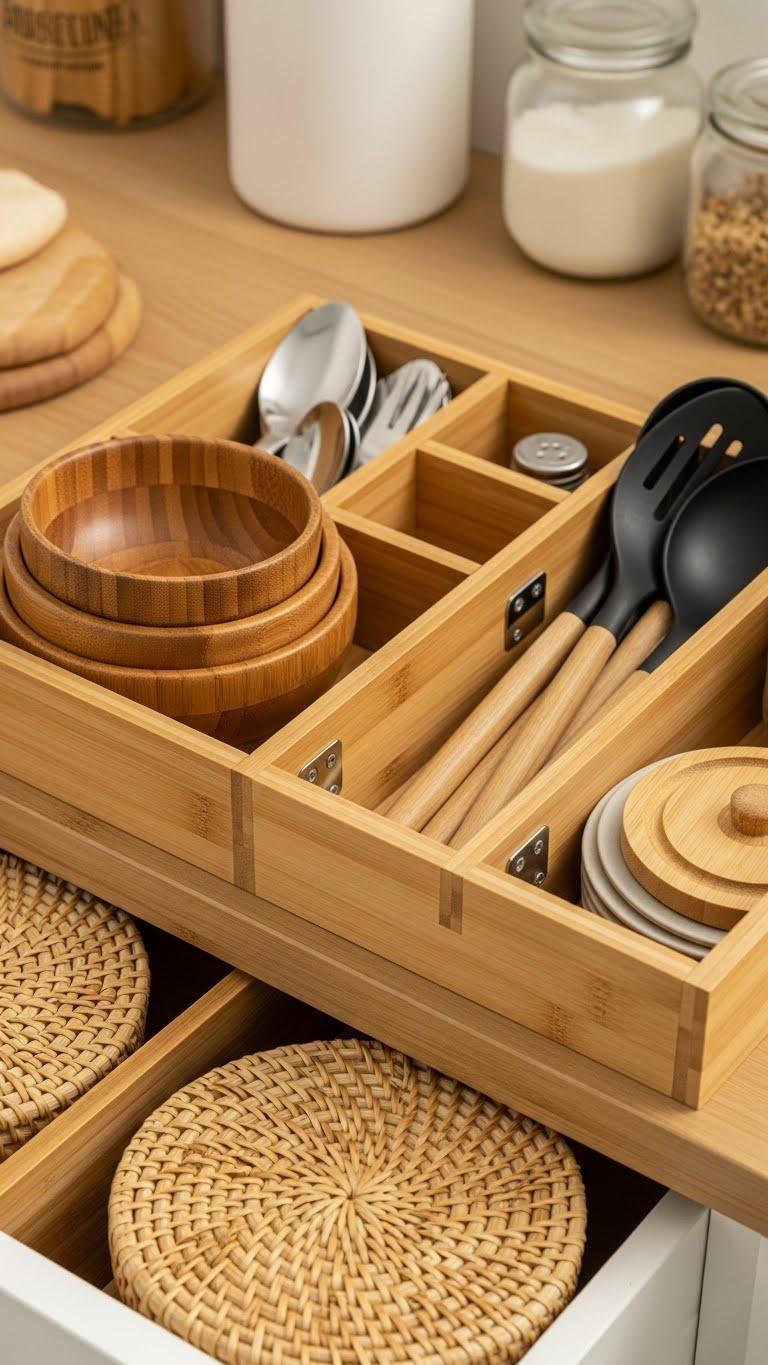
Bamboo Dividers for a Natural Look
Paragraphs
Collapsible Fabric Bins for Flexible Storage
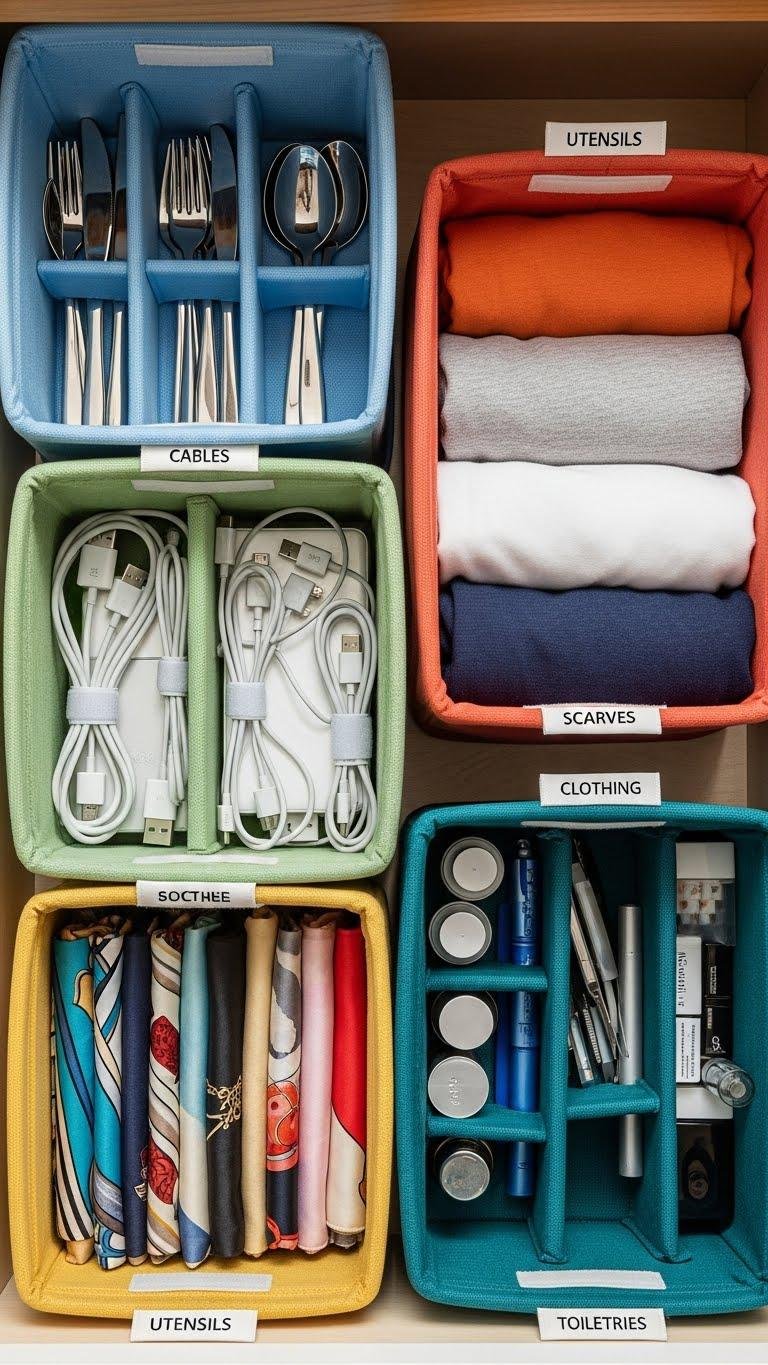
Using collapsible fabric bins lets you change your drawer layout in seconds—just unfold to add compartments or flatten to create open space.
You’ll choose foldable totes and fabric baskets in sizes that match utensils, scarves, or tech cables.
Place non-slip bases, label edges, and mix heights for easy access.
You’ll enjoy portable, lightweight organization that adapts as your needs shift.
Plastic and Acrylic Trays for Small Items
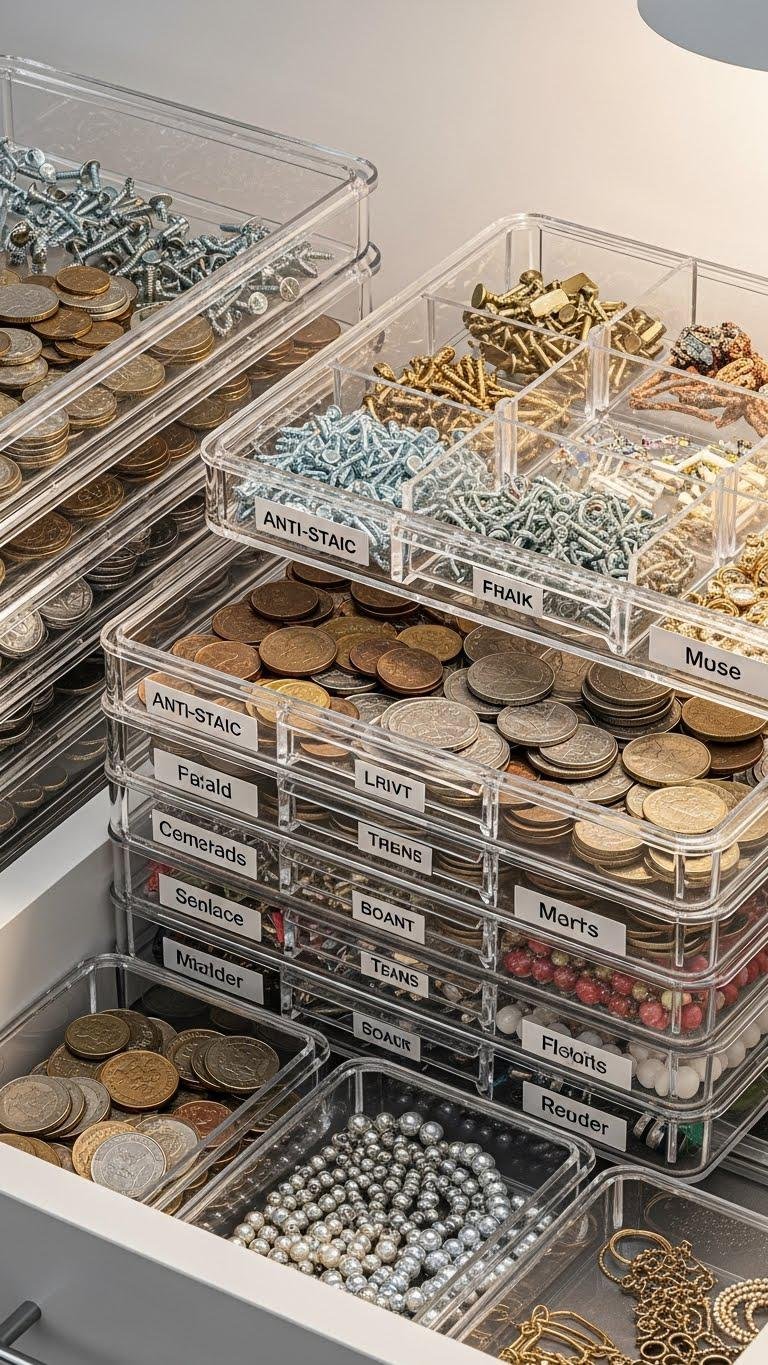
Often you’ll reach for clear plastic or acrylic trays when you need crisp, visible organization for small items. You’ll choose stackable trays to maximize vertical space, arrange compartments for coins, screws, or jewelry, and prefer anti-static trays for electronics or delicate beads.
You’ll label edges, slide trays to access contents smoothly, and enjoy a tidy drawer that supports your freedom to find things fast.
DIY Wood Slats With Cord Clips
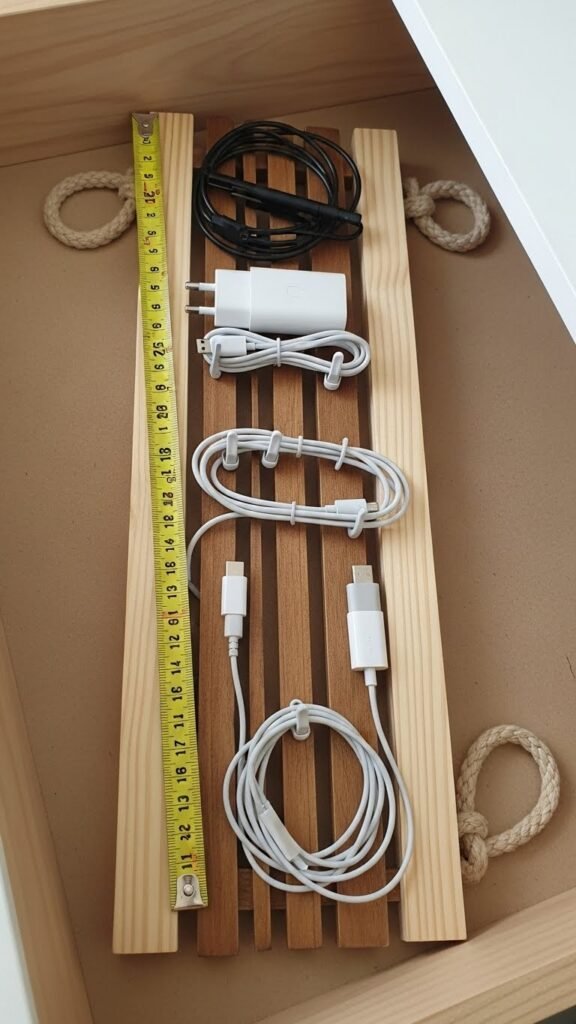
Create a slim, custom divider by fastening narrow wood slats across the drawer base and snapping cord clips onto the slats to hold chargers, cables, and headphones neatly in place.
You’ll measure spacing, predrill, and stain or leave natural. Position rope loops for flexible anchoring, plan clip placement for consistent cable routing, and trim slats to let items sit flush and ready
Interlocking Modular Divider Systems
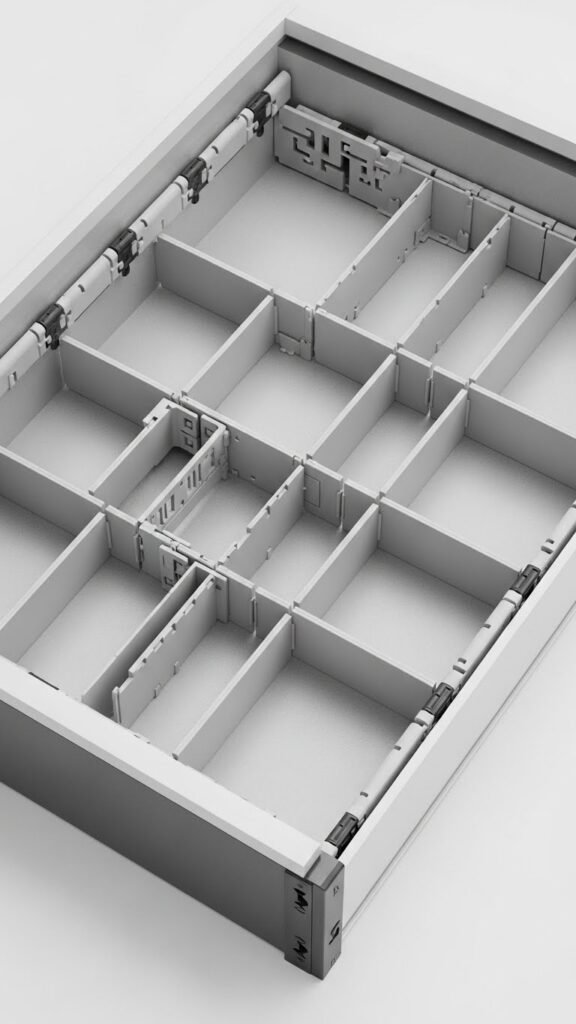
Interlocking modular divider systems snap together to give you flexible, precise control over drawer layouts without permanent hardware or custom cuts.
You’ll assemble panels using snap fit connectors and optional magnetic joints for quick reconfiguration. Measure drawer interior, plan compartments, then click pieces into place.
The system lets you adapt spacing, secure small items, and remove segments for cleaning or different storage needs.
Vertical Stacking Inserts for Plates and Bowls

If you need to store plates and bowls upright in a drawer, vertical stacking inserts give you secure, space-saving support that keeps pieces separated and easy to access.
You’ll install adjustable slots for vertical plateware, creating snug fits that prevent sliding. Use removable dividers to build bowl towers for varied sizes, letting you rearrange freely while protecting fragile items and maximizing drawer capacity.
Use Adhesive Non-Slip Strips to Keep Things Put

When drawers shift or small items slide every time you open them, stick adhesive non-slip strips along the base to keep things put and reduce noise. You’ll press adhesive grip strips into place, cutting to fit compartments and corners.
They act as drawer protectors, prevent scratching, and stabilize utensils, tools, or accessories. Change or clean them easily to maintain order and freedom.
Transparent Dividers for Easy Visibility
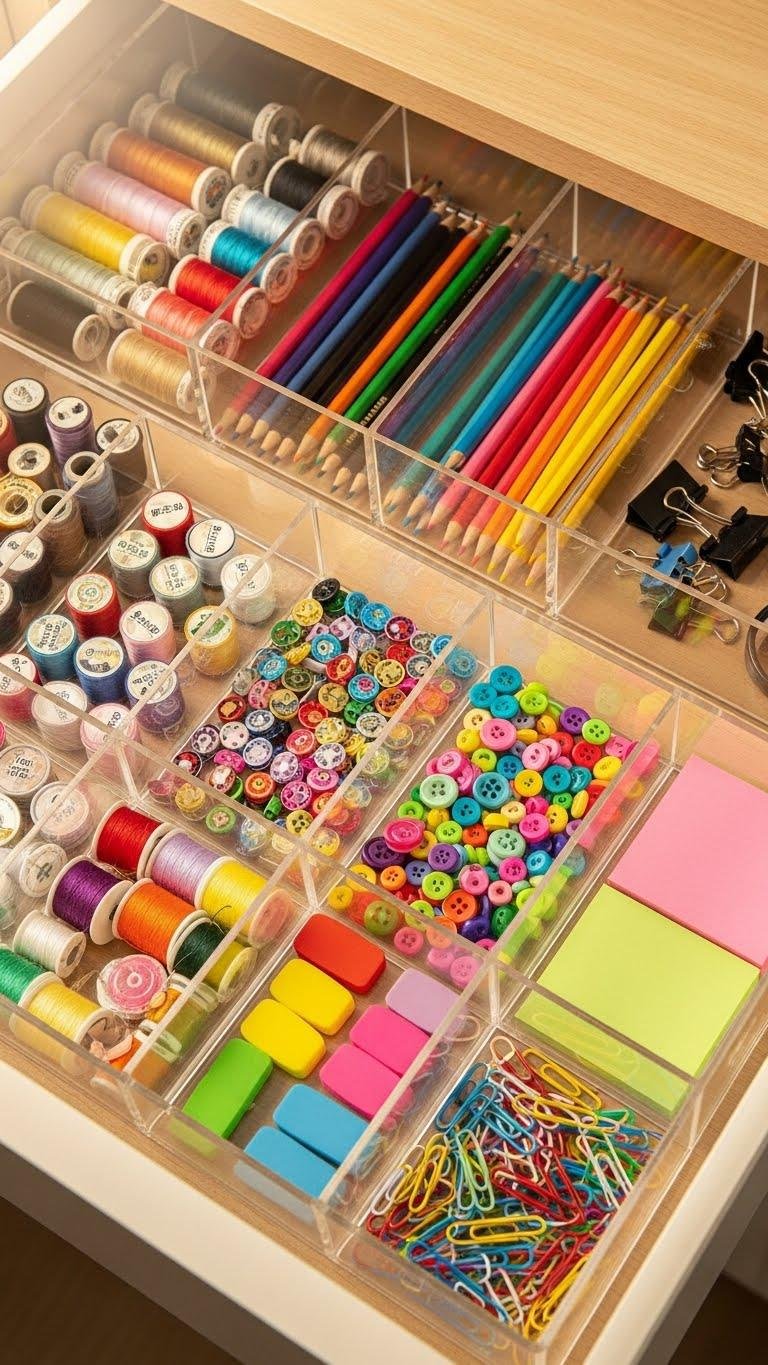
Want to find what you need at a glance? Use clear acrylic or see through PVC dividers to keep compartments visible without visual clutter.
You’ll measure drawer dimensions, cut panels to fit, and secure them with minimal hardware or adhesive. Transparent dividers preserve openness, let light reach contents, and let you reorganize quickly so your space feels unconfined and efficient.
Color-Coded Bins for Quick Identification

A few simple color-coded bins can save you time by making categories instantly recognizable at a glance. You’ll assign hues to functions—tools, receipts, cables—so you spot items without digging.
Label edges, keep uniform bin sizes, and maintain a visual sorting system across drawers. This straightforward setup frees you from clutter, speeds retrieval, and makes maintaining order effortless and liberating.
Repurpose Small Containers and Jars

Dig out jars, spice tins, and small takeout containers and turn them into tidy drawer compartments that keep tiny items visible and accessible.
You’ll label lids, group like items, and nest smaller containers inside larger ones to save space.
Use a mason jar for buttons, spice tins for clips, and shallow trays for cords.
Anchor containers with non-slip pads so everything stays put.
Clip-On Accessories to Add Storage Layers
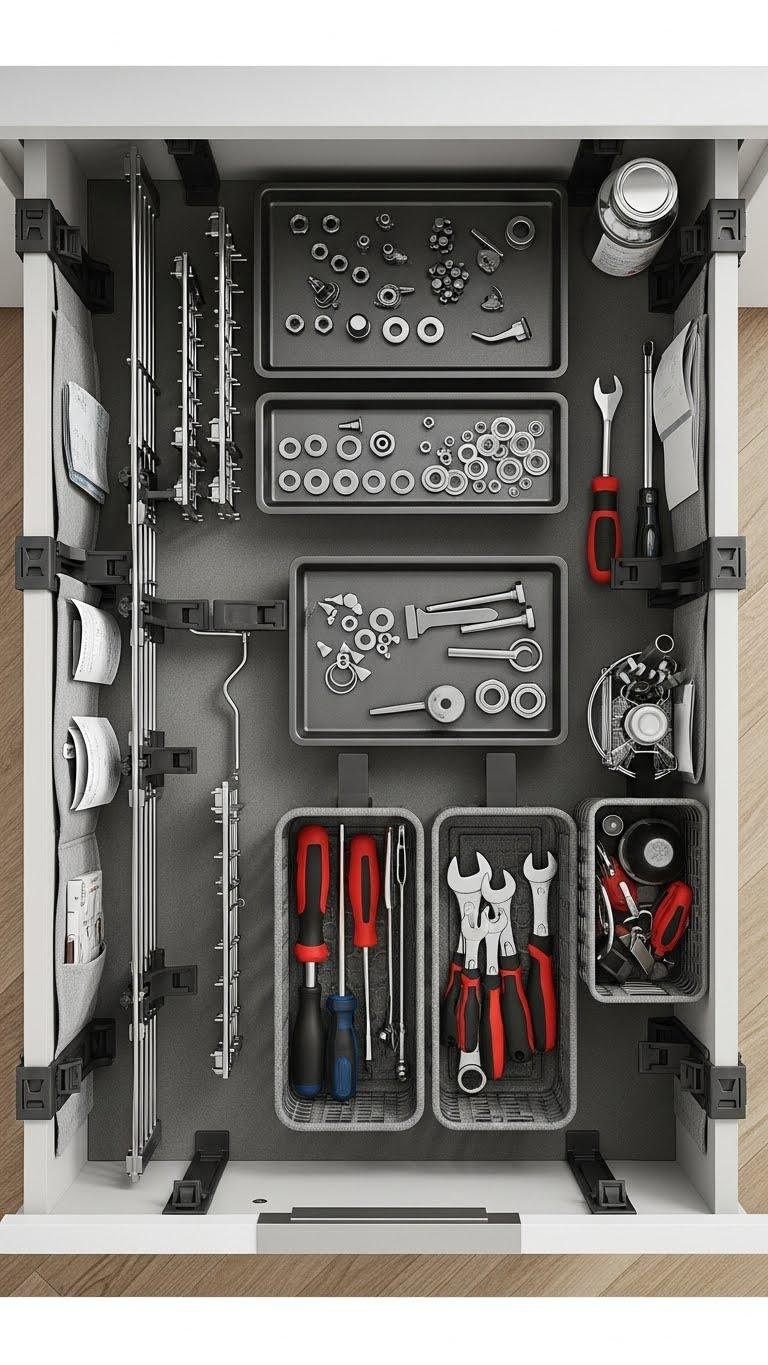
Clip clip-on racks, hooks, and baskets onto the inside of your drawer or along its sides to add vertical storage without wasting floor space. You’ll free surfaces by attaching magnetic trays for loose metal bits and hanging pockets for slim tools or receipts.
Choose sturdy clips, measure depth to prevent interference, and arrange layers so items stay visible, reachable, and easily reconfigured.
Paint or Wrap Dividers to Match Decor
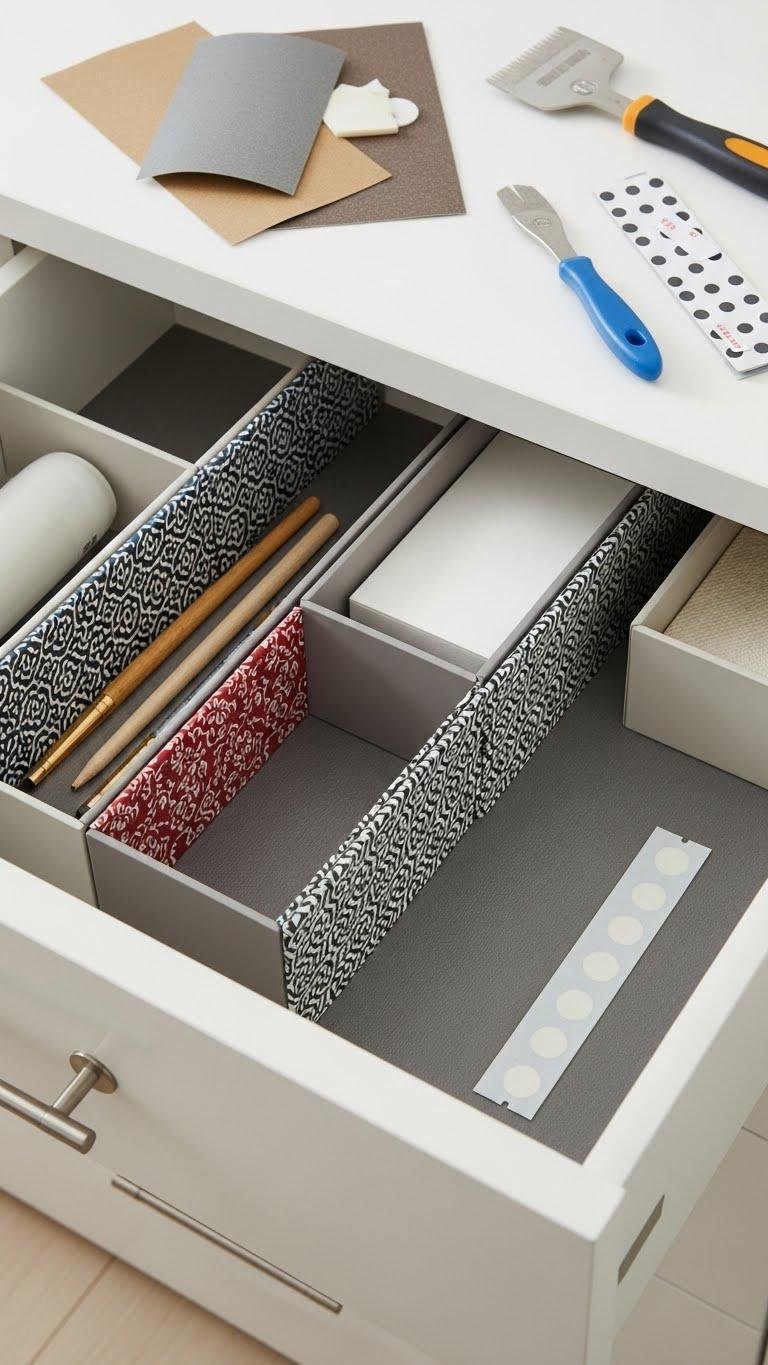
When you want your drawer dividers to blend with or accent your decor, paint or adhesive wrap gives you clean, coordinated results with minimal fuss.
You’ll choose a matte finish for subtlety or patterned wrapping for bold accents.
Sand lightly, prime, and apply thin coats or smooth adhesive strips.
Trim edges, seal corners, and install quickly to keep organization sleek and personal.
Moisture-Resistant Materials for Kitchen Drawers
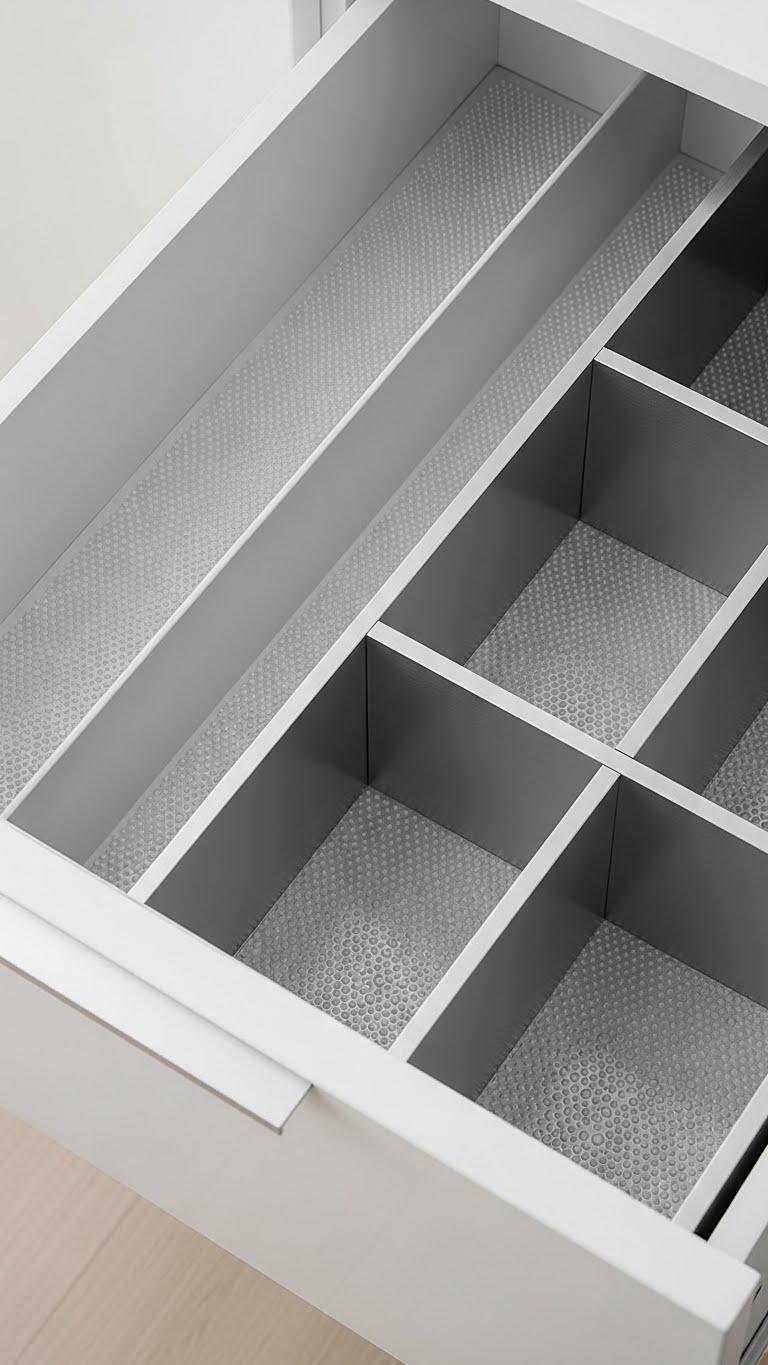
Because kitchen drawers face spills, steam, and frequent handling, choose materials that resist moisture and stay sturdy over time.
You’ll prefer sealed silicone liners for easy cleaning and watertight protection, and stainless inserts for durable divider edges that won’t warp.
Combine both to protect wood, prevent mold, and let you rearrange confidently.
Measure carefully and secure components for lasting freedom and order.
Create a Tech Drawer With Cable Compartments

Set up a tech drawer that keeps cables untangled and gear easy to find by creating dedicated compartments for each device and accessory. Divide space for phones, tablets, and wireless chargers; use small bins for cables, adapters, and earphones. Reserve a ventilated area for bulky surge protectors and power bricks. Label nothing here if you prefer flexible placement and quick access.
Label Compartments for Consistent Order
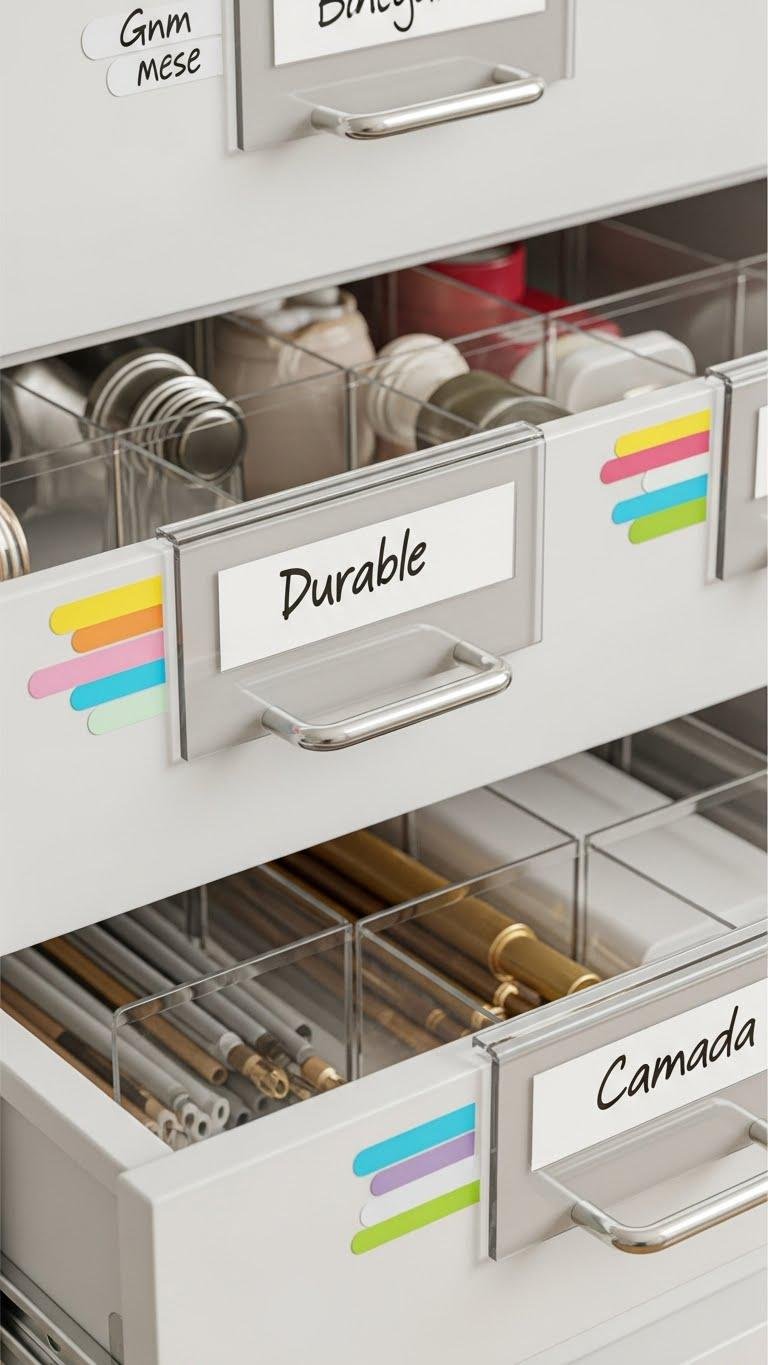
Paragraphs
Quick-Change Modular Layouts for Seasonal Needs
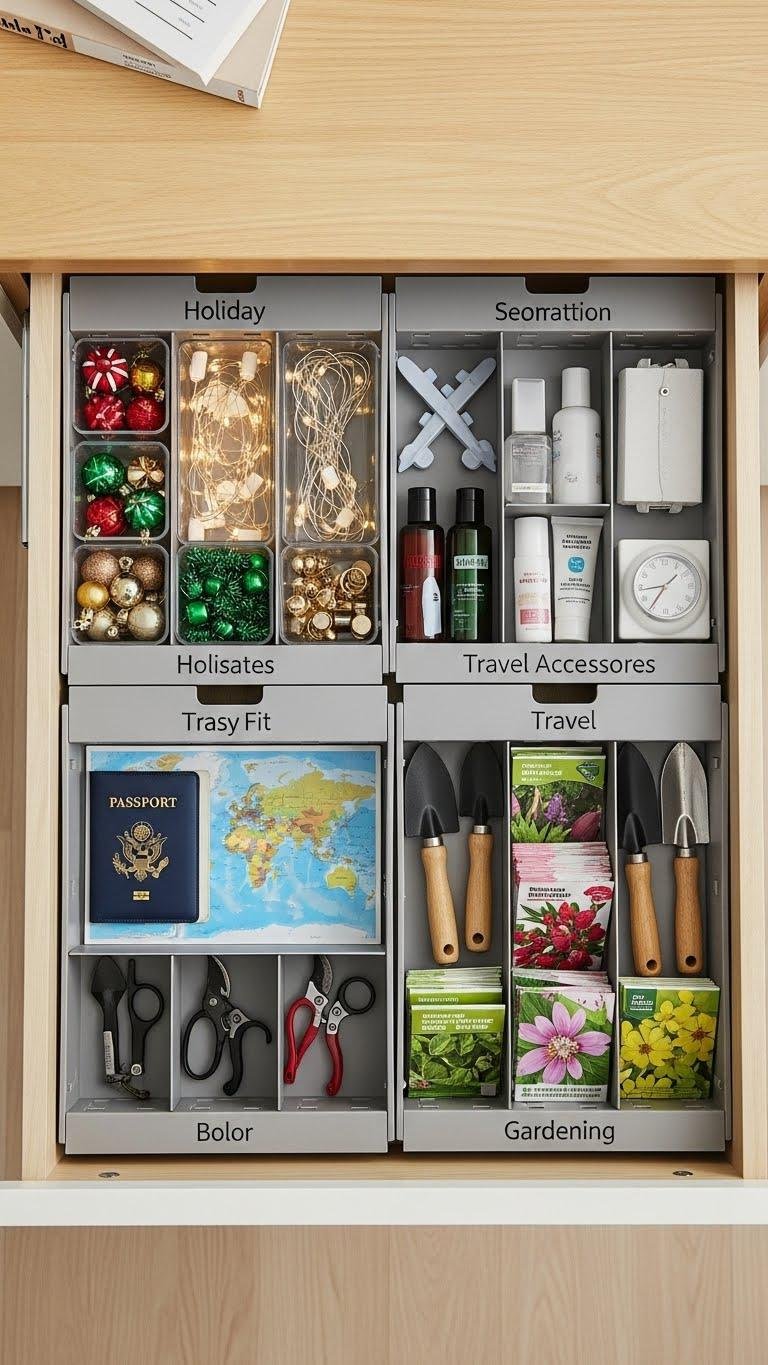
Once your compartments are labeled for consistent order, you can plan modular inserts that let you swap layouts as seasons change. You’ll design modular inserts sized to fit drawer dimensions, enabling seasonal swaps with a quick release mechanism.
Create themed layouts for holidays, travel gear, or gardening tools. Keep pieces lightweight, durable, and easy to reposition so you stay organized and free to adapt.