
You can tame dresser chaos with a few simple, repeatable habits that make clothes easy to find and harder to forget. Start by measuring drawers, sorting by use, and adopting uniform folds so everything stays neat and visible. Add dividers, shallow trays, and a donation box nearby to keep overflow in check. Try a quick ten-minute tidy each week—and keep going to see which tips actually stick.
Assess Your Wardrobe and Drawer Space
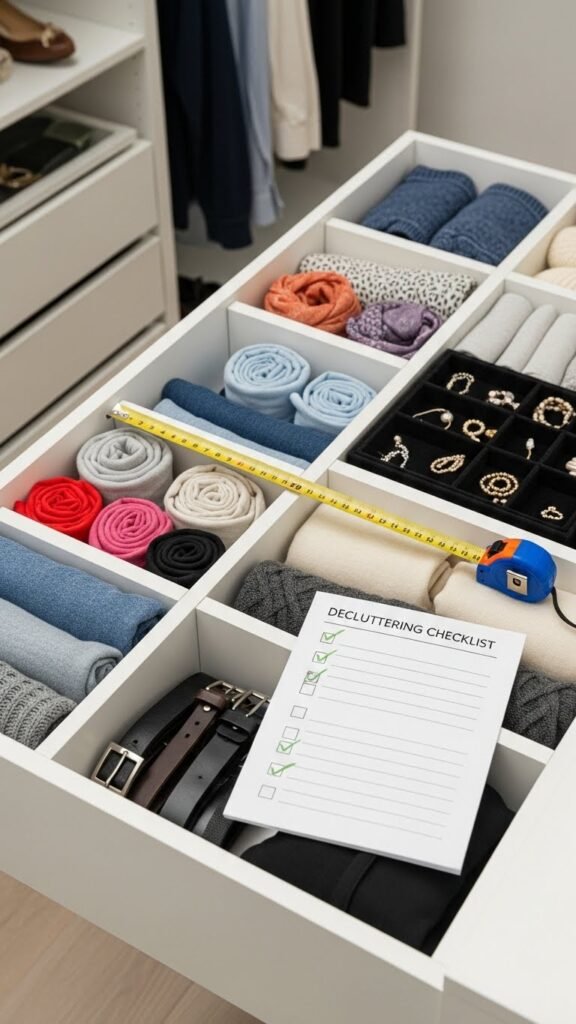
Before you buy organizers or rearrange anything, take stock of what you own and the space you have; measure drawer dimensions, note how many drawers and their depths, and list the types and quantities of clothing and accessories you need to store.
Map your wardrobe footprint, prioritize essentials, and plan placements. Consider drawer lighting for visibility. Decide what must stay, what can go, and keep choices simple.
Sort Clothes by Category and Frequency
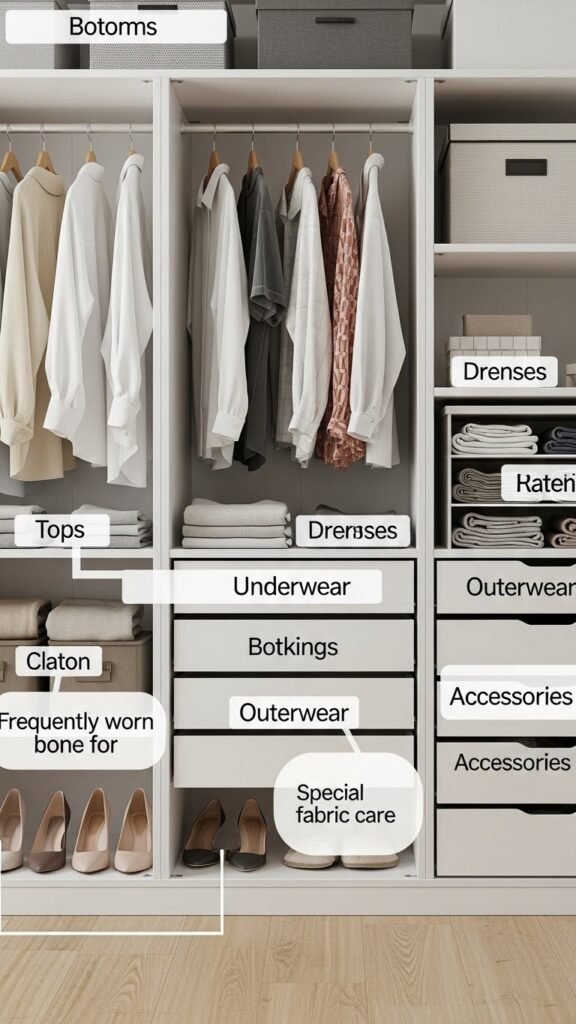
Next, systematically separate your clothes by category—tops, bottoms, dresses, underwear, outerwear, and accessories—and then rank each category by how often you wear items in it.
prioritize everyday pieces for easy access, set aside occasional items for seasonal rotation, and note special fabric needs for material care.
Arrange drawers so frequently used garments are front and center for quick freedom.
Declutter With a Keep, Toss, Donate System
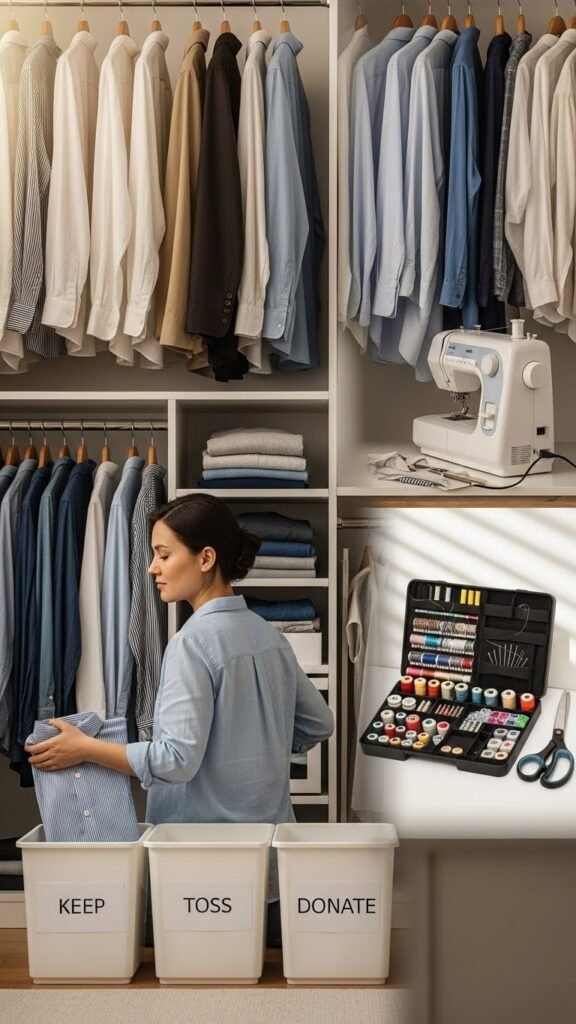
Once you’ve grouped and ranked your clothes, tackle each item with a simple Keep, Toss, Donate system to speed decisions and cut clutter.
Work row by row, making quick calls: keep essentials, toss irreparable pieces, donate good-condition items.
Use a repair station for mending and adopt sentimental sorting for heirlooms you’ll truly wear or photograph before letting go.
Stay decisive and free.
Fold Vertically to Maximize Drawer Capacity

Folding clothes vertically lets you see and access every item without digging through stacks, so you can fit more in each drawer and keep things tidy. Adopt vertical folding to respect drawer geometry: align edges, turn shirts on their side, and place heavier items at the back.
You’ll gain visual control, faster outfits, and liberated closet space that supports a freer, simpler routine.
Use Uniform Fold Sizes for Stable Stacks
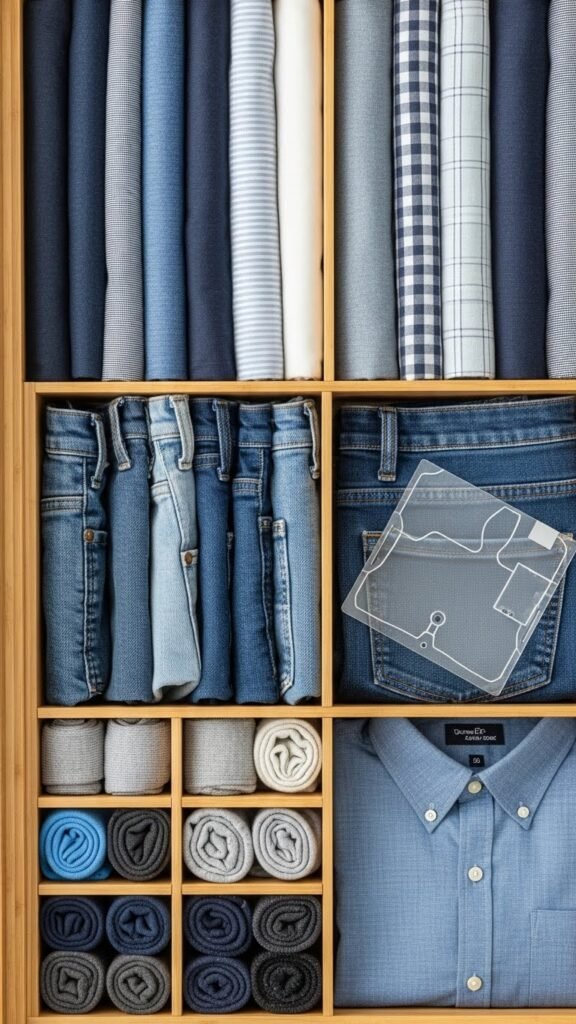
Usually, you’ll get the most stable, space-efficient stacks when you fold items to consistent dimensions. You’ll measure once, set consistent measurements for shirts, pants, socks, then replicate.
That uniformity speeds retrieval, reduces shifting, and improves stack stabilization. Adopt a simple folding template, train yourself to repeat it, and enjoy drawers that stay orderly so you can move freely through your day.
Install DIY or Expandable Drawer Dividers
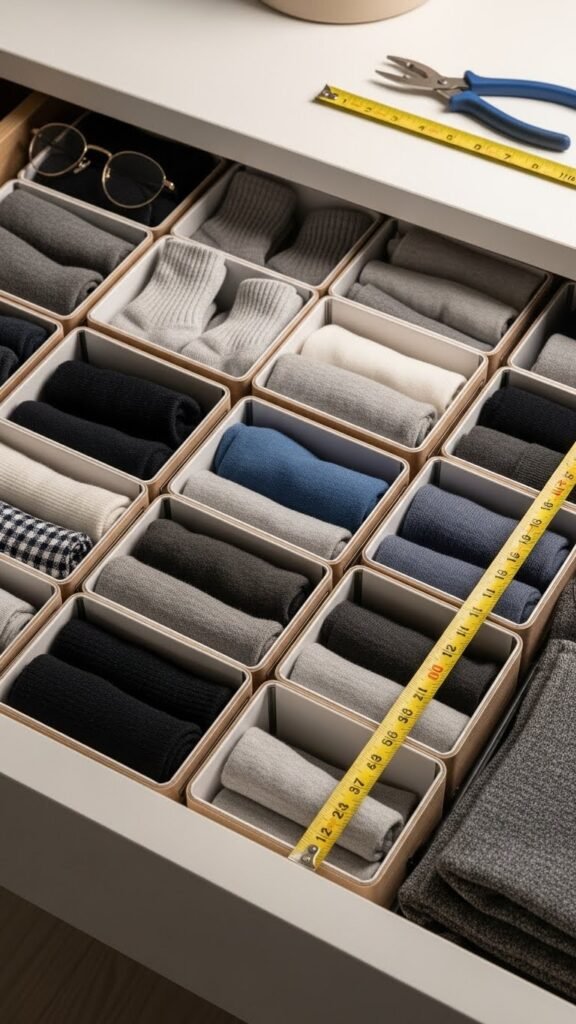
Bring order to unruly drawers by installing DIY or expandable dividers that fit your exact needs. You’ll create zones for socks, tees, and accessories using simple materials or adjustable accordion separators.
Choose magnetic dividers for metal drawer frames or lightweight wood for flexibility. You’ll measure, cut, and position pieces methodically so each item has a clear place, freeing space and easing daily choices.
Reserve Top Drawers for Daily Essentials
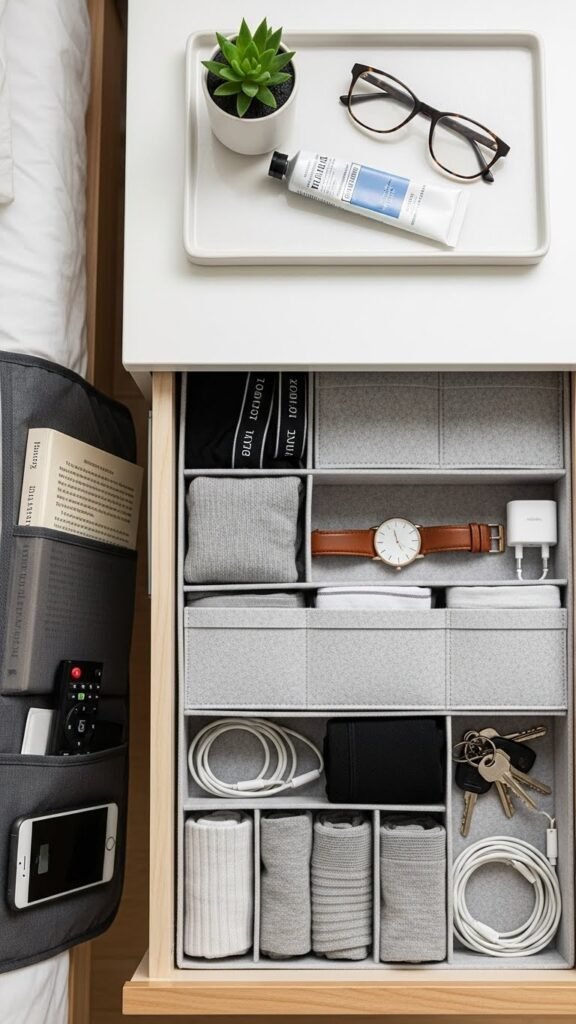
Frequently, you’ll find the top drawer becomes the go-to spot for morning essentials, so reserve it for items you reach for every day—underwear, socks, a watch, keys, or your phone charger.
Use pocket strips and small dividers for quick access. Keep a countertop tray for overflow and a bedside organizer for nightly items.
Maintain one tidy zone so choices stay simple.
Create Sections for Pants, Shorts, and Tops
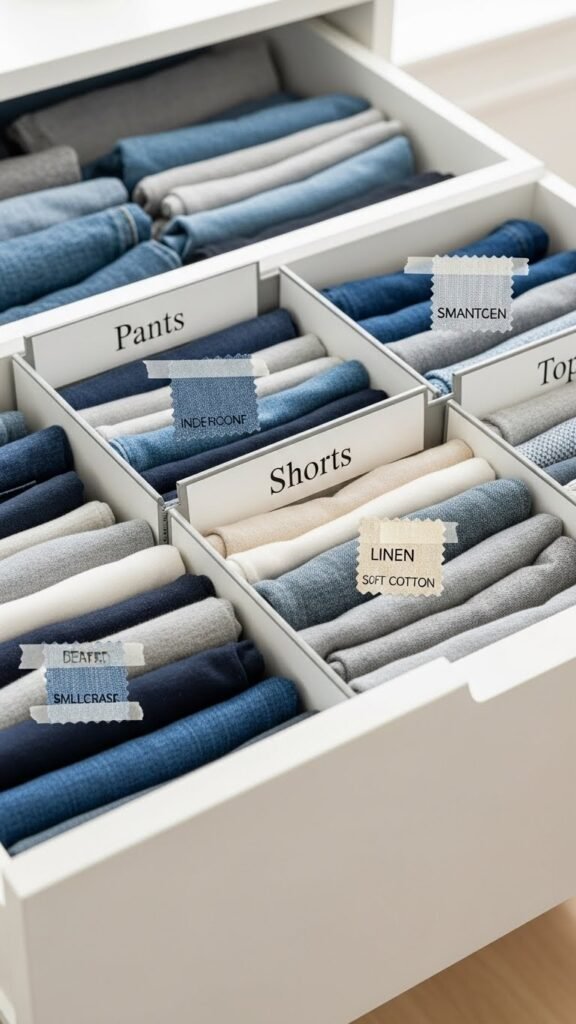
Once your top drawer holds daily basics, organize the rest of the dresser by creating clear sections for pants, shorts, and tops. Sort garments by frequency and fold uniformly. Use drawer dividers and drawer labels for instant retrieval. Keep a fabric swatch taped to each section to match texture and care.
You’ll move faster, feel lighter, and reclaim morning freedom.
Store Seasonal Items Separately and Swap Biannually
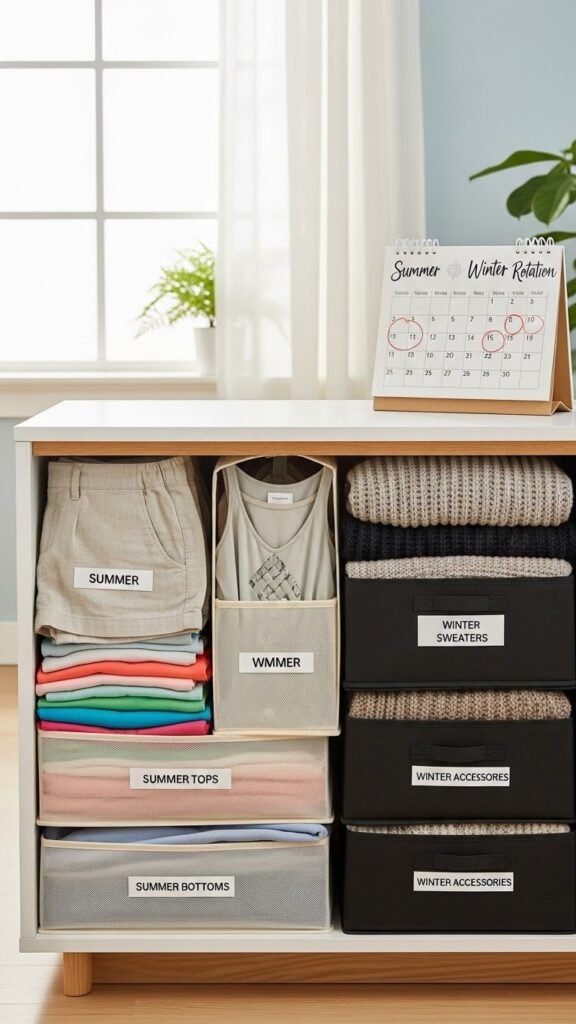
If you rotate your wardrobe twice a year, you’ll free up drawer space and keep only what’s appropriate for the season within easy reach. Decide what stays, what goes to offsite storage, and what you donate.
Pack out-of-season items in breathable containers, note contents, and schedule seasonal rotation days. Swap efficiently to enjoy a streamlined dresser and more freedom in daily dressing.
Label Drawers for Faster Morning Routines
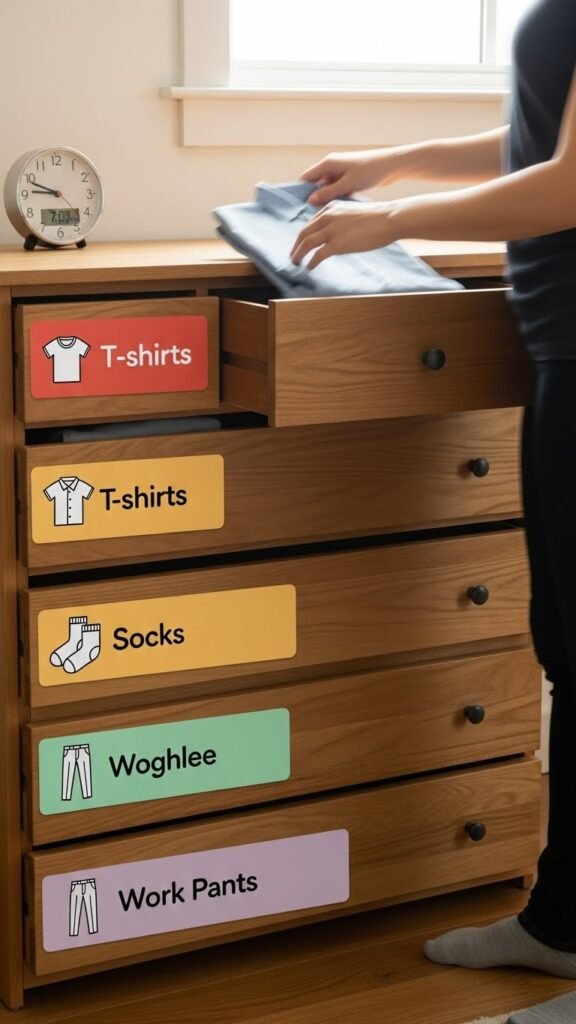
Labeling your dresser drawers saves time and removes decision fatigue during busy mornings: assign clear, consistent labels (e.g., “T-shirts,” “Socks,” “Work Pants”) and place them where you’ll see them at a glance.
Use morning labels and simple color coding to group outfits, prioritize ease, and create routines. You’ll grab what you need faster and reclaim mornings for what matters.
Use Small Containers for Socks and Underwear
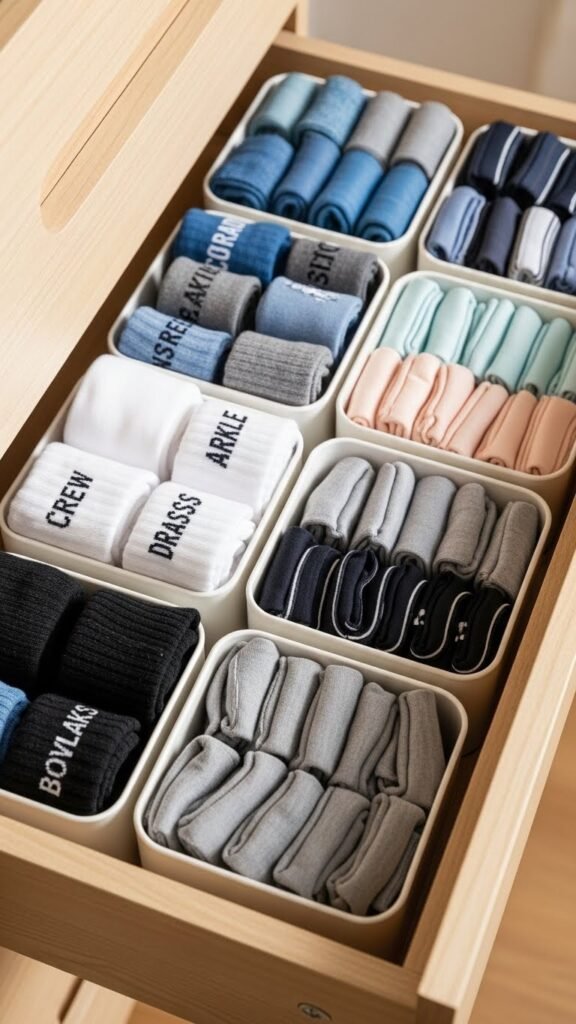
Keep small containers in your dresser drawers to corral socks and underwear so you can grab matching pairs without digging. Sort by type and color using drawer inserts and small fabric bins to keep items visible and separated.
Fold consistently, place frequently worn pieces up front, and rotate seasonal items. You’ll save time, reduce decision fatigue, and feel freer each morning.
Designate a “Go” Pouch Zone for Outfits
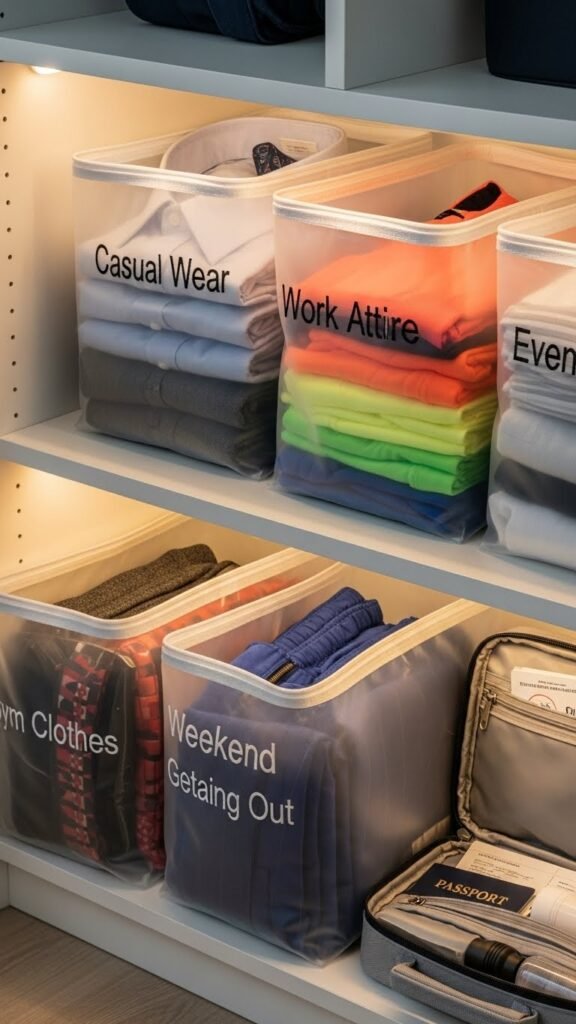
You can take the same principle of sorting small items and apply it to complete outfits by creating a dedicated “Go” pouch zone.
Label grab pouches for outfit staging—casual, work, gym—so you’re travel ready and calm during last minute departures.
Keep pouches visible and accessible in a drawer or shelf.
This system frees time and reduces decision fatigue.
Bundle Outfits Together for Ready-to-Wear Sets
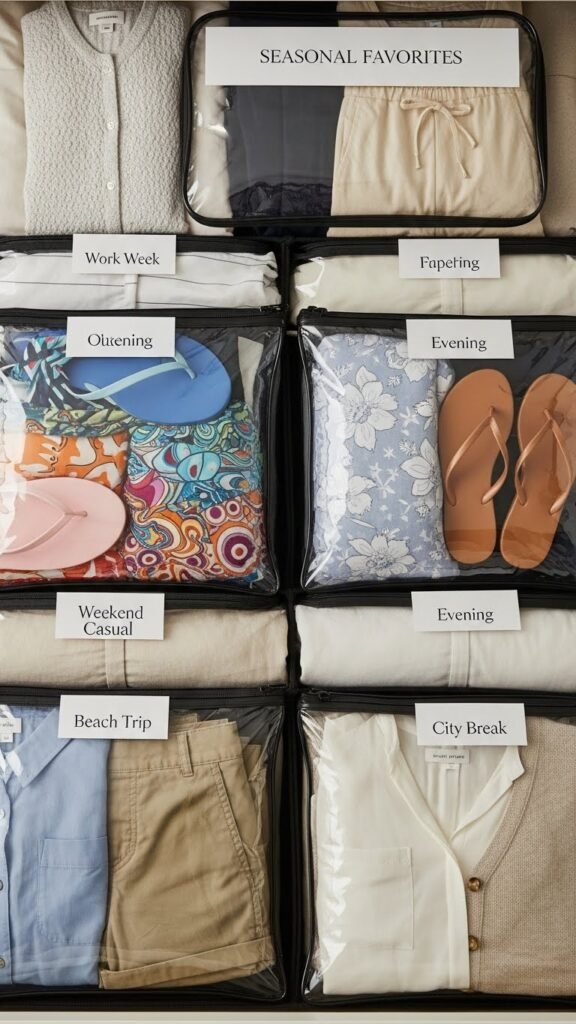
Grouping complete outfits together makes mornings quicker and packing easier: tuck a top, bottoms, undergarments, and accessories into a single drawer section or pouch so you’ve got a ready-to-wear set at a glance.
You’ll build outfit capsules by color and purpose, label sections, and rotate seasonally.
For travel, assemble travel ready sets in clear pouches so you grab freedom and style without thinking.
Use Slim Hangers and Maximize Closet Shelves
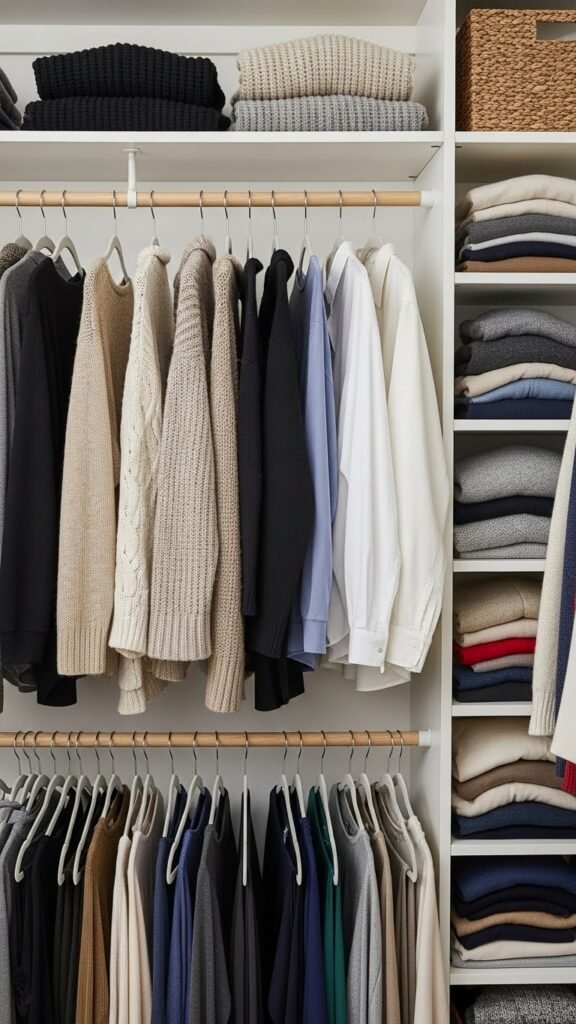
Bundling outfits in drawers sets you up for quick mornings, but you’ll also want to free up hanging space and make shelves work harder. Switch to space saving hangers with velvet slimness to fit more pieces without slipping.
Group garments by type and season, keep frequently worn items at eye level, and fold sweaters flat to preserve shape while maximizing each shelf’s capacity.
Add Shelf Risers to Use Vertical Drawer Space
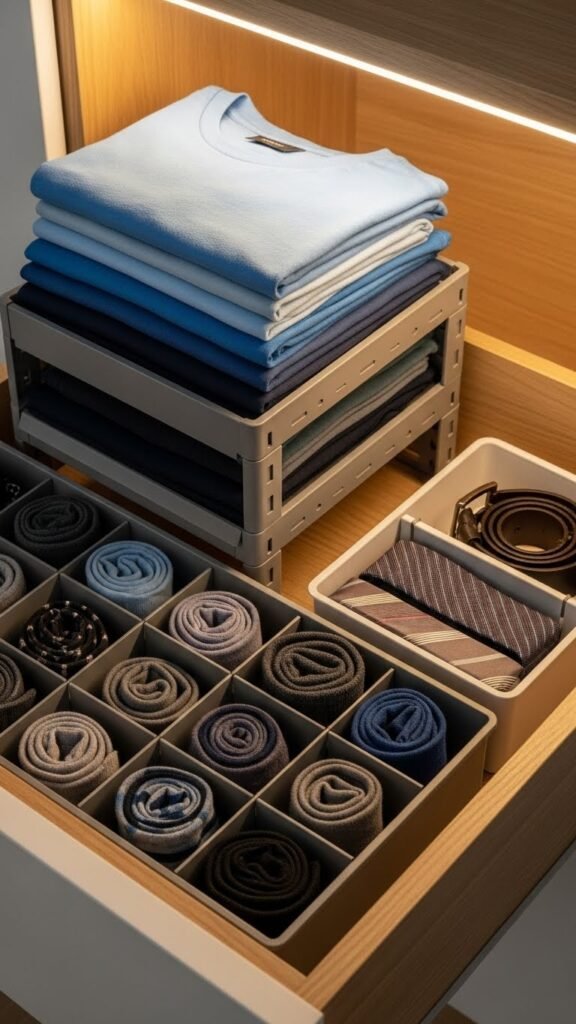
Install shelf risers to multiply usable vertical space inside drawers and make items easier to see and reach. You’ll stack shirts, socks, and accessories without crushing them, using vertical dividers to keep stacks stable.
Choose adjustable risers and add subtle drawer lighting for quick selection. This system saves time, preserves garments, and gives you the freedom to grab what you need fast.
Repurpose Cubbies and Bins for Bulky Items
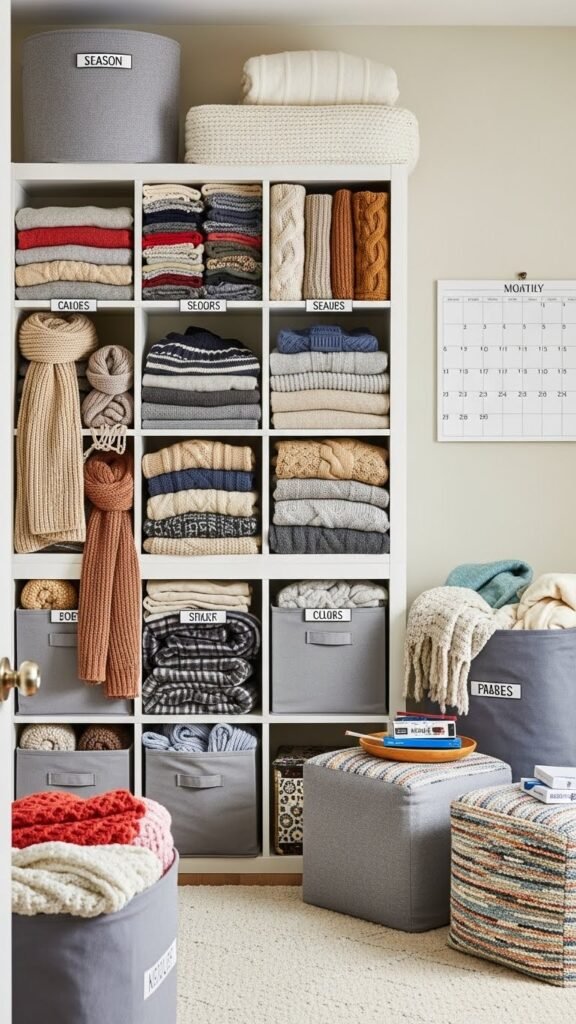
When you’re dealing with bulky items like sweaters, scarves, or winter gear, repurpose cubbies and bins to keep them contained and accessible. Sort by season, label each slot, and use blanket bins for soft piles.
Fold bulky pieces to save space, stash seldom-used items in upcycled ottomans, and rotate contents monthly. This system frees space, reduces decision fatigue, and keeps order.
Keep Accessories in Trays or Dedicated Compartments
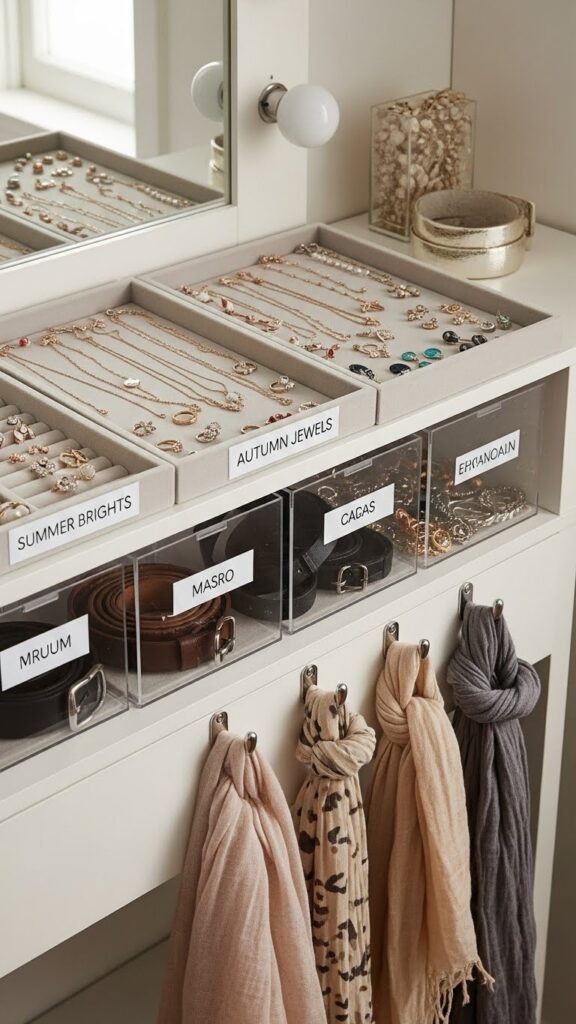
Corral accessories in shallow trays or dedicated compartments so you can see and grab what you need without digging.
Lay out jewelry trays for necklaces, rings, and studs to prevent tangles and speed choices.
Install belt racks or small hooks for belts and scarves so they hang neat.
Label compartments, rotate seasonally, and keep a simple routine to maintain freedom from clutter.
Utilize Under-Bed or Under-Crib Storage for Overflow
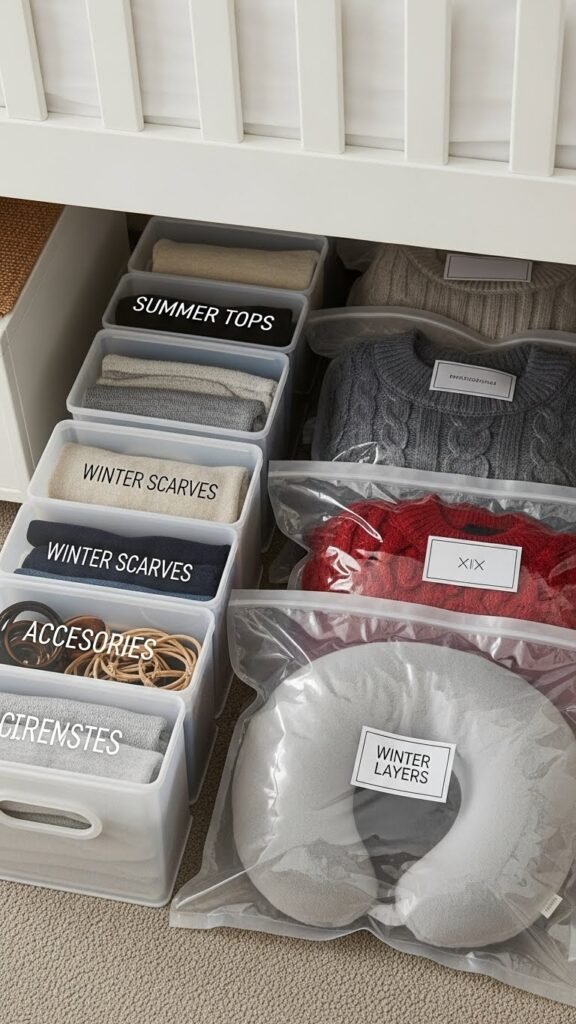
If you’ve sorted accessories into trays and hooks, you’ll free up dresser drawers for clothing and seasonal rotation—so put overflow under the bed or crib in slim, labeled bins for items you don’t need daily.
Store bulky sweaters and a memory foam travel pillow in vacuum sealed bags to save space. Slide bins out easily, rotate contents seasonally, and reclaim calm.
Limit Drawer Depth by Rotating Inventory Regularly
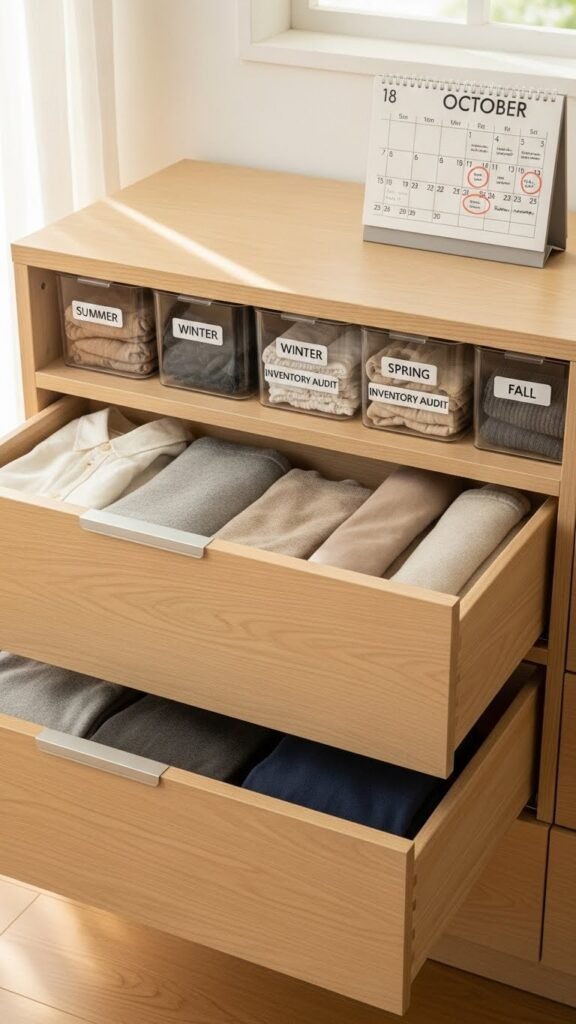
Because dresser drawers fill up fast, rotate what’s inside regularly to keep each drawer shallow and accessible. You’ll schedule seasonal rotation and quick inventory audits monthly or quarterly, removing items you don’t wear.
Fold fewer pieces per drawer, store excess elsewhere, and label containers for easy swaps. This system frees space, reduces decision fatigue, and keeps your daily choices simple and liberating.
Color-Code Sections to Simplify Selection
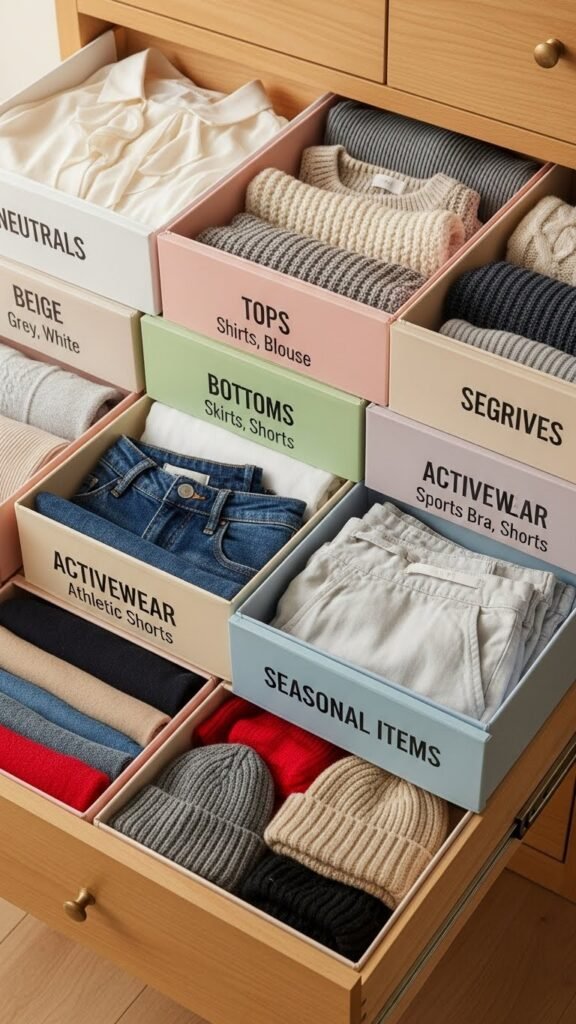
A simple color-code makes picking outfits faster and keeps your dresser orderly: assign a color to each clothing category (neutrals, tops, bottoms, activewear, and seasonal items), and use matching labels, drawer liners, or folded-edge colors to mark sections.
You’ll sort by seasonal palettes and fabric grouping, maintain easy access, and grab looks without overthinking, freeing time and reducing decision fatigue.
Maintain Visibility With Clear or Mesh Containers
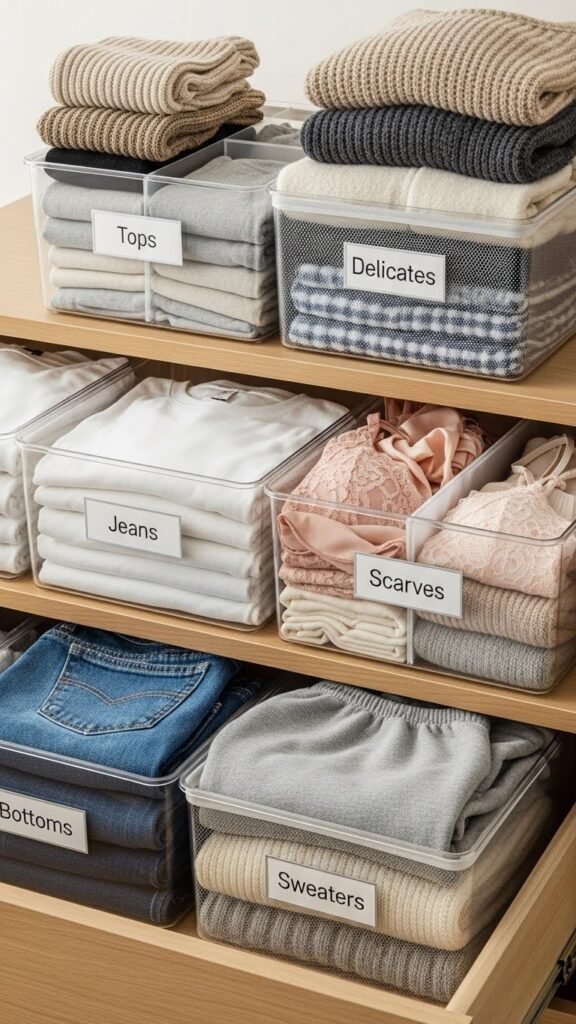
When you can see what’s inside at a glance, you spend less time rummaging and more time getting dressed; clear or mesh containers make that possible by keeping items visible while containing them neatly.
Use clear bins for folded basics, breathable mesh for delicates. Label edges, group by function, and rotate seasonally so your dresser stays orderly and your choices stay free.
Use Non-Slip Liners to Prevent Shifting
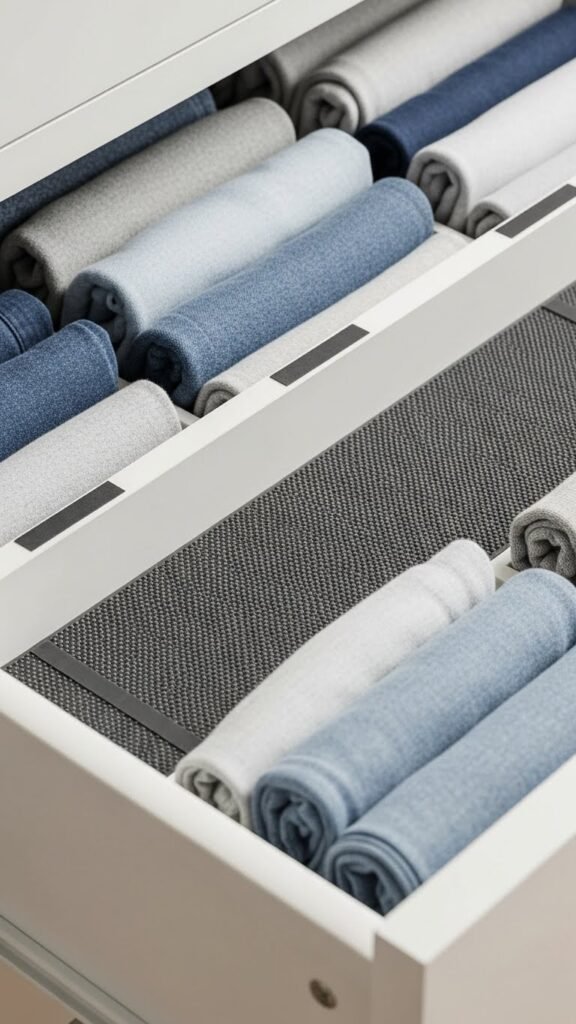
Often overlooked, non-slip liners keep drawers and containers from shifting so your neatly folded clothes stay in place.
You’ll add rubberized padding or traction tapes to drawer bases and shelf edges, preventing piles from sliding when you open drawers. Install cut-to-fit strips for zones that need grip, and replace liners seasonally so your system stays reliable, simple, and freeing.
Create a Donation Box Near Your Dresser
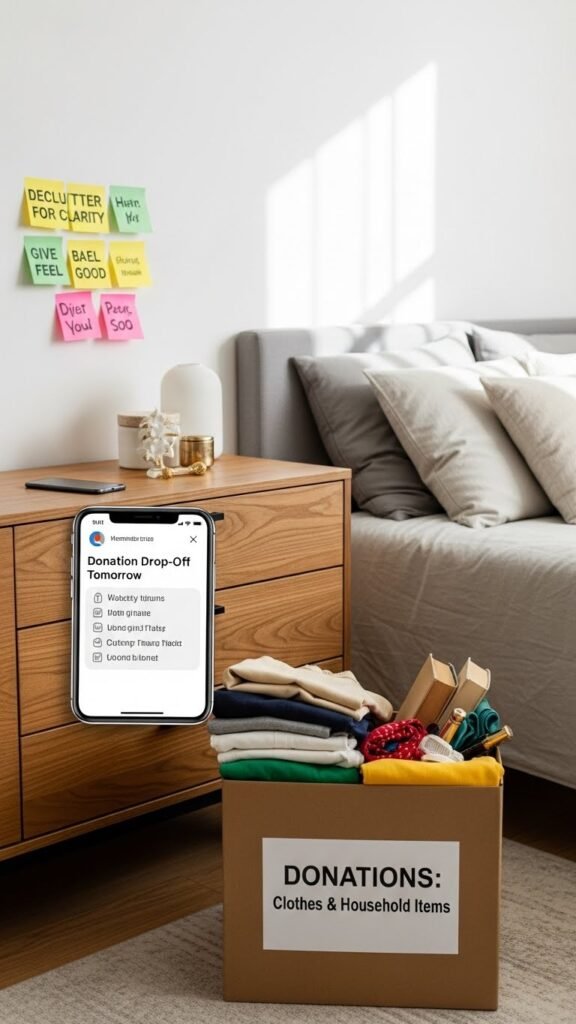
Beside your dresser, set up a simple donation box you can drop items into without overthinking decisions. Label it clearly and keep donation reminders on your phone or a sticky note so you act when it fills.
Empty it monthly, coordinate pickup logistics or drop-off windows, and let the habit free your space. You’ll simplify choices and keep clutter from returning.
Schedule Regular 10-Minute Tidying Sessions
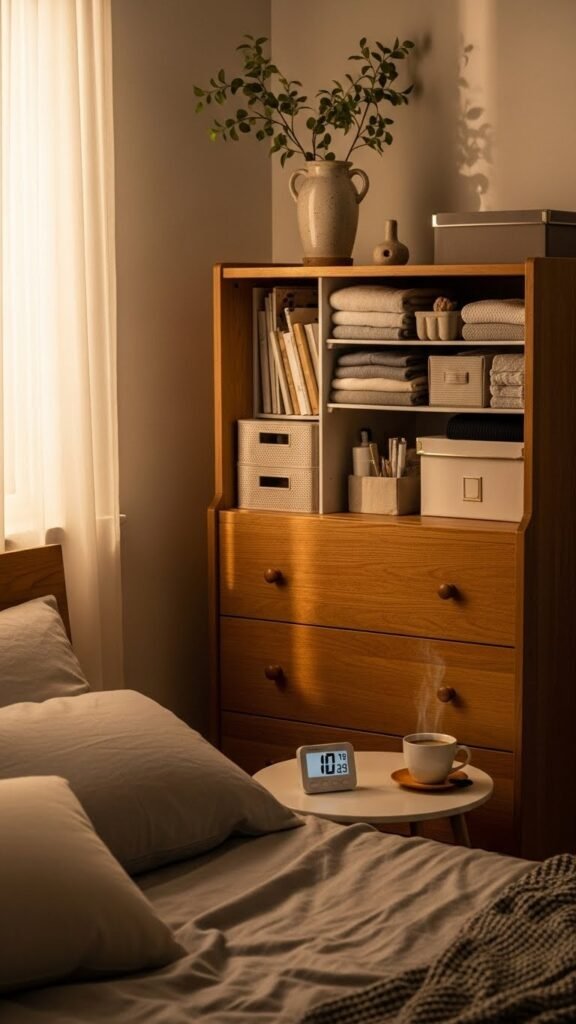
Regularly setting aside just 10 minutes a day makes upkeep easier and stops clutter from building back up. You’ll set a timer, follow simple timer rituals, and tackle one zone: fold, return, or sort.
Keep tidy incentives—like a coffee reward or extra free time—to reinforce the habit. Repeat daily, stay intentional, and enjoy the freedom of a consistently orderly dresser.