
You can make your entryway calm and usable with a few simple, systematic tweaks that cut clutter and speed comings and goings. Start by creating a clear drop zone, add hooks and a bench, then sort shoes and accessories into labeled containers so everything has a place. These practical steps save time daily and prevent buildup—keep going to see the specific hacks that make it effortless.
Create a Dedicated Drop Zone Near the Primary Entry

Set up a compact drop zone right inside your primary entry so keys, bags, shoes, and mail have a designated spot the moment you walk in. You’ll define simple arrival rituals: stash essentials, shed shoes, sort mail.
Use a small bench, tray, labeled bins and textile hooks for scarves or hats. Keep it tidy; freedom comes from consistent, minimal routines.
Install Wall-Mounted Hook Racks for Coats and Bags
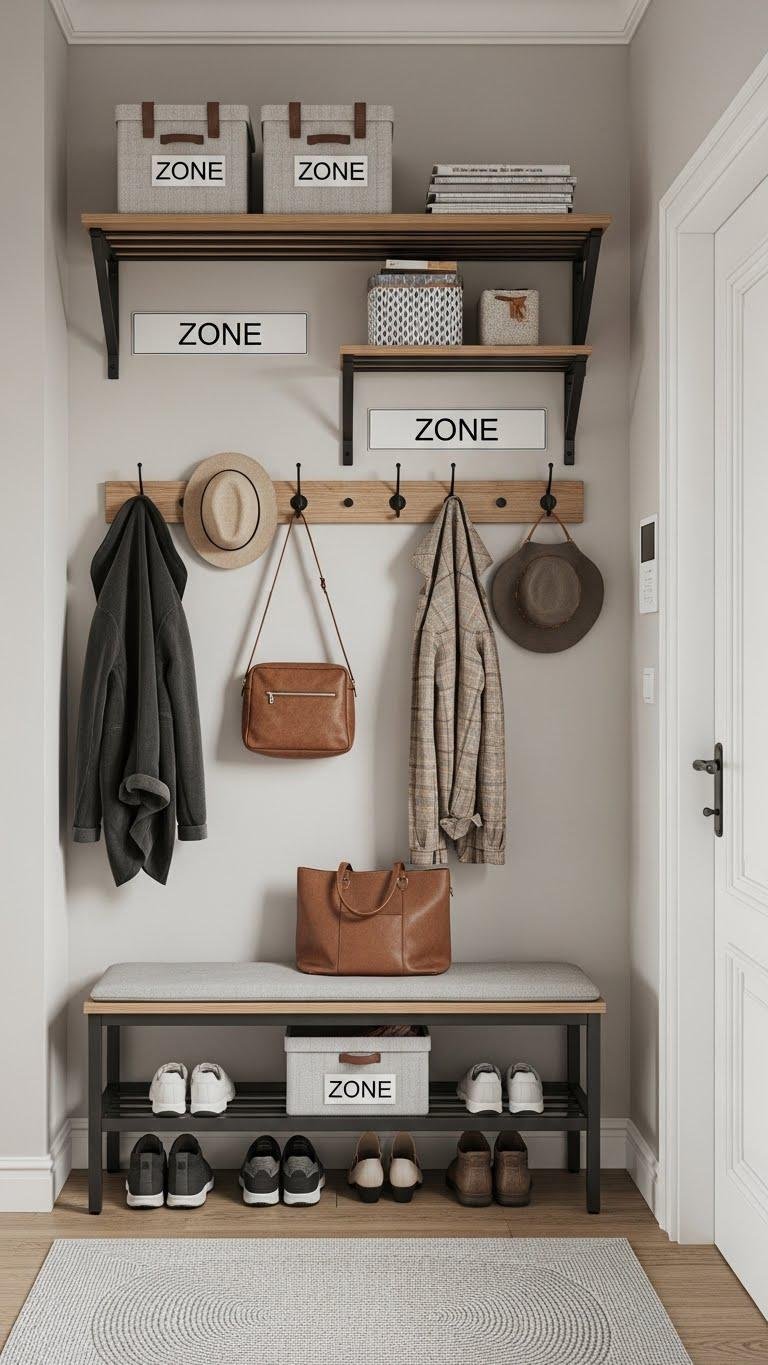
Paragraphs
Add a Storage Bench for Seating and Shoe Storage
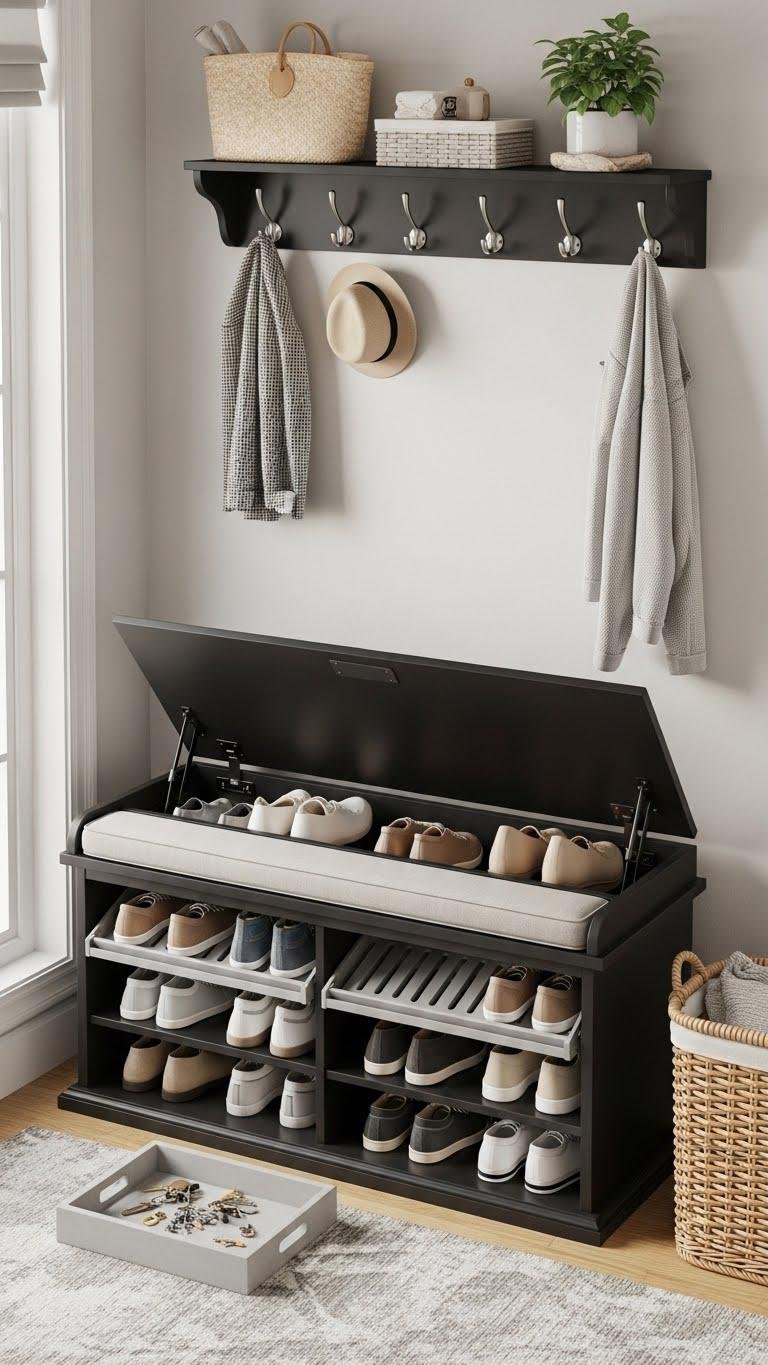
Placed beneath your hook rack, a storage bench gives you a dedicated spot to sit while putting on shoes and hides clutter out of sight. Choose bench cushions for comfort and a lift-top or drawers for hidden storage.
Arrange shoes in low-profile shoe cubbies or slotted trays to keep pairs accessible. Keep a small tray for keys and a basket for seasonal gear.
Use Cubed Organizers With Labeled Bins
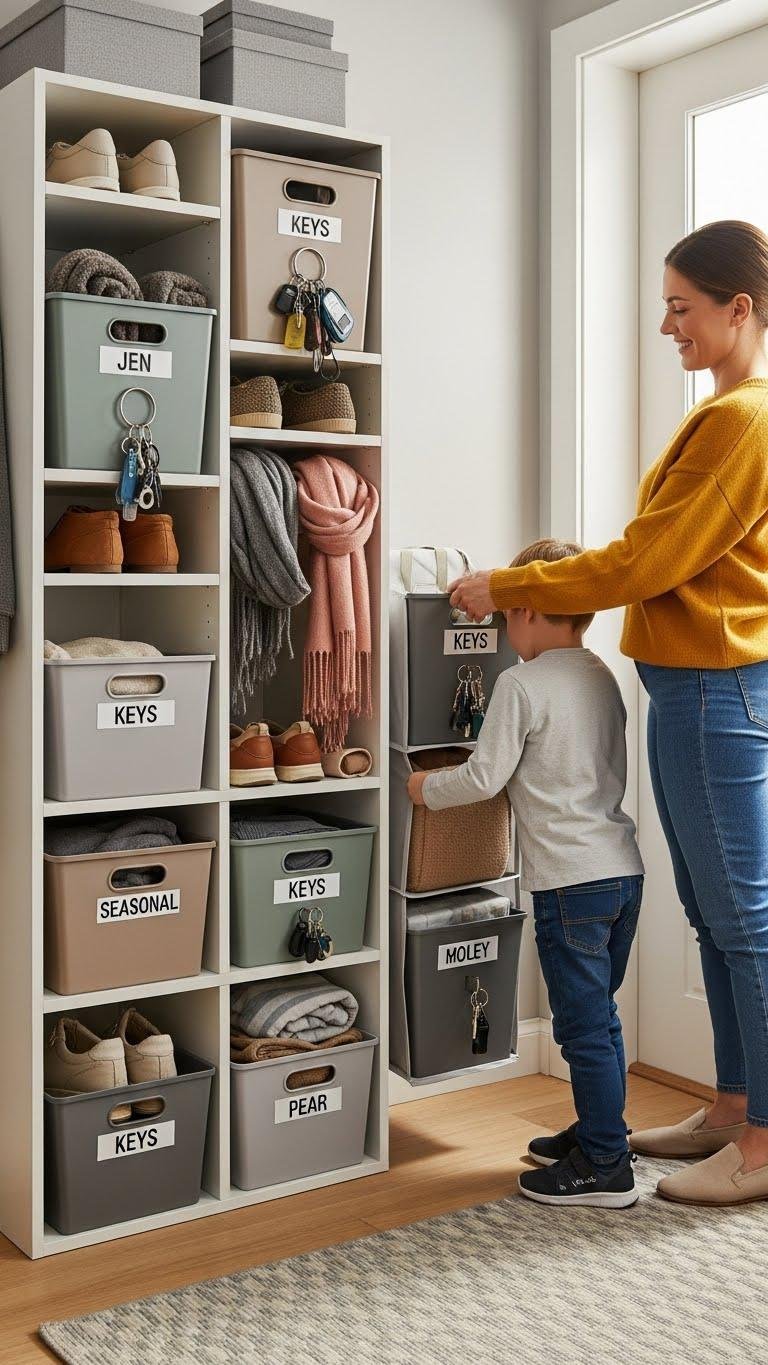
If you liked the way a storage bench tucks away shoes, cubed organizers multiply that hidden-storage idea into a vertical system you can tailor to every family member.
Assign labeled bins for shoes, scarves, keys; use label maintenance to keep tags accurate. Schedule bin rotation weekly for seasonal items and outgrown gear. You’ll gain clear entry routines and simple, flexible control.
Place an Umbrella Stand and Catchall Tray by the Door
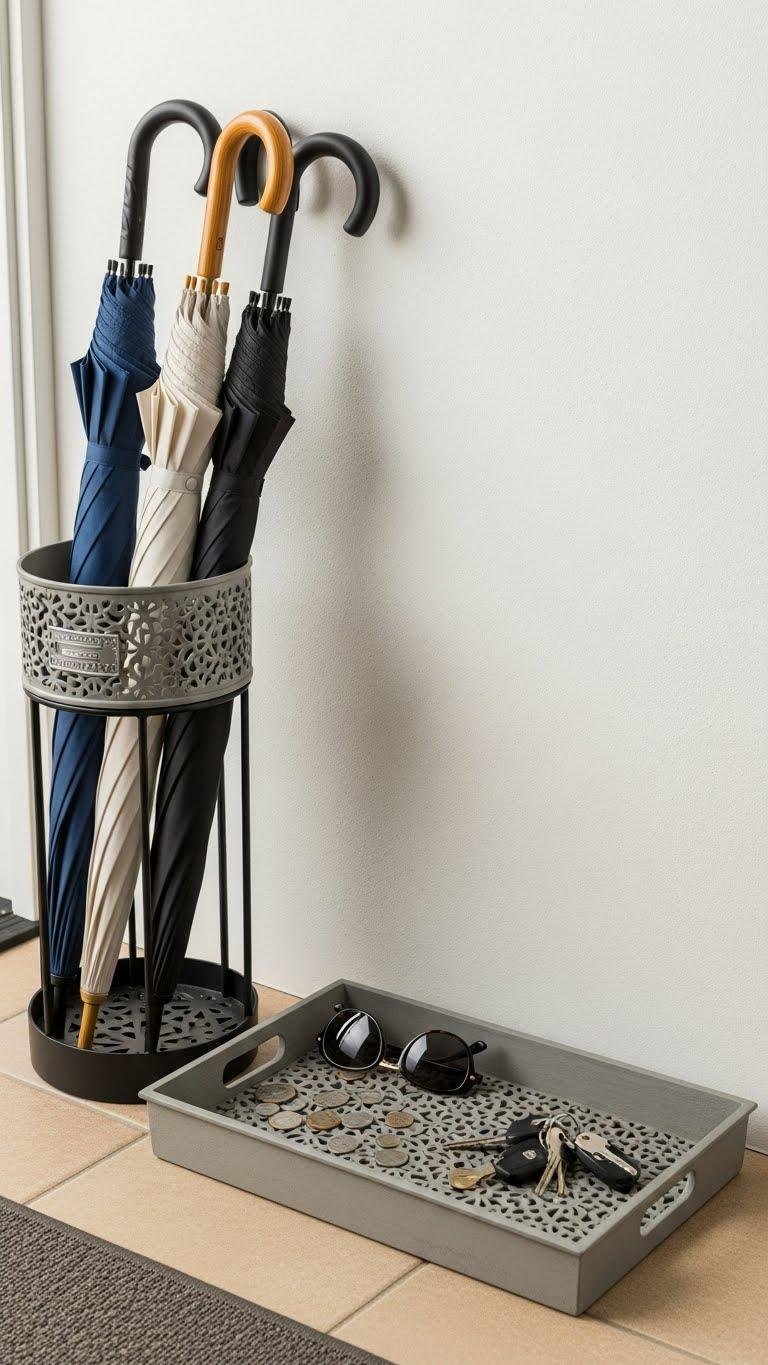
Paragraphs
Designate Baskets for Each Family Member
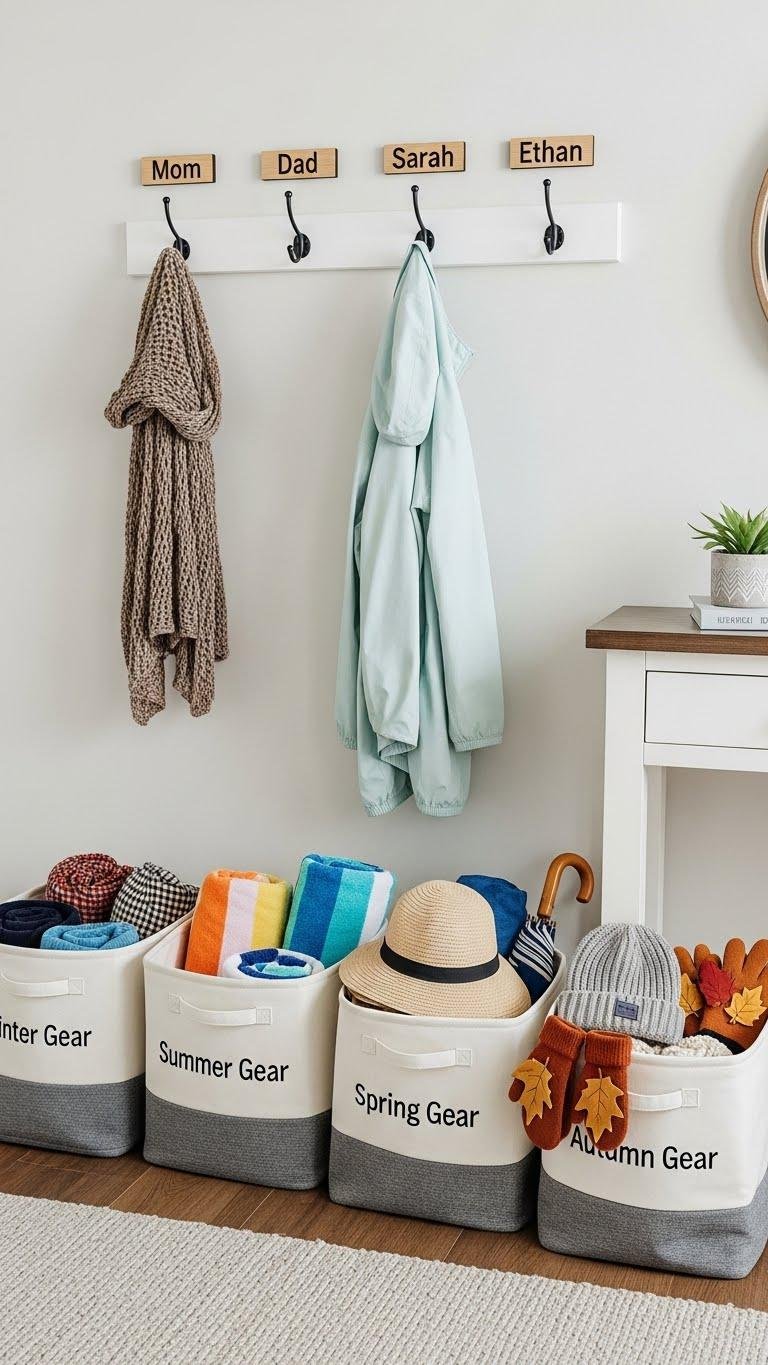
When you give each family member a clearly labeled basket by the door, everyone’s items have a predictable home so mornings move faster.
Assign personal baskets for keys, masks, and chargers; tuck seasonal gear in labeled laundry baskets for quick swaps. You’ll reduce decision fatigue, keep clutter contained, and reclaim time.
Rotate and empty baskets weekly to maintain freedom and order.
Incorporate Low Hooks and Bins for Kids

Lower hooks and labeled bins give kids a predictable spot for backpacks, coats, and shoes so you can cut down on morning meltdowns and lost items.
Mount child sized pegs at reachable heights, pair each with a labeled bin or toy baskets for small gear. Teach simple routines: hang, bin, and grab. Consistency builds independence and frees your time.
Implement a Seasonal Rotation System for Outerwear
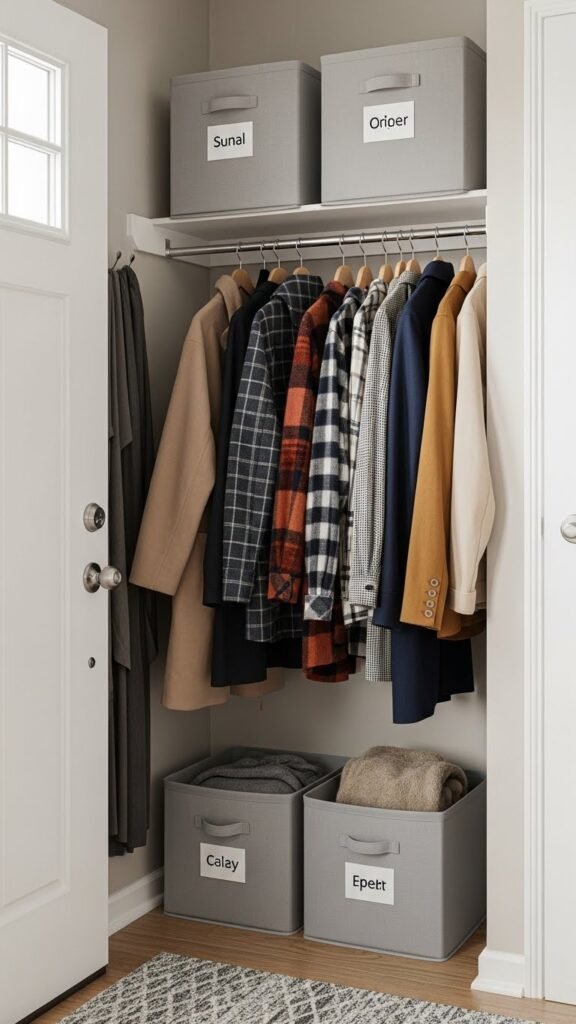
Rotating outerwear seasonally keeps your entryway clutter-free and makes it easy to grab the right layers. You designate a storage bin for off-season coats, add seasonal labeling, and relocate them to a closet or attic.
Keep current-season pieces accessible, check weather proofing on raincoats and jackets, repair zippers, and refresh hangers. Schedule two swaps yearly to stay streamlined and free.
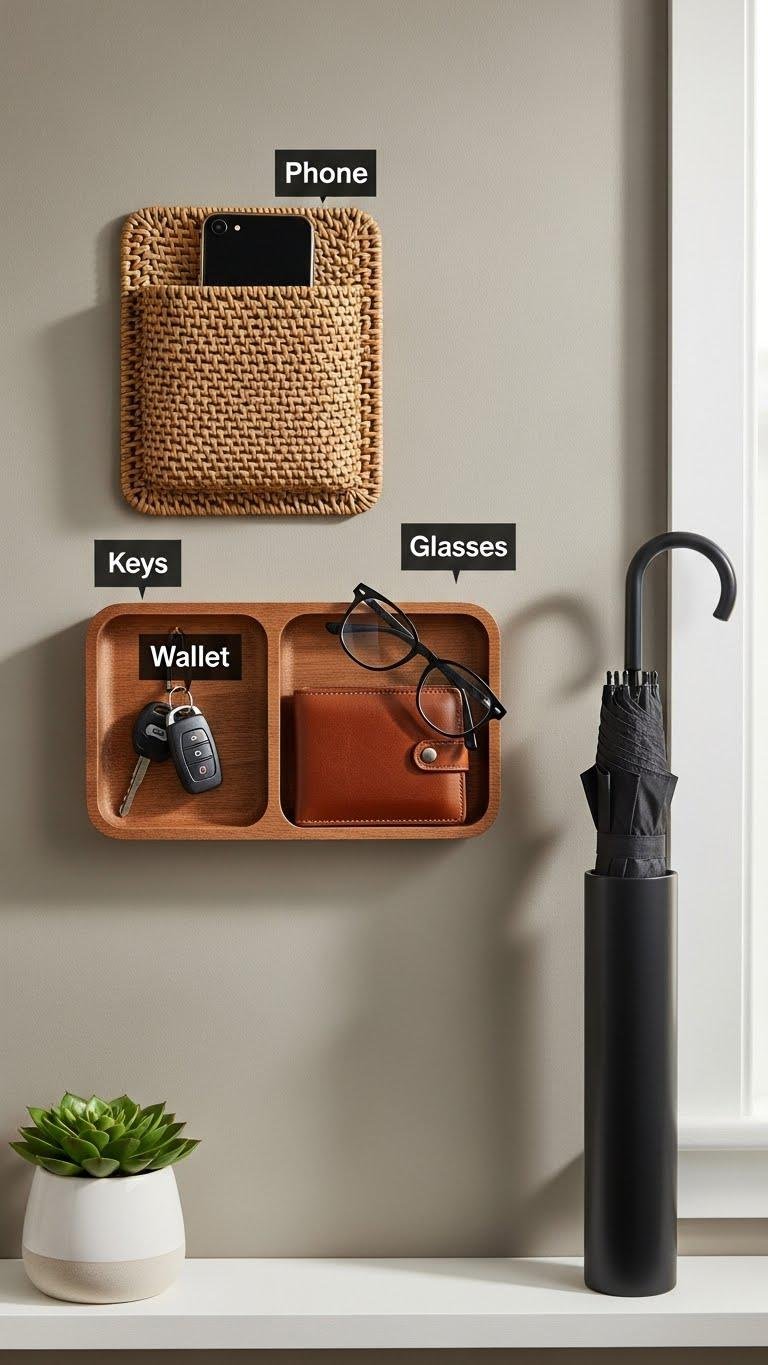
Keep Daily Essentials Visible and Within Reach
Paragraphs
Use Slim Shoe Racks to Maximize Narrow Spaces
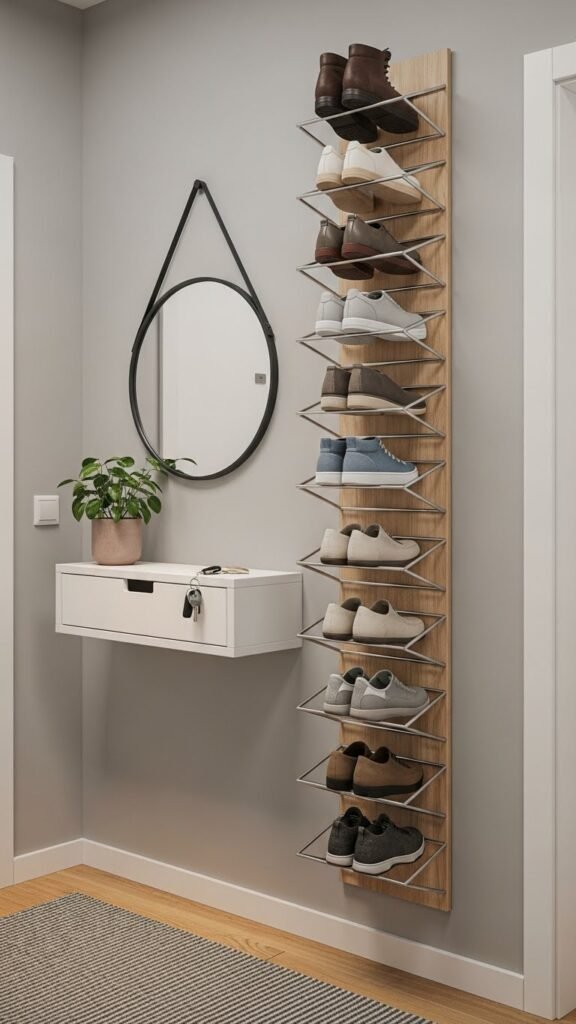
Once your daily essentials have a fixed spot, make the most of tight entryways by choosing slim shoe racks that fit narrow footprints without sacrificing capacity.
You’ll stack space saving footwear vertically or on staggered shelves, reclaiming floor area for movement. Measure your entry, pick adjustable tiers, and anchor units for stability.
This keeps shoes orderly, accessible, and your entryway feeling open and freeing.
Combine Coat Rack and Shoe Storage in One Unit
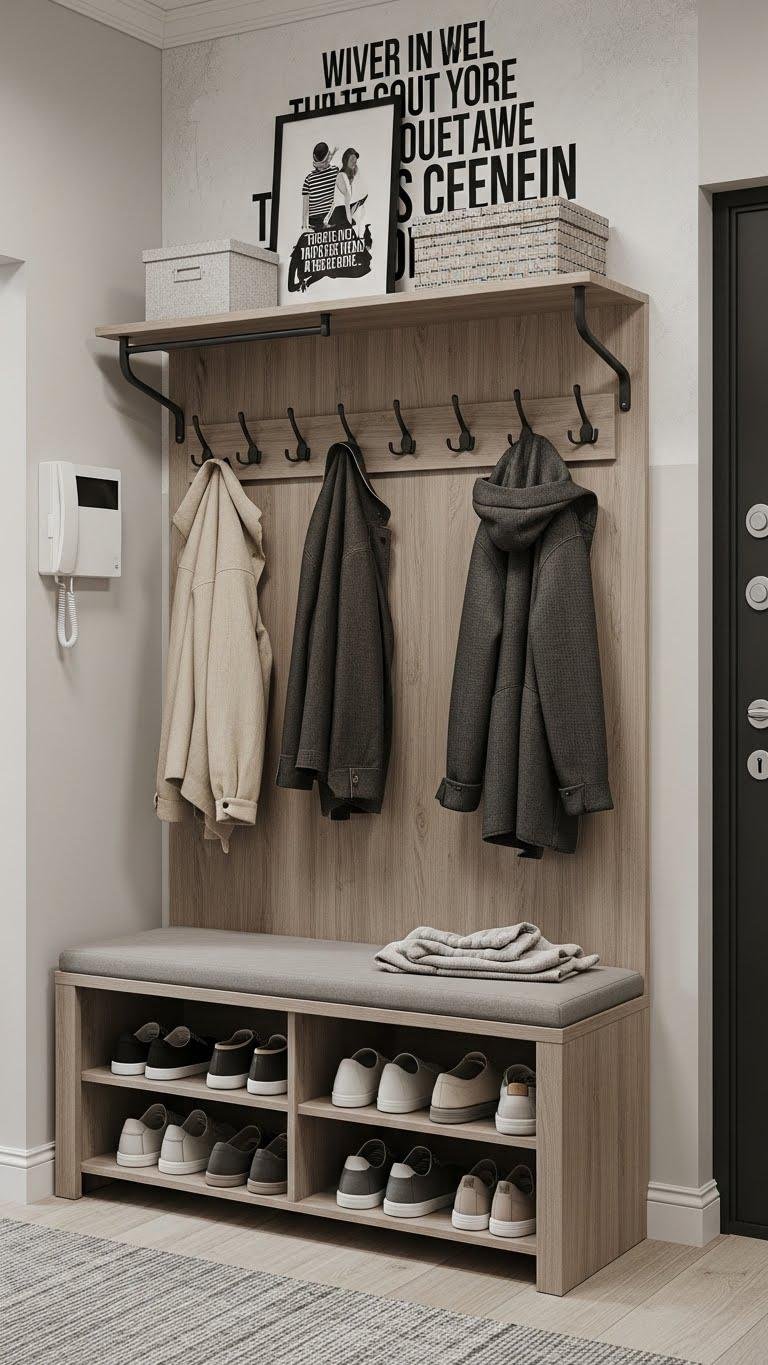
When you pair hanging space with shoe storage in a single unit, you cut clutter and streamline your morning routine.
Choose a modular unit that stacks shelves beneath hooks, so you grab coats and shoes in one motion. Add modular lighting to brighten choices and an entryway mural above to inspire departure. Mount securely, assign zones, and keep daily items within reach.
Employ Clear Containers for Pet and Hobby Gear
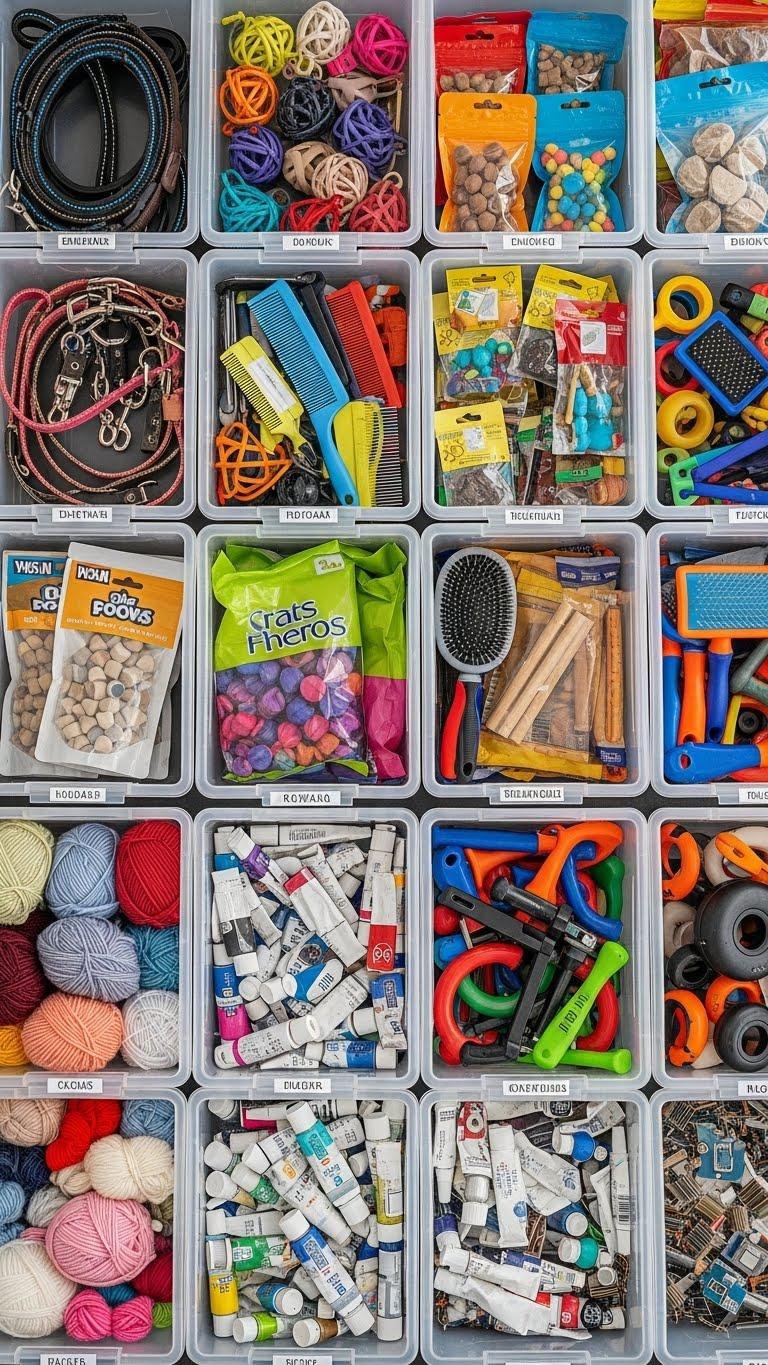
Keep pet and hobby gear visible and grab-ready by storing them in clear, labeled containers you can stack or slide onto shelves. You’ll sort items by use: leashes, treats, grooming tools in one clear bins section; toys, craft supplies, spare parts in hobby totes.
Label fronts, group by frequency, and keep a quick-access shelf for daily essentials so departure stays effortless and free.
Limit Entryway Storage to Everyday Items Only
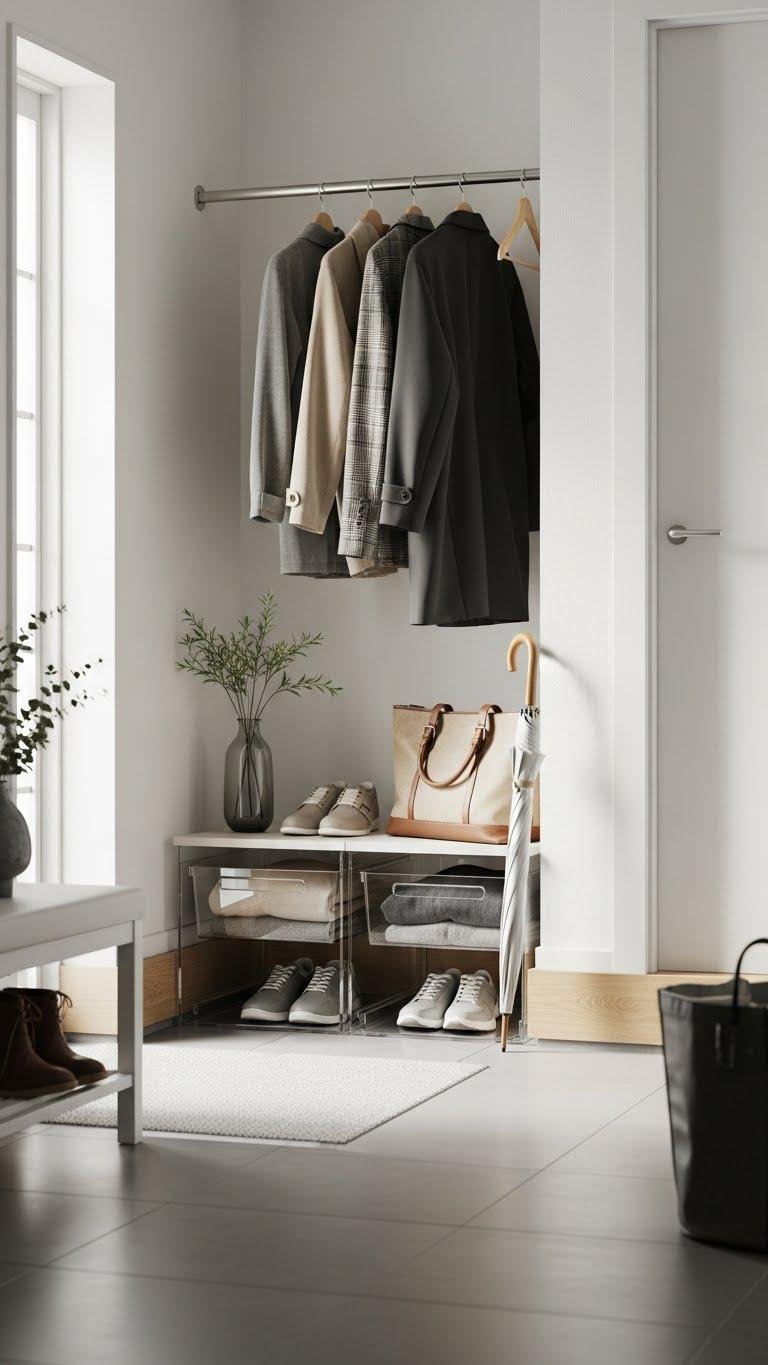
Storing pet and hobby supplies in clear bins makes it obvious which items you reach for every day, so use that clarity to pare down what lives in the entryway. Keep only daily essentials and minimalist essentials you use leaving or returning home: coats, shoes, a bag, umbrella. Store seasonal or bulky items elsewhere.
Review weekly and remove anything you didn’t use.
Add a Small Console Table With Drawer for Keys
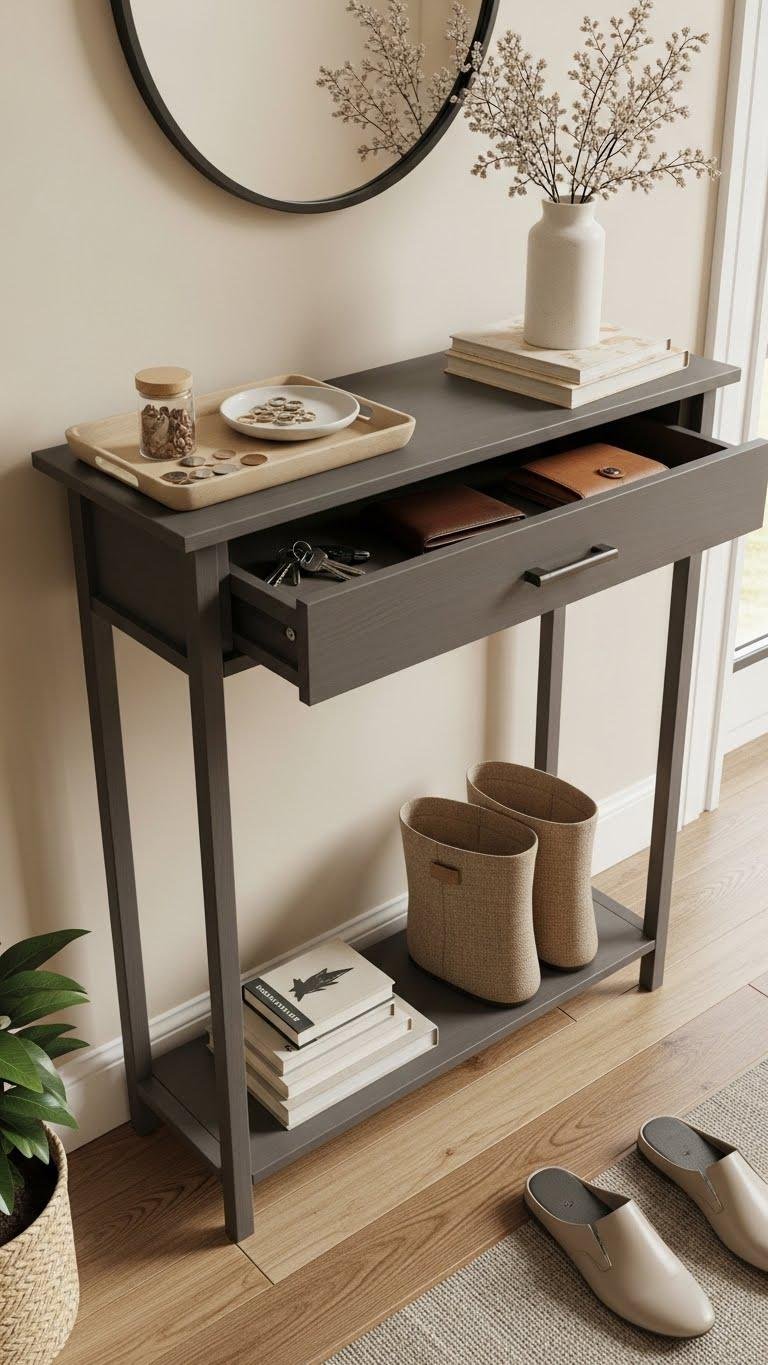
Add a slim console table with a drawer to anchor your entryway and give your keys a consistent home. Pick a narrow console console that fits your path, then reserve the drawer for keys, wallet, and daily essentials.
Keep top drawer decor minimal—tray for loose change, small dish for rings. Empty weekly, so you leave and return with ease and freedom.
Use Vertical Wall Storage to Save Floor Space
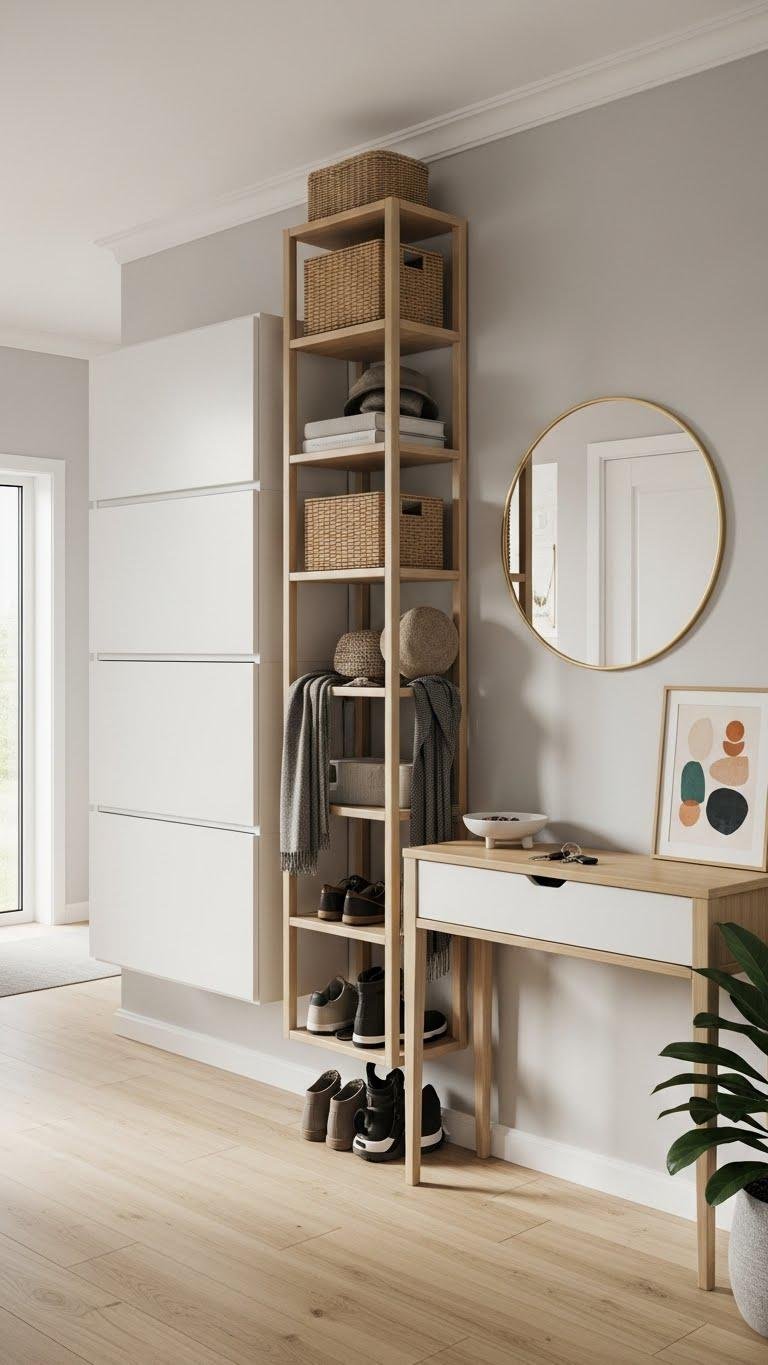
Once your console table has a dedicated drawer for daily items, look upward to reclaim floor space by using vertical wall storage. Install vertical shelving to stack baskets, shoes, and seasonal gear.
Add wall mounted cabinets for concealed clutter and a streamlined look. You’ll free movement, simplify entry routines, and keep essentials reachable without sacrificing openness or your sense of freedom.
Create a Mail and Paper Sorting Station
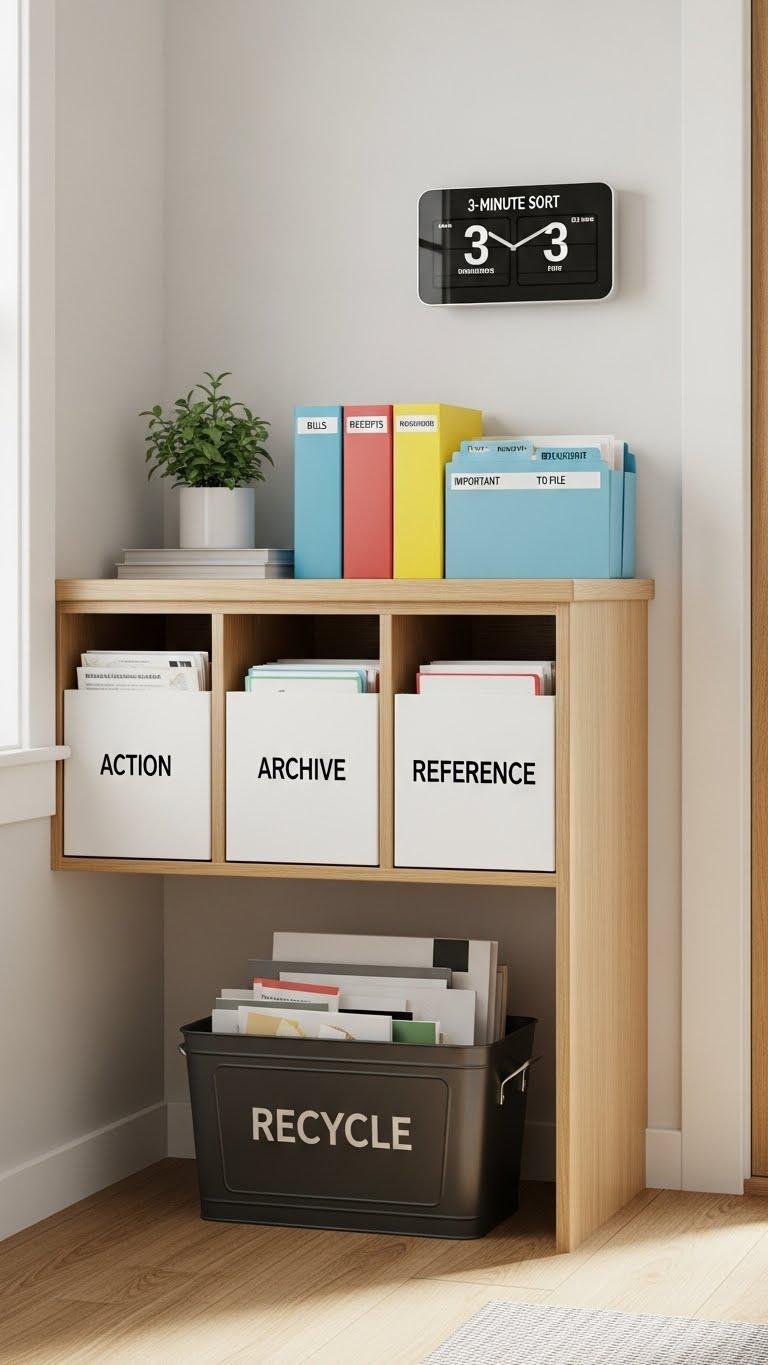
Set up a dedicated mail and paper sorting station near the entry so you can deal with envelopes, bills, and forms the moment you come in.
Create clear inbox zones for action, archive, and reference. Tackle urgent sorting first, label folders for fast document labeling, and keep a bin for paper recycling.
Commit to a daily three-minute habit to stay free and uncluttered.
Install a Mirror With Hidden Storage Behind It
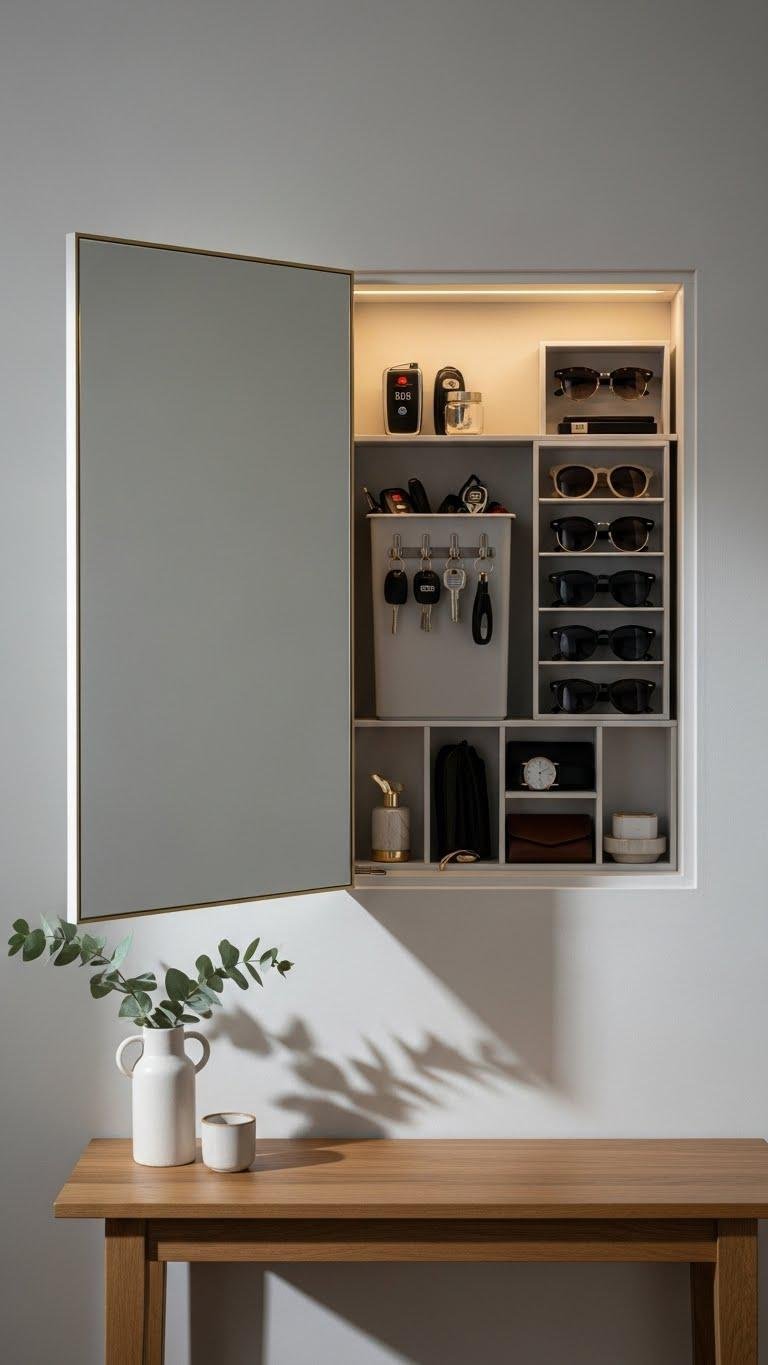
When you hang a mirror with hidden storage behind it, you get a sleek checking point and discreet space for keys, sunglasses, and small essentials without eating up floor or drawer room.
Mount a mirrored jewelry storage or hidden medicine cabinet at eye level, organize items on labeled shelves, and use shallow bins. You’ll streamline exits and reclaim visual calm.
Use Trays or Catchalls for Loose Accessories
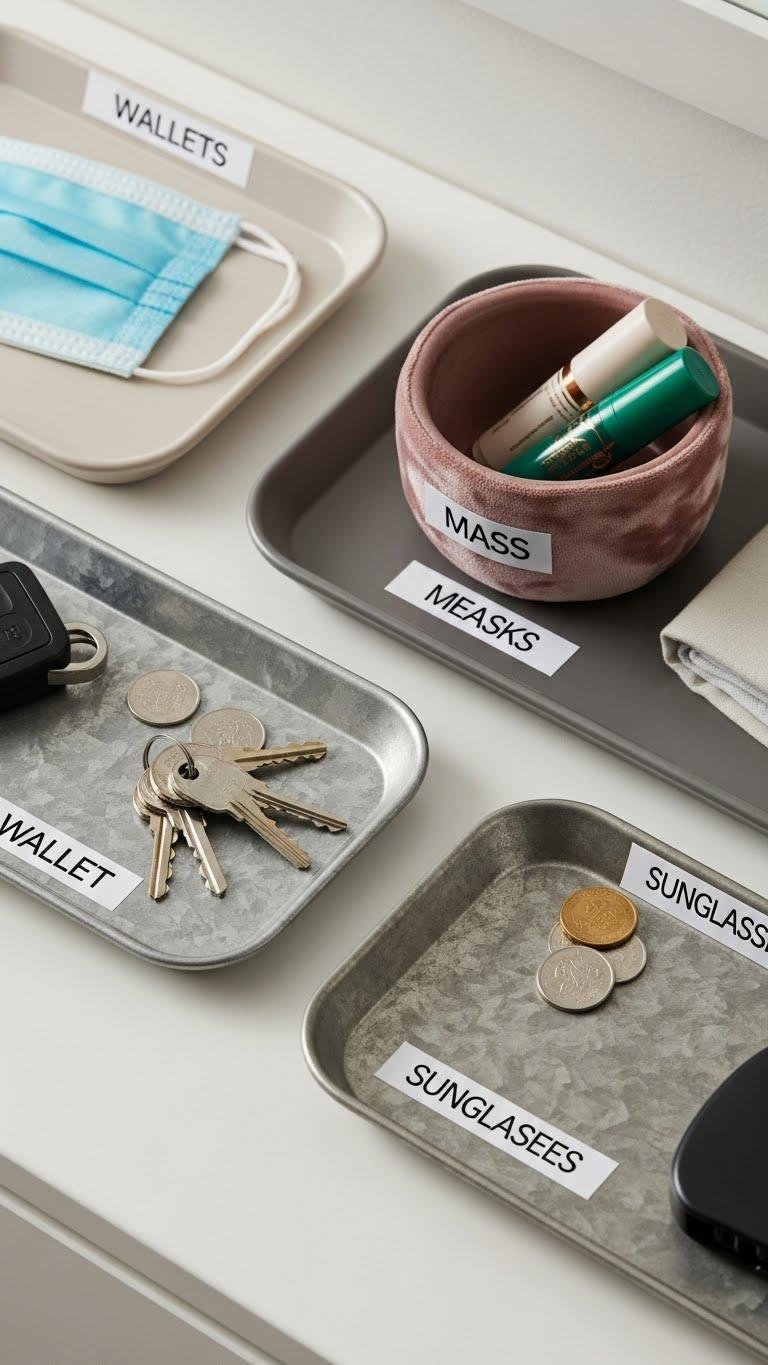
A few shallow trays or catchalls can keep keys, coins, lip balm, and loose change from turning your entryway into clutter; place one near the door so you drop items in as you come and go.
Choose a metal tray for durability and a velvet bowl for delicate items. Label spots for wallets, masks, and sunglasses so you grab essentials quickly and stay free.
Regularly Declutter and Reassess Entryway Needs
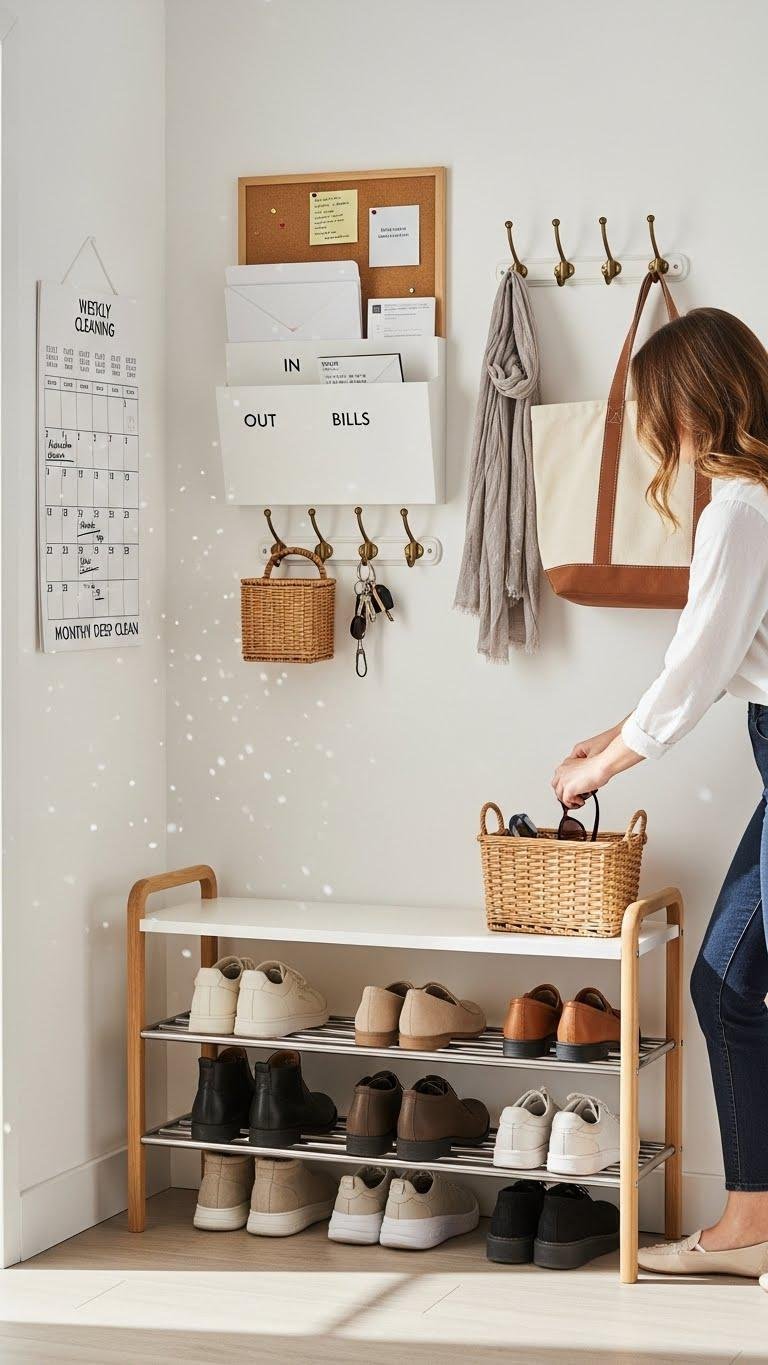
Regularly check and clear your entryway so clutter doesn’t build up unnoticed; schedule a quick 5–10 minute sweep weekly to remove stray mail, shoes, and accessories, and a deeper monthly review to reassess storage needs and discard or relocate items you never use.
Then run a needs audit, perform a seasonal purge, donate or recycle extras, and adjust solutions to keep freedom and order.
Make the Entryway Welcoming Yet Functional
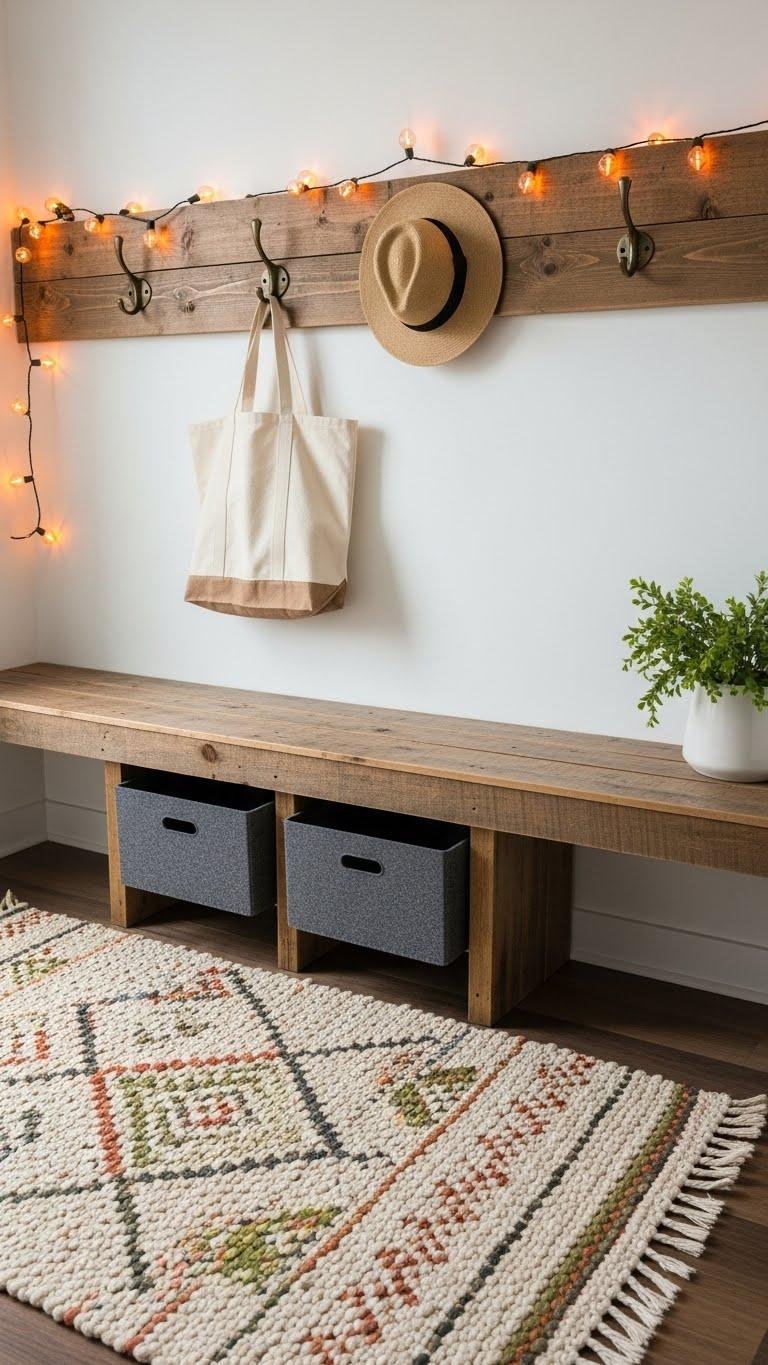
After you clear out clutter and fine-tune storage, focus on making the entryway both inviting and useful so it serves people, not piles.
Keep a clear landing zone, add hooks and a slim bench with hidden bins, and use textured rugs to define the space. Install seasonal lighting for warmth and safety. Decide what stays, what goes, and keep routines simple.