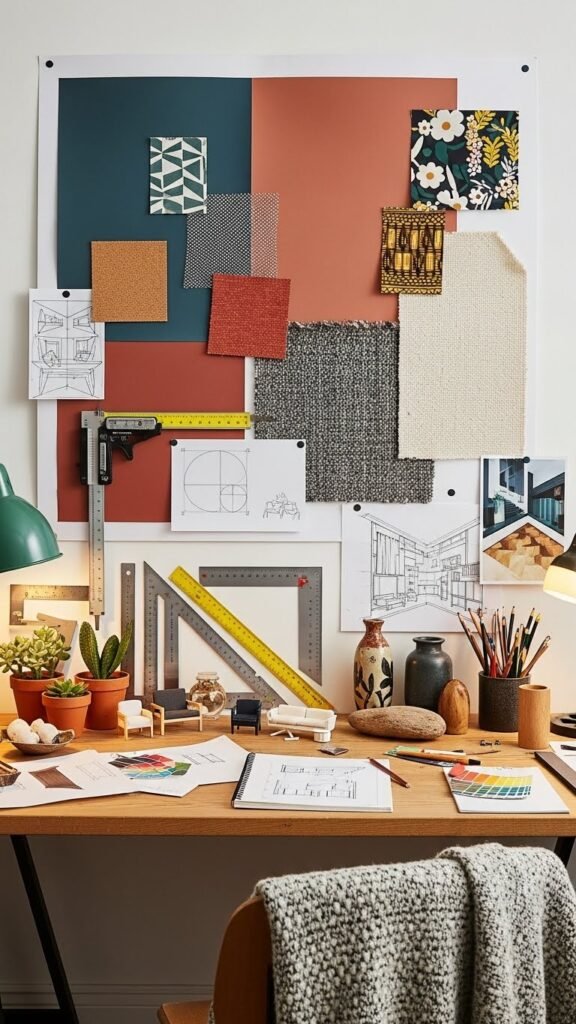
You’ll start by setting a clear mood and purpose for each room, then build a cohesive palette and lighting plan that actually works with your furniture and flow. I’ll show practical rules for scale, focal points, texture layering, and smart repetition so your home looks intentional—not staged. Keep these guidelines in your toolkit and you’ll solve the common styling mistakes that hurt both comfort and resale value.
Define the Mood for Each Room

When you start styling a room, decide the mood before you pick furniture or paint — it guides every choice and keeps the outcome cohesive.
You’ll map purpose, use color psychology to set energy, and layer sensory cues—textures, scent, light—to match intent.
Choose bold accents for play, muted tones for calm, and leave flexible zones so your space breathes and adapts to freedom.
Establish a Cohesive Color Cadence

Now that you’ve set each room’s mood, let color become the language that carries it through your home. You’ll map deliberate color shifts between spaces, choosing anchor hues and accent repeats that feel effortless.
Use palette sequencing to link focal points, hallways, and upholsteries, keeping contrasts intentional so movement feels liberating, not chaotic, and each room reads as part of a confident, cohesive whole.
Follow the 60/30/10 Color Rule
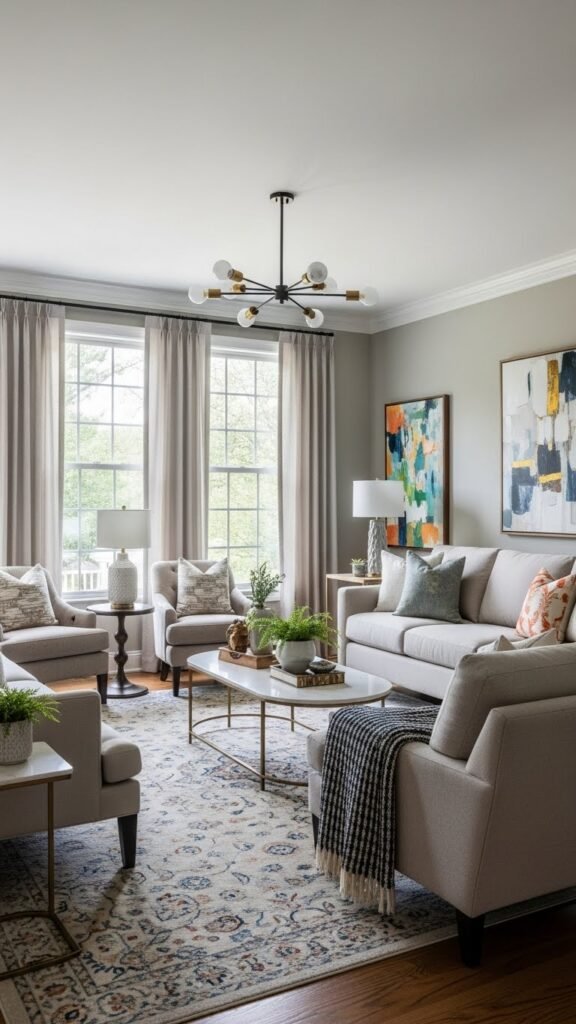
If you want rooms to feel intentionally balanced, follow the 60/30/10 rule: pick one dominant hue for about 60% of the space (walls, large rugs, major furniture), a secondary color at roughly 30% (sofas, curtains, painted trim or an accent wall), and an accent color at 10% (throws, art, hardware, light fixtures).
Trust undertone selection, use sampler swaps, and edit boldly.
Create Repetition for Visual Rhythm
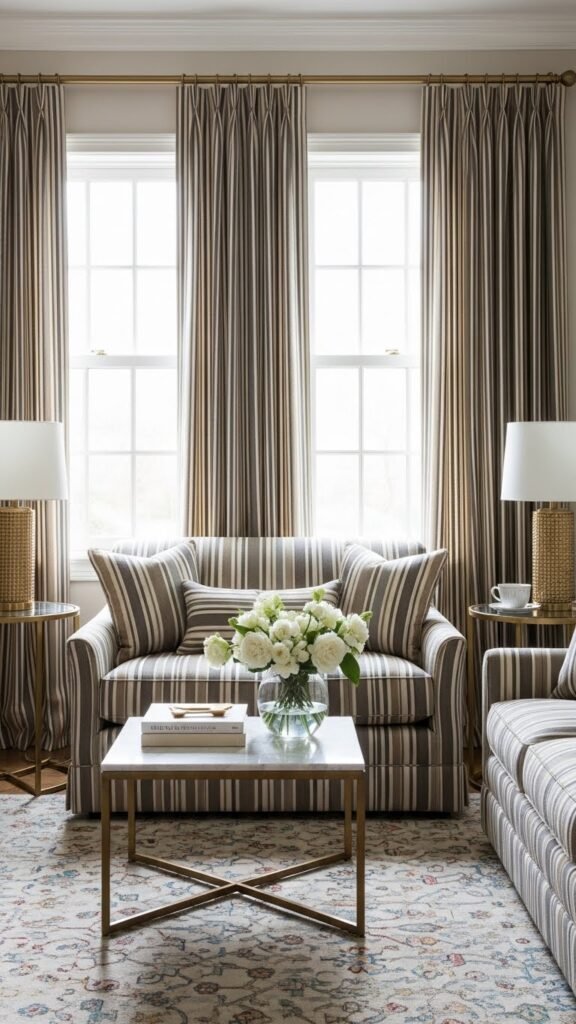
Often you’ll want to repeat key elements—colors, materials, shapes—to give a room a steady visual beat that guides the eye.
Use rhythmic textiles and repeated motifs to create flow: echo a stripe in cushions, curtains, and a rug, mirror a brass finish on lamps and hardware, and vary scale so repetition feels intentional, lively, and freeing rather than rigid.
Choose a Clear Focal Point
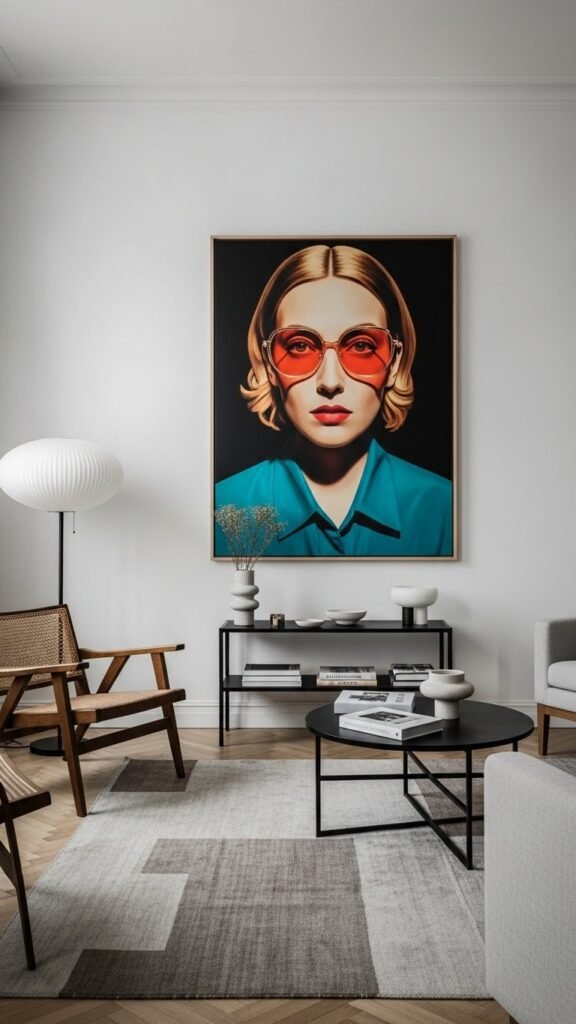
Repeating elements creates flow, but you still want the eye to land somewhere—pick one strong focal point and build everything around it. You’ll make a clear visual hierarchy decision: choose a bold artwork, sculptural lamp, or statement rug as your centerpiece selection.
Keep surroundings restrained, use contrast and scale to support it, and commit so the room feels intentional and free, not cluttered.
Arrange Furniture to Emphasize the Focal Area
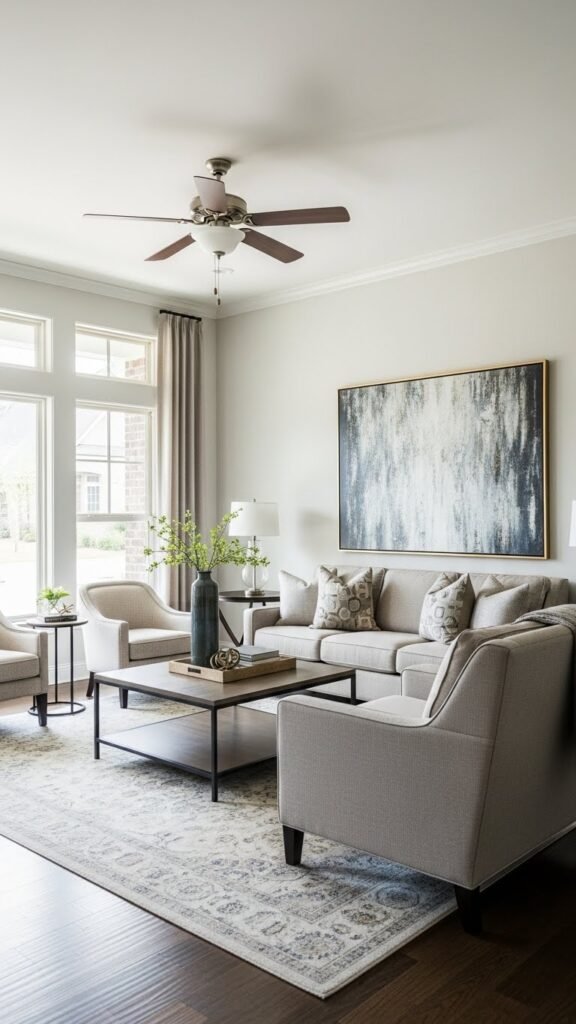
Anchor your seating and major pieces toward the focal point so every view feels intentional: angle the sofa to face the artwork or rug, place a pair of chairs to create a conversational triangle, and keep pathways clear by floating furniture at least 18–24 inches from walls where possible.
Then refine traffic flow with sightlines mapping, balance scale, and leave breathing room to support relaxed, liberated living.
Hang Art at Eye Level

Think of eye level as the default measurement for hanging art: aim for the center of your artwork to sit about 57–60 inches from the floor so it reads naturally whether you’re standing or seated. You’ll balance scale and spacing, create cohesive gallery clusters, and lean into asymmetric arrangements for personality. Measure, mark, and trust your eye to place pieces where they free the room and feel intentional.
Use Color and Contrast to Highlight Features
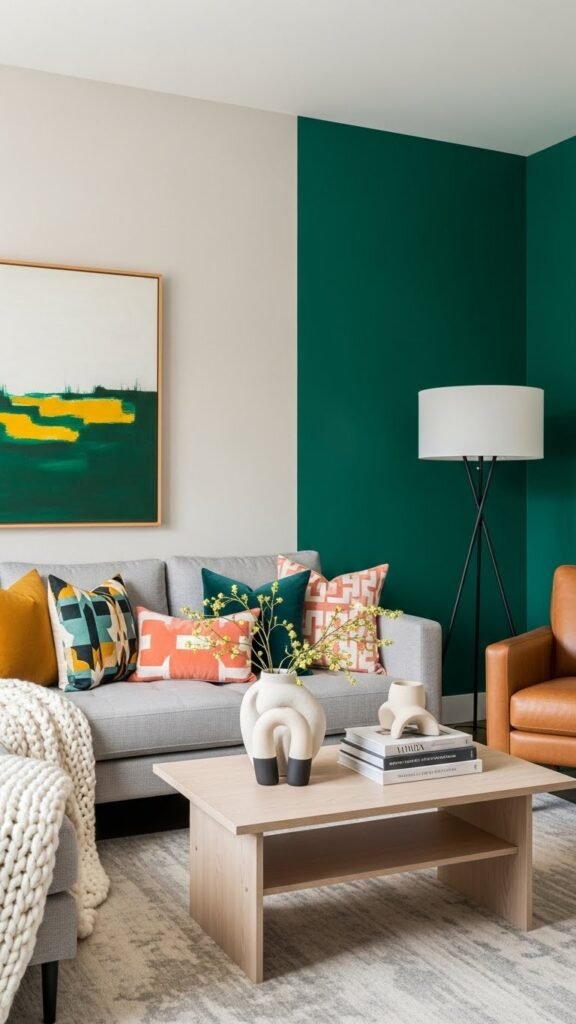
Once your art sits at the right height, use color and contrast to make key pieces pop and guide the eye around the room.
Choose accent walls sparingly, pick bold hues that reflect your personality, and layer contrast fabrics on seating and pillows. Balance vivid spots with neutral zones so each feature breathes. You’ll create a stylish, freeing space that feels intentional and modern.
Layer Ambient, Task, and Accent Lighting
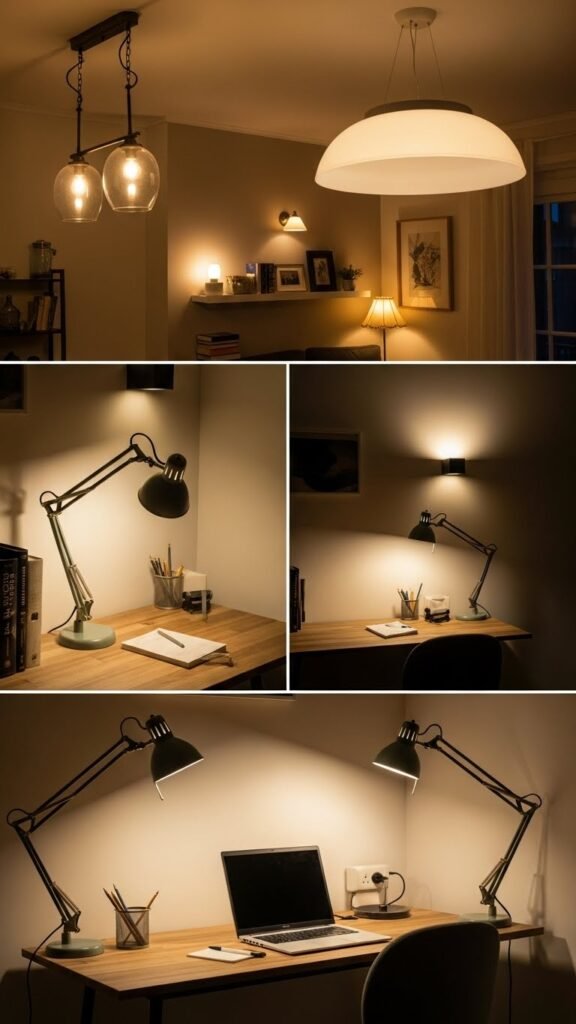
When you plan lighting, layer ambient, task, and accent sources so every corner has purpose and flexibility.
You’ll combine warm layers for cozy evenings with brighter task lights for work zones, placing layered fixtures—pendants, sconces, and adjustable lamps—where they serve function and drama.
Map zones, pick consistent finishes, and leave room to rearrange so light matches your lifestyle.
Install Dimmers for Mood Control

Often the simplest switch upgrade makes the biggest difference: install dimmers to control light levels, save energy, and instantly change a room’s mood. You’ll choose dimmers compatible with smart switches, match bulb temperatures to activities, and set scenes for reading, dinner, or chilling. Install low-profile knobs or paddle switches, wire carefully or hire an electrician, and embrace flexible lighting that frees your daily rhythm.
Balance Scale and Proportion of Furniture

Because a room feels right when its furniture relates to the space, start by measuring floor area, ceiling height, and traffic paths so you pick pieces that sit in proportion rather than dominate or disappear.
You’ll create scale harmony by mixing heights and depths, choosing proportional seating for conversation, and leaving breathing room. Trust bold, flexible choices that respect space and movement.
Size Rugs and Curtains to the Room
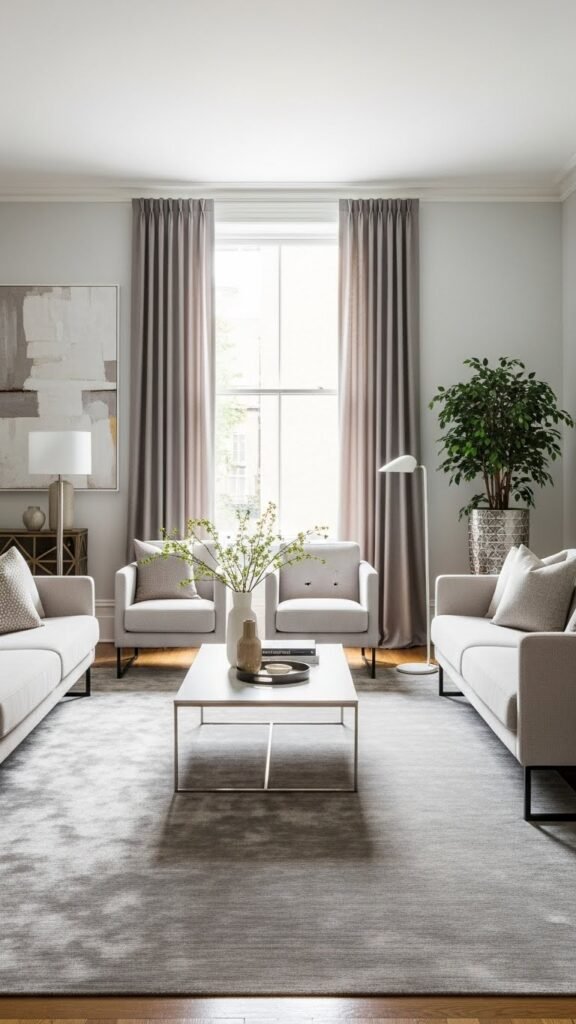
If you want your room to feel anchored and proportionate, size rugs and curtains to the actual scale of the space rather than the furniture alone.
You’ll choose scale selection to make floors feel expansive and hang curtains high and wide for ideal curtain proportion. Aim for measurable margins: rug under key legs, curtains grazing the floor, creating freedom without clutter or gimmicks.
Mix Shapes and Textures to Avoid Predictability

Regularly breaking up predictable lines with varied shapes and textures keeps a room visually interesting and grounded. You’ll mix rounded furniture with angular pieces, add asymmetrical accents like staggered shelving, and layer tactile contrasts—linen, boucle, metal—to create freedom in design.
Keep scale balanced, repeat a motif twice, and swap one bold texture to refresh the look without feeling staged or constrained.
Maintain Natural Traffic Flow and Negative Space
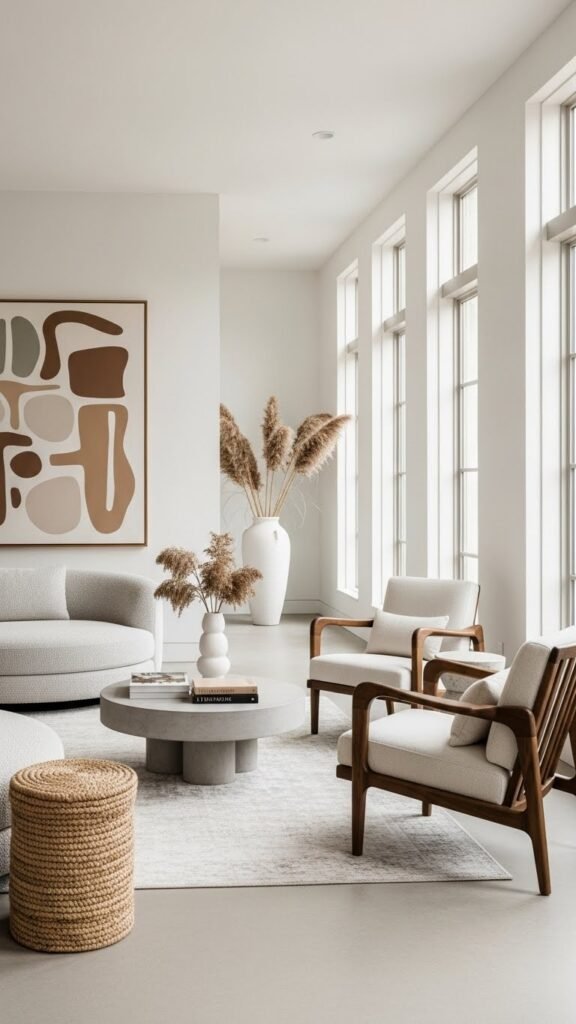
Edit Mercilessly to Remove Clutter

Neutralize Palettes to Appeal to More Buyers
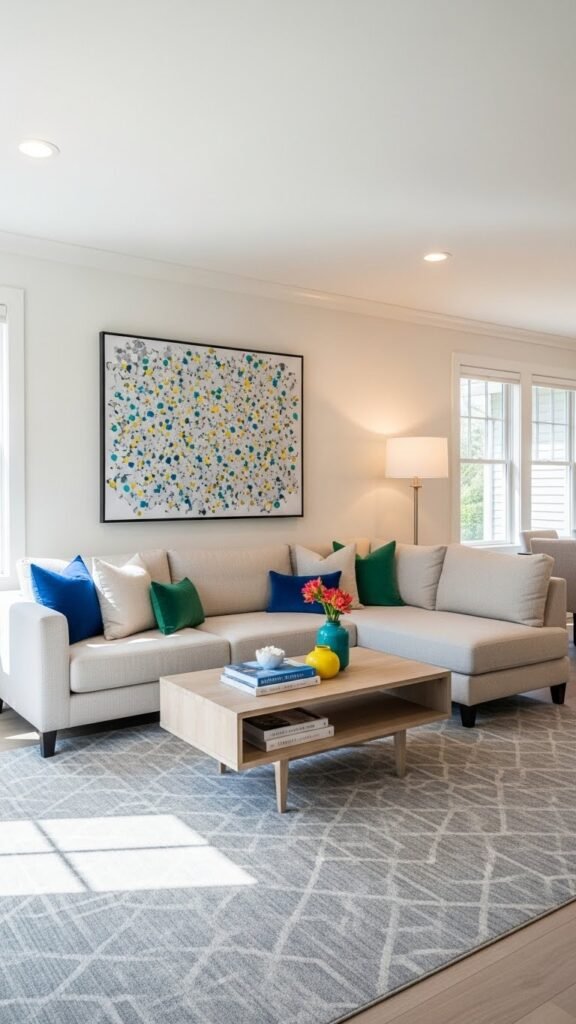
Often buyers picture themselves in a home, so neutralizing your palette helps more people see that potential; strip strong colors back to soft whites, warm beiges, greys, or muted greiges and reserve bold hues for small, easily changed accents. You’ll choose soft neutrals that highlight light and scale, apply buyer psychology to room flow, and make targeted swaps that feel freeing and modern.
De-personalize While Keeping Warmth
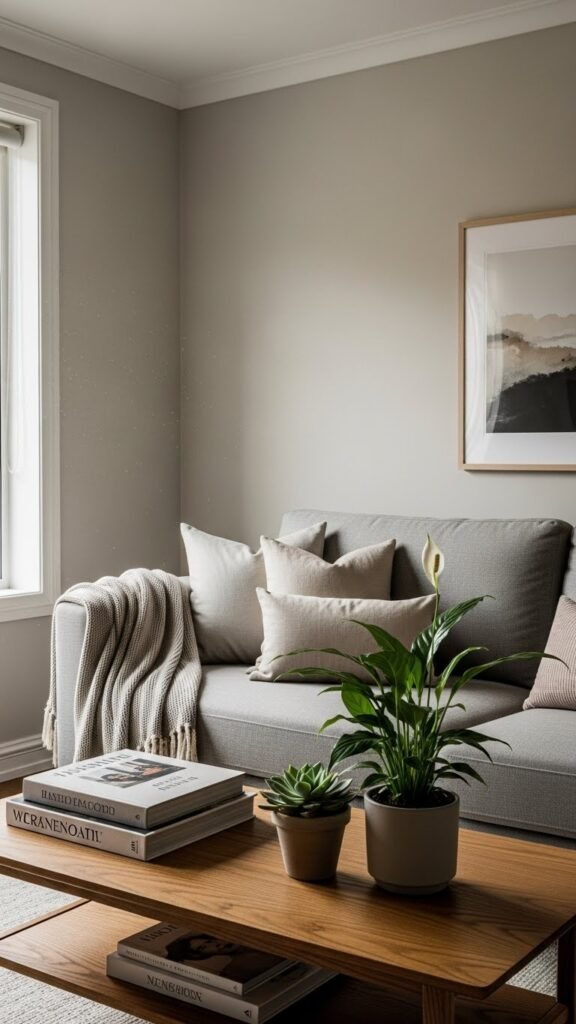
Stripping away personal clutter doesn’t mean making your home feel cold — it means editing with intent so buyers can see themselves there. You’ll replace photo-heavy surfaces with soft neutrals, layered textiles, and a few sculptural objects.
Keep personality via curated greenery, artful books, and tactile throws. Aim for openness and calm so buyers imagine freedom without erasing warmth.
Style Surfaces Like a Model Home
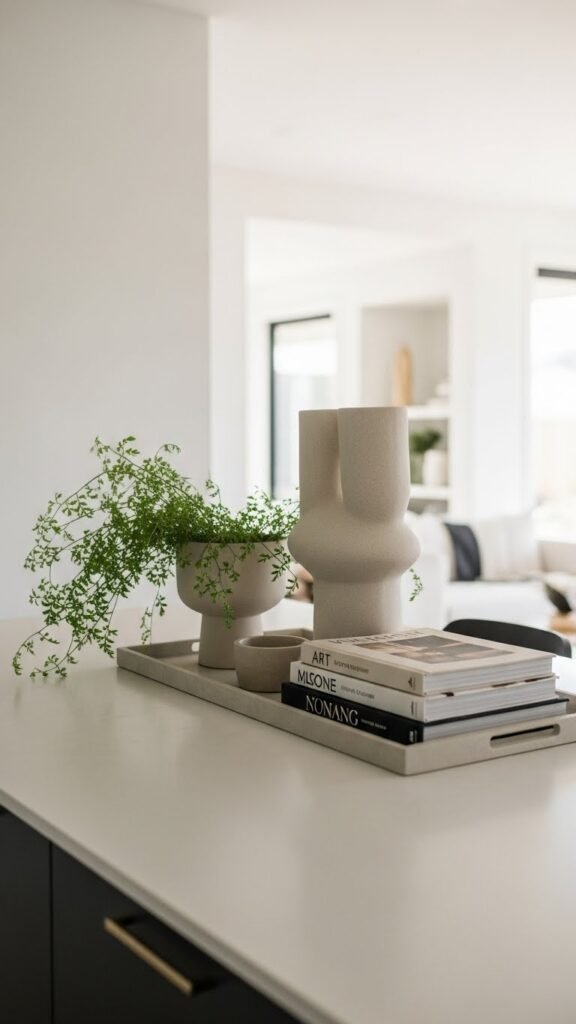
Think of every countertop, table and shelf as a mini set you’re directing — clear the clutter, then arrange a few purposeful layers that read modern and inviting.
You’ll choose matte finishes for calm, cohesive surfaces, group items on styled trays, and keep scale balanced: one taller sculptural piece, a low stack of books, and one organic element.
Edit until it breathes.
Use Seasonal Accessories for Easy Refreshes

Seasonally swapping a few well-chosen accessories is the quickest way to refresh a room without a full redesign.
You’ll rotate textiles like cushion covers and throws, add eco friendly accents—wicker trays, beeswax candles—and shift holiday neutral decor for seamless changes.
Don’t forget seasonal scenting with subtle oils.
Keep storage simple so swaps stay effortless and the space feels liberating, not cluttered.
Incorporate Personal Items Subtly
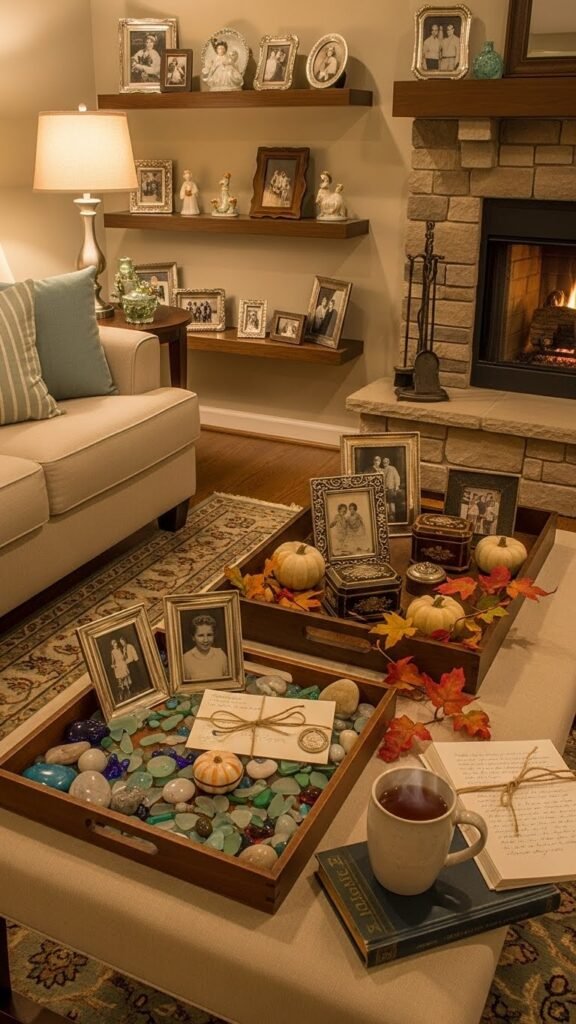
While you want your home to look curated, personal items should feel intentional rather than tossed on display; pick a few meaningful pieces and place them where they can be seen without overwhelming the room.
You’ll create heirloom vignettes on shelves or consoles, and arrange memory clusters in small frames or trays. Keep scale balanced, rotate items seasonally, and let each piece breathe.
Be Bold With Texture and Pattern Layering
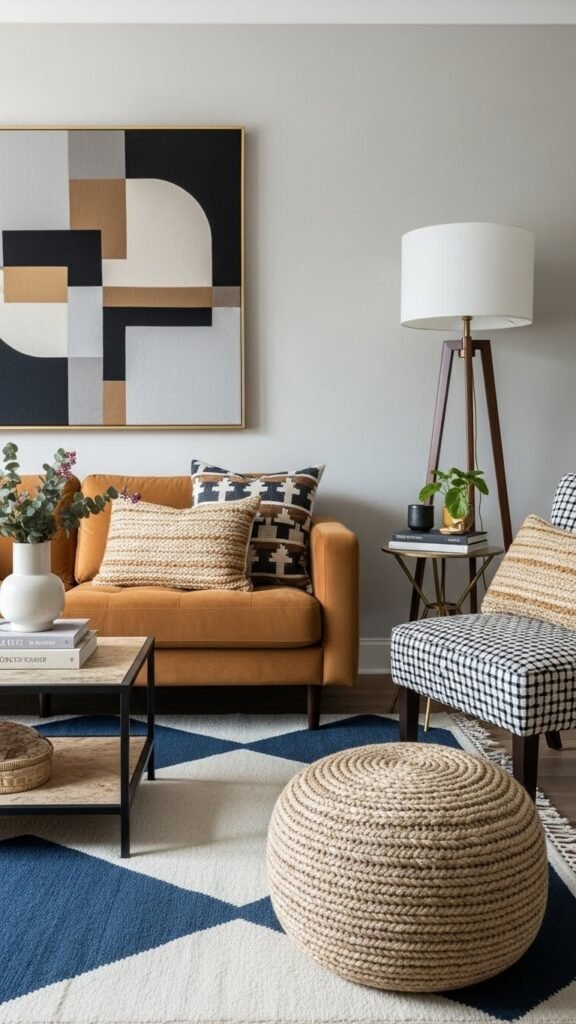
Layer in texture and pattern confidently to give a room depth and personality without it feeling chaotic. You’ll mix tactile contrasts—velvet, woven, matte—then balance prints by repeating a color palette.
Play with unexpected scales: large geometrics with tiny florals, bold rug anchors, subtle cushions. Keep proportions intentional, limit competing hues, and let one element command attention so the look feels free, curated, and modern.
Test and Adjust Lighting for Every Activity
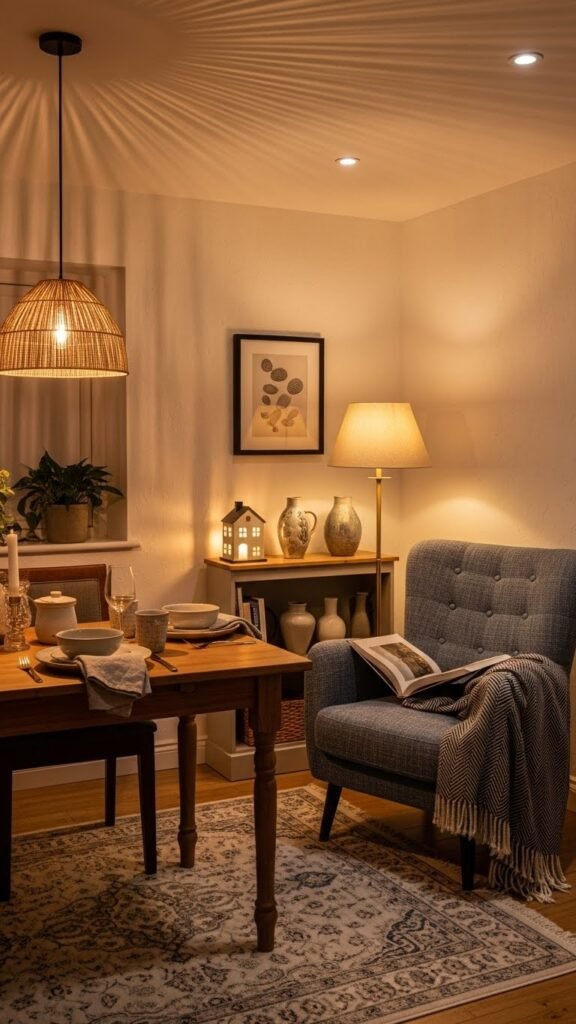
After you’ve nailed texture and pattern, turn the same thoughtful eye to lighting—it’s what lets those surfaces sing at every hour.
You’ll test and adjust brightness for dining, reading, and relaxing, noting how shadows shift.
Move lamps for ideal task placement, layer ambient and accent sources, and choose dimmable fixtures so you can control mood without sacrificing function or the liberating feel of a home that adapts to you.