
You’ll transform rooms by thinking like a lighting pro: layer soft ambient washes with task-focused lamps, add dimmers and tunable whites for instant mood shifts, and tuck accent spots to sculpt focal points. Practical tweaks — from pendant clusters over islands to uplights that banish shadowy corners — make a space feel curated and calm. Keep going and you’ll uncover easy swaps that lift style and function without a full remodel.
Install Layered Lighting Schemes
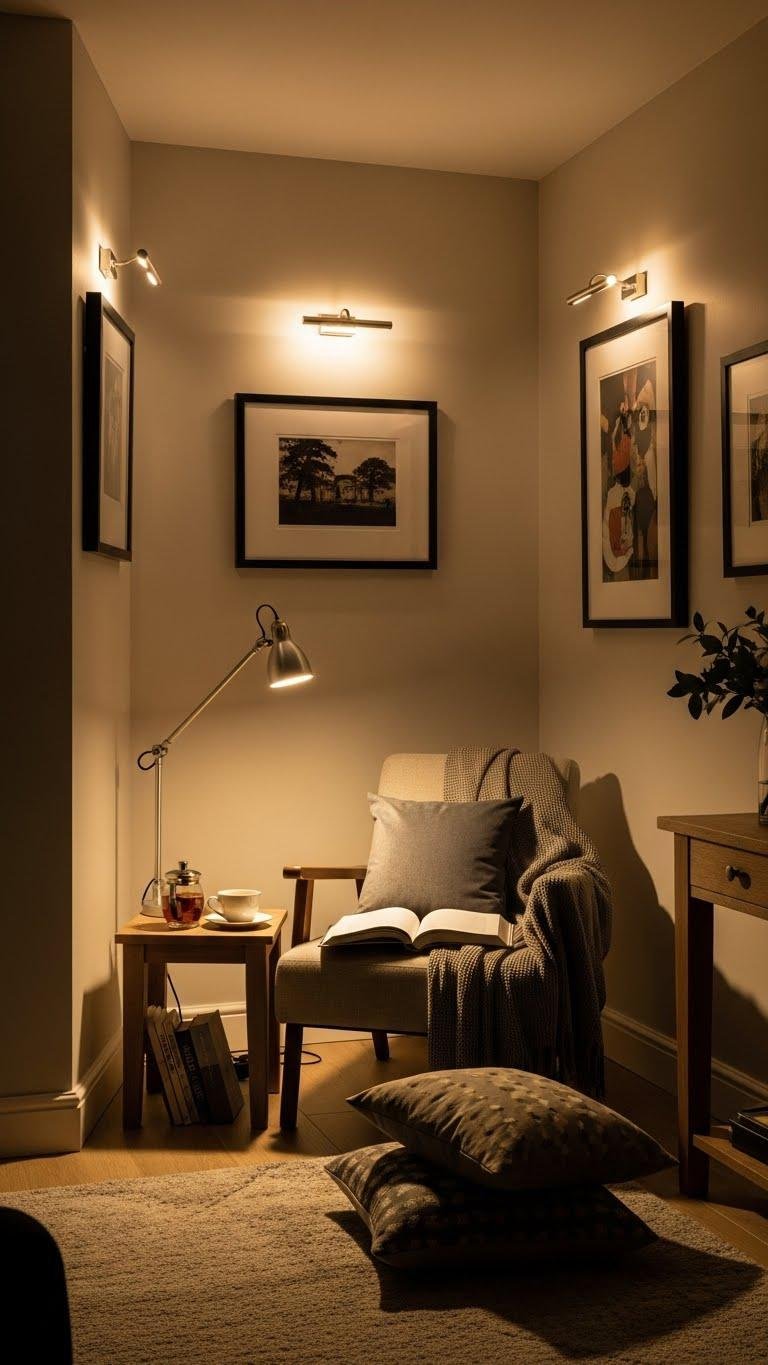
When you layer lighting, you’ll shape how a room feels and functions — not just how it looks. You’ll combine ambient layers with task and accent points so each moment feels intentional.
Use ceiling washes for even, forgiving glow, then add focused sources where you read or create. This lets you move freely through moods, control energy, and make spaces feel both open and intimate.
Add Dimmer Switches Throughout Living Areas
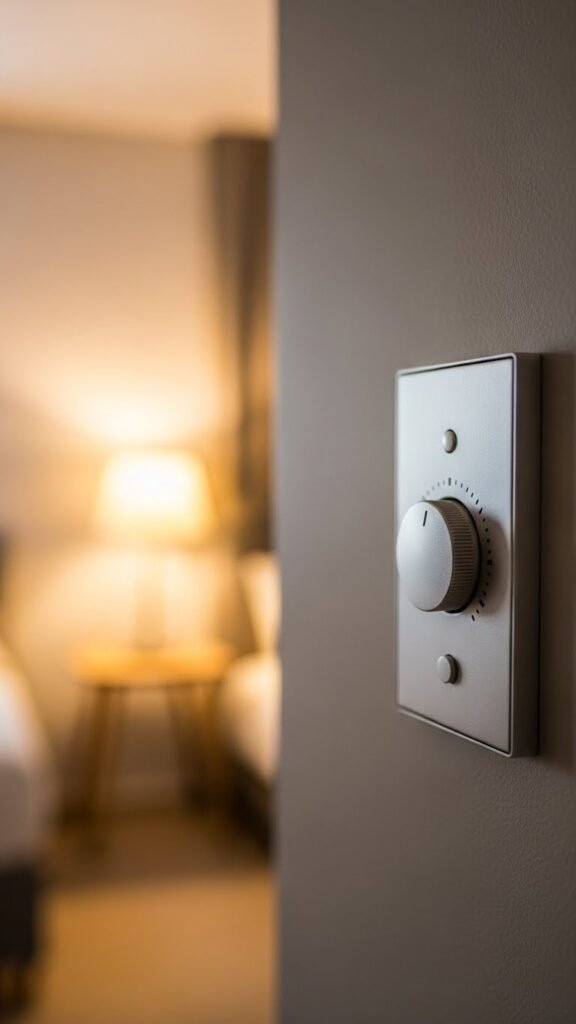
Softening light with a quick twist or tap can change a room’s mood in seconds, so add dimmer switches to give you instant control over ambiance and function.
You’ll want Dimmable Wiring for compatibility and reliability; pair switches with Scene Mapping to preset moods for reading, entertaining, or relaxing. Install strategically across living areas so you freely shape light with precision.
Use Warm Color Temperatures in Lounges and Bedrooms
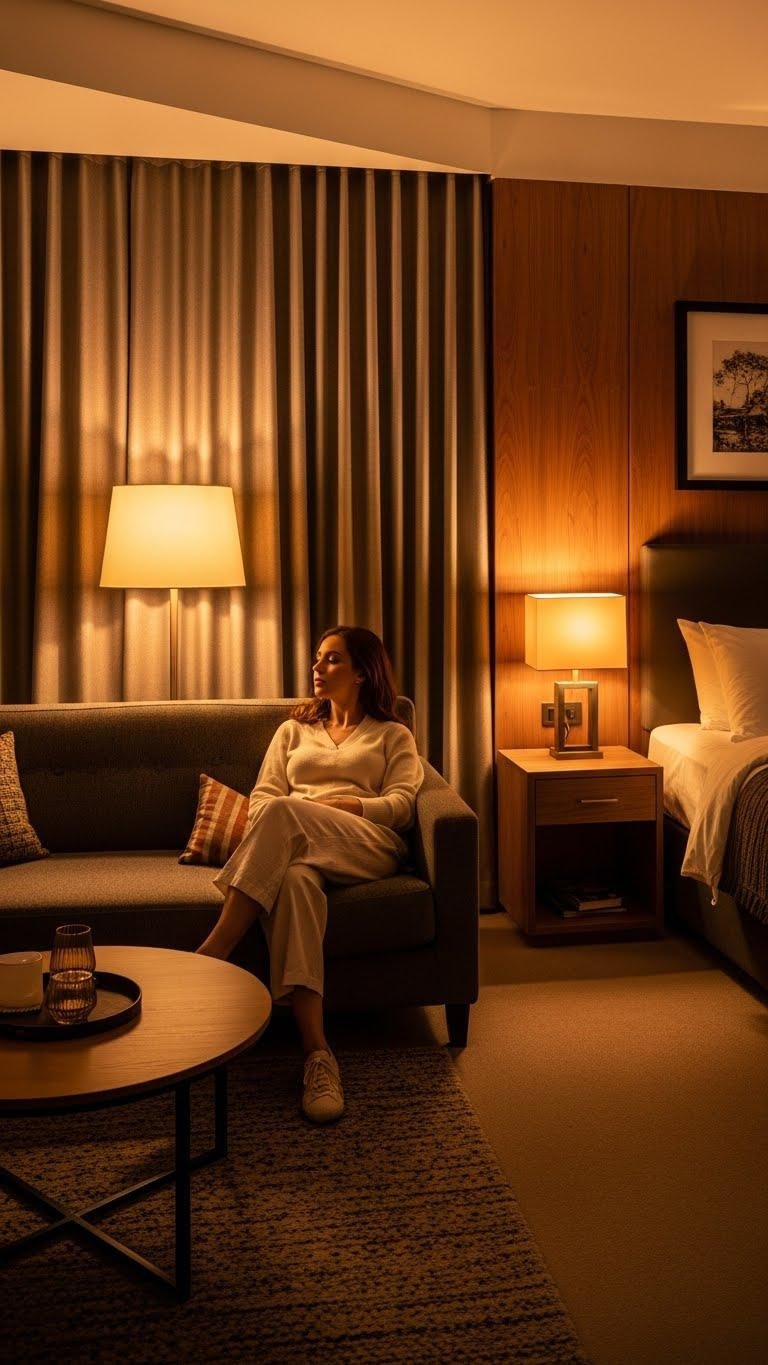
Because your lounge and bedroom are places for winding down, choose warm color temperatures (2700–3000K) to make fabrics, skin tones, and wood finishes feel richer and more inviting. You’ll create a cozy amber glow that soothes and feels liberating, helping you relax.
Opt for sleep friendly bulbs, layered low-level fixtures, and soft lamps to control mood without harshness.
Place Task Lighting at Workspaces and Reading Nooks
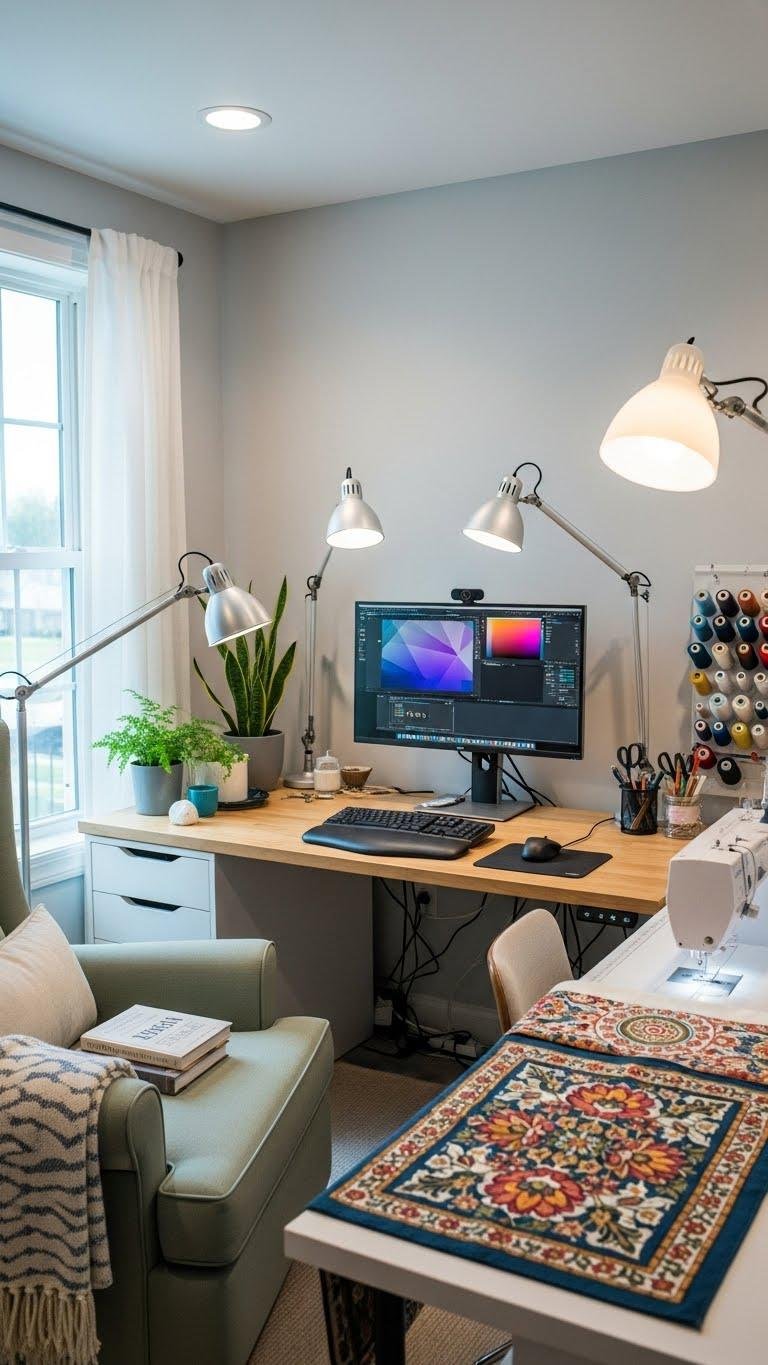
Aim light directly where you work to reduce eye strain and keep your focus—task lighting should be bright, well-directed, and adjustable so you can tailor beam angle and intensity for reading, sewing, or computer work.
Choose adjustable tasklights with focused beams, mount or position them for ergonomic placement, and aim for minimal glare.
You’ll feel freer, more efficient, and comfortable in your creative zones.
Highlight Artwork With Adjustable Accent Lights
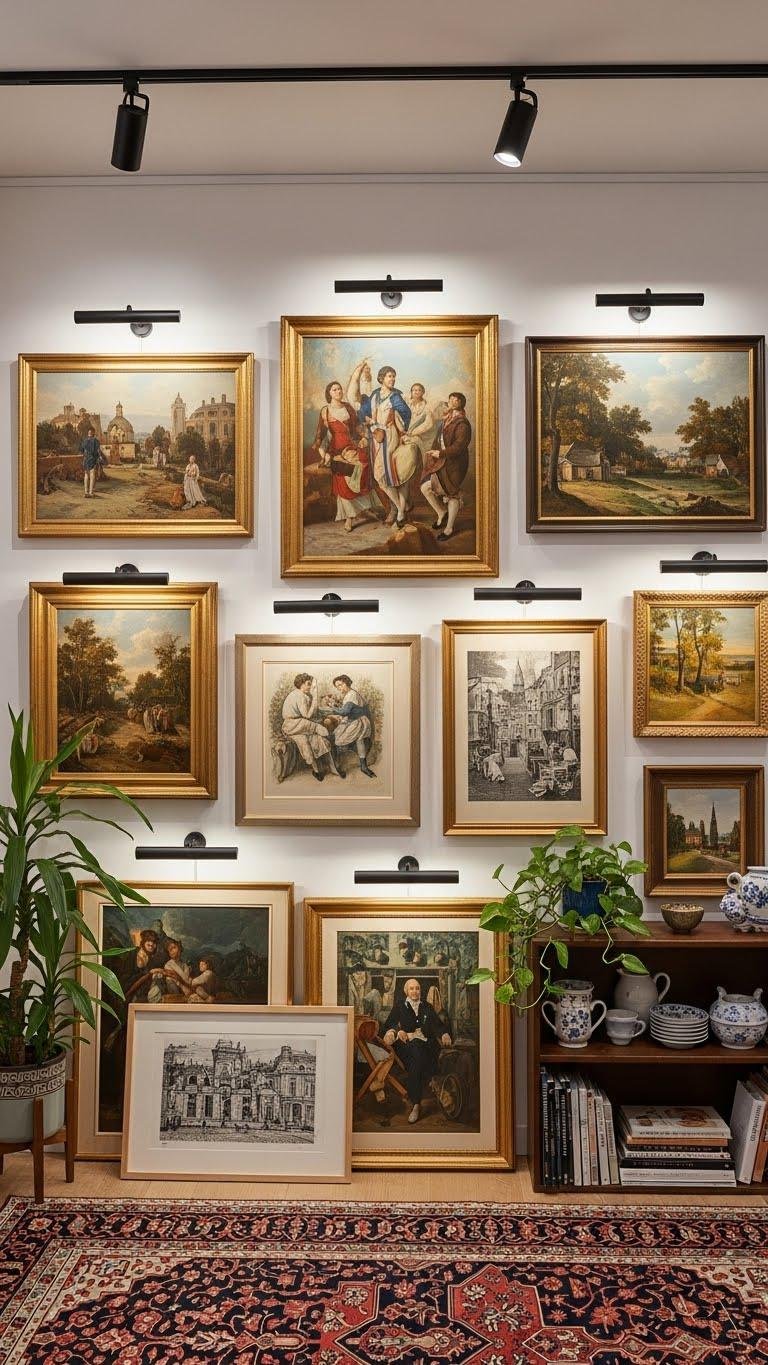
Once your work and reading areas are well lit, bring the same care to the walls where your art lives: adjustable accent lights let you sculpt mood and draw attention to pieces without overpowering the room.
You’ll position gallery rails for flexible spacing, aim picture washers for even washes, and tweak angles to free each piece’s character—practical, precise, and quietly transformative.
Integrate LED Strips Under Cabinets and Shelves
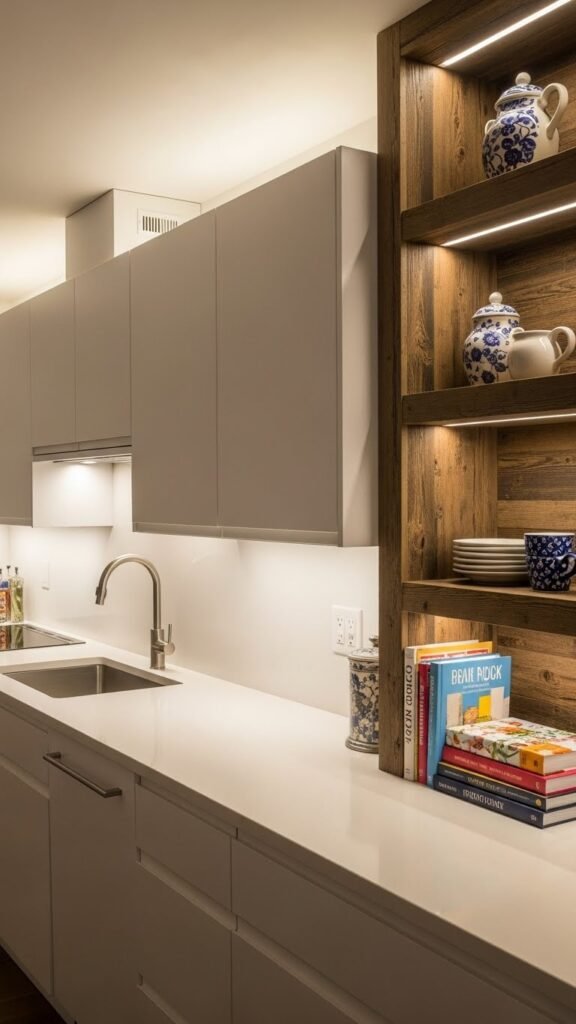
Under-cabinet LED strips give your kitchen and shelving a clean, functional glow that feels both modern and hospitable.
You’ll place strips to highlight prep zones and display items, minding cabinet ventilation so lights don’t trap heat.
Choose low-heat, dimmable strips, hide cords, and plan power access.
If you change layout, use proper adhesive removal to avoid damage and stay flexible.
Mount Wall Sconces to Create Vertical Illumination
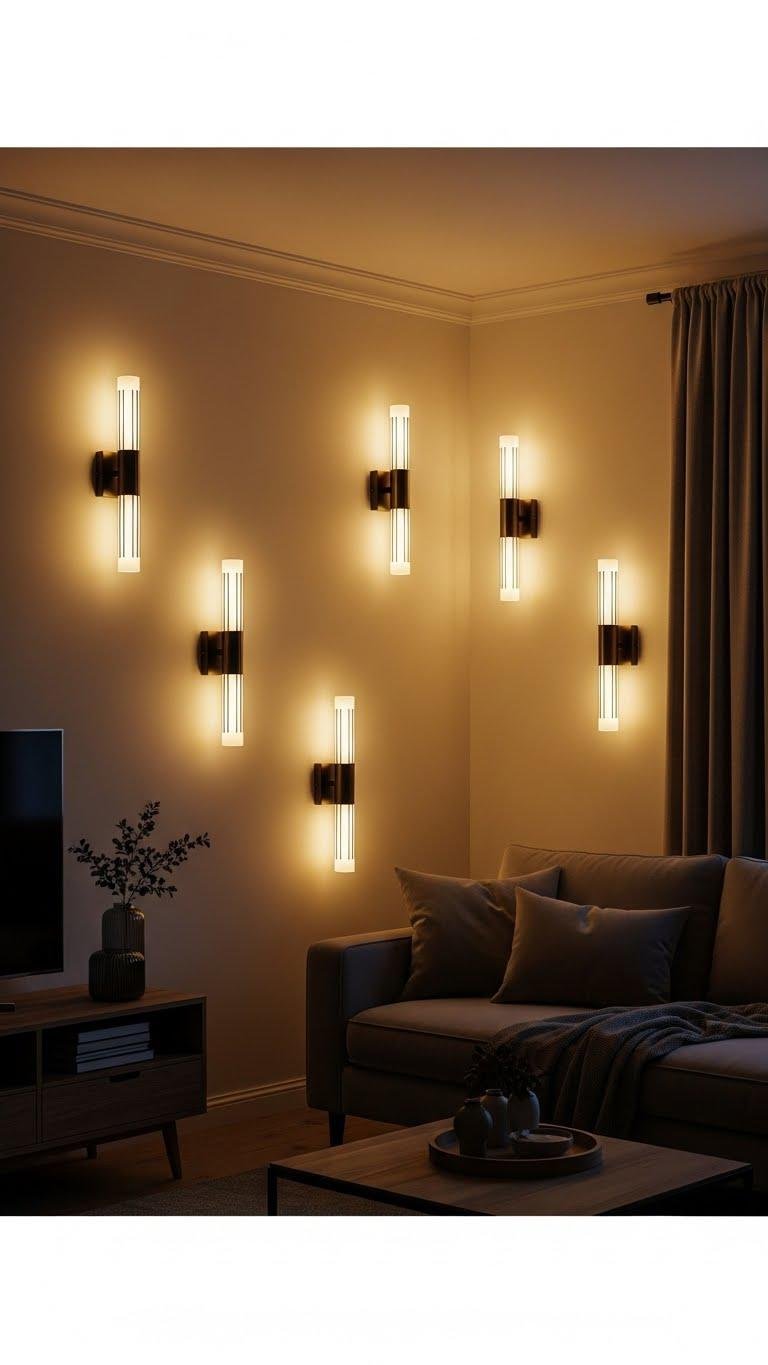
Mount wall sconces to wash your walls in soft, vertical light that instantly adds depth and warmth to a room. You’ll craft mood and freedom with vertical layering: place sconces at eye level, stagger heights for drama, and mind sconce spacing—usually 24–36 inches apart or scaled to wall width.
Choose dimmable fixtures and clean lines to keep the look airy and intentional.
Use Pendant Lights to Define Dining and Kitchen Zones

In the kitchen and dining areas, pendant lights act as visual anchors, carving out functional zones while setting the mood—choose fixtures that match the room’s scale and hang them low enough to focus light on the table or island without blocking sightlines.
You’ll mix vintage pendants for warmth with minimalist pendants for calm, spacing them precisely to define zones and support relaxed, liberated living.
Install Motion Sensors in Hallways and Closets
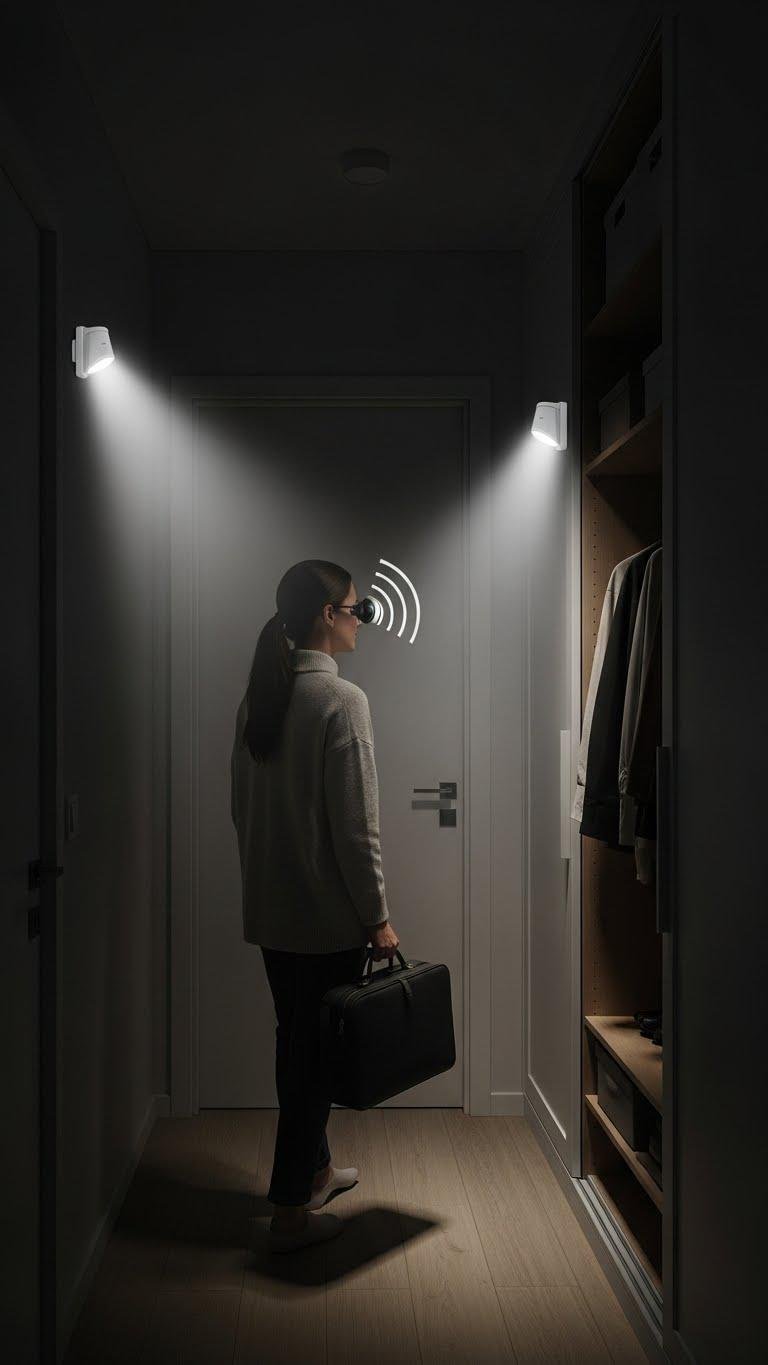
Bring light to the places you barely notice by installing motion sensors in hallways and closets—they turn on automatically as you pass, making late-night trips and hands-full moments safer and simpler.
You’ll enjoy motion activated convenience and crisp closet illumination; an occupancy sensor preserves energy, grants freedom from switches, and offers soft night vision so you move confidently without breaking rhythm or mood.
Position Floor Lamps to Fill Dark Corners
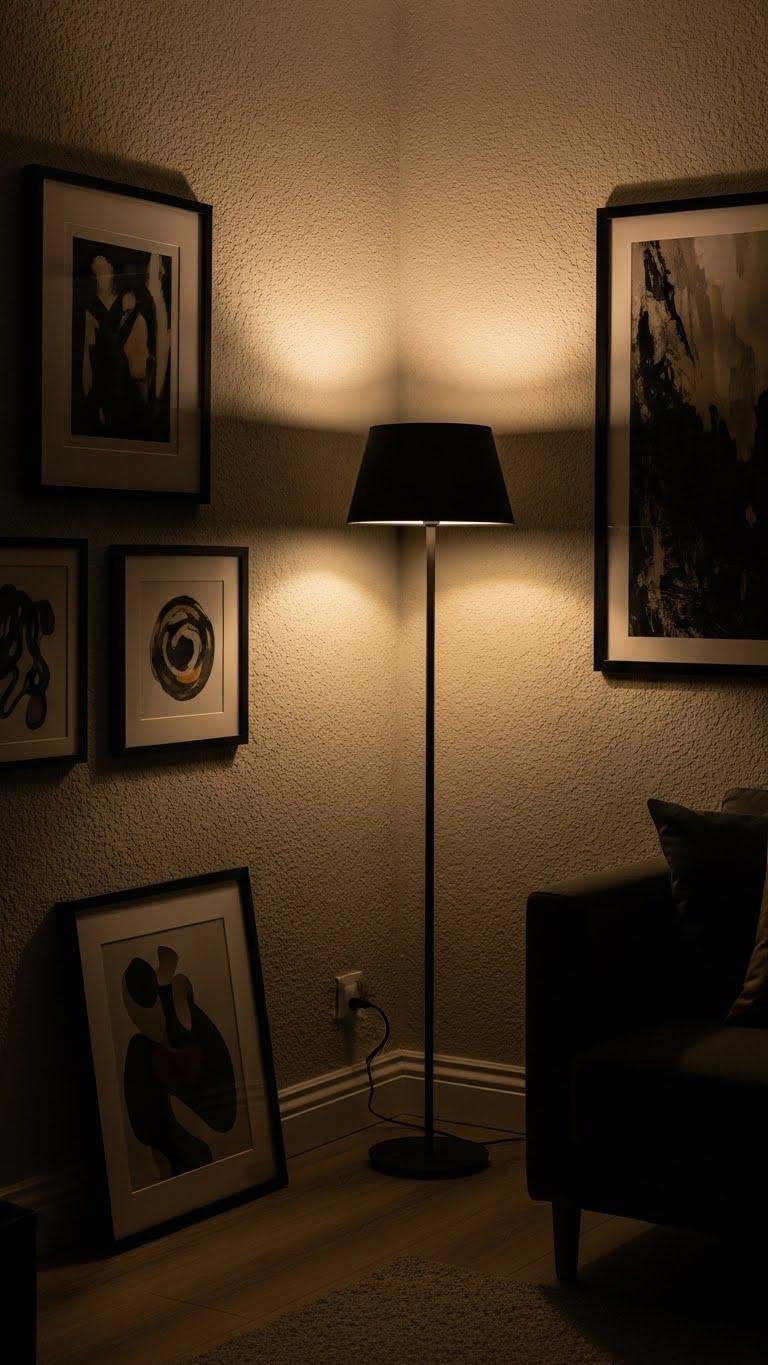
Want to banish those shadowy corners without rewiring a thing? Place a tall floor lamp with a slim profile to throw corner uplighting upward, softening edges and freeing the room.
Choose ambient floorspots with dimmers so you control mood and intensity. Angle light toward textured walls or artwork to add depth. You’ll create a liberated, calm space that feels intentional and alive.
Use Mirrors to Amplify Natural and Artificial Light
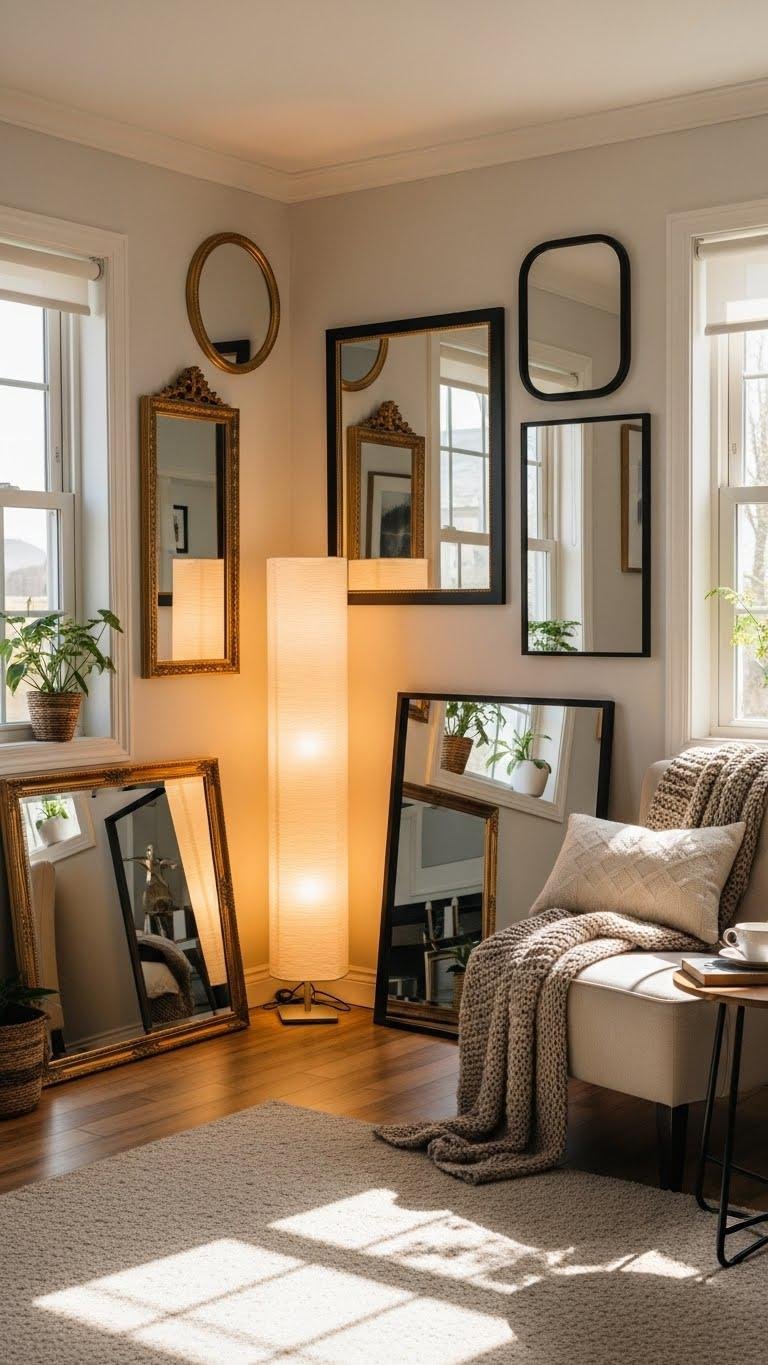
After you’ve softened corners with a floor lamp, add mirrors to multiply that warmth and bounce both natural and artificial light around the room. Place mirrors opposite windows or lamps for strategic mirror placement, angling reflective surfaces to brighten shadowed areas.
You’ll create airy depth, amplify mood, and keep control—arrange sizes and frames freely to suit rhythm and function without clutter.
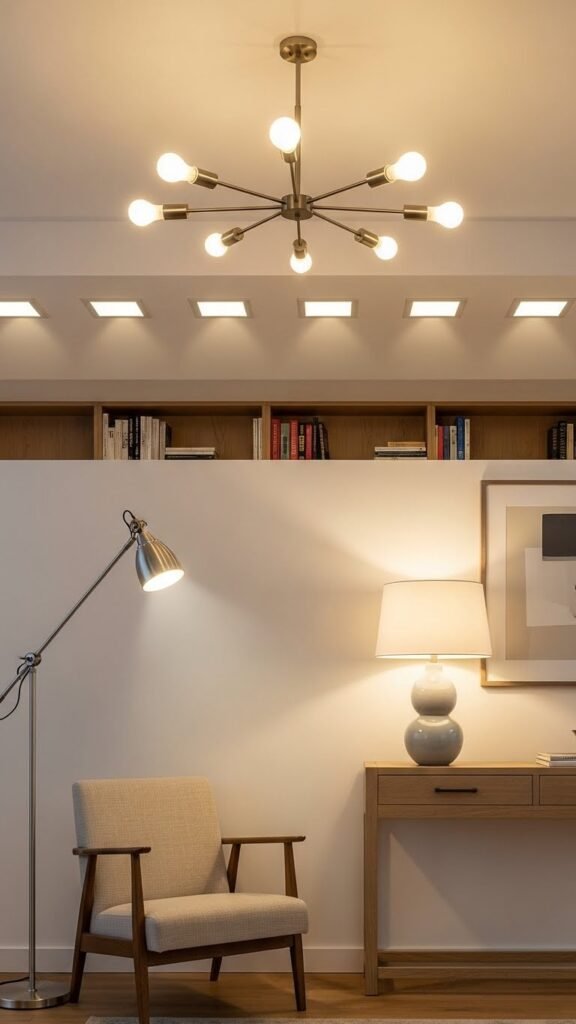
Choose Energy-Efficient LED Bulbs for Every Fixture
Paragraphs
Add Smart Bulbs for Color and Scene Control
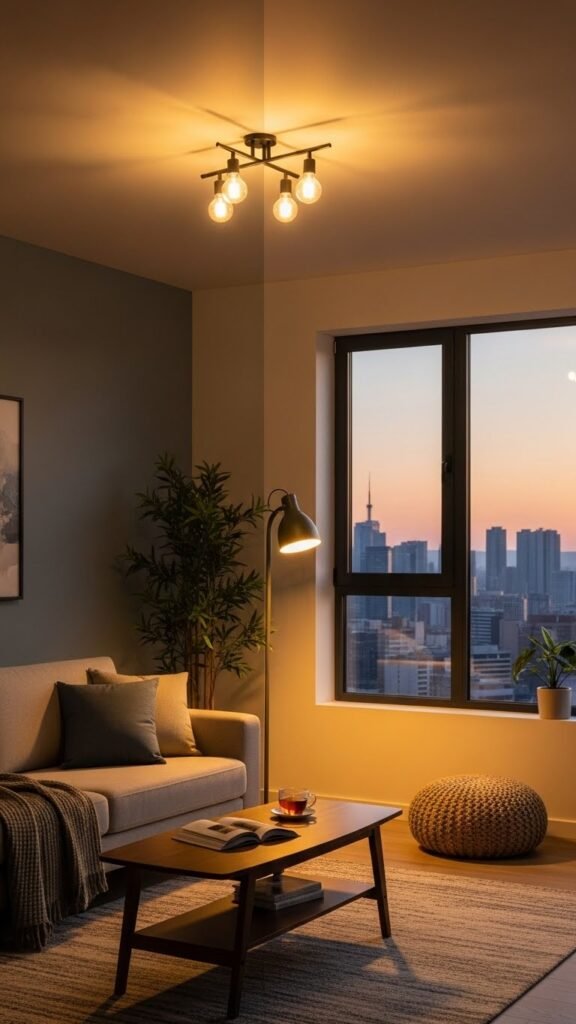
Brighten up a room with smart bulbs and you’ll get instant control over color, brightness, and mood without rewiring a thing.
You can create mood presets for reading, relaxing, or hosting, then trigger them from your phone or voice assistant.
Set bulb sync with music or movie scenes for immersive nights.
It’s practical freedom: tweak tones, save scenes, and change ambiance in seconds.
Layer Ambient, Task, and Accent Lights in One Room
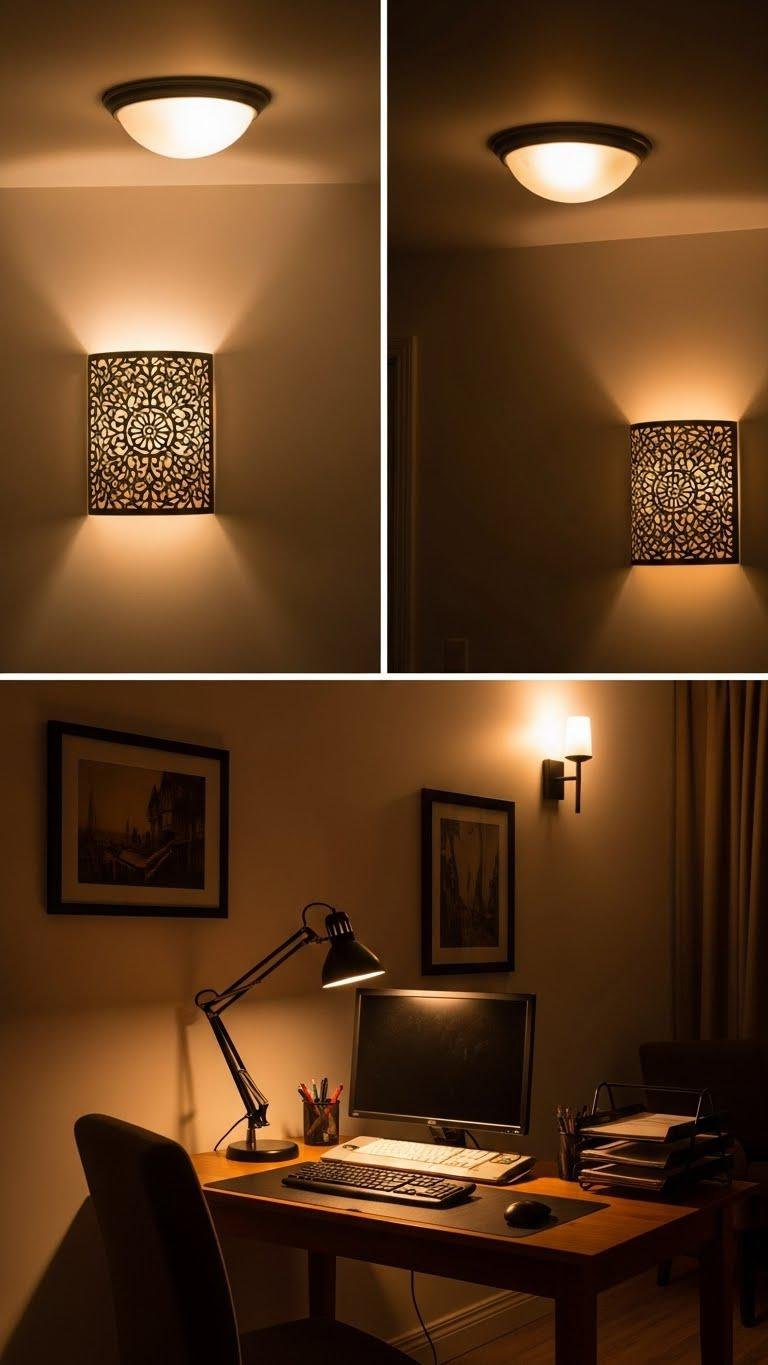
Balancing ambient, task, and accent lights lets you shape how a room feels and functions throughout the day, so you can move from focused work to relaxed downtime without fighting shadows.
Layer ambient for overall mood, add task fixtures where you work, and place accents to highlight texture. Consider color layering and ceiling height to keep control and craft a liberating, adaptable space.
Use Uplighting to Enhance Architectural Features
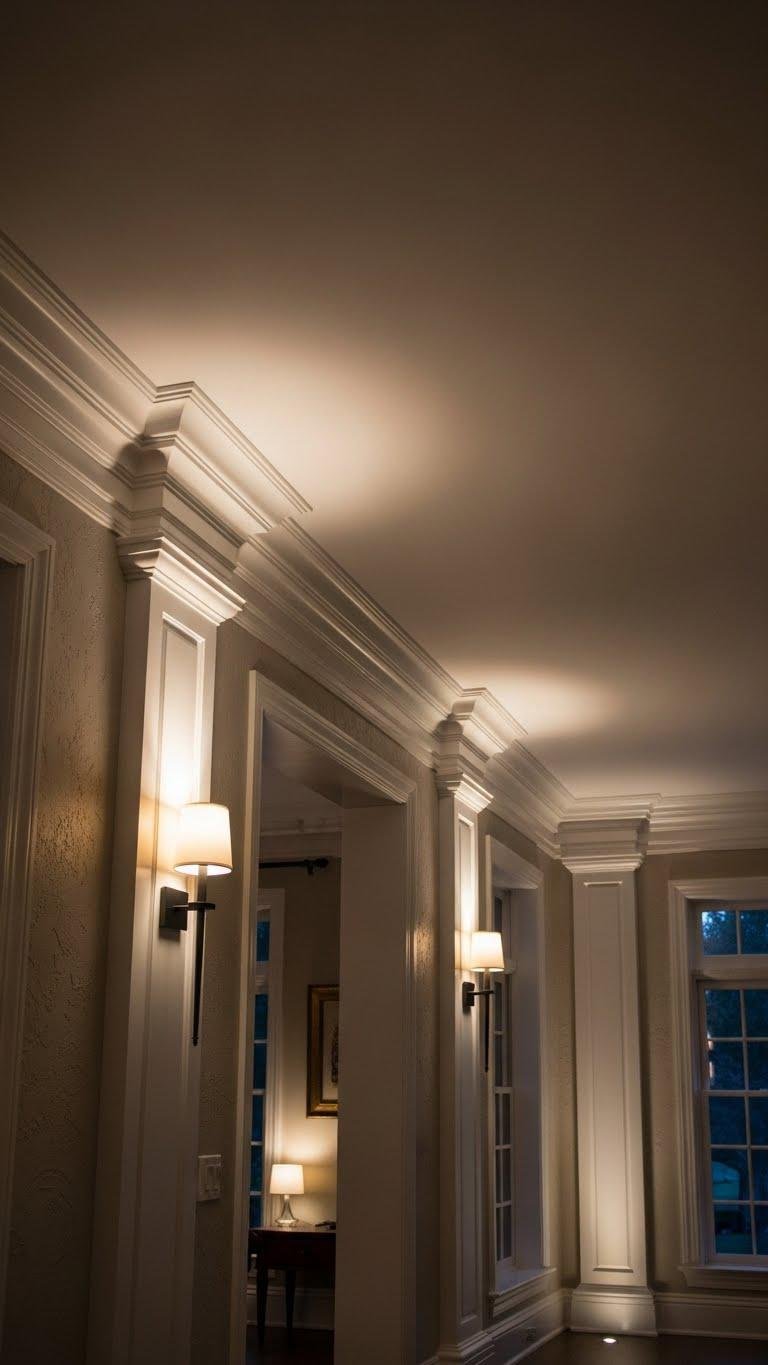
When you aim uplighting at crown moldings, columns, or textured walls, it lifts the room’s architecture out of the background and gives spaces a deliberate, sculpted feel.
You’ll place soffit uplighting to wash ceilings, angle fixtures for dramatic shadow, and use uplight landscaping ideas by windows. Keep fixtures low-profile, dimmable, and directed so the mood feels liberated, intentional, and serene.
Install Under-Stair Lighting for Safety and Style

Line your stair treads with low-profile LED strips or recessed step lights to create a calm, guided path that prevents missteps while adding sleek visual interest.
You’ll mount LED risers beneath each tread, casting even glow without glare.
Pair with a slim stair handrail light for balance.
The result feels safe, liberated, and meticulously designed, practical for night use and effortless appeal.
Incorporate Lighting Automation and Schedules
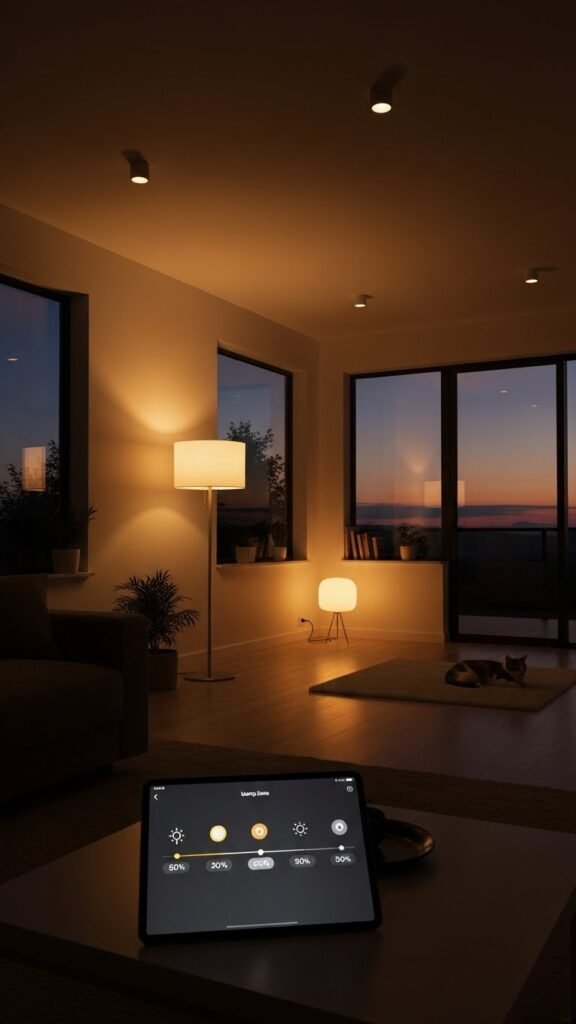
By setting schedules and automations, you’ll turn lighting from something you manage into something that manages your comfort—waking rooms gradually with soft warm tones, dimming halls after bedtime, and ramping up task lights when you start cooking.
You’ll craft routine syncing that follows your life, use adaptive triggers for presence or sunset, and free yourself from manual switches while keeping control.
Use Accent Lighting to Showcase Plants and Decor

If you want your plants and decor to feel like part of the room’s story, use focused accent lighting to draw attention and add depth.
Position botanical spotlighting to highlight leaf shapes and sculptural pieces, pair low-wattage uplights with textured backlighting for contrast, and aim beams carefully. You’ll create serene, liberated corners that feel curated without clutter.
Integrate Voice Control With Your Lighting System
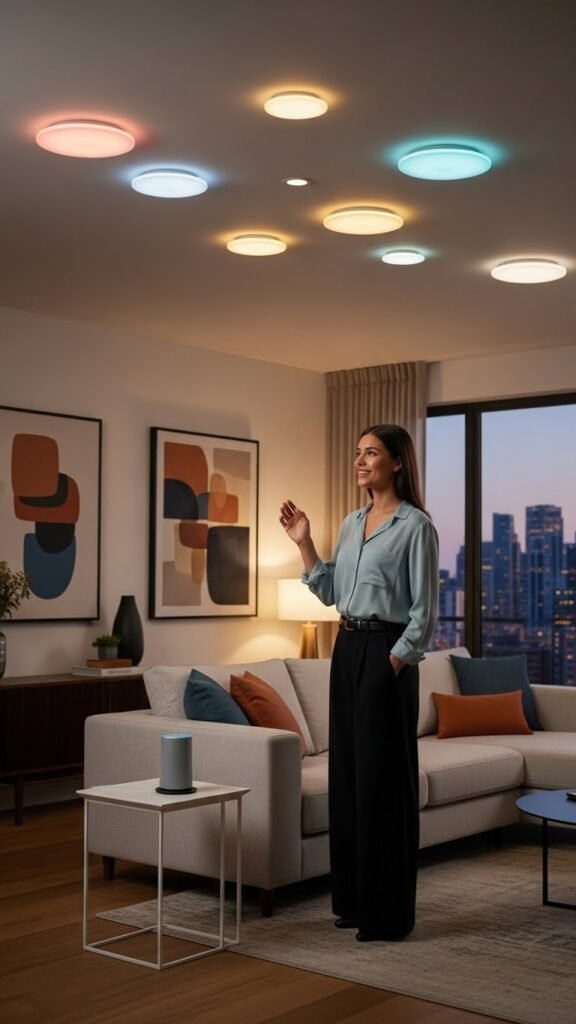
Bring voice into your lighting setup to shape mood instantly and hands-free—you’ll change scenes, dim for dinner, or spotlight a plant with a single command.
You’ll configure routines, label rooms, and mitigate vocal latency by fine-tuning responsiveness.
Prioritize voice privacy with local processing and strict permissions so you feel free to command lights confidently, control ambiance precisely, and reclaim effortless, secure home freedom.
Opt for Recessed Lighting With Adjustable Trims
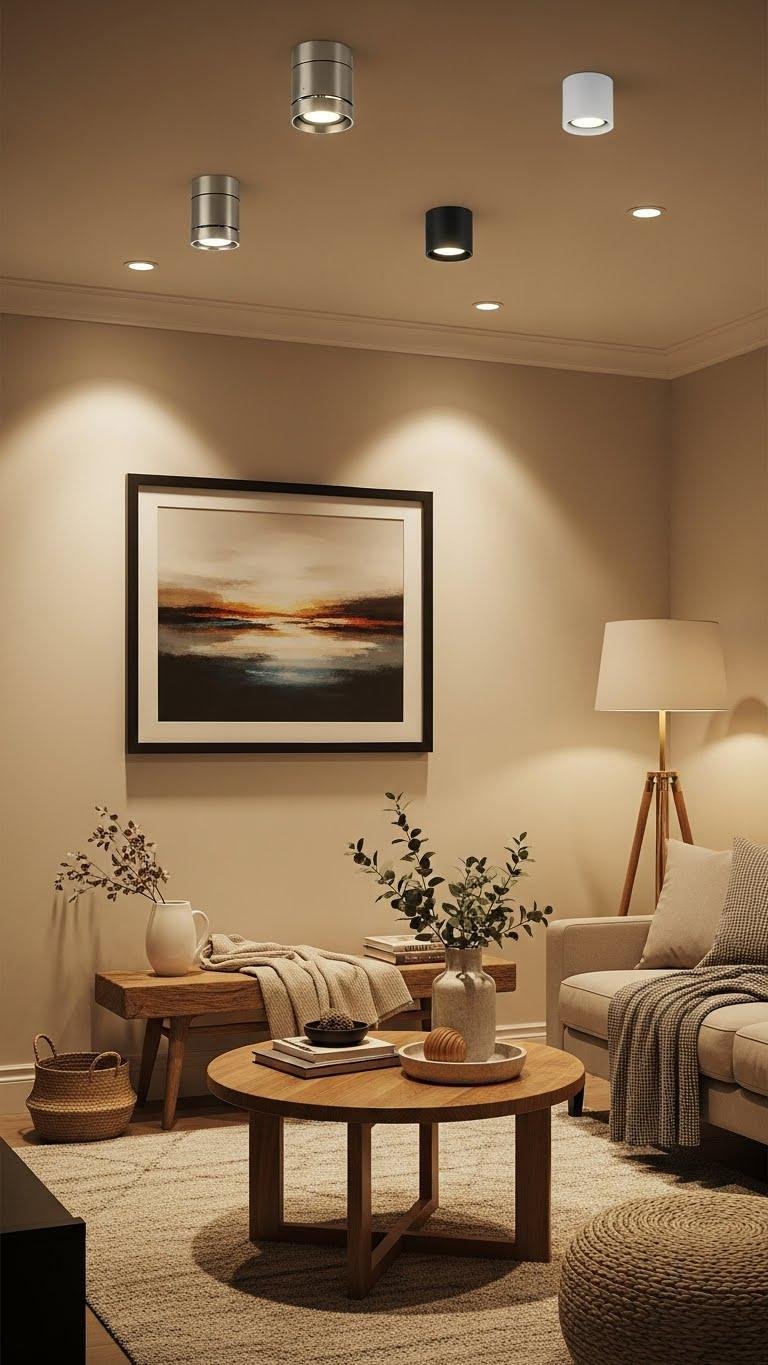
After you’ve set up voice scenes, think about how recessed fixtures can hide tech while shaping mood from the ceiling. Choose adjustable trims with varied trim finishes to match your room’s vibe, and tweak beam angles to spotlight art, soften corners, or create cozy pockets.
You’ll gain flexible control, clean sightlines, and a liberated, intentional atmosphere without visible clutter.
Use Dimmable Recessed or Track Lights in Kitchens
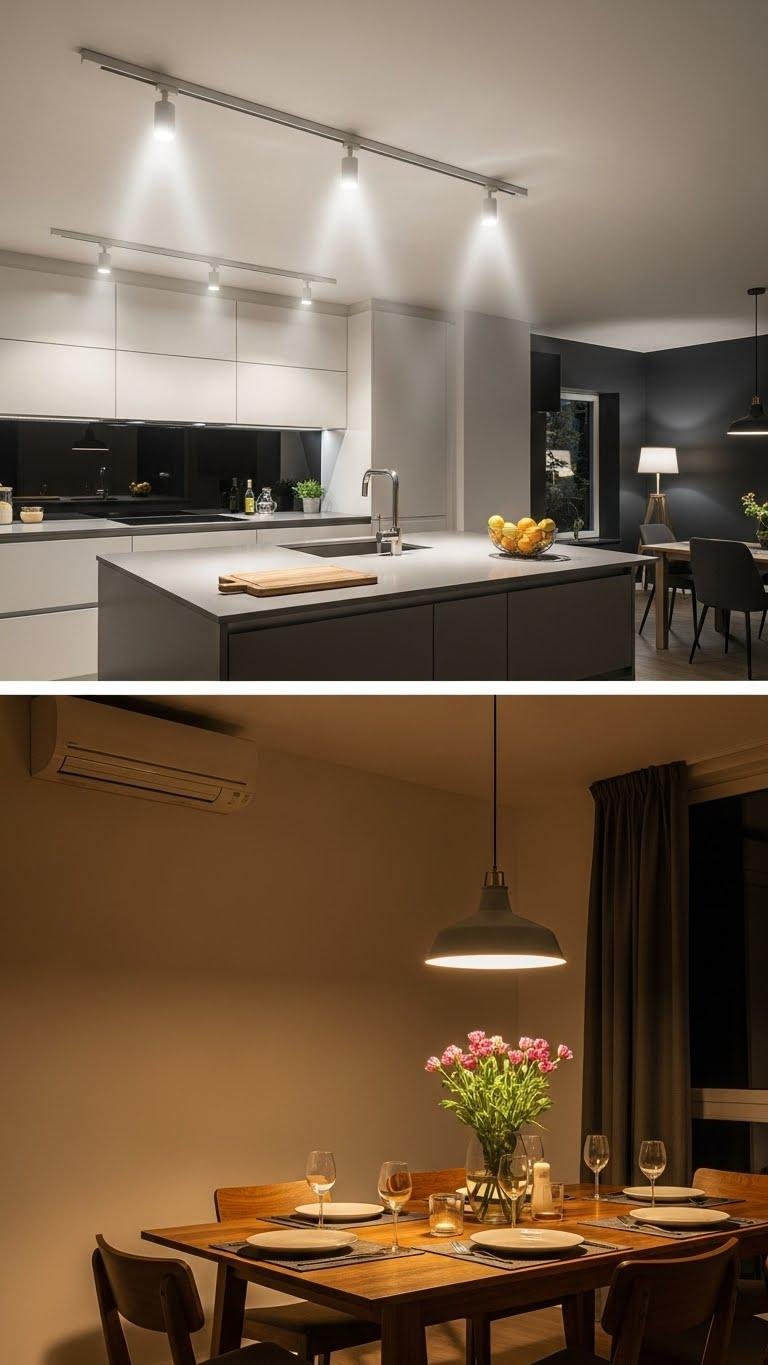
Create layered, dimmable recessed or track lighting so your kitchen shifts easily between bright task work and relaxed evening meals.
You’ll control mood with soft dimming zones—bright over prep islands, gentler pools for dining.
Choose fixtures with good heat management and LED drivers to protect cabinets.
Position adjustable tracks for flexibility, then set scenes that free you to cook, entertain, or unwind.
Add Pathway Lights for Outdoor Ambiance and Safety
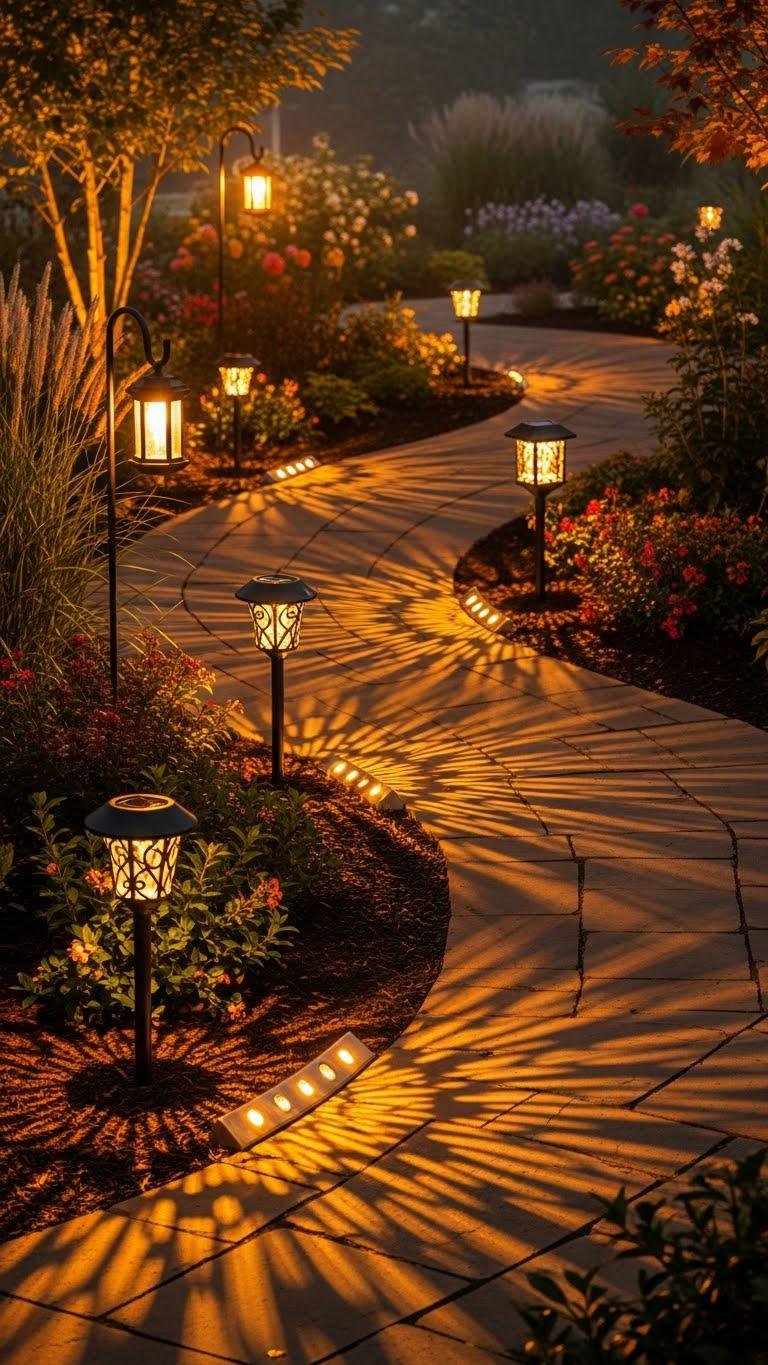
Light up your walkways to guide guests and set a welcoming, safe tone after dusk. You’ll place solar lanterns or low-profile pathway markers to define routes, prevent trips, and create a relaxed, liberated vibe.
Choose warm tones, stagger heights, and tuck lights into plantings for subtle drama. Maintain batteries and clear sightlines so your yard feels effortless, inviting, and secure.
Use Tunable White Lights to Match Activity and Time
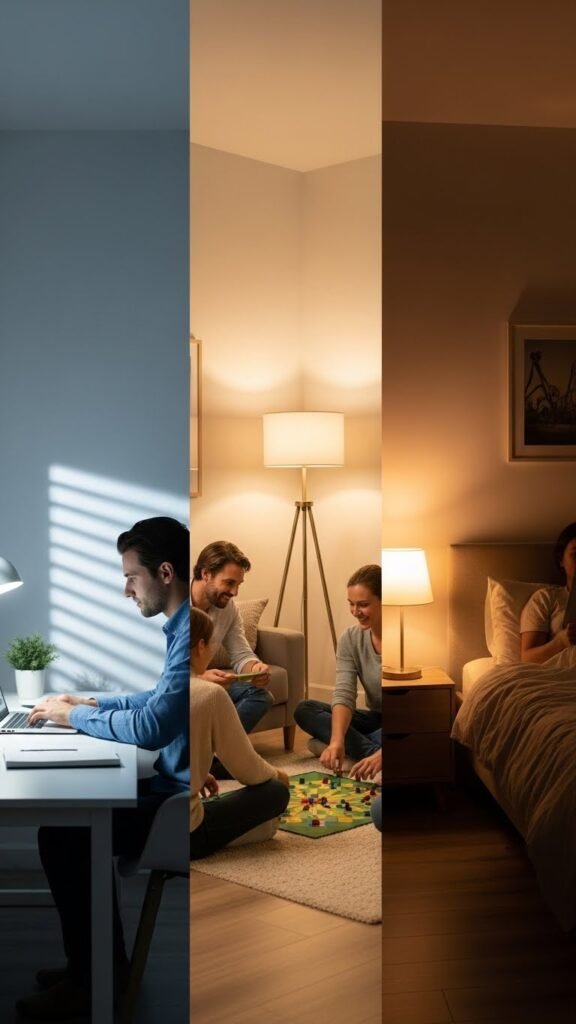
Having your walkways softly lit sets the mood outside, and you can carry that thoughtful intent indoors with tunable white lights that adapt to what you’re doing and when.
You’ll choose cool tones for focus, warm hues to unwind, and schedule settings for circadian alignment. These activity adaptive fixtures let you control atmosphere, preserve sleep, and enjoy freedom in how each room feels.
Install Pendant Clusters for Visual Interest
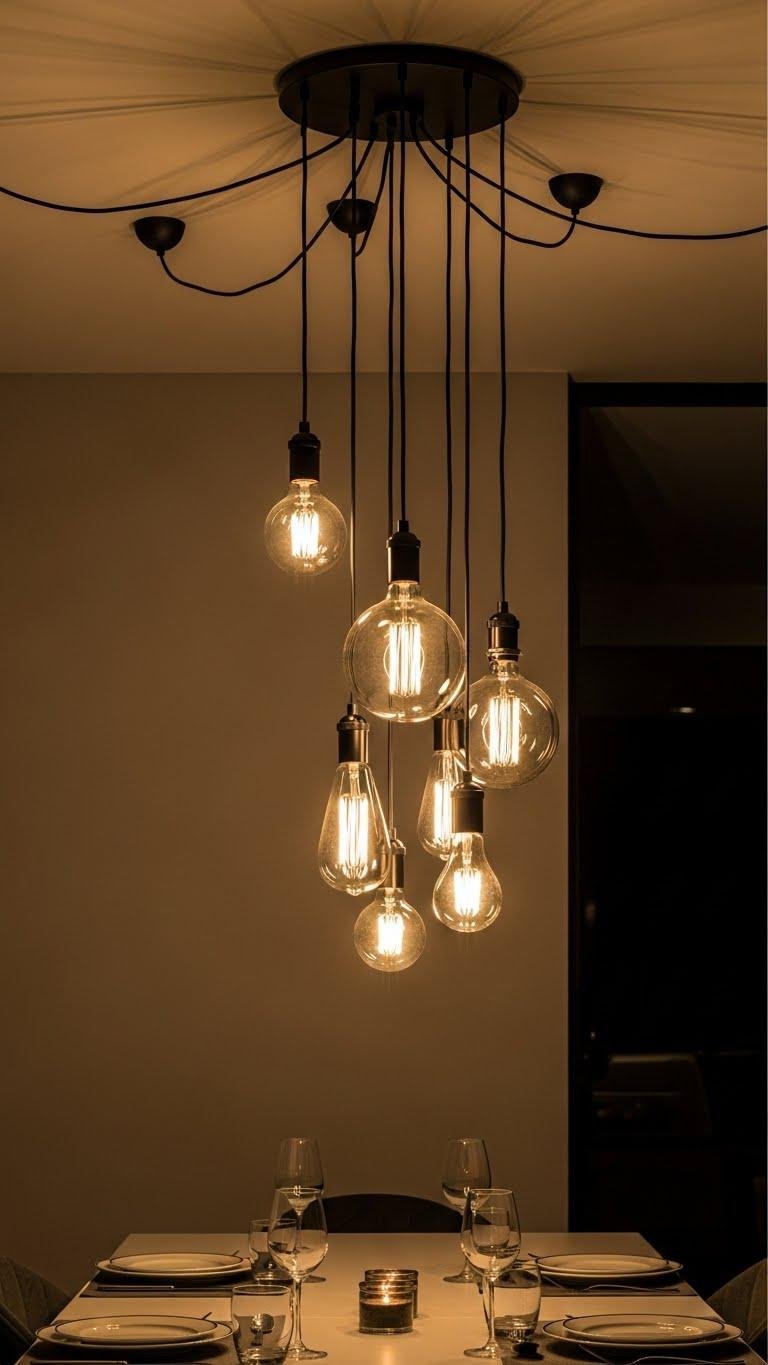
Cluster pendants around a table or entryway to turn functional lighting into a focal point that sets the room’s mood. You’ll choose cluster spacing to balance intimacy and flow, vary sizes and mixed heights for rhythm, and pick dimmable bulbs to control glow.
Install at arm’s reach distances, center over key zones, and keep wiring neat for a liberated, intentional look.
Use Lighting Scenes to Change Mood Instantly
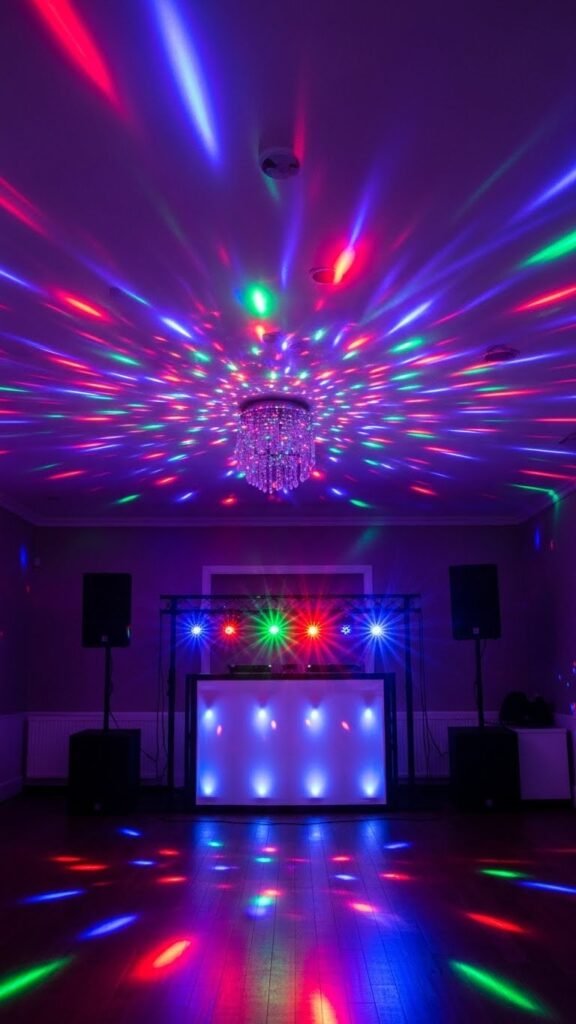
Want to shift a room’s mood in an instant? You’ll use scene presets to map lighting moods—warm dim for relaxation, bright cool for focus—then toggle them freely.
Plan color shifts that flow slowly or snap instantly depending on activity. Test timing, brightness, and saturation so each preset feels effortless.
You’ll gain control, craft atmosphere, and move through moods without fuss.
Place Lighting to Create Depth With Shadow Play

When you place lights to catch edges and textures, they’ll carve depth into a flat room and make shadows part of the design; aim low-angle uplights, side lamps, and focused spotlights to exaggerate form while keeping ambient glow for balance.
You’ll craft shadow gradients that guide sightlines and layered silhouettes that imply motion—position fixtures deliberately, adjust angles, and embrace contrast to free the space.
Maintain Fixtures and Clean Bulbs for Optimal Output

Regularly wipe down fixtures and replace old bulbs so your lighting stays crisp and true to its design.
You’ll schedule a brief fixture inspection monthly, dusting crevices and tightening fittings.
Clean bulbs deliver purer color and longer life; label spares and use cool, dry bulb storage to protect them.
These small rituals keep rooms feeling open, controlled, and ready for spontaneous living.