
Start by emptying your pantry and deciding what stays, tosses, or gets donated so you can build a practical system that actually works. Sort items by category and frequency, swap in adjustable shelving, and use clear airtight containers with labels and FIFO rotation to cut waste and speed meal prep. Keep everyday foods at eye level, tuck overflow into labeled bins, and schedule quick audits—there’s more to make this space calm and efficient.
Empty and Declutter Your Pantry Completely
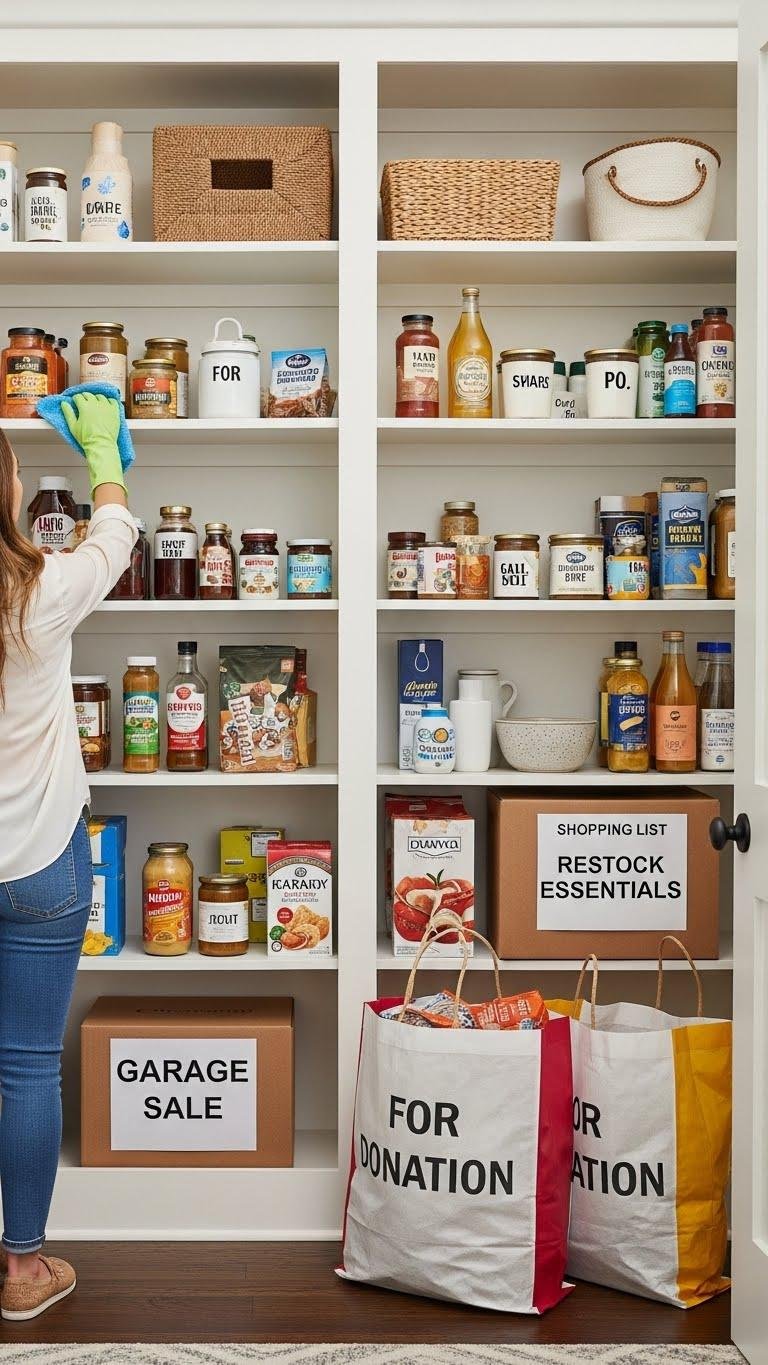
Before you start refilling shelves, take everything out so you can see what you have and what’s expired or unnecessary. You’ll sort fast: keep essentials, recycle damaged packaging, and set aside duplicates. Box sellable items for a garage sale and bag gently used goods for donation drop off. Wipe shelves, note restock needs, then return items with clear order to regain control and freedom.
Group Items by Category and Use
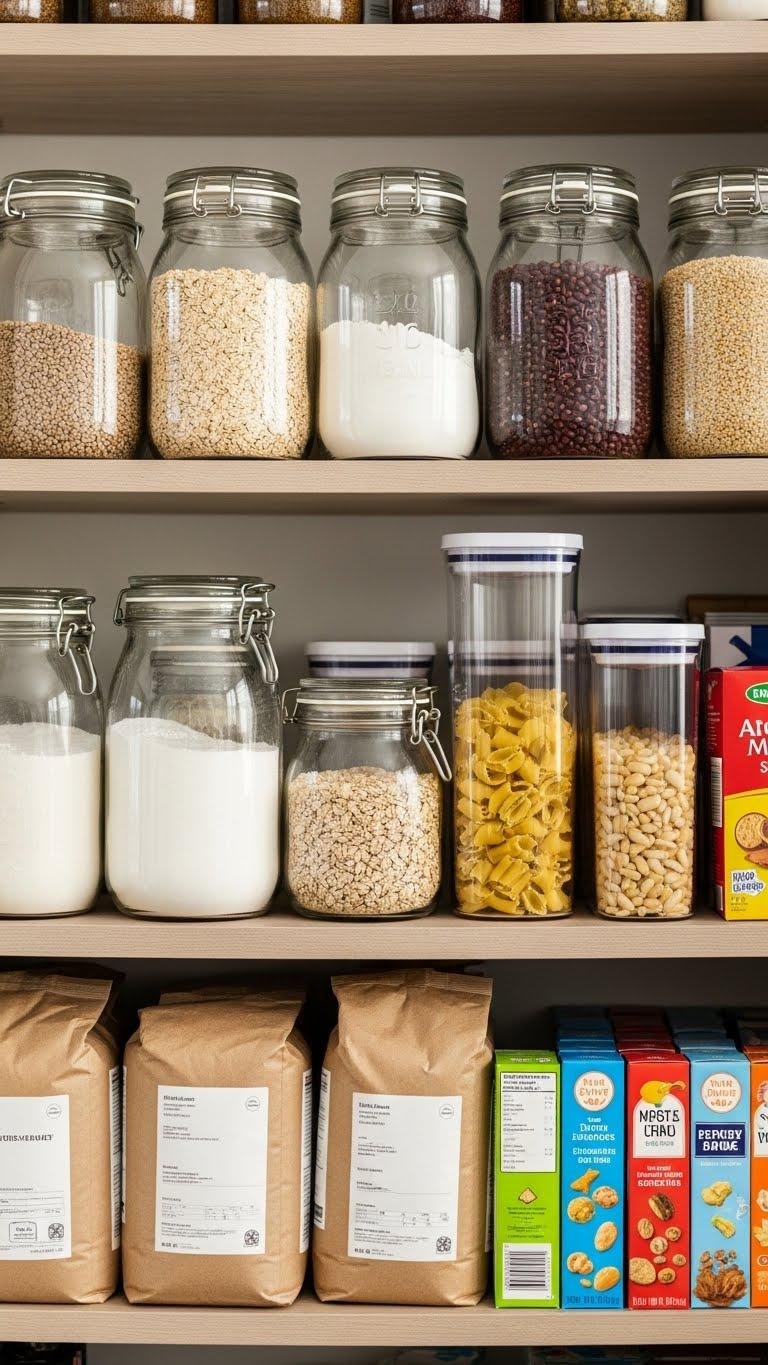
Once you’ve cleared and cleaned the pantry, sort items into logical groups—canned goods, baking supplies, snacks, breakfast, sauces, grains, and frequently used spices—so you can see quantities and use patterns at a glance.
Create Meal stations for quick prep, place everyday items front and center, and use Frequency sorting to keep rarely used goods tucked away. This saves time and frees your choices.
Use Clear Airtight Containers for Dry Goods
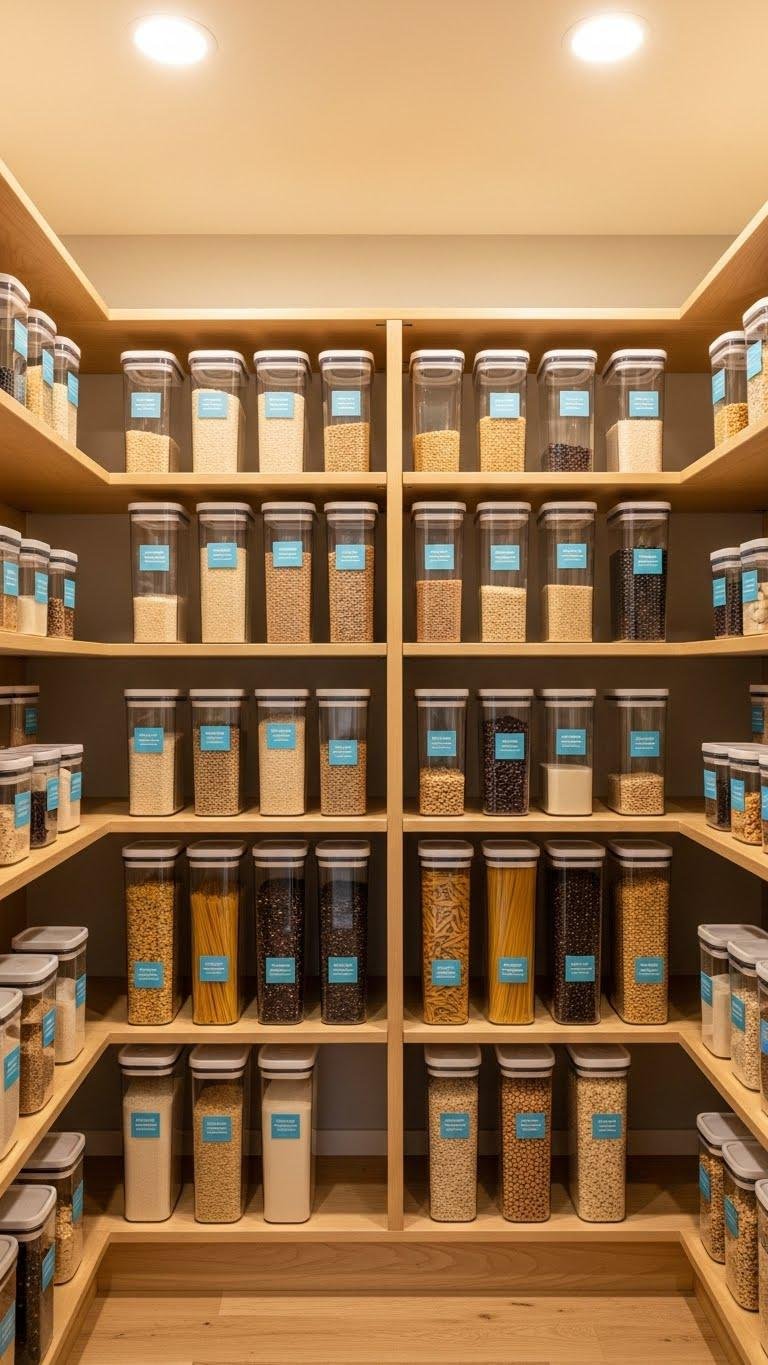
Often you’ll find that clear airtight containers are the single best upgrade for dry goods—because they make contents visible, preserve freshness, and cut down on spills and pests.
You’ll enjoy airtight aesthetics that simplify choices and free your routine. Stack jars to save space, use moisture control sachets for rice and grains, and you’ll reduce waste, streamline shopping, and keep your pantry calm and ready.
Label Containers With Names and Expiration Dates
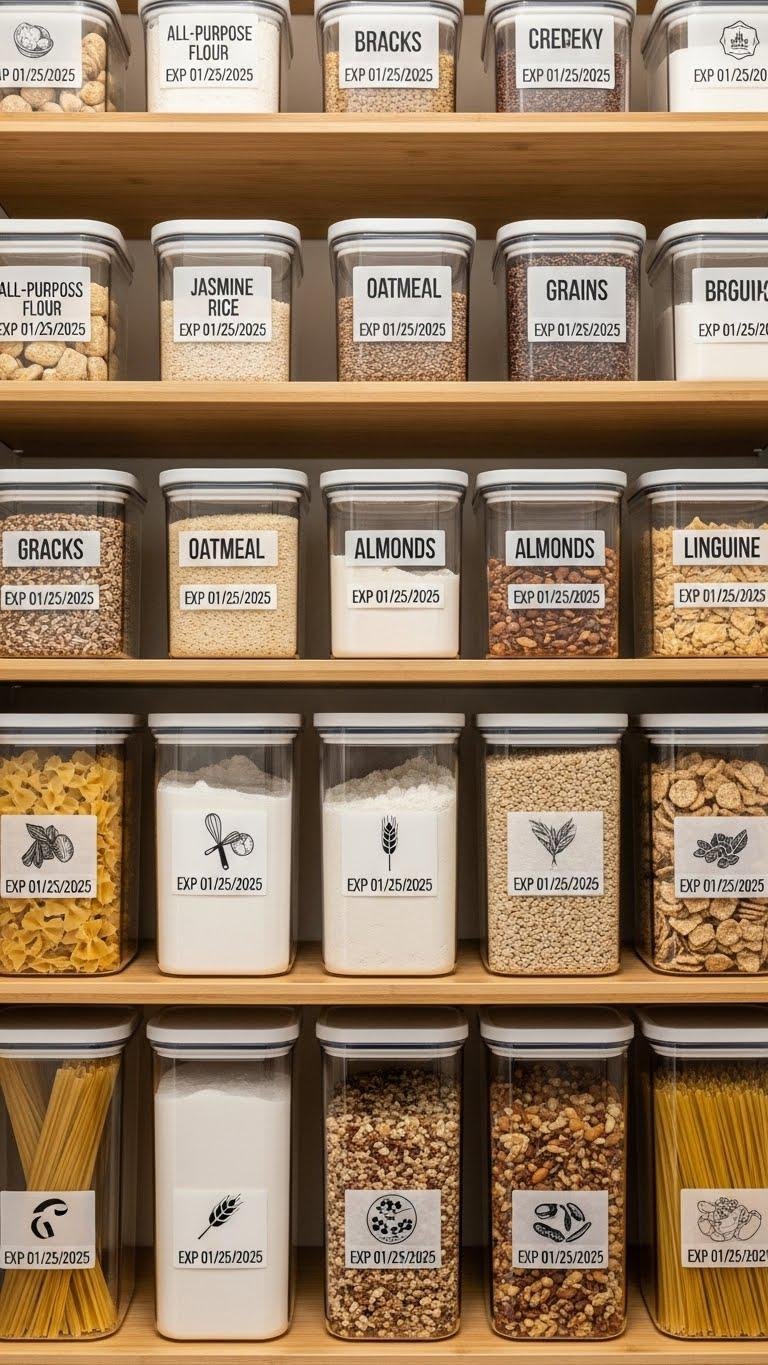
Label each container with the item name and its expiration or best-by date so you can grab what you need fast and avoid surprises. You’ll stay liberated from waste by using clear labels, color coding for categories, and simple custom stamps for quick marking. Update dates as you rotate stock, keep labels readable, and enjoy a streamlined pantry that lets you move freely and cook without second-guessing.
Install Adjustable Shelving for Flexible Storage
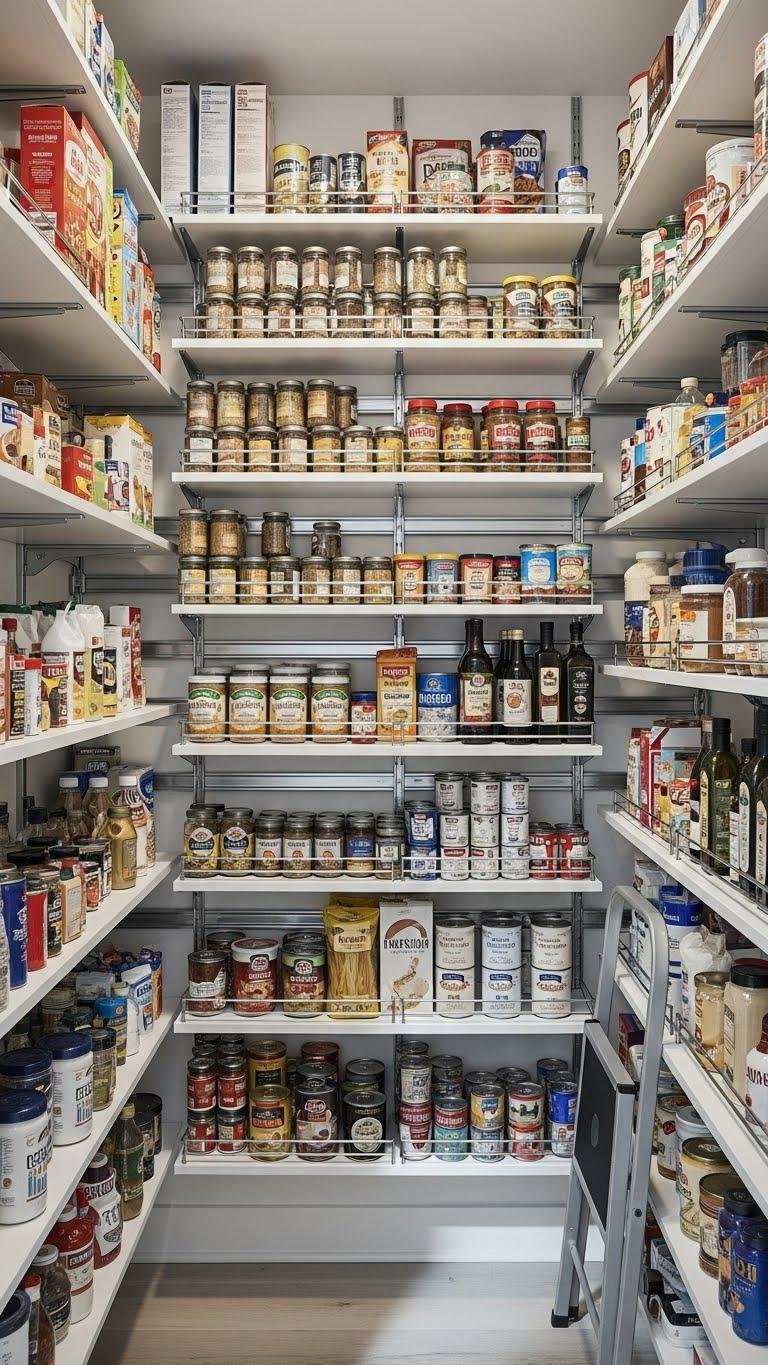
When you install adjustable shelving, you give your pantry the flexibility to fit tall cereal boxes one week and short spice jars the next.
You’ll use modular tracks and adjustable brackets to reposition shelves quickly, so storage adapts to changing needs. This setup frees you from clutter, lets items stay visible, and makes restocking faster — practical, simple control over your space.
Maximize Vertical Space With Shelf Risers

Adjustable shelving gives you basic flexibility, but shelf risers let you squeeze more usable space out of each shelf by creating short, stackable tiers for cans, boxes, and jars.
You’ll free sightlines and reach, pairing risers with under shelf lighting to find items fast.
Fit risers into a micro pantry, combine with vertical bins and narrow baskets, and keep everything visible and accessible.
Add Pull-Out Drawers for Deep Shelves
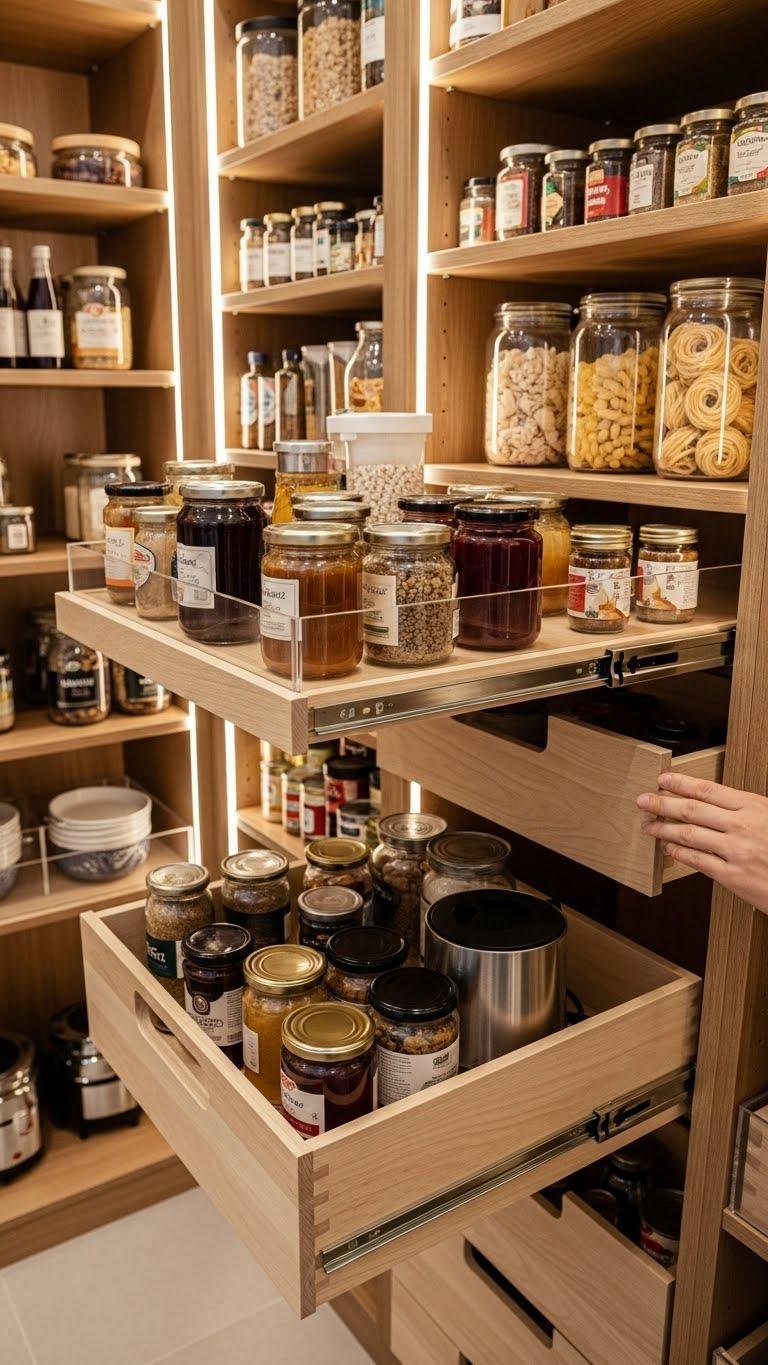
Pull out deep shelves to turn wasted rear space into easily reachable storage—installing full-extension drawers or sliding trays lets you see and grab items without kneeling or shuffling.
Fit heavy duty sliders for smooth, durable motion and choose soft close mechanisms to prevent bangs.
You’ll free up space, simplify inventory, and enjoy effortless access so pantry life feels organized and liberating.
Use Stackable Bins and Racks for Canned Goods
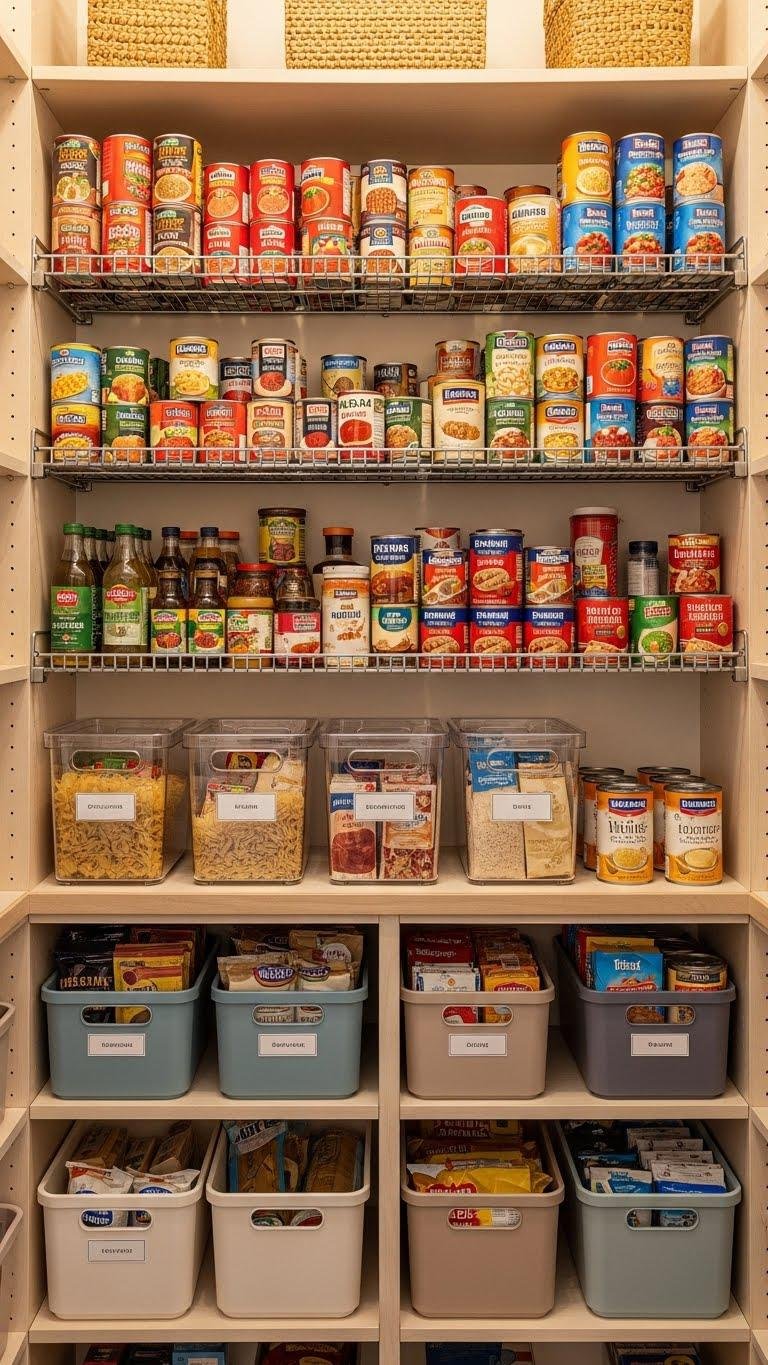
Maximize space and simplify meal prep by using stackable bins and tiered racks for canned goods — they keep labels visible, prevent toppled stacks, and let you grab what you need in one motion.
You’ll optimize can capacity, enjoy stackable aesthetics, and free up shelf room. Choose sturdy materials, group by type, rotate older cans forward, and maintain a calm, efficient pantry system.
Create Functional Zones for Meals and Tasks
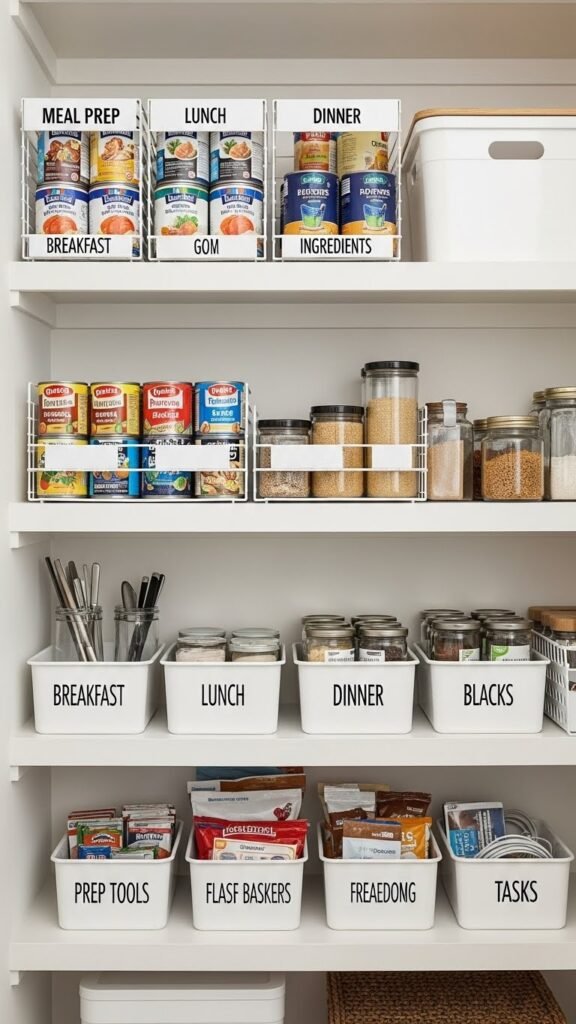
Now that your cans are easy to find and grab, organize the rest of the pantry by creating functional zones for meal prep and tasks. Design clear meal stations for breakfast, lunch, dinner ingredients so you can grab what you need and go. Use labeled task baskets for prep tools, snacks, and charging cords. Keep zones minimal, flexible, and freedom-focused.
Reserve Eye-Level Shelves for Everyday Staples
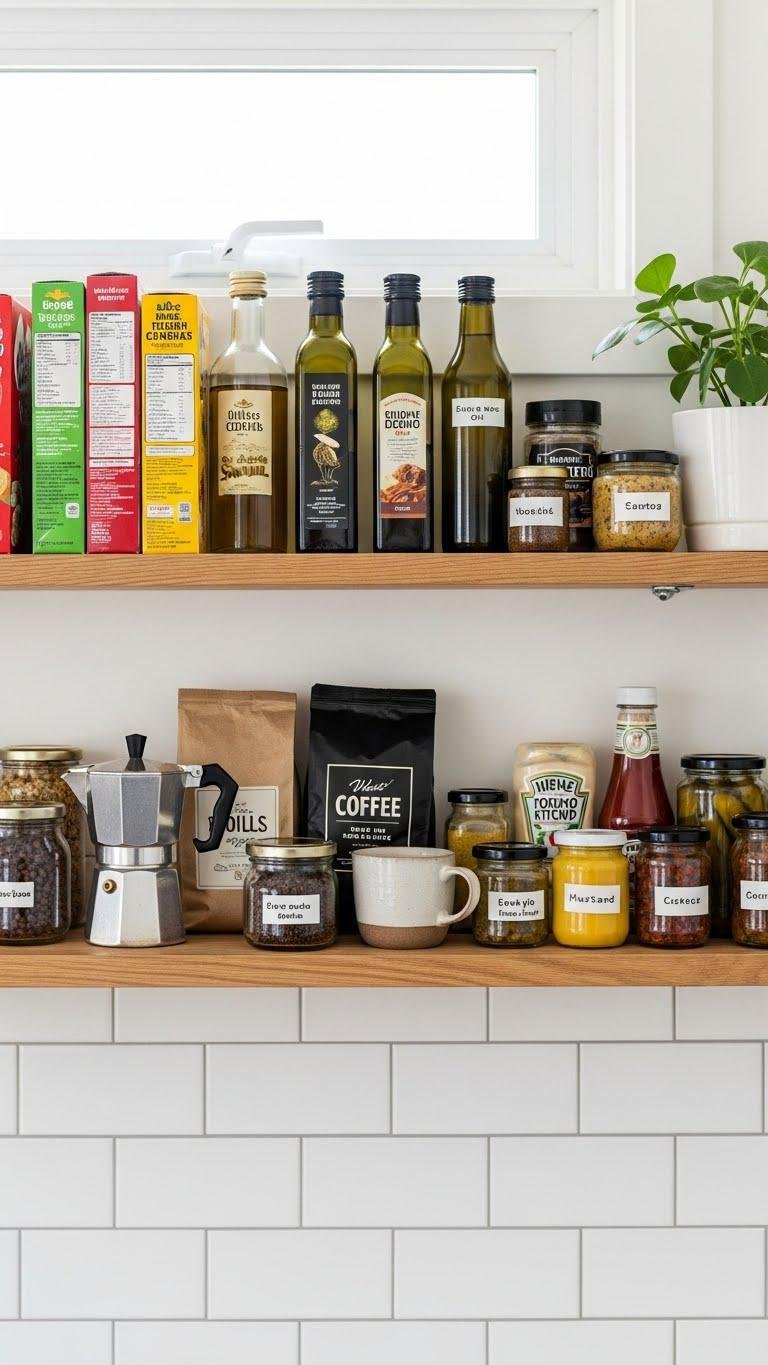
Frequently, the easiest way to speed up meal prep is to reserve eye-level shelves for the staples you reach for daily—think breakfast cereals, cooking oils, coffee, and lunchtime condiments.
You’ll arrange items for reach optimization, group like items for everyday rotation, and label clearly so grabbing what you need becomes automatic. This saves time, reduces clutter, and frees you to enjoy cooking.
Store Rarely Used Items on High or Low Shelves
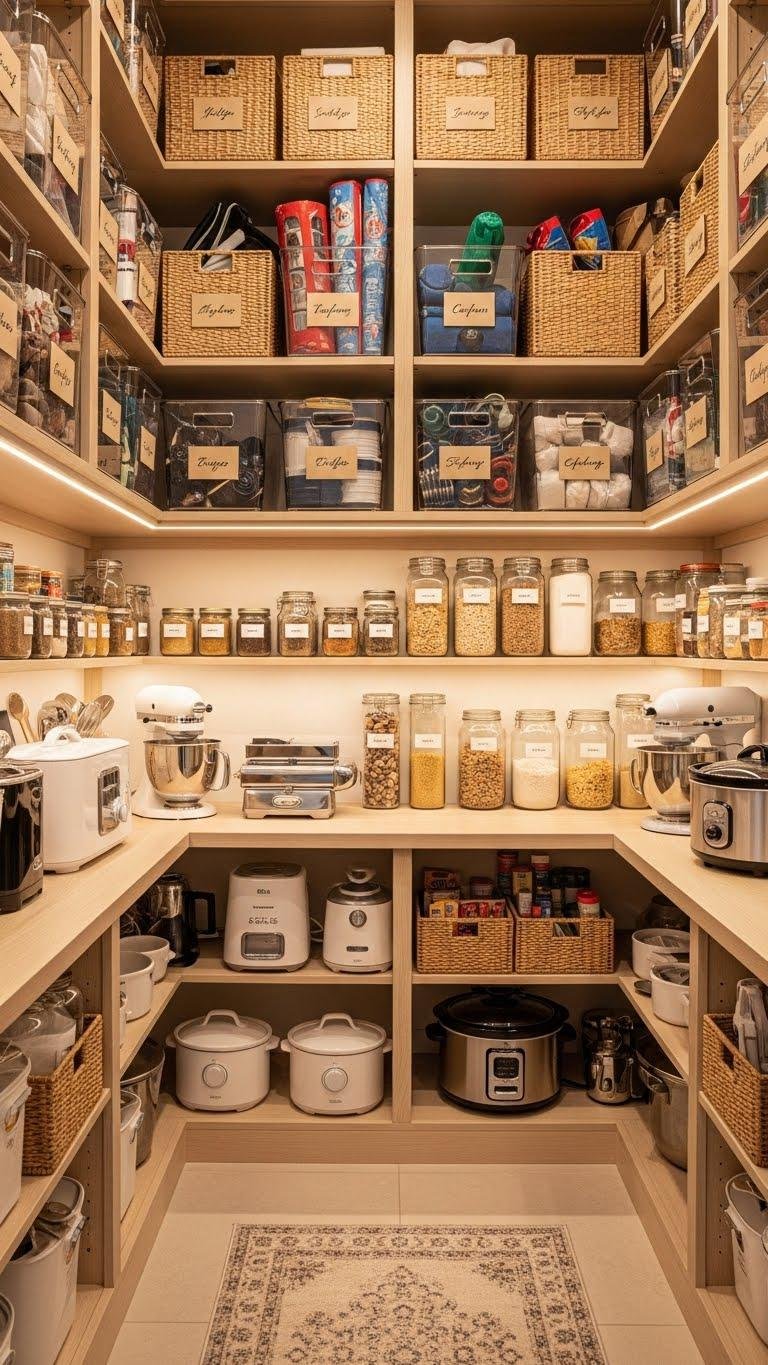
Because you only need them occasionally, put bulky or seldom-used items on the highest or lowest shelves to keep everyday zones uncluttered and accessible.
Store seasonal overflow in labeled bins up high and tuck specialty appliances low where they’re easy to pull out but out of the way.
You’ll preserve sightlines, simplify grabbing daily items, and enjoy a freer, calmer pantry.
Use Lazy Susans for Spices and Small Jars

Spin a Lazy Susan into a corner of your pantry and suddenly all your spices and small jars are within reach. You’ll set a spice carousel for effortless access, reduce spills, and see labels at a glance. Treat it as jar lazy loading: rotate to retrieve, rotate to store.
You’ll save time, reclaim space, and keep cooking simple and free from clutter.
Keep a Centralized Grocery List Near the Pantry
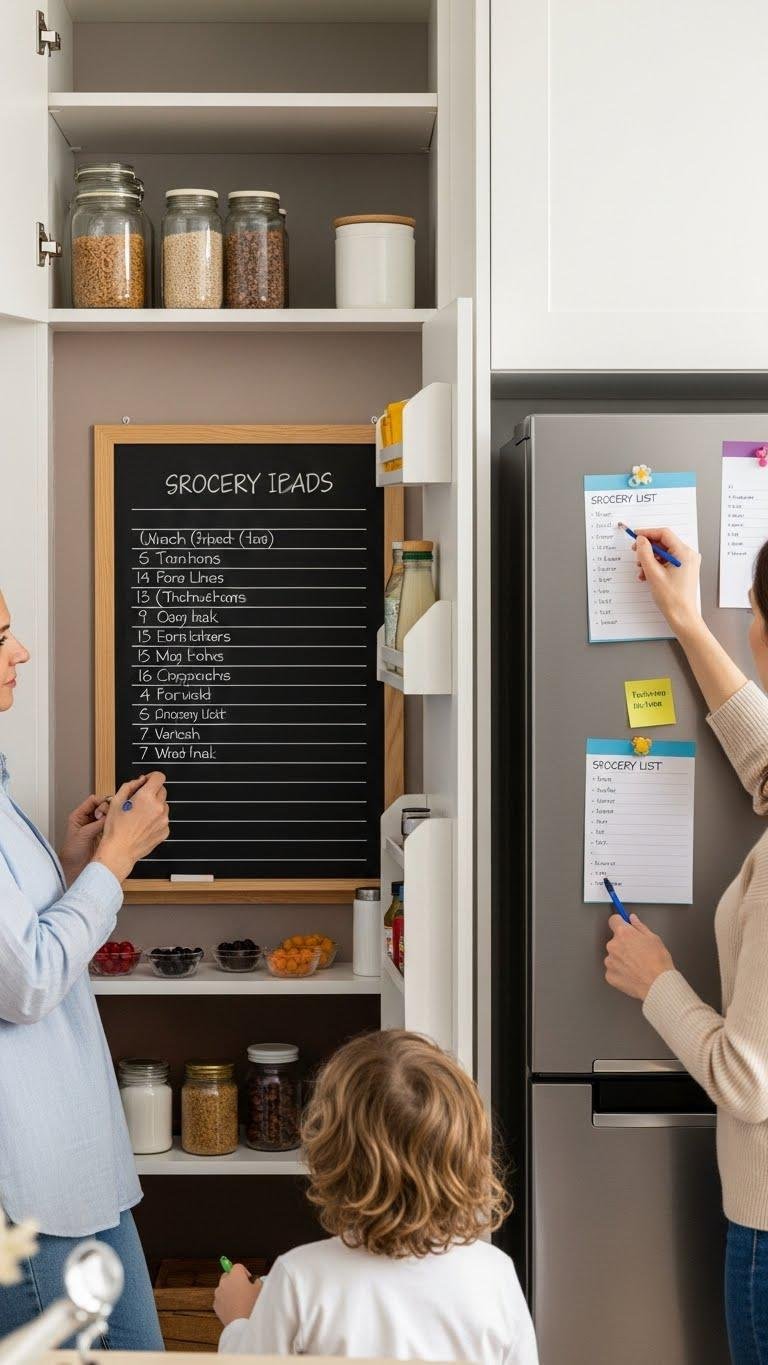
Keep a single grocery list right by the pantry so you and everyone in the household can add items the moment you run out. Mount a chalkboard pad for erasable staples and a magnetic notepad on the fridge for quick scribbles.
You’ll cut impulse buys, streamline shopping, and reclaim time. Keep it simple, visible, and routine so errands feel liberating, not chained.
Use Baskets to Contain Snacks and Small Packs
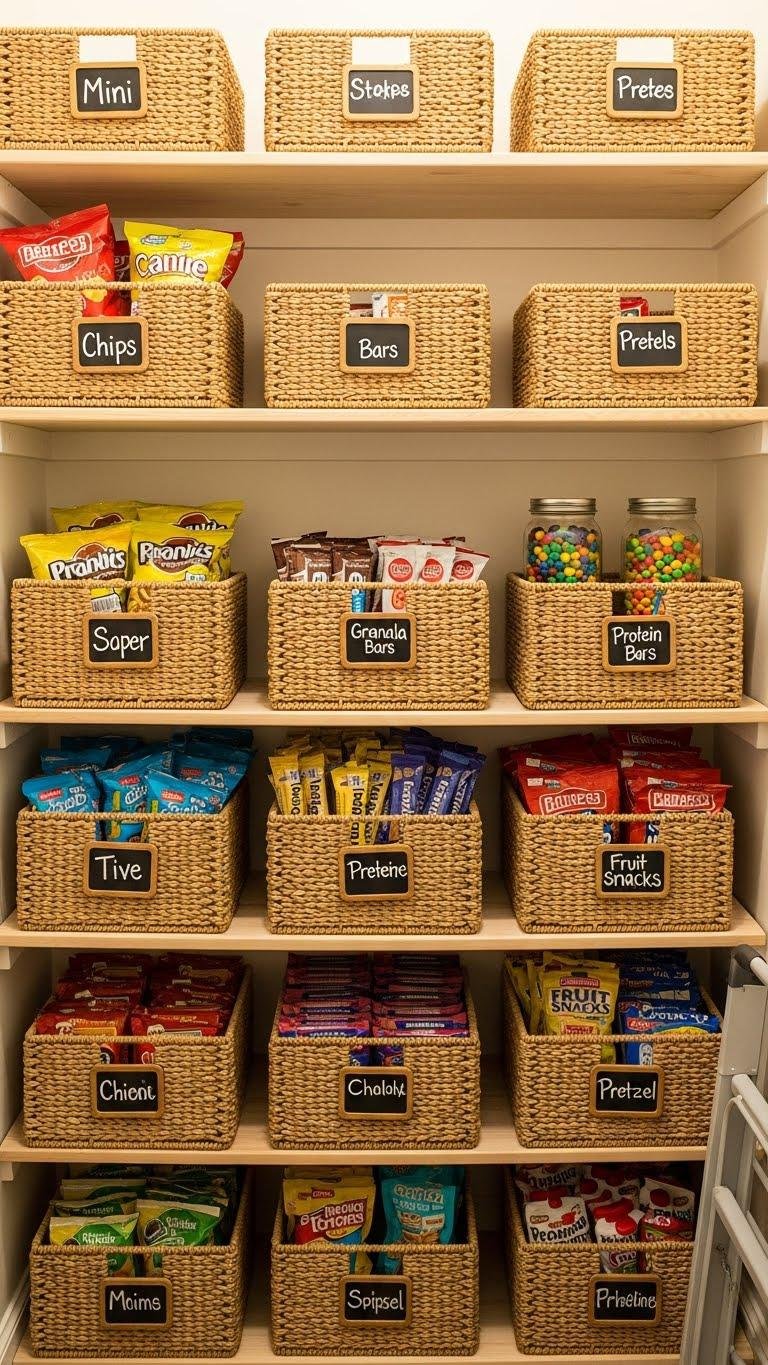
Corral small snacks and single-serve packs into labeled baskets so you can grab what you need in one smooth reach. Use snack baskets to group chips, bars, and portion pouches by type or person.
You’ll save time, reduce clutter, and keep portions visible. Label each basket clearly, rotate stock, and enjoy a pantry that supports quick choices and more freedom in your day.
Use Three-Tier Shelves for Tiered Visibility
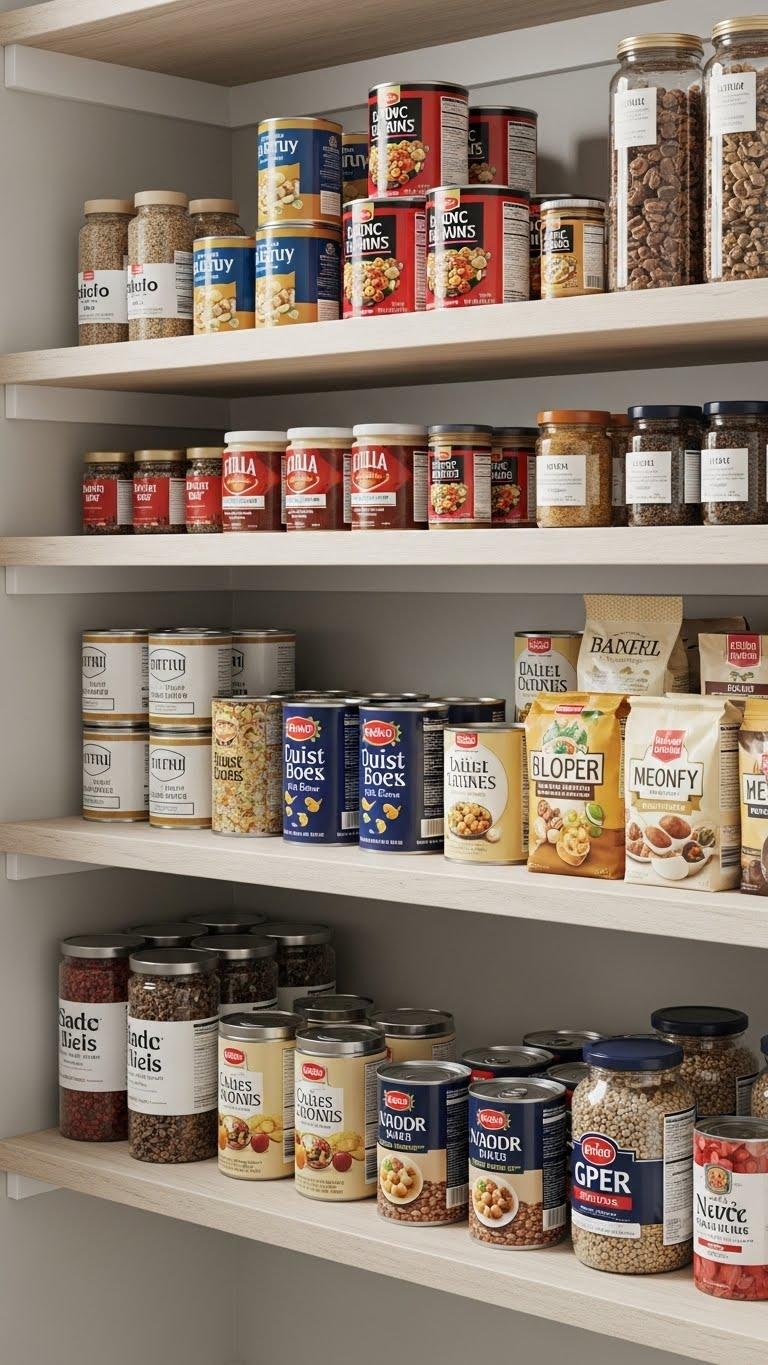
Stack three-tier shelves to lift items from the back so you can see everything at a glance. You’ll arrange cans, jars, and mixes by category, enjoying tiered visibility that saves time and reduces frustration.
Choose finishes that match shelf aesthetics to keep the space calm and free. Swap heights and positions easily so your pantry stays orderly and supports your daily freedom.
Implement FIFO Rotation to Reduce Waste

Rotate items using the FIFO (first in, first out) method so older products get used before newer ones, cutting spoilage and saving money. You’ll set clear Shelf Rotation routines, mark dates with Batch Labeling, and move new purchases behind older stock.
Treat pantry flow as First In, Second Out discipline: you’ll save time, reduce waste, and keep choice simple and liberating.
Store Baking Ingredients Together With Tools
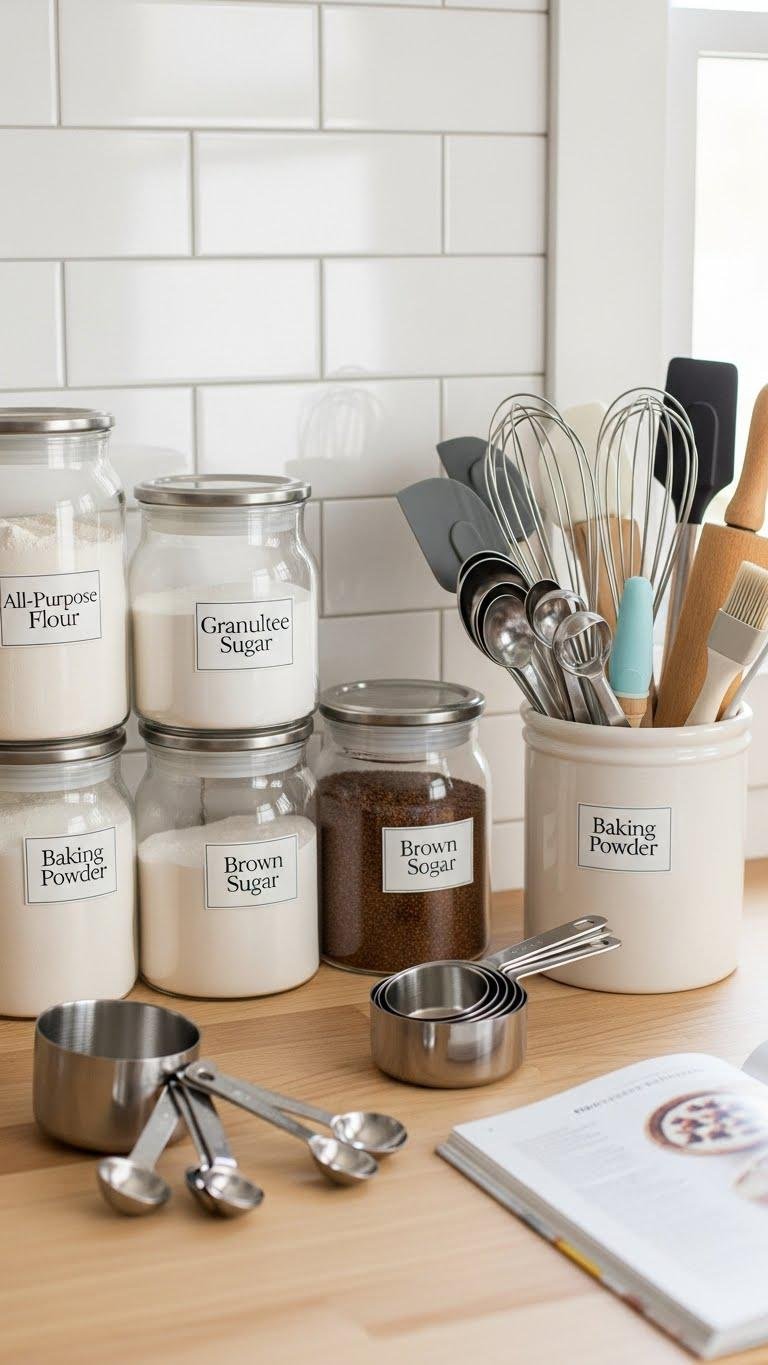
Keep your baking essentials together so you can grab what you need and get started without hunting. Set up an ingredient station with labeled containers for flour, sugar, and leaveners, nearby measuring cups and spoons, and a designated spot for baking tools like whisks and spatulas.
You’ll save time, cut clutter, and enjoy the freedom to bake whenever inspiration strikes.
Use Drawer Organizers and Dividers for Small Items
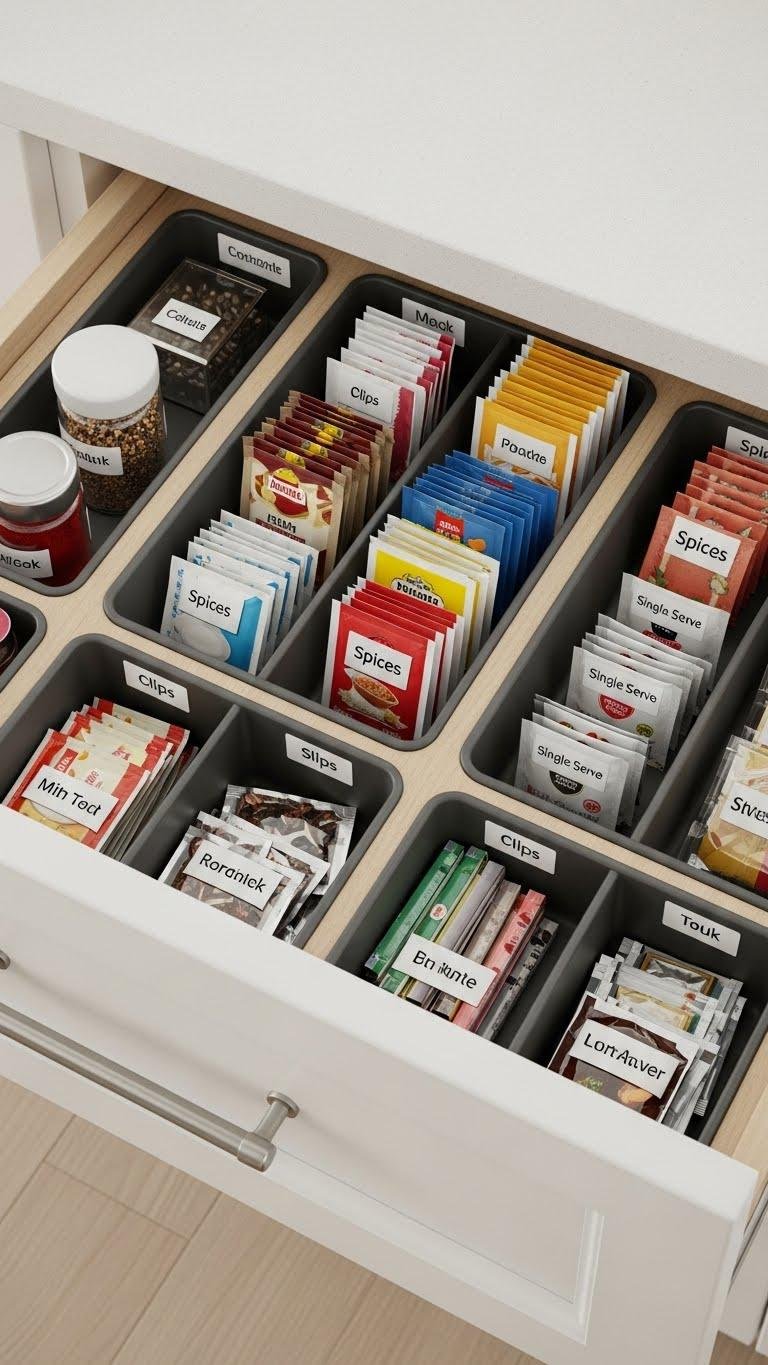
If you want easy access to small pantry items, use drawer organizers and dividers to create tidy, labeled zones for spices, packets, clips, and single-serve goods. You’ll enjoy freedom to grab what you need fast.
Use Label Inserts to identify compartments, and Custom Trays to fit drawers precisely. Keep similar items together, rotate stock, and reclaim time and calm in your kitchen.
Protect Food With Airtight Prokeeper-Style Sets
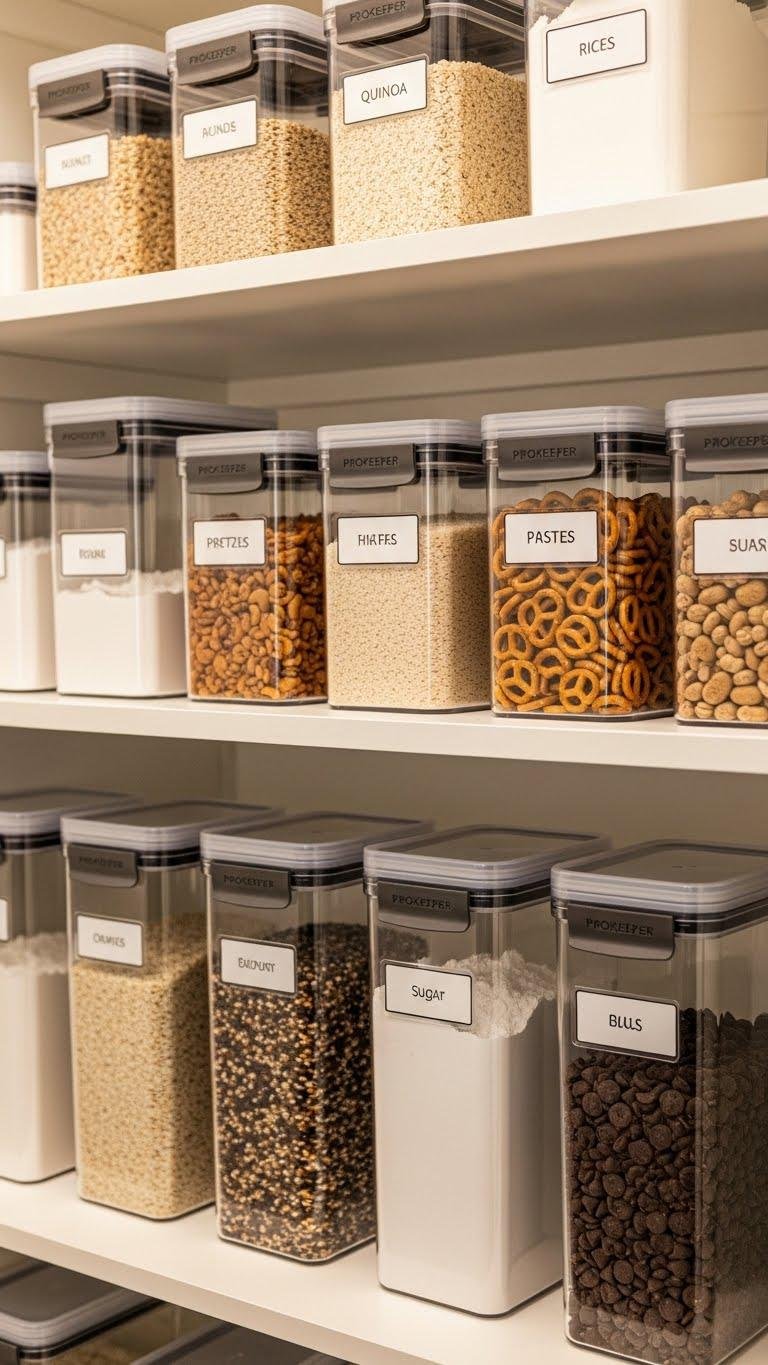
Seal freshness with airtight Prokeeper-style sets to extend shelf life and prevent spills, pests, and stale flavors. You’ll swap bulky bags for stackable containers with air tight seals and clear labels, so you grab what you need fast.
Rigid lids act as moisture barriers, protecting grains, snacks, and baking supplies. You’ll save space, cut waste, and keep pantry freedom intact.
Maintain Clean Surfaces to Prevent Pests
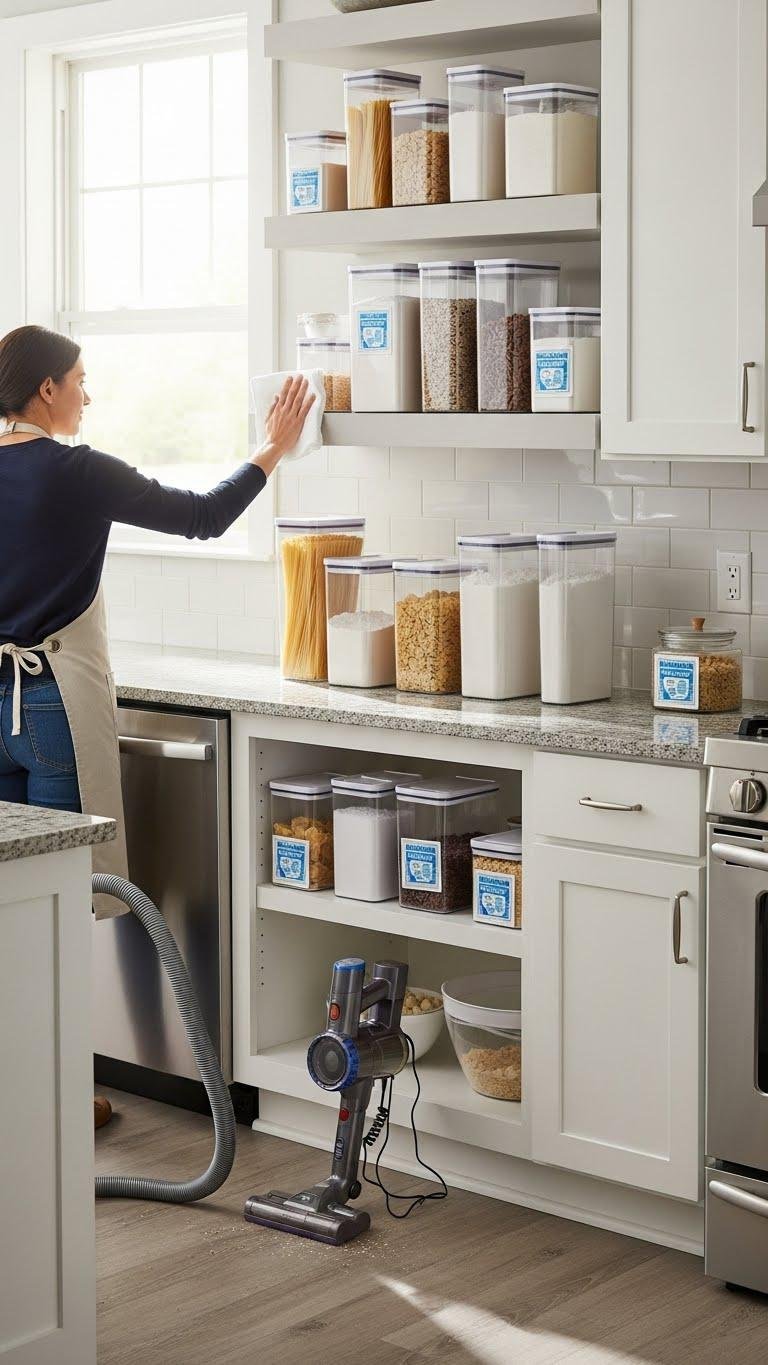
Now that your staples are snug in airtight Prokeeper-style containers, maintain clean surfaces to stop pests before they start. Wipe shelves regularly with gentle surface disinfection solutions, clear crumbs, and vacuum corners.
Control humidity and use moisture control packets to keep the space dry. You’ll reduce attractants, simplify inspections, and keep infestation risks low so you can enjoy a freer, calmer kitchen.
Regularly Reassess and Reorganize Your System
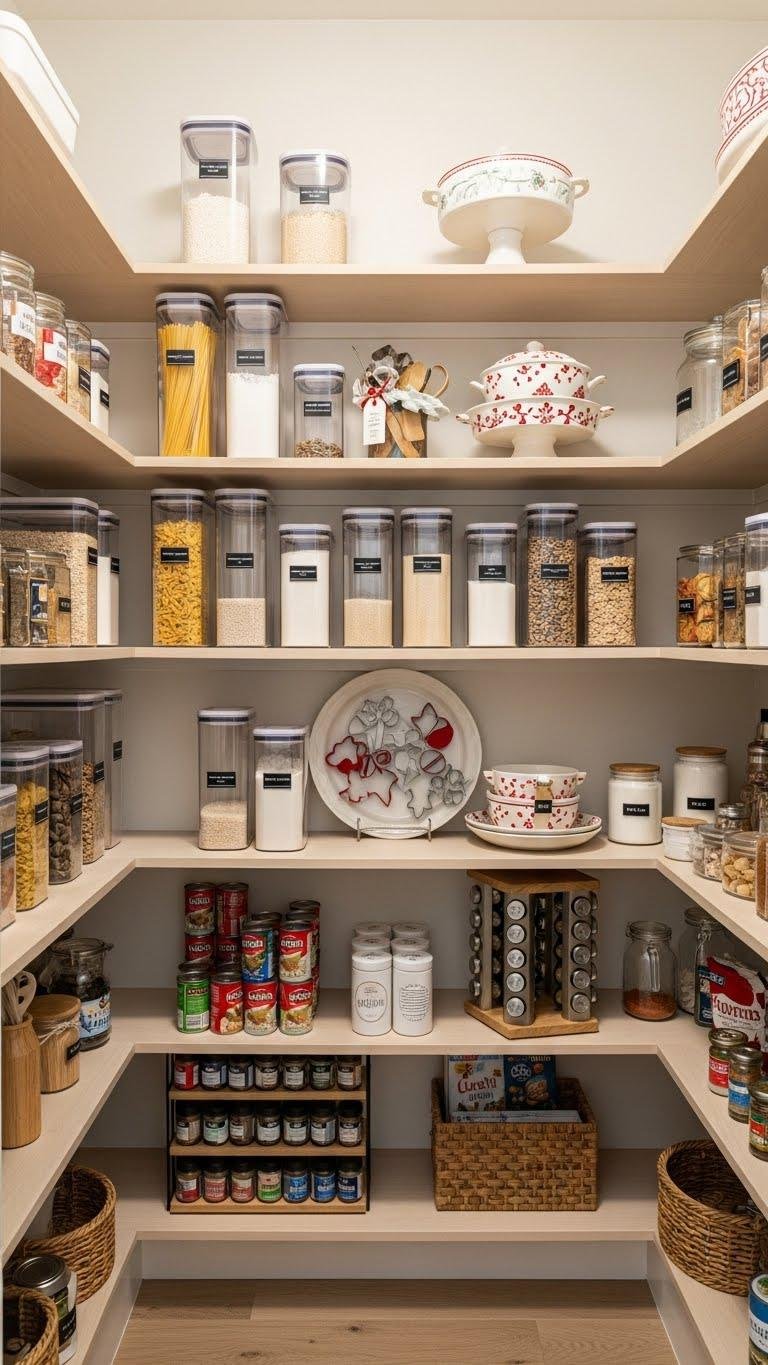
Regularly check and tweak your pantry layout so it keeps working as your needs change. Set quarterly seasonal inventory sessions to move items, rotate stock, and donate extras. Pair those with habit audits to spot routines that clutter space or waste food.
You’ll free up time and simplify shopping by adjusting shelves, labels, and containers to support the life you want.
Make Healthy Foods Front and Center

When you place fruits, whole grains, and healthy snacks at eye level and near the front of shelves, you’re far more likely to grab them first; arrange clear, labeled containers for prepped produce and quick grabs so healthy choices become the easy choice.
Use produce first placement and tidy healthy snack displays so you can move freely, make smart choices fast, and cut decision friction.