
You can refresh a room without a big budget or major tools—just a few smart swaps and a little patience. Swap hardware, paint a thrifted dresser, add fabric panels or a starch-stiffened headboard, and rethink furniture placement to open sightlines. These 27 doable ideas mix quick wins and lasting touches, practical steps that’ll make your space feel curated and calm—keep going and you’ll find the ones that fit your style and skill level.
Fabric-Covered Cabinet Facade

For an easy, high-impact update, cover your cabinet facades with fabric to add texture, pattern, and color without replacing doors. You’ll use simple upholstery techniques—adhesive spray, batting, and careful trimming—to create clean lines and durable surfaces.
This cabinet styling instantly personalizes a room, lets you swap looks seasonally, and gives you creative freedom without major renovation or permanent commitment.
Tassel Trim for Curtains and Cushions
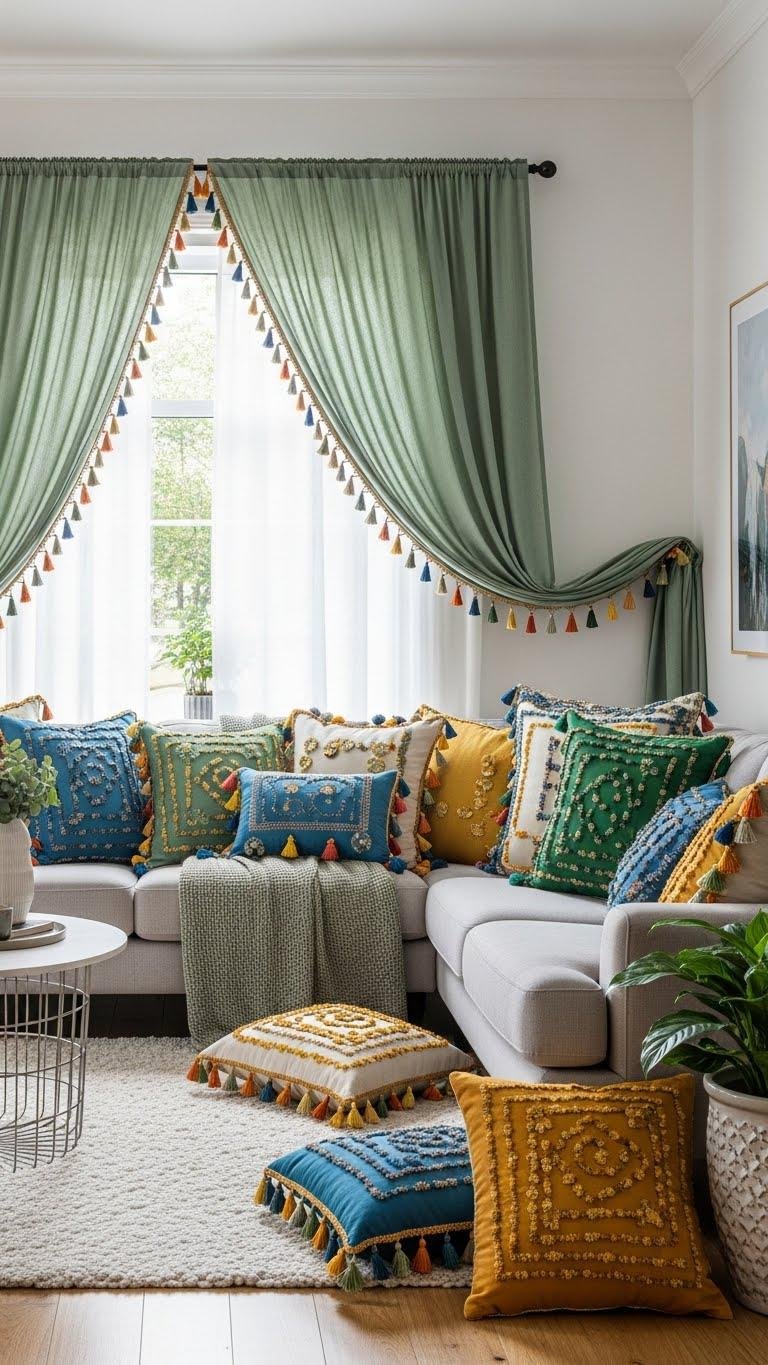
Paragraphs
Liquid Starch Fabric Headboard
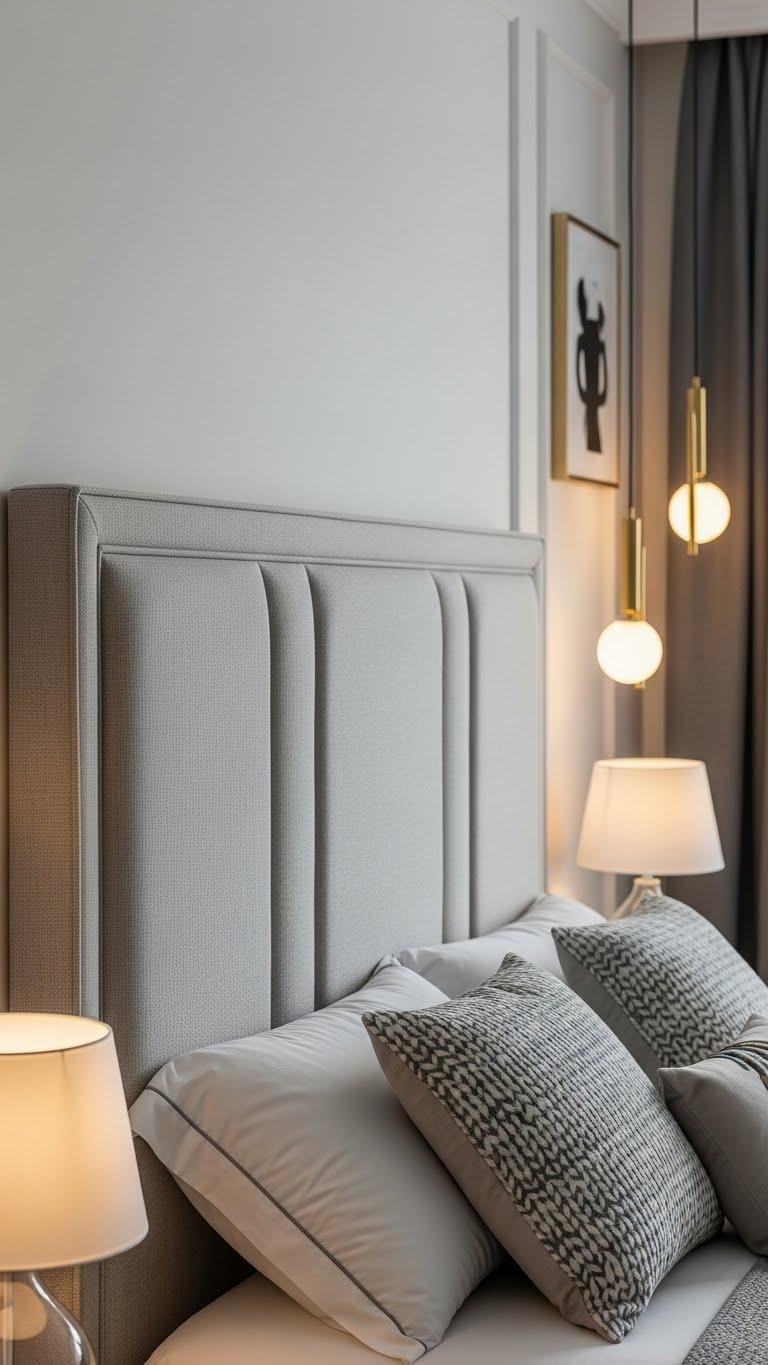
When you want a crisp, custom headboard without upholstery skills, liquid starch turns plain fabric into a structured, durable surface you can staple or wrap over plywood; it stiffens cotton and linen so seams stay sharp and patterns read cleanly, letting you achieve tailored lines, tufting, or channel details with minimal tools.
You’ll use starch bonding for temporary upholstery, peel off later, and refresh as you roam.
Dresser Makeover With Fabric Insets
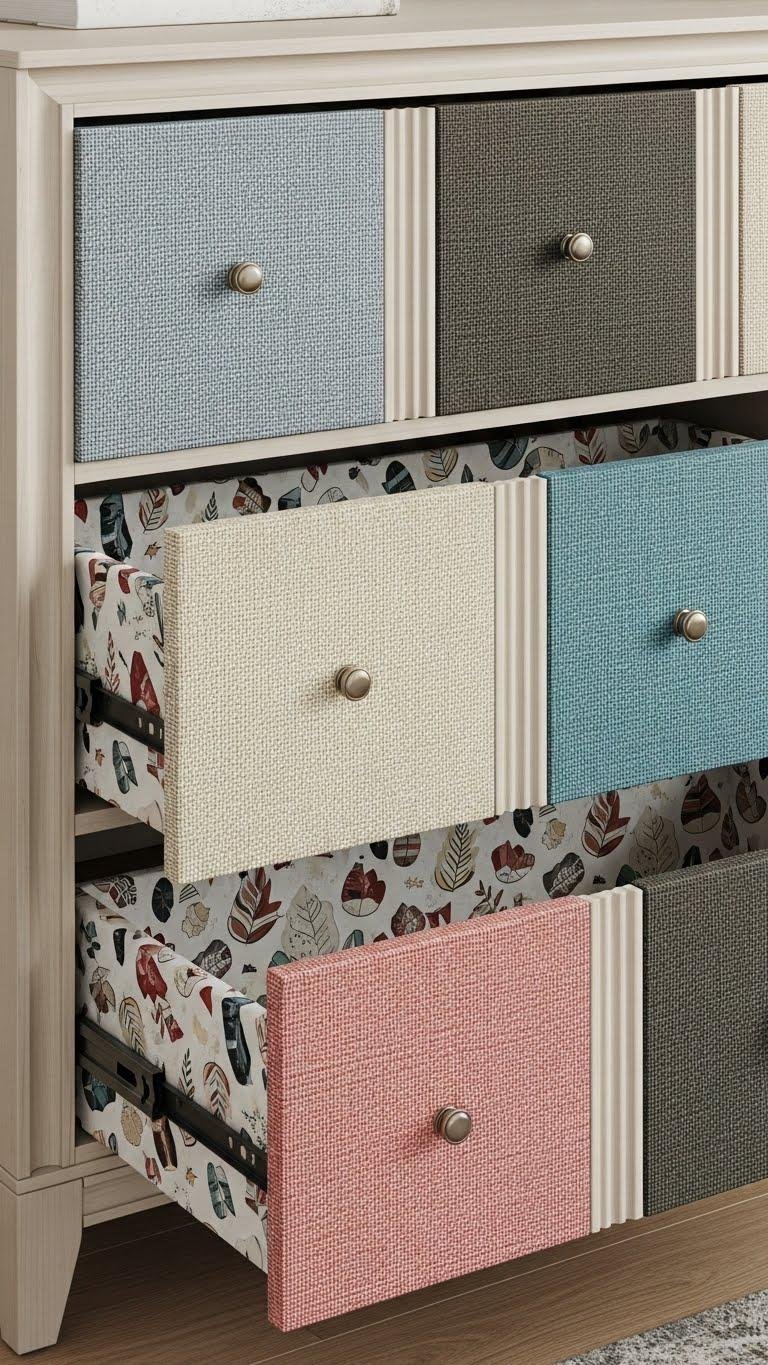
Give your dresser a fresh, custom look by inseting fabric panels into the drawer fronts or frame—you’ll get texture and color without full reupholstery.
Choose durable fabric for upholstered drawerfronts, trim edges with thin molding, and secure with adhesive or small brads.
Use patterned lining inside drawers for a surprise pop.
You’ll personalize storage, keep functionality, and change style freely.
Fabric-Backed Bookcases

A fabric-backed bookcase can transform a plain shelving unit into a room focal point with minimal effort—choose a bold print to create contrast or a neutral texture to add depth.
You’ll cut foam board, attach an upholstered backing or patterned liners, then secure fabric with spray adhesive for a clean fit. It’s a simple, freeing update that looks custom and keeps books organized.
Daybed Swap for Small Bedrooms
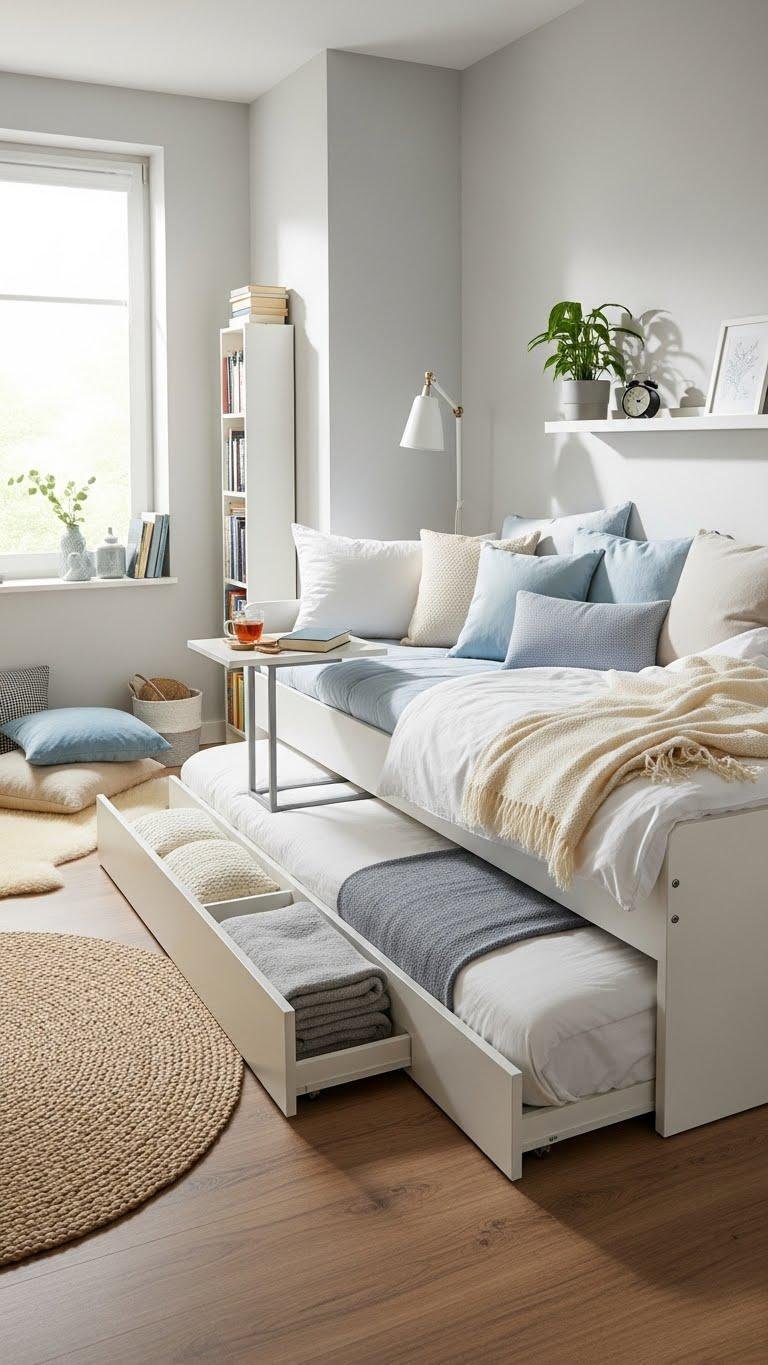
Swap in a streamlined daybed to instantly free up floor space and add versatile seating that doubles as a guest bed.
Choose a trundle conversion for occasional sleepers or a lofted daybed to reclaim under-bed real estate for storage or a cozy nook.
You’ll pick slim frames, airy linens, and modular accessories that keep the room light, flexible, and ready for adventure.
Closet-to-Mini-Office Conversion
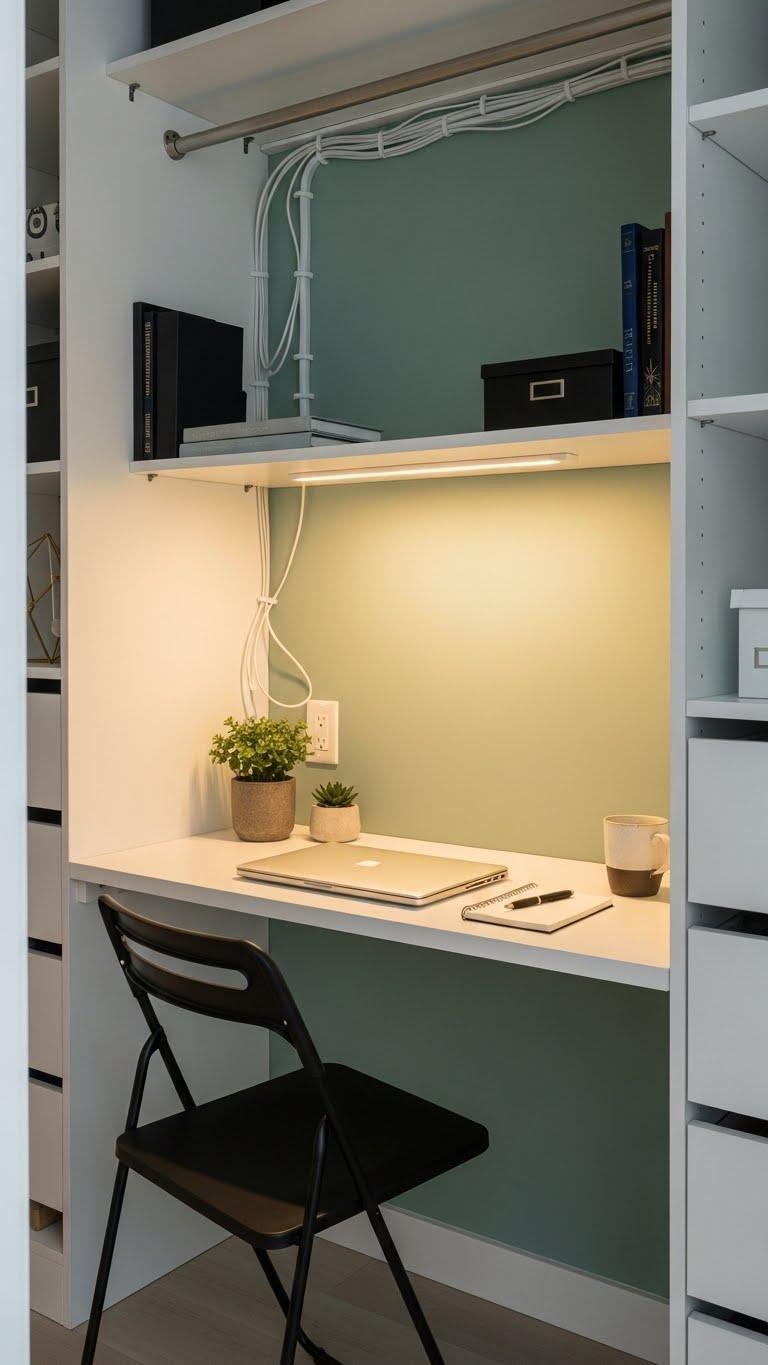
When you reclaim that unused closet, you get a compact, distraction-free workspace that fits neatly into your daily routine. Convert shelves into a slim compact desk, mount focused lighting, and add a folding chair. Wire neatly, use hidden storage for supplies, and paint a calming accent.
You’ll gain a private, efficient corner that frees your mind and schedule.
Tonal Drenching on Walls and Bedding
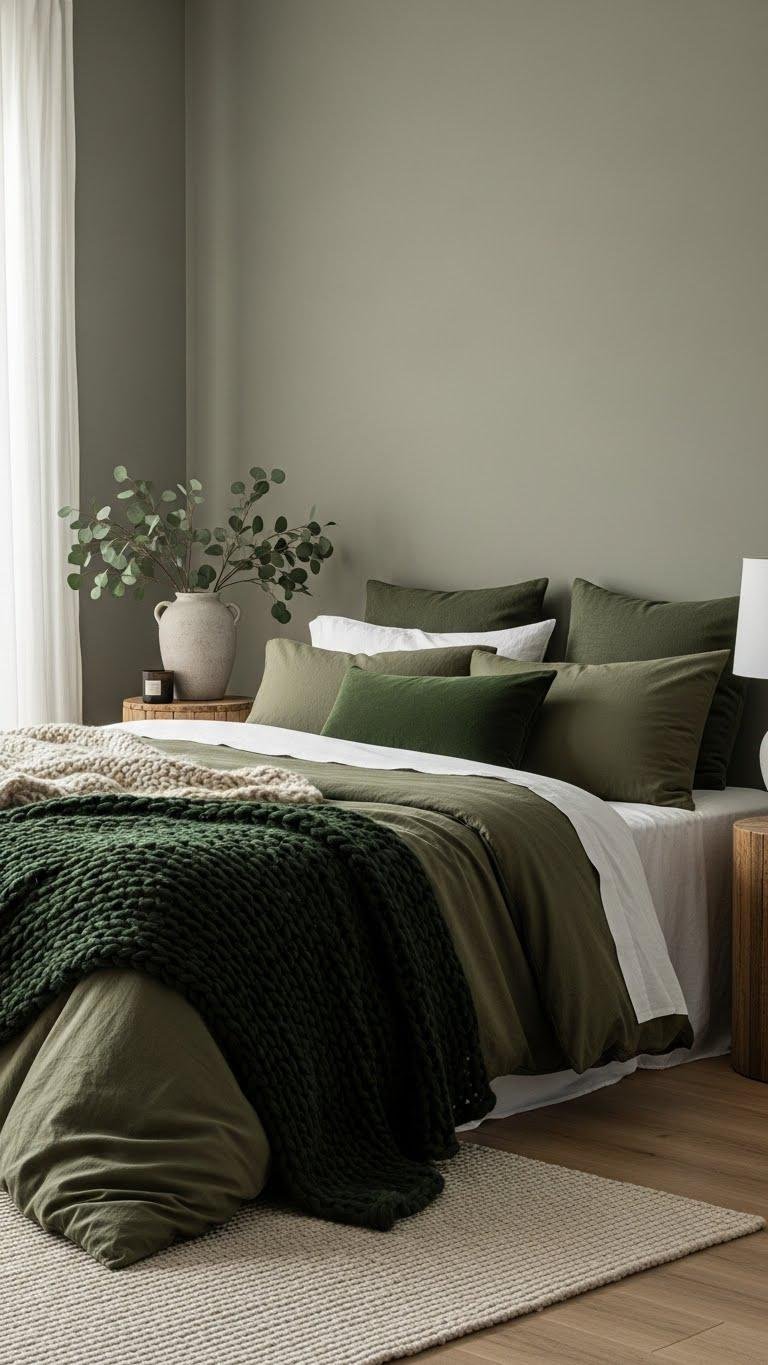
Often you’ll find tonal drenching gives a room an immediate sense of cohesion—paint the walls, choose bedding, and layer textiles in closely related shades so the space feels intentional and calm.
You’ll embrace tonal layering by mixing matte and glossy finishes, varying textures, and adding saturated bedding for depth. Keep accents minimal, contrast with one lighter tone, and let the palette free your design choices.
Wall-to-Wall Extended Headboard
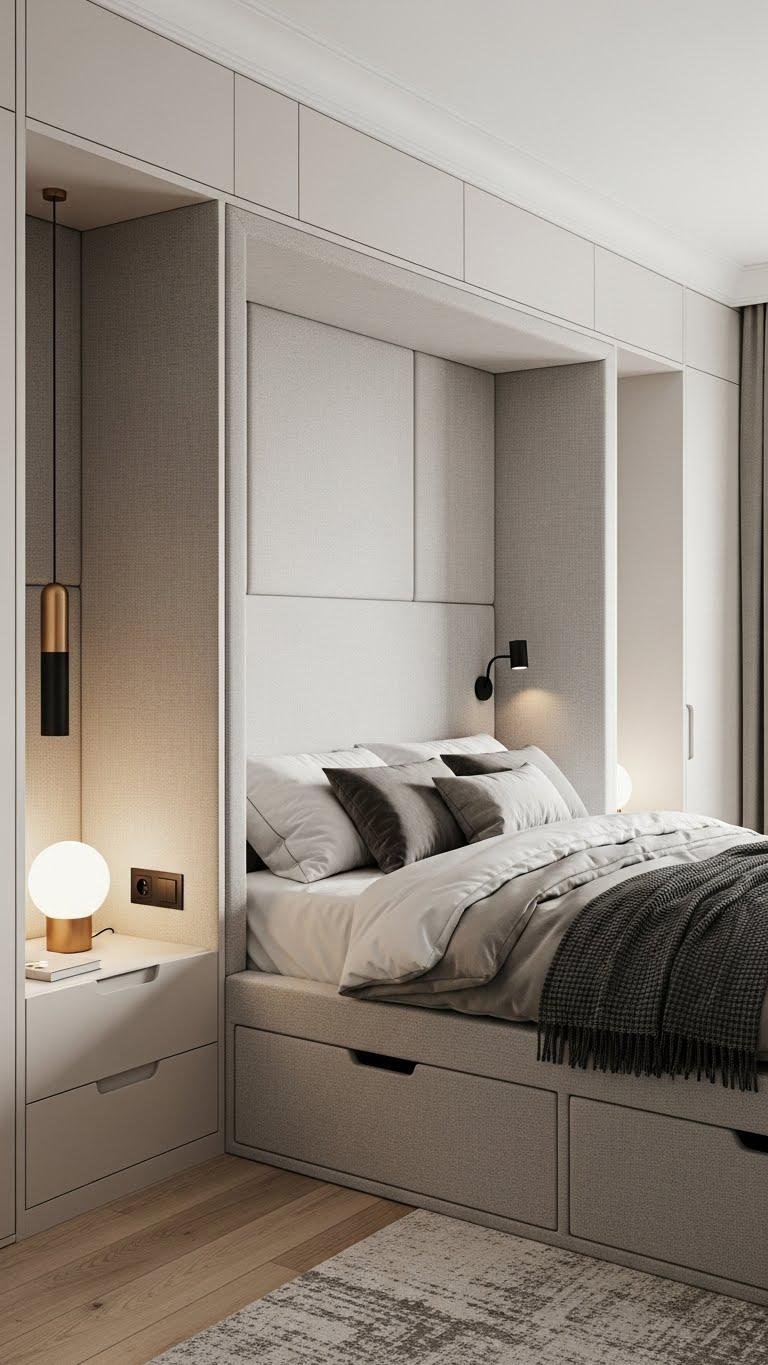
Framing the bed with a wall-to-wall extended headboard instantly anchors the room and gives you a built-in sense of structure and scale. You’ll craft a padded alcove for lounging, tuck storage beneath, and choose seamless upholstery to keep lines clean.
It’s a liberating upgrade that feels custom, practical, and minimal—letting you control proportions, texture, and cozy privacy without fuss.
Minimal Artwork Arrangement
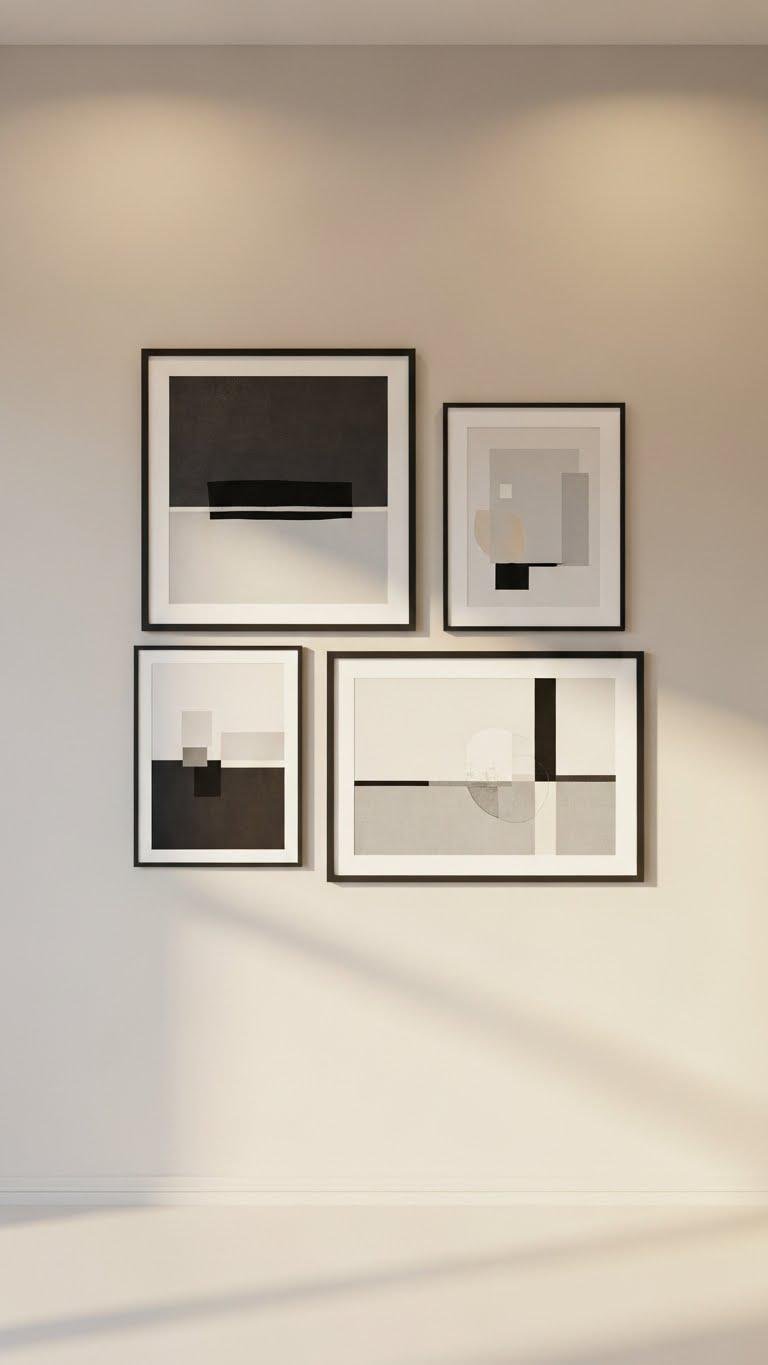
If you want art that breathes instead of competes, choose a minimal arrangement that balances negative space, scale, and a restrained palette. You’ll create a minimalist gallery feel by picking few curated pieces, aligning frames with staggered symmetry, and spacing them intentionally.
Measure, mark, and hang at eye level; let each work command calm, clarity, and the freedom to edit as your room evolves.
Upcycled Thrift Store Canvas Art

Give old canvases new life by hunting thrift stores for pieces with good composition or sturdy frames you can transform.
You’ll build a salvaged frame gallery by cleaning, sanding, and repainting frames, then stretching or backing canvases.
Add painted canvas silhouettes for bold contrast, or layer translucent washes for depth.
You’ll create liberated, polished art that costs little and expresses your style.
Painted Dresser With New Knobs
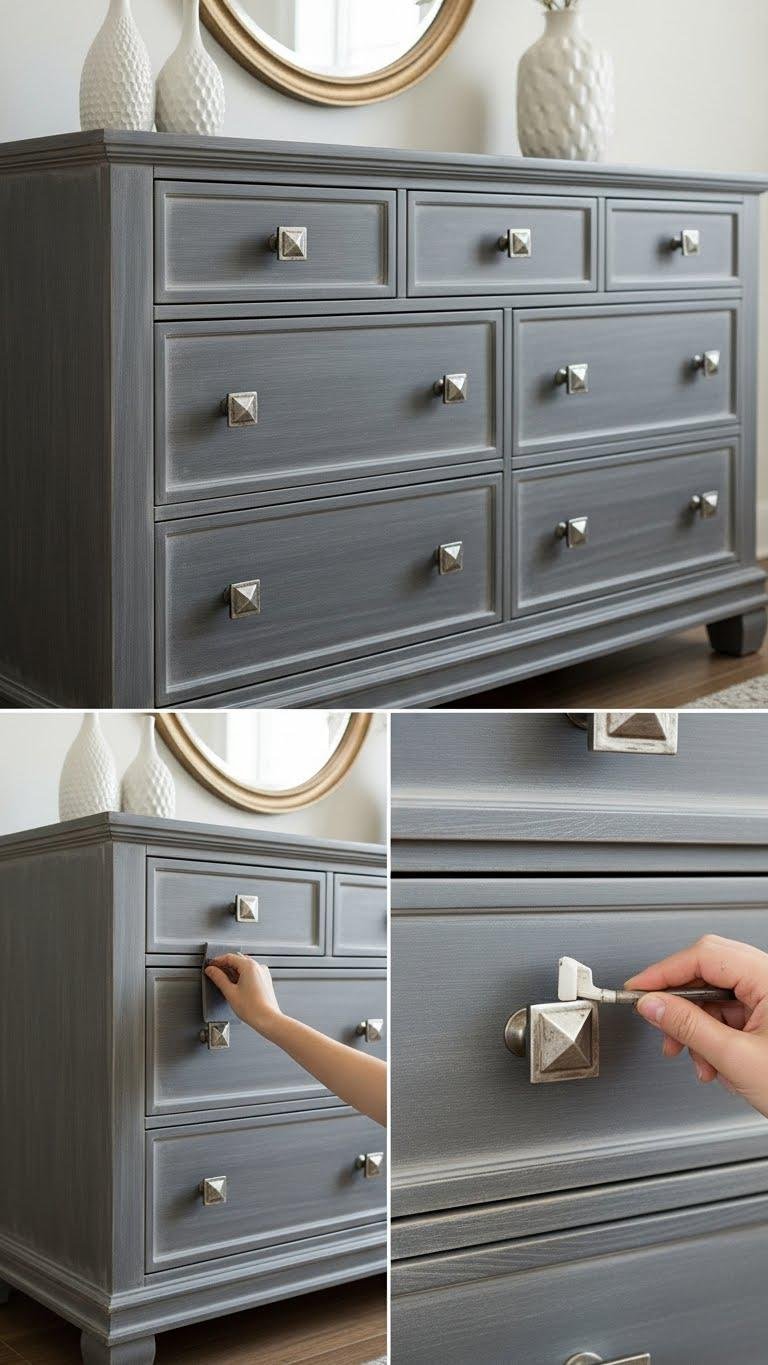
Refresh a tired dresser by sanding, painting, and swapping in new knobs to turn a utilitarian piece into a focal point. You’ll choose a durable chalk finish for effortless matte texture, mask edges for crisp lines, and pick bold geometric pulls to express your style.
Sand lightly between coats, align hardware precisely, and let each drawer become a small declaration of liberated design.
Budget Furniture Refresh With Unique Hardware
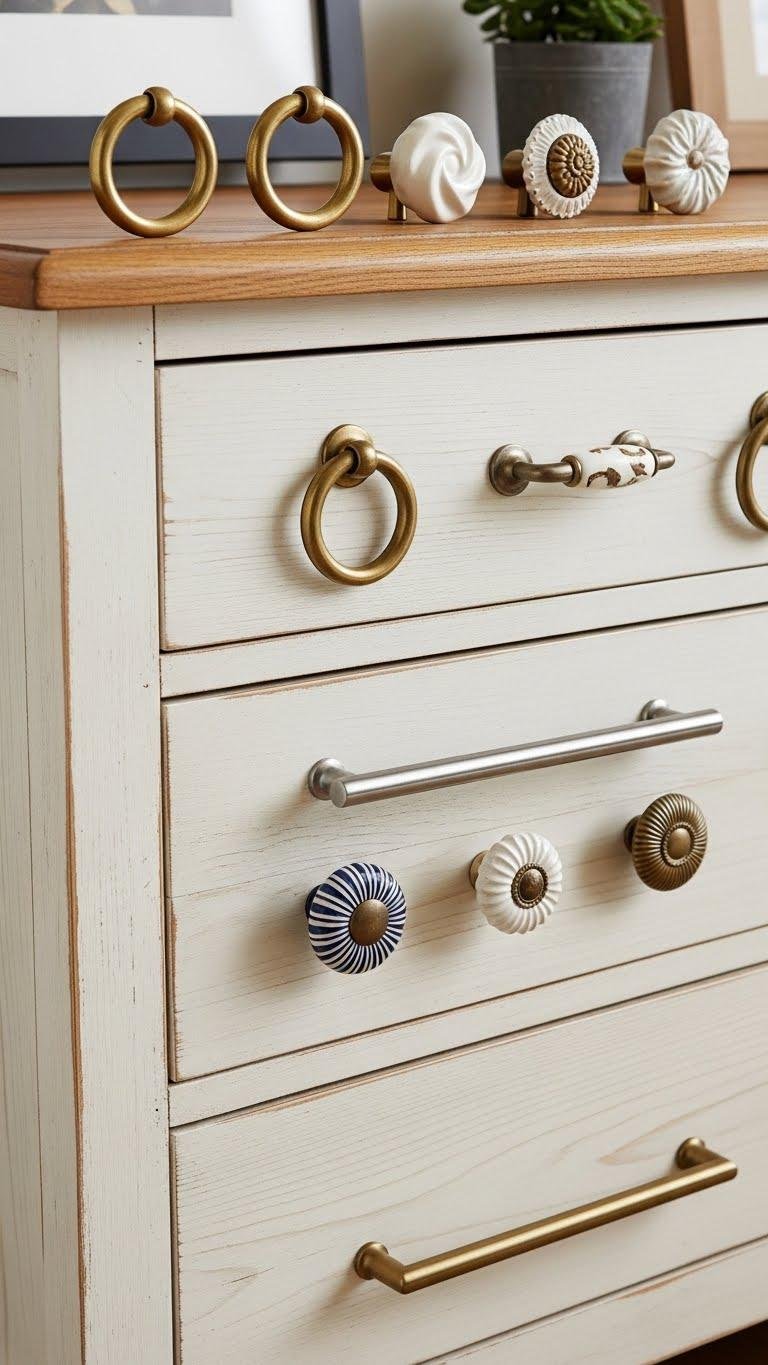
Transform a plain thrift-store find into a standout piece by focusing on hardware as your design pivot: swap mismatched, tired knobs for a curated set of unique pulls—think oversized brass rings, sculptural ceramic knobs, or slim modern bar handles—to instantly elevate the look without blowing your budget.
Choose a drawer upgrade that mixes vintage pulls with matte modern metals; you’ll get charm, function, and liberated style.
Layered Pillow Styling
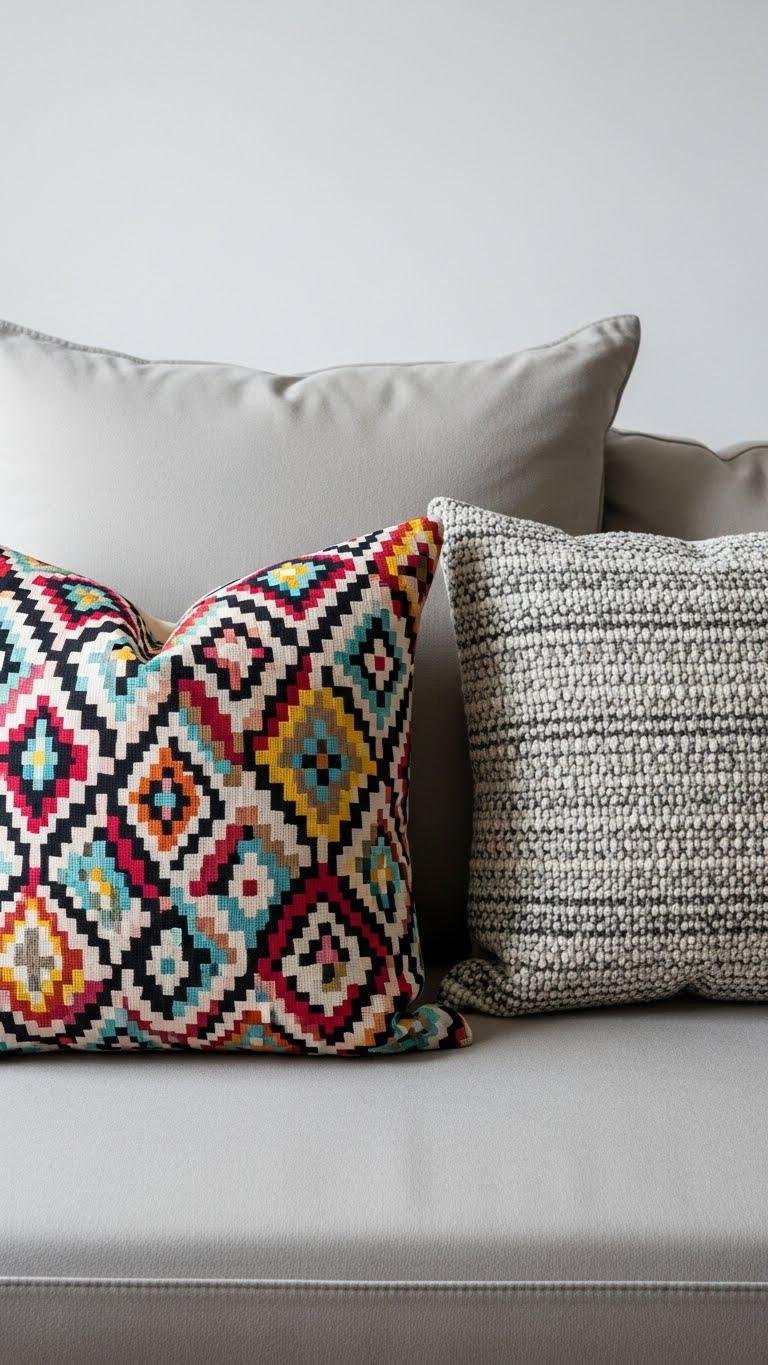
Start with three pillows as your baseline: a large square for structure, a medium patterned pillow for personality, and a smaller textured cushion for contrast.
You’ll layer by mixing sizes, colors and contrasting textures, placing pillows with confident asymmetrical placement so it feels relaxed not rigid. Rotate fills for loft, tuck corners for shape, and keep swaps simple so your space stays free and inspired.
Mix-and-Match Nightstands
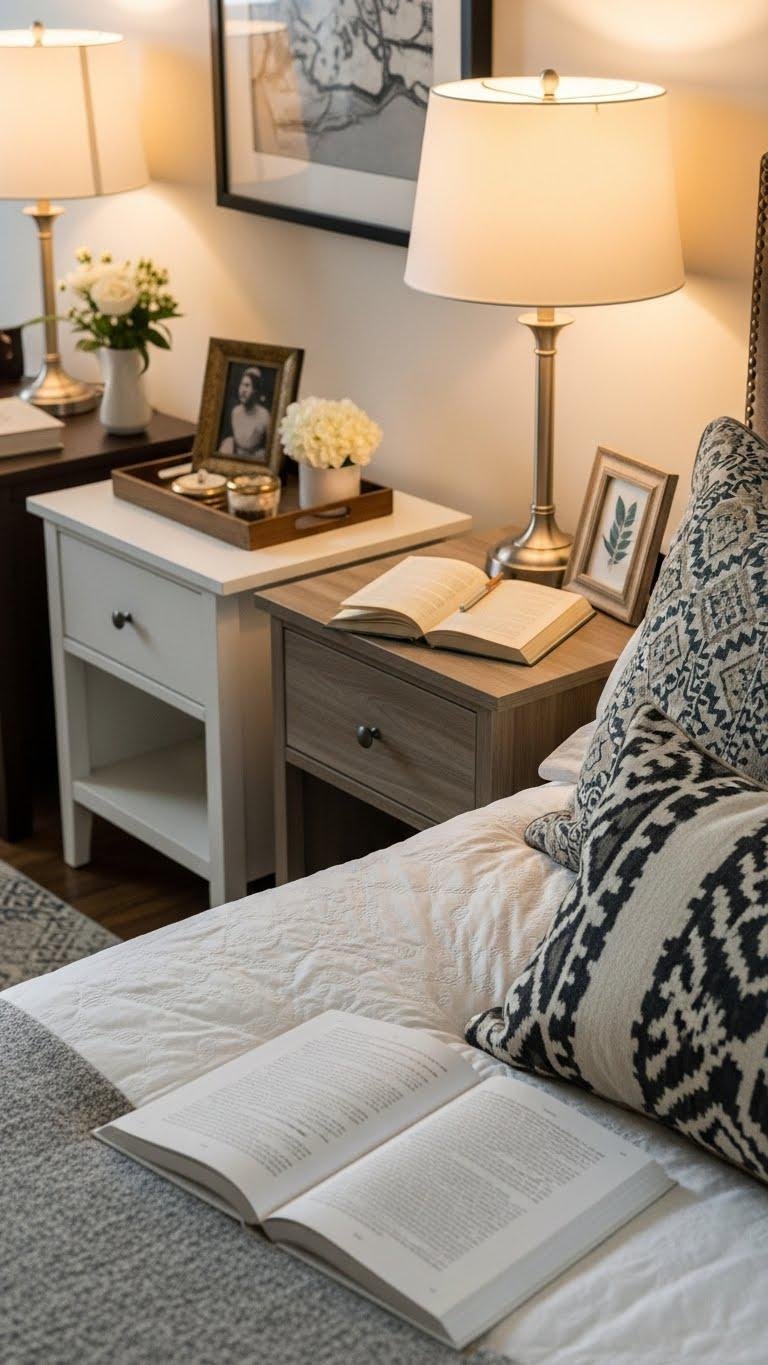
Pillows set the mood on your bed; your nightstands finish the story. Choose mismatched silhouettes to express freedom while keeping balance—one slim, one boxy.
Pick varied finishes that complement hardware and lamp heights. Anchor each side with a tidy tray, a book, and a personal object.
You’ll create an intentional, lived-in look that feels curated, easy, and utterly yours.
Accent Wall With Bold Wallpaper or Paint

Give one wall a bold wallpaper or paint and watch the whole room sharpen into focus. You’ll pick a confident hue or motif that invites pattern breathing, then balance it with furniture and trim.
Stay practical: sample swatches, map paint proportions, and use texture layering—rugs, throws, matte vs. gloss—to ground the accent without overwhelming. This lets your space feel liberated and intentional.
Monochromatic Texture Scheme
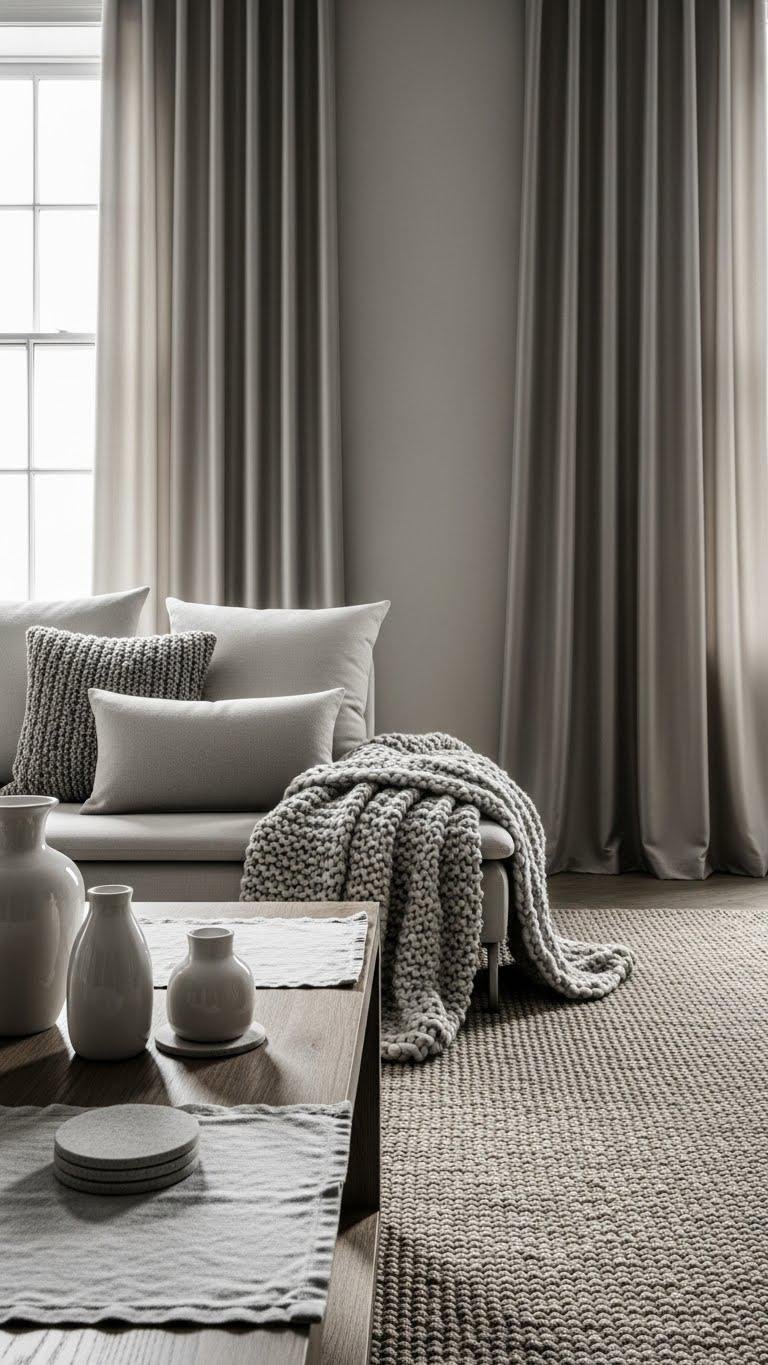
When you layer only one color, texture becomes the star—so plan a mix of finishes and fabrics that read as rich rather than flat.
You’ll use tone layering to create depth: matte walls, satin curtains, boucle pillows, woven rugs.
Texture pairing matters—mix tight weaves with loose knits, glossy accents with raw linen—so your space feels cohesive, liberated, and deliberately tactile.
Wooden Panel Accent Wall

A wooden panel accent wall instantly grounds a room and adds sculptural warmth, so pick a grain and profile that complement your monochromatic texture scheme.
You’ll choose between reclaimed rustic stripes or sleek floating planks, plan stud spacing, and seal for durability. Install horizontally to widen a space or vertically to lift ceilings; finish subtly so furniture and light remain free and unfettered.
Graphic Print Accent Pieces
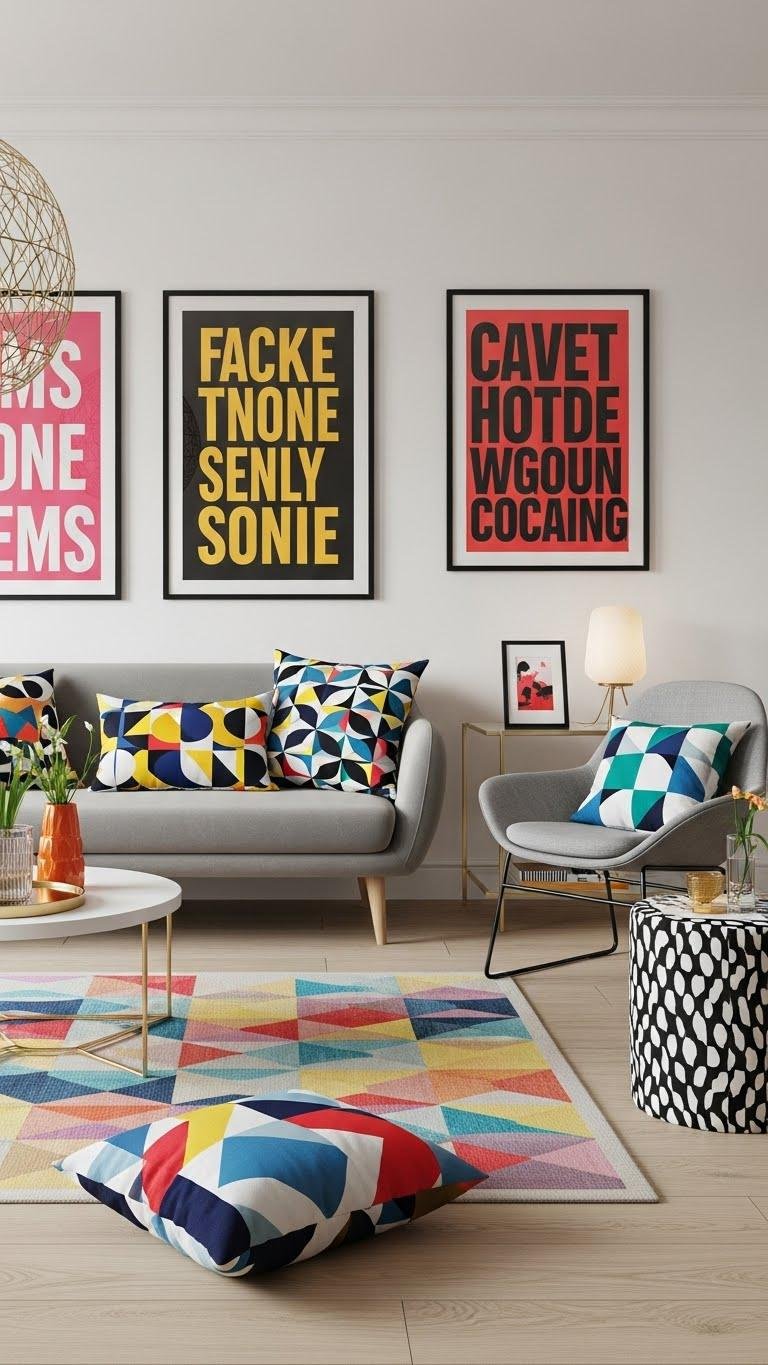
Graphic prints inject instant personality into a room, so pick pieces that play off your existing palette and scale.
Choose bold geometric cushions, rugs, or framed art to anchor zones without overwhelming flow. Mix retro typography posters with minimalist furnishings for contrast, and rotate accents seasonally to keep freedom fresh. Measure sightlines, balance color intensity, and secure lightweight pieces for easy swaps.
Built-In Shelves for Alcoves
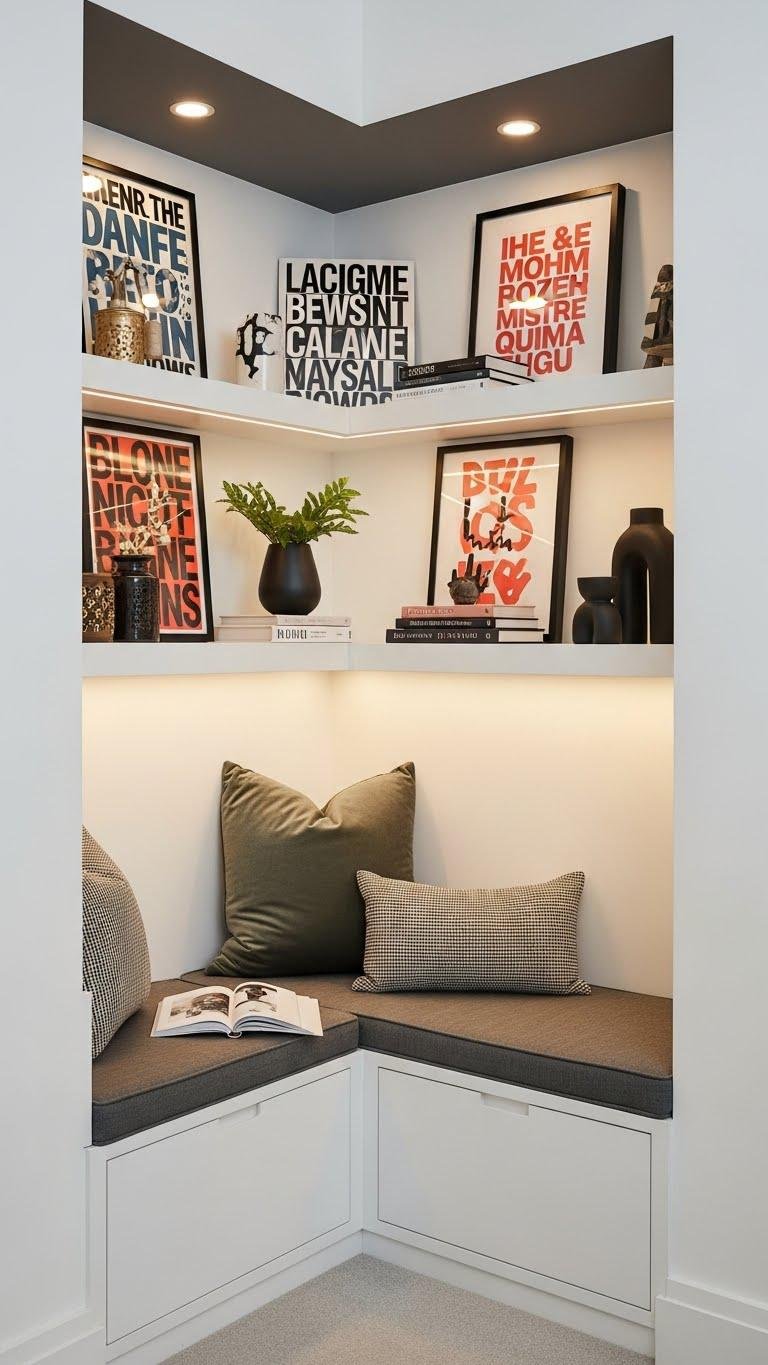
If you love how bold prints define a seating area, built-in shelves for alcoves will give those accents a tailored backdrop that keeps the room feeling curated rather than cluttered.
You’ll plan Alcove lighting to highlight objects, stagger shelf depths for flow, and integrate Corner seating nearby for cozy nooks. Choose open and closed storage, paint the recess for contrast, and keep styling spare.
Low-Profile Furniture Layout

Often you’ll find low-profile pieces make a room feel larger and more relaxed, so choose furniture that sits low to the ground and keeps sightlines open.
You’ll arrange low slung seating around a streamlined coffee table, leaving walking space and visual breathing room. Anchor zones with a slim rug, prioritize multifunctional pieces, and keep proportions honest so the room feels free and unfussy.
Clear or Light-Colored Furnishings
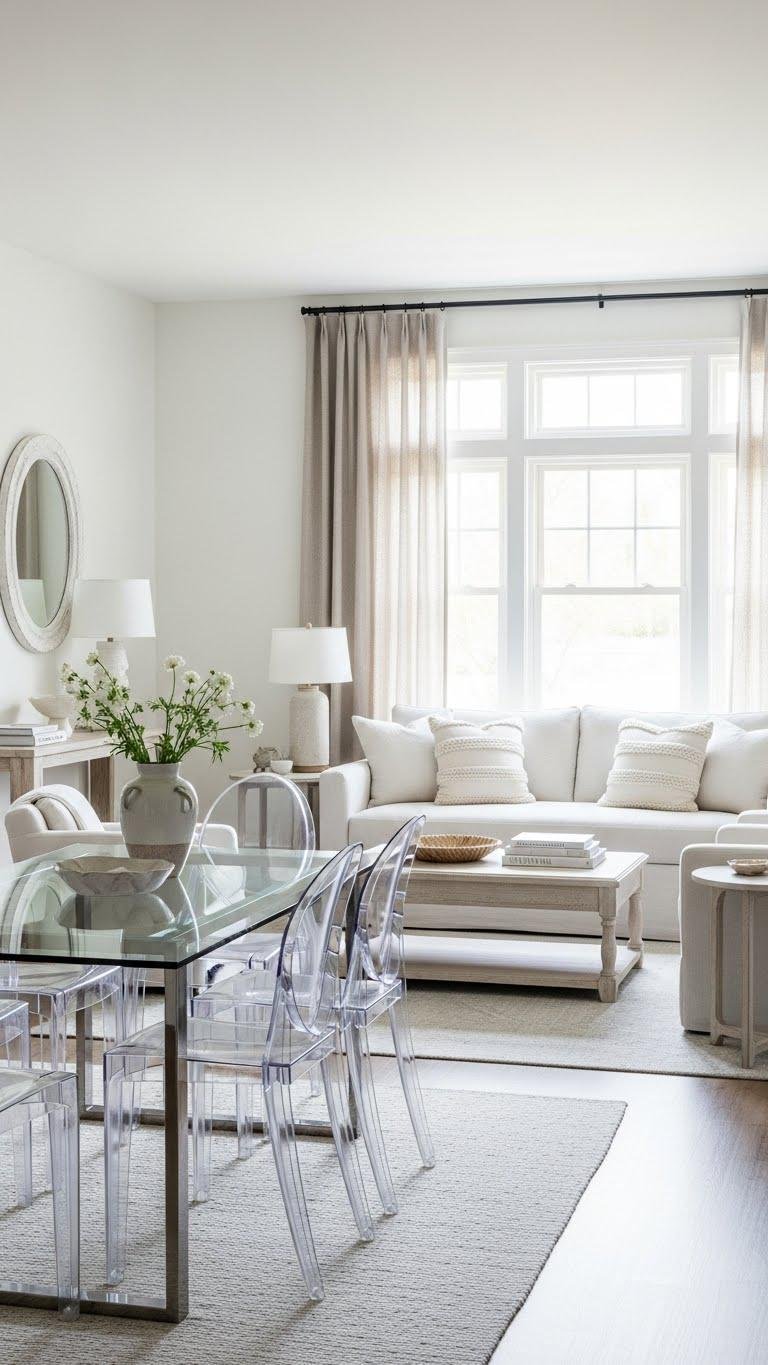
Bring in clear or light-colored furnishings to brighten sightlines and keep the room feeling airy: translucent acrylic chairs, glass-topped tables, pale linen sofas, and washed-wood pieces reflect light and visually recede, so your space reads larger without sacrificing function.
Pair pale upholstery with textured throws and linen curtains to maintain warmth and freedom of layout; choose streamlined shapes for effortless, uncluttered living.
Draped Fabric Room Divider

A draped fabric room divider lets you carve out zones without building walls, giving you instant privacy and softening a room’s lines.
Choose a sewn curtain on a ceiling track or tension rod for a neat, tailored look. It’s a portable partition you can move, swap fabrics for mood changes, and easily remove—perfect if you crave flexible, stylish separation without commitment.
Furniture Arrangement for Better Light Flow

Good furniture placement makes natural light work for you instead of against you; position seating and low-profile pieces to let sun and daylight travel deep into the room, and keep bulky items away from windows and primary light paths. Angle rugs and tables to guide sightlines, add angled mirrors to bounce light, and use translucent blinds for privacy without blocking glow, so you feel open and free.
Framed Dollar Store Artwork

Once you’ve let sunlight shape the room, don’t overlook how inexpensive framed art can polish those bright, open spaces.
You’ll scout dollar store prints, secure them in simple frames, and mix a framed coin for vintage charm. Use craft magnets to test arrangements on a metal board before committing to wall placement. It’s bold, affordable, and instantly freeing.
Painted Knobs and Small Accessories
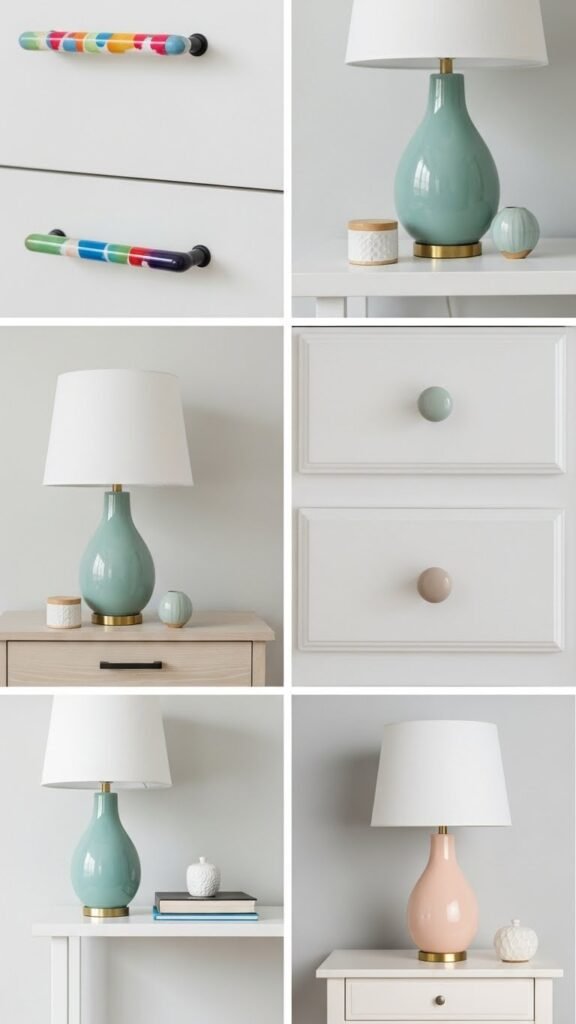
Several small updates can change a room’s personality overnight: swap plain drawer pulls for painted knobs, refresh lamp bases with a matching accent color, and add tiny metallic or ceramic details that tie the palette together.
You’ll pick colorful pulls to punctuate shelves, paint knobs in muted tones for calm, and mix vintage luster accents for character. Small choices give you effortless control.
Thrifted Accessory Mix-and-Match
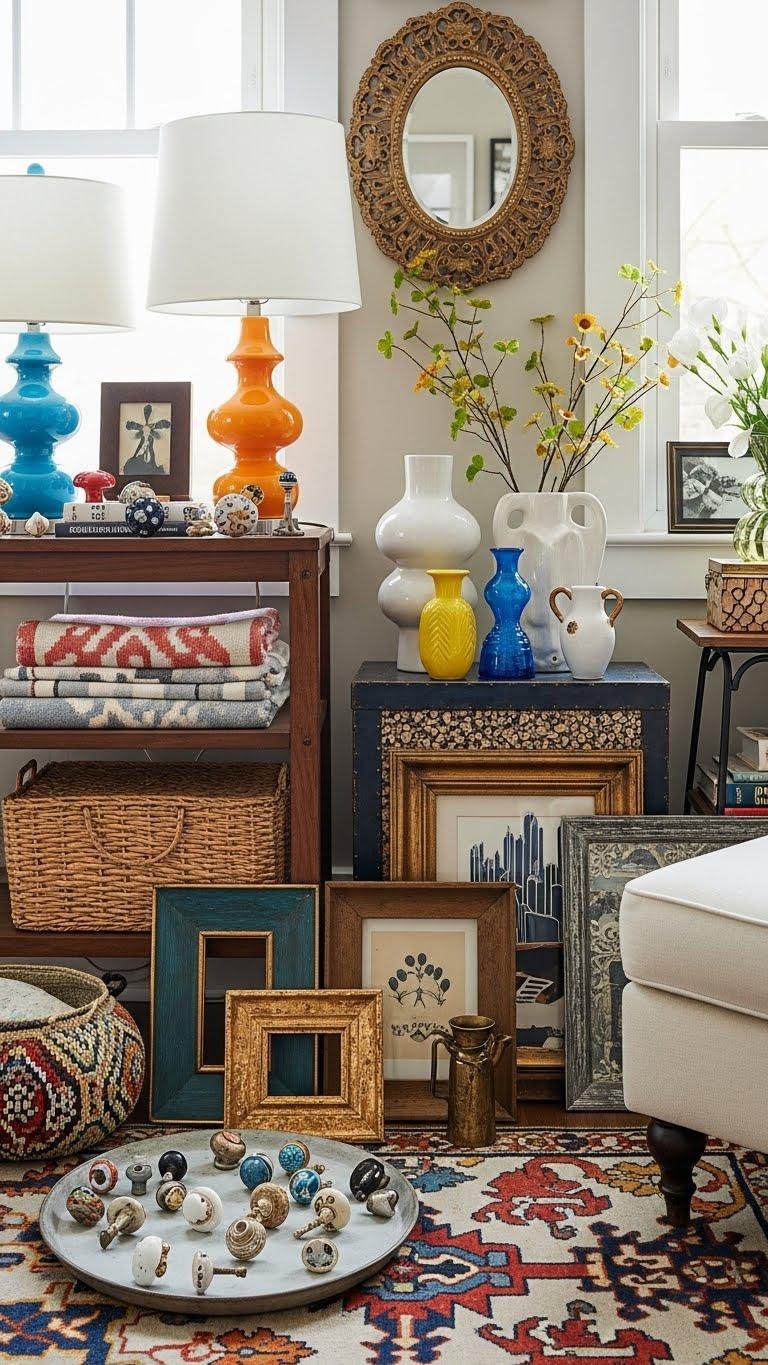
After swapping out knobs and tweaking lamp bases, broaden your palette by mixing thrifted finds with curated accents. You’ll pair vintage hooks with modern trays, sculptural vases, and artfully worn frames to create contrast.
Embrace pattern layering on textiles and rugs, rotate pieces seasonally, and trust your instincts—this keeps the room playful, intentional, and utterly yours without breaking the bank.