
You’ll rethink shelves as curated stages, not just storage—mix floating shelves and low-profile planters with layered vintage finds, odd-numbered clusters, and mirror-backed pieces to build depth and rhythm. Focus on texture, negative space, and a few bold statement items, then use subtle lighting and asymmetry to guide the eye. Keep it intentional and flexible, and you’ll want to rearrange seasonally to keep the display fresh—here’s how.
Floating Shelf Minimalism
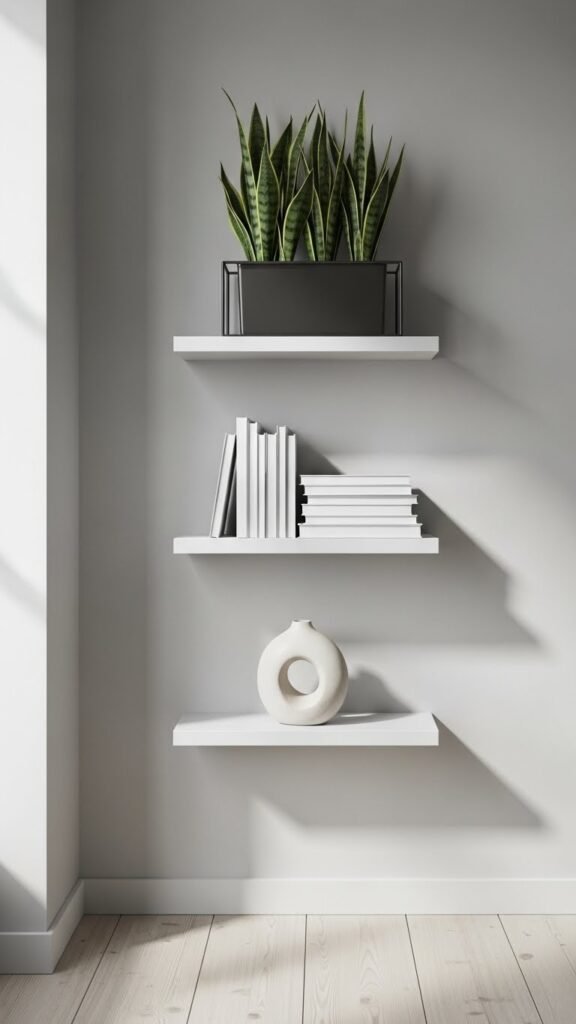
When you mount slim, cantilevered shelves, they instantly sharpen a room’s lines and keep the visual weight light; arrange a few carefully chosen objects—a low-profile planter, a stack of monochrome books, and a single art object—to create crisp, breathing spaces.
You’ll embrace Scandinavian restraint and Zen simplicity, editing pieces ruthlessly so each item reads as design, granting you airy, liberated display.
Decorative Bracket Statements

Make decorative brackets the focal point by choosing finishes and profiles that read like jewelry for your wall. You’ll balance ornamental corbels with sleek metal brackets, mixing vintage curves and modern lines.
Add subtle bracket lighting to sculpt shadows and highlight textures. Choose pieces that feel liberating, let your display breathe, and signal confident, curated style without clutter.
Asymmetrical Shelf Arrangements

Although symmetry feels safe, asymmetrical shelf arrangements let you compose a space that’s lively and tailored—place varying-length shelves, stagger heights, and mix depths so each object has room to breathe while your eye moves purposefully across the wall.
You’ll embrace offset symmetry, staggered heights, and curated clusters; rotate art, ceramics, and plants to create rhythm, negative space, and a liberated, modern display.
Repurposed Ladder Shelving
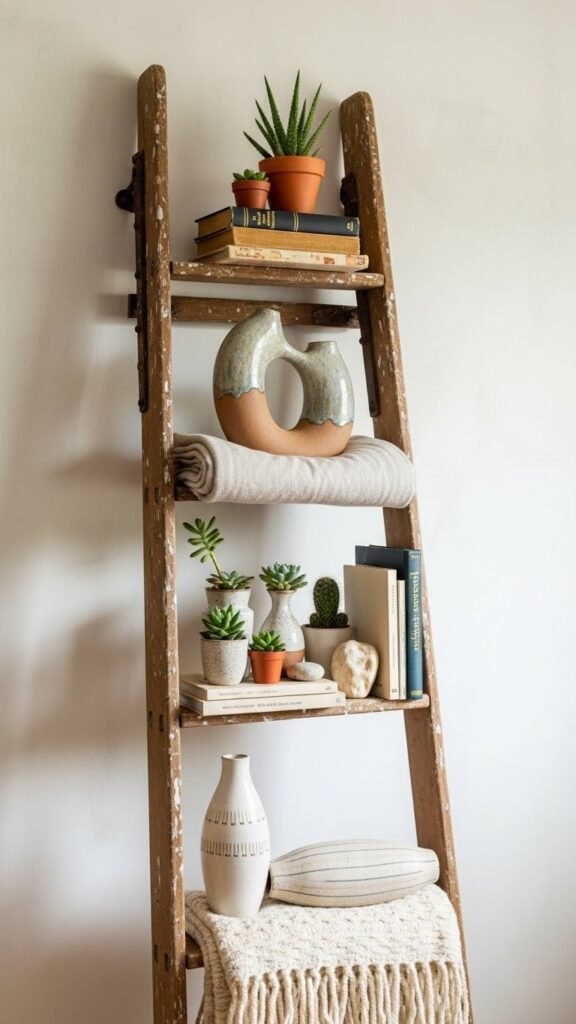
Lean a vintage wooden ladder against a blank wall to create an instant, layered shelving vignette that feels both raw and refined; you’ll see how the rungs become staggered platforms for books, folded throws, potted succulents, and a few sculptural ceramics.
Embrace rustic rungs and vertical repurposing to craft an airy, free-spirited display—mix textures, leave negative space, and let each object breathe.
Shadow Box Collections
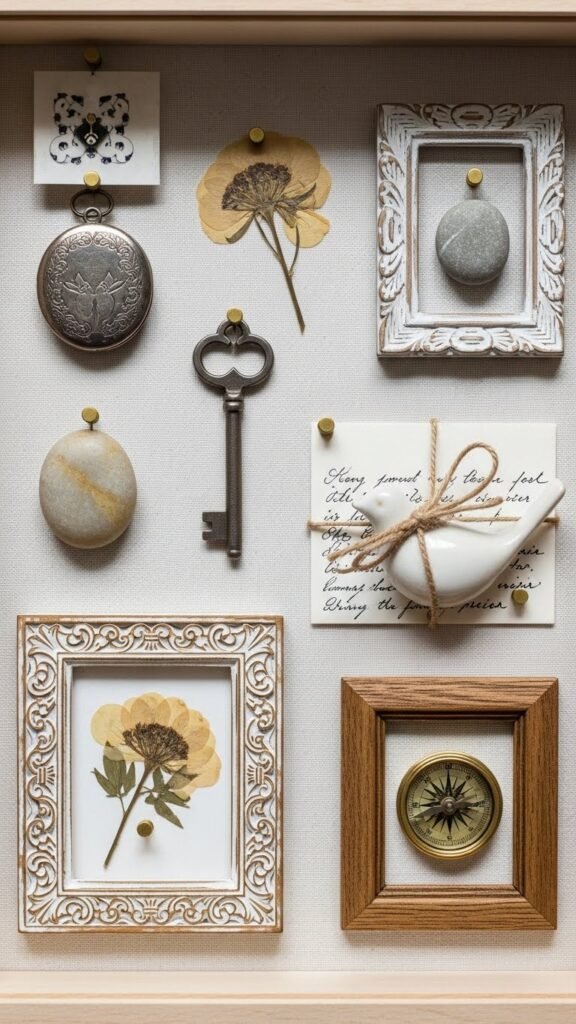
When you group small keepsakes into shadow boxes, you turn flat walls into curated three-dimensional galleries that catch the eye and invite closer inspection.
You’ll craft airy, modern vignettes with curated layers, mixing heirloom displays and contemporary objects.
Emphasize tactile textures—linen backings, brass pins, carved wood frames—to create liberated, focused compositions that feel personal, intentional, and effortlessly display-ready.
Eclectic Yet Cohesive Displays
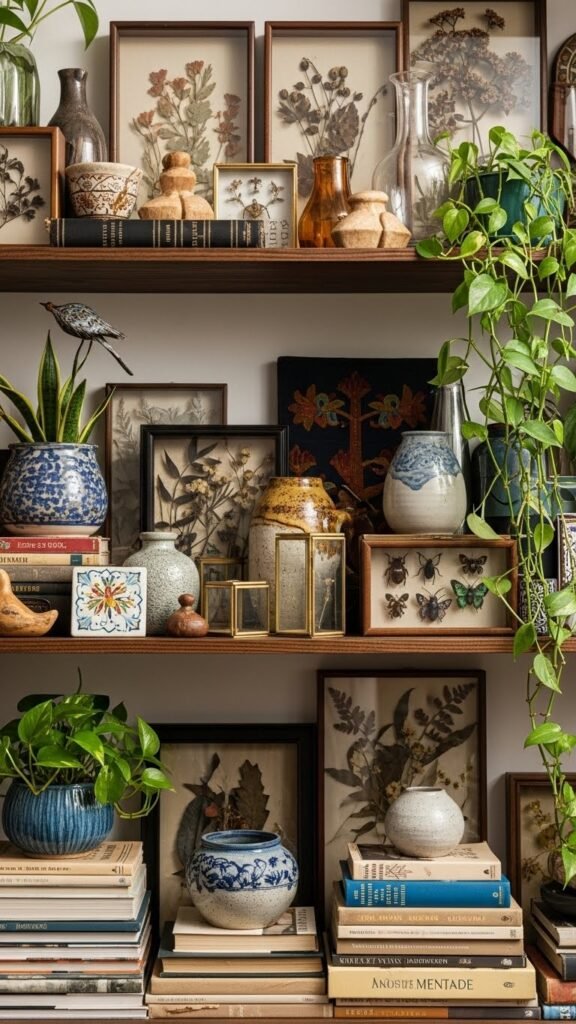
After arranging your keepsakes into shadow boxes, push the idea further by mixing pieces across shelves to create an eclectic yet cohesive display that reads as a single curated story.
You’ll balance textured contrasts—rough ceramics beside sleek glass—layering books, plants, and cultural heirlooms so each shelf breathes.
Trust your eye, play with scale, and let unexpected pairings feel intentional and free.
Anchored Groupings With Odd Numbers
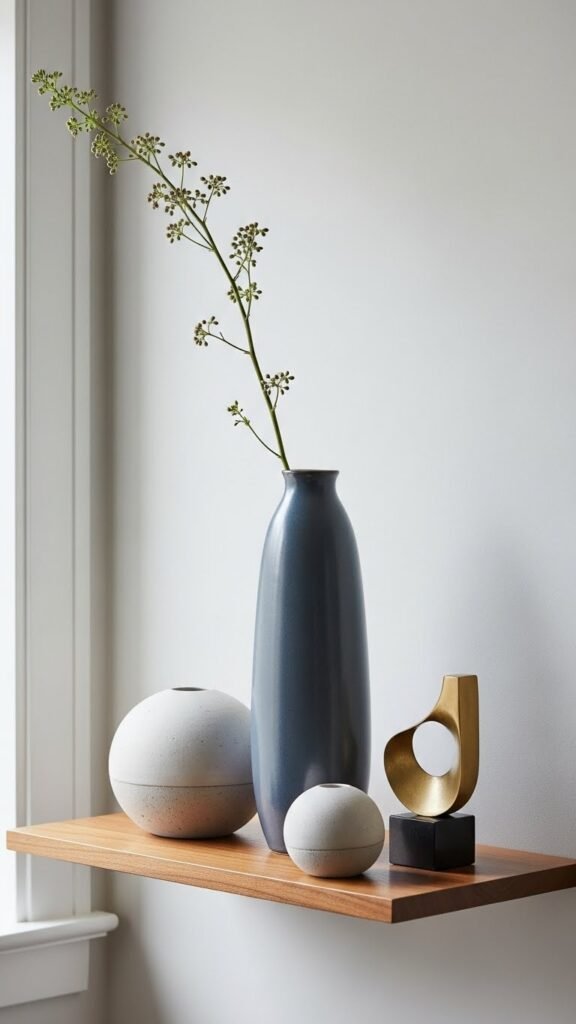
Start with three pieces to form an anchored trio that feels deliberate: pick a dominant object to act as your visual anchor—a tall vase, bold sculpture, or framed print—then flank it with two smaller companions that echo its color, texture, or theme.
Embrace odd numbered groupings, build layered vignettes, and keep a scale focused trio so each shelf reads modern, airy, and intentionally free.
Rotating Memory Boxes

Often you’ll refresh a shelf’s story simply by rotating a set of memory boxes: choose three to five slim, labeled boxes in coordinating tones, place them staggered at varying depths, and swap the front-facing lid or object every few weeks to keep the vignette alive.
Embrace memory rotation and heirloom curation; let tactile labels, textured surfaces, and intentional gaps create a liberated, photo-ready display.
Framed Art and Sculpture Staggering
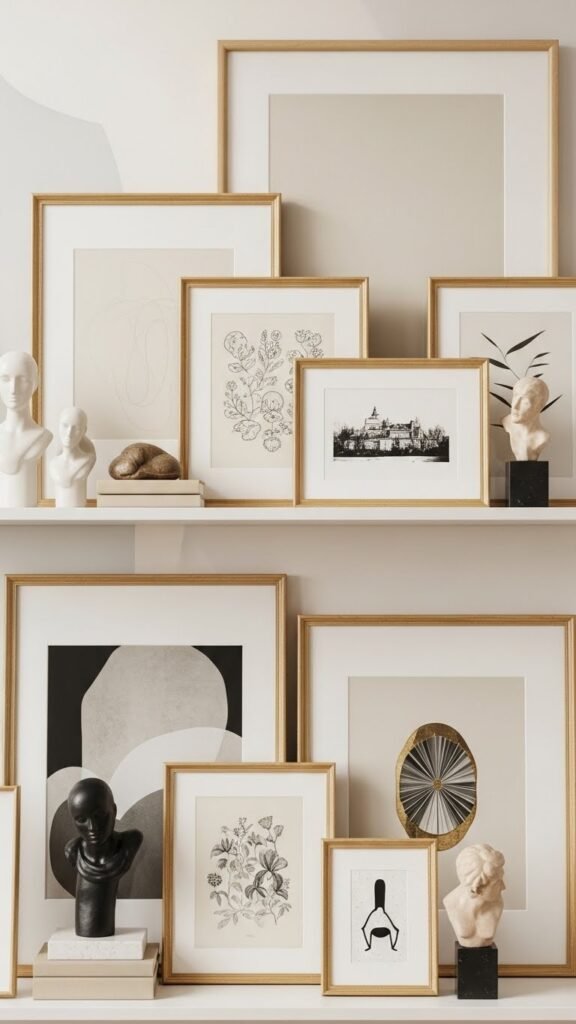
When you mix framed prints with small sculptures, stagger them vertically and horizontally so each piece gets its own breathing room and the eye moves across the shelf like a curated gallery.
You’ll favor asymmetrical pairing, letting taller frames lean back while sculptures sit forward to create scaled depth. Keep negative space intentional, swap pieces seasonally, and let the arrangement feel liberated yet precise.
Color Block Book Styling
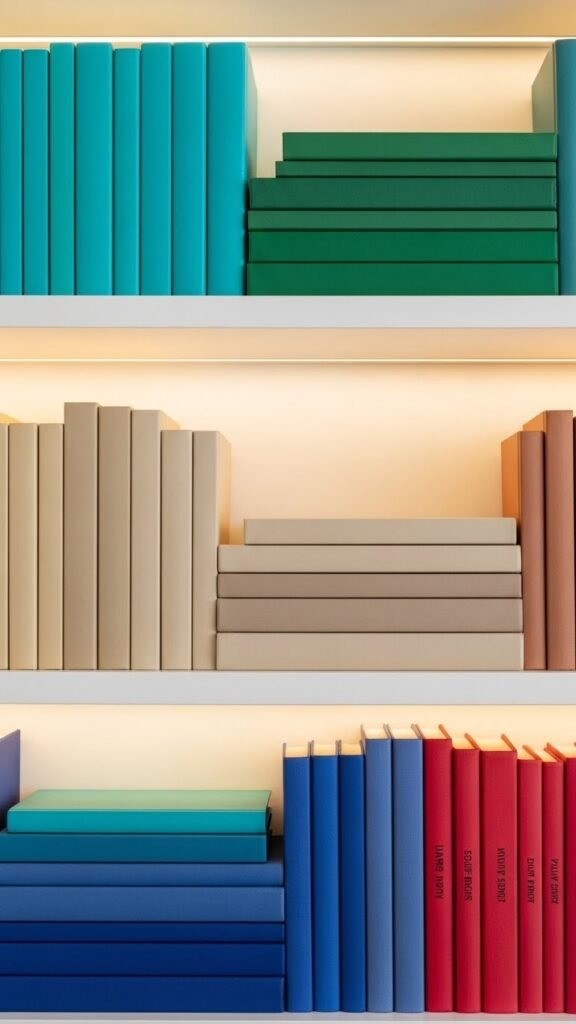
Frequently, color block book styling gives a shelf an instant graphic pop by grouping spines into bold, solid sections—think a row of teal, a cluster of warm neutrals, a burst of jewel tones—so the eye reads blocks of color instead of individual titles.
You’ll arrange paperback stacks and hardcovers into a deliberate color gradient, mixing heights and textures so each block feels curated, free, and modern.
Balancing Negative Space
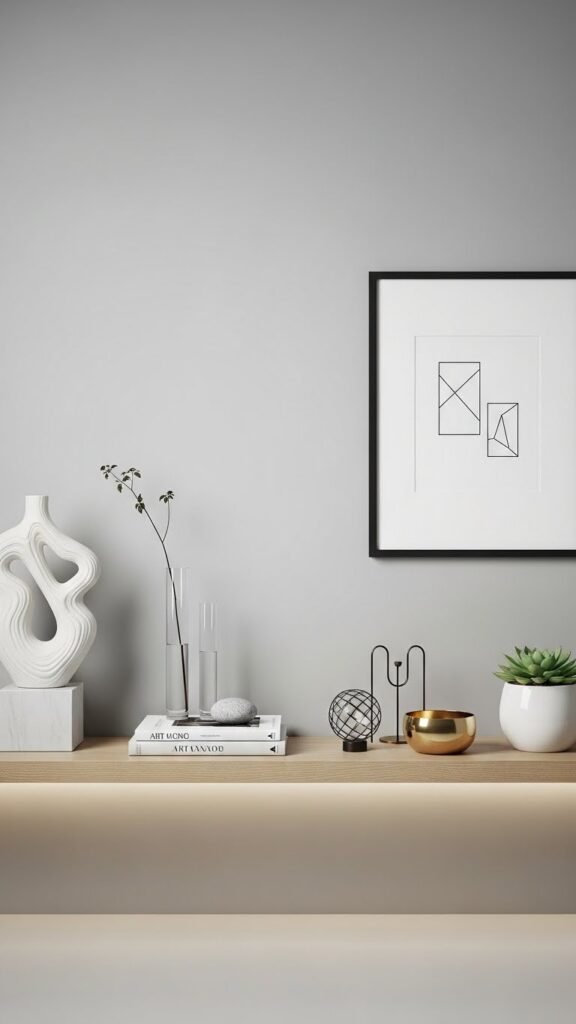
Because empty space reads as intentionally designed, you’ll want to treat it like another element on the shelf—measured, deliberate, and rhythmic. You’ll practice negative breathing between objects, letting gaps become visual punctuation. Use empty anchors—single sculptural pieces or framed art—to stabilize compositions. Keep proportions airy, alternate dense and sparse zones, and trust restraint to create freedom and contemporary, gallery-like calm.
Mirror-Backed Depth Enhancemen

Moving from airy gaps to reflective planes, a mirror-backed shelf will amplify that gallery-like calm while adding convincing depth. You’ll use reflective illusion to make objects pop, pairing matte ceramics and metallics for contrast.
Position art and sculptural pieces to exploit depth doubling, keep edges uncluttered, and let light glide across surfaces so your displays feel liberated, modern, and intentionally edited.
Transparent Container Groupings
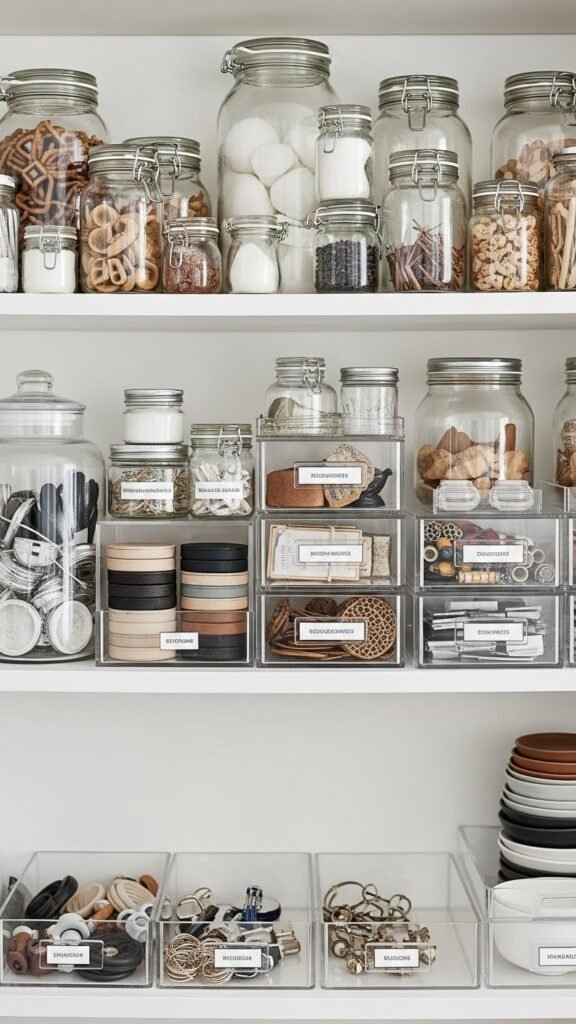
Glass jars and clear acrylic boxes turn everyday objects into a curated vignette; use them to corral collections so each item reads as intentional rather than accidental.
You’ll mix clear boxes and stackable bins, arranging grouped lids by color and texture. Labeled trays keep odds and ends accessible yet refined. The result feels airy, edited, and liberating—shelf styling that’s effortless to maintain.
Plant and Natural Element Integration
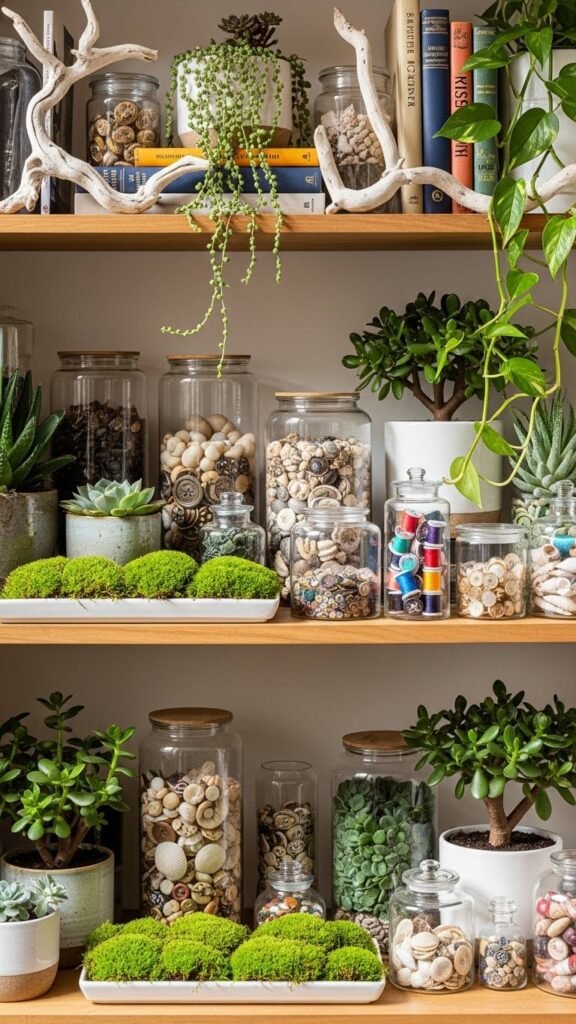
Clear containers make collections sing, but adding living greenery and natural textures brings warmth and motion to the shelf.
You’ll layer potted succulents and living moss in low trays, tuck trailing vines among books, and position driftwood accents to create sculptural lines.
Keep scale varied, allow negative space, and choose pieces that feel effortless so your display breathes and invites exploration.
Neutral Accessory Balances
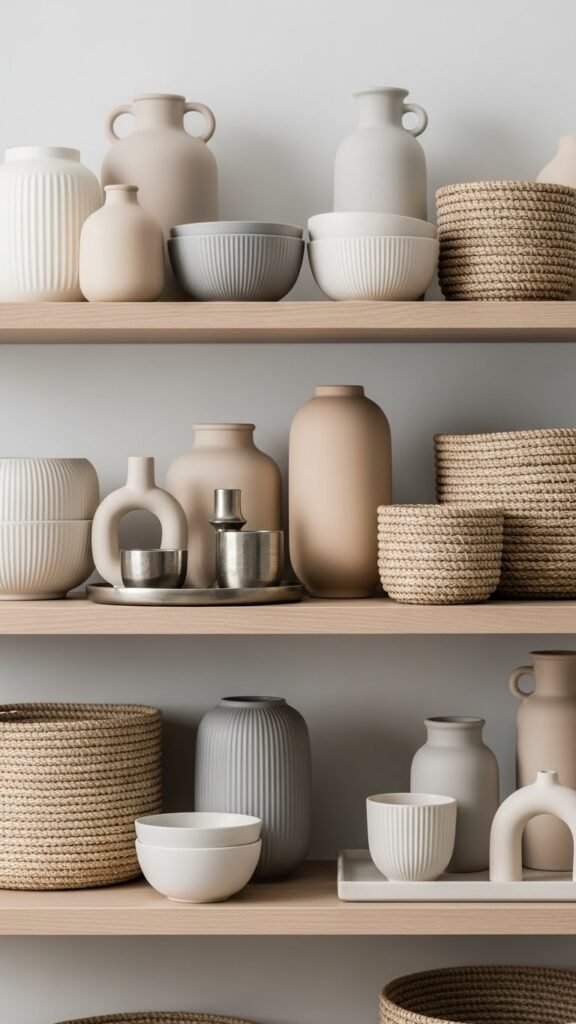
Often you’ll anchor a shelf’s look with neutral accessories that quietly tie together color, texture, and scale.
You’ll balance tonal contrasts—soft beiges against warm grays—while embracing texture mixing: matte ceramics, woven baskets, and brushed metal.
Arrange pieces to breathe, alternate heights, and let negative space read as intentional.
The result feels effortless, modern, and liberating, giving you room to edit.
Chalk-Painted Upcycled Shelves
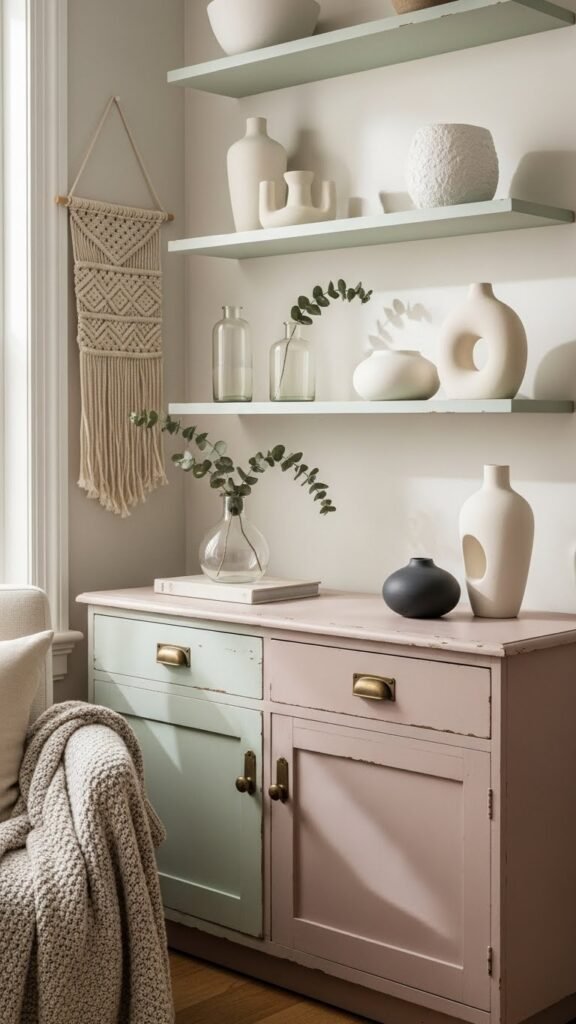
If your neutral accessories set the tone, chalk-painted upcycled shelves give the room a handcrafted, lived-in backbone that amplifies that calm palette.
You’ll choose soft matte hues, apply subtle chalk distressing along edges, then style open tiers with airy objects and sculptural pottery.
Swap in vintage hardware for character, leaving negative space so each piece breathes and your display feels free, curated, intentional.
Lightweight Entryway Shelving

Lean into airy materials and slim profiles to keep your entryway feeling effortless and open: lightweight shelving—think powder-coated metal frames, rattan tiers, or floating wood planks—gives you defined storage without closing off the space.
You’ll pair wall mounted cubbies with a slim console to corral keys and mail, styling with sculptural trays, woven baskets, and a single artful mirror for a free, curated arrival.
Ladder Shelves for Vertical Storage
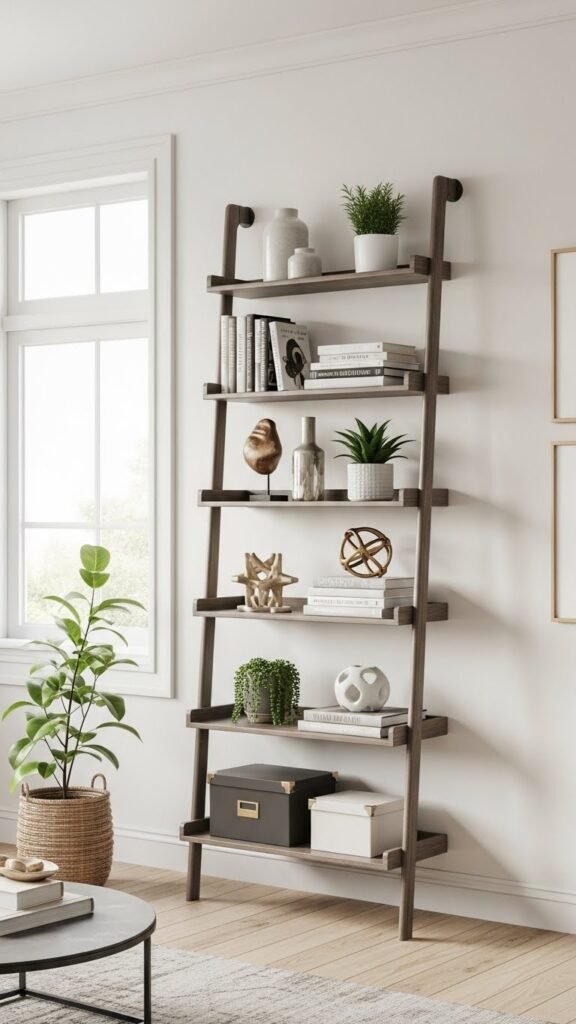
Step up your storage game with ladder shelves that climb the wall and draw the eye upward, making small rooms feel taller and more intentional.
You’ll love a lean ladder silhouette with compact tiers that layer books, plants, and sculptural pieces. Arrange negative space, rotate textures, and keep sightlines open—this frees your room to breathe while staying chic, practical, and display-ready.
Material Cohesion With Room Architecture
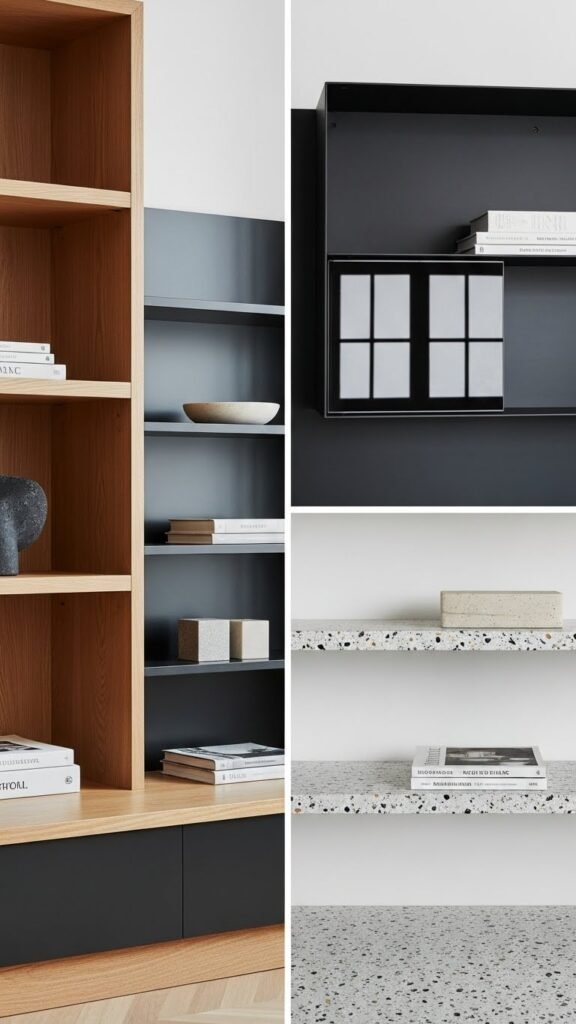
When your shelving materials echo the room’s architectural cues—warm wood grains matching trim, matte black metal mirroring window frames, or terrazzo shelves picking up floor flecks—the whole space reads as intentional and curated.
You’ll choose pieces that respect historic materiality and amplify structural rhythm, letting textures, joint details, and voids breathe.
That restraint gives you a liberated, cohesive backdrop for bold displays.
Seasonal Rotating Displays
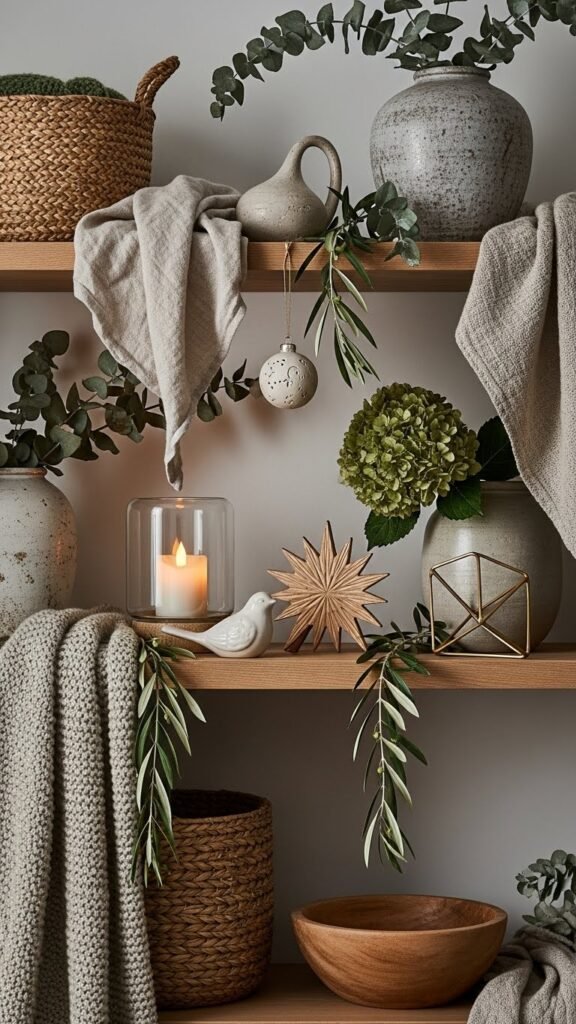
Rotate your shelving vignettes with the seasons to keep the room feeling fresh and intentional: swap in tactile accents, color palettes, and botanical choices that echo each season’s light and mood.
You’ll curate Seasonal themes that feel effortless: think breezy linens, warm woods, muted greens.
Use Rotating ornaments sparingly, play with scale, and let negative space amplify each piece’s personality.
Thematic Curated Vignettes

After renewing your shelves for the season, anchor each vignette around a clear theme to make every arrangement feel intentional and story-driven. You’ll choose focused color palettes, sculptural objects, and varied heights to guide the eye.
Mix bold accents with neutral bases, curate narrative themes that whisper rather than shout, and leave breathing room so each piece reads as a deliberate chapter.
Vintage and Modern Layering

Although contrasting eras might seem at odds, you can layer vintage and modern pieces to create a cohesive, museum‑worthy shelf that feels fresh and collected.
Embrace patina contrast—aged brass beside matte ceramic—to highlight texture. Use scaled repetition, negative space, and a restrained palette. Layered era mixing should feel intentional, playful, and free: let each object breathe while narrating a bold, personal story.
Large-Scale Statement Pieces
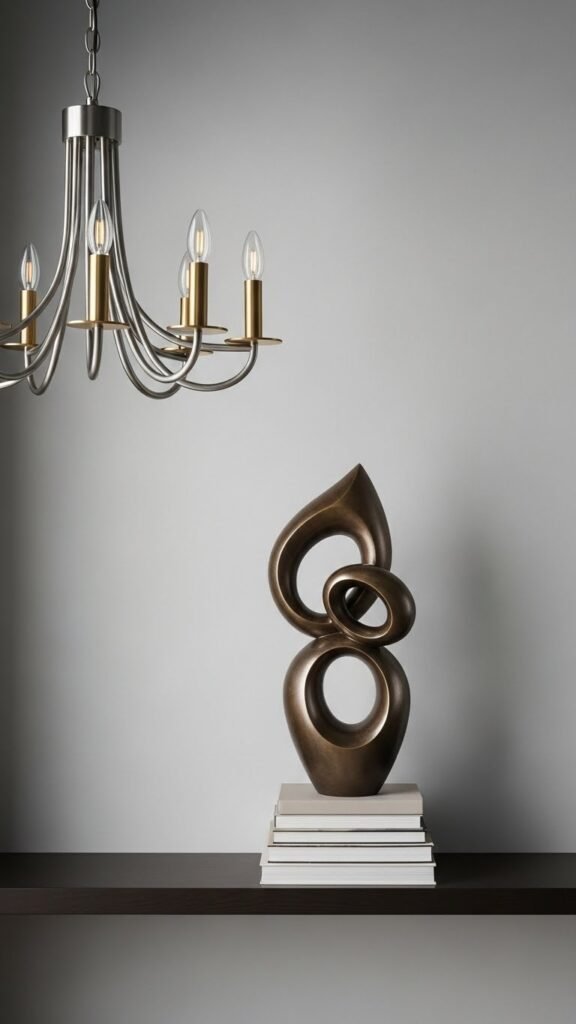
When you place a single oversized piece on a shelf, it anchors the whole composition and sets the visual tone for everything around it.
You’ll balance an oversized sculpture with negative space, lean into scale by pairing low-profile books, and let a statement chandelier nearby echo curves or metallics.
Choose bold but simple lines so each shelf breathes, feels liberated, and reads confidently.
Small Item Compartmentalization

Shifting from a single sculptural statement to the smaller things, you’ll want compartments that organize without crowding the visual calm.
Choose tiny trays for jewelry and curios, and slim, labeled boxes to hide cables and spare keys. Mix clear acrylic with warm wood for contrast, align compartments to negative space, and let each small stash feel intentional so your shelves breathe and invite.
Lighting to Highlight Displays
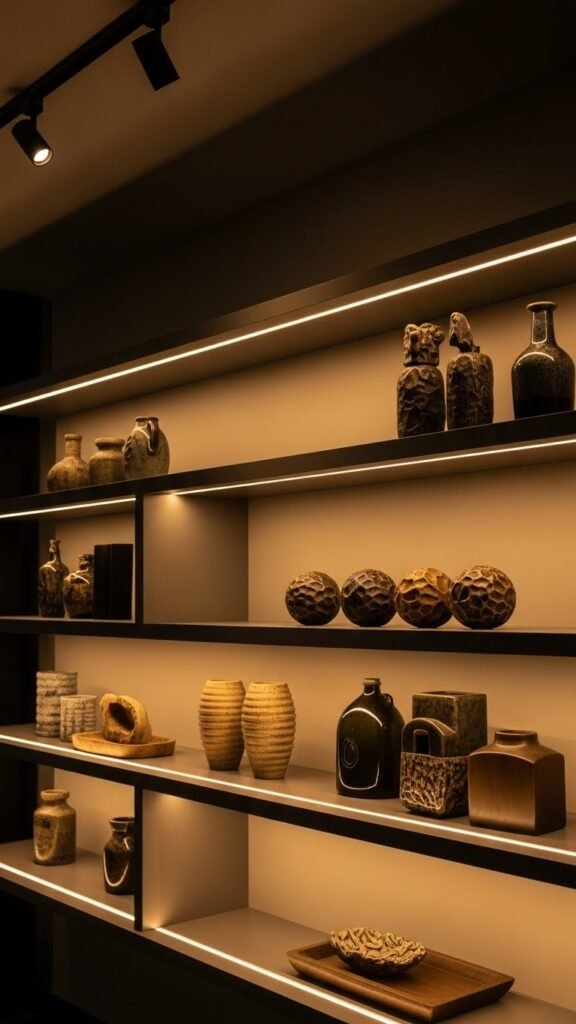
Think of lighting as the sculptor that brings each shelf vignette to life: use warm, directional LEDs to wash textured objects and create soft pools over curios, and add thin strip lights under shelves to carve clean lines and emphasize negative space.
You’ll layer adjustable tracklighting for focal drama, blend in smart RGBs for mood shifts, and position fixtures to let pieces breathe.
Maintaining Intentional Minimalism

Good lighting makes objects sing, but keeping a shelf purposeful means editing what’s on it in the first place. You’ll practice intentional editing: choose bold shapes, curated color pops, and negative space.
Let each item breathe, rotate pieces seasonally, and favor mindful consumption over impulse buys. This restrained, modern approach lets your display feel airy, confident, and freeing—clarity by design.