
You’ll curate shelves like a gallery, choosing a tight two-to-four color palette, repeating a signature accent, and editing ruthlessly so each vignette breathes; layer heights with risers and book stacks, anchor compositions with one standout piece, and guide the eye with zigzag placements and odd-numbered groupings—there’s more to explore on lighting, texture mixing, and seasonal swaps that will change how your shelves feel.
Establish a Cohesive Color Palette
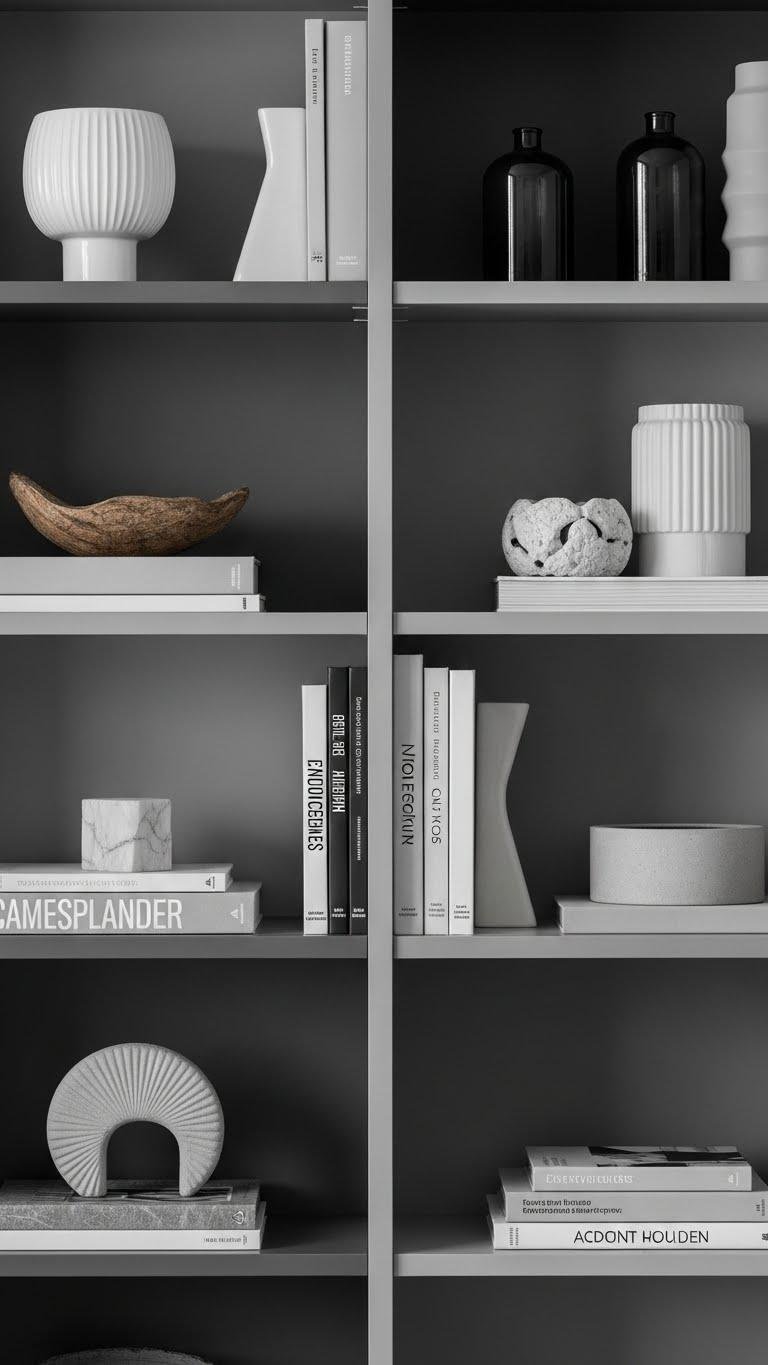
Start by choosing a short, intentional palette—two to four colors that will thread through every shelf vignette. You’ll test monochrome swatches to lock mood, then add accent undertones for contrast.
Mix matte and gloss, natural textures and artful objects. Keep repetition subtle so each shelf feels curated yet free, letting color unify disparate pieces without feeling constrained or predictable.
Use the Zigzag Placement Strategy
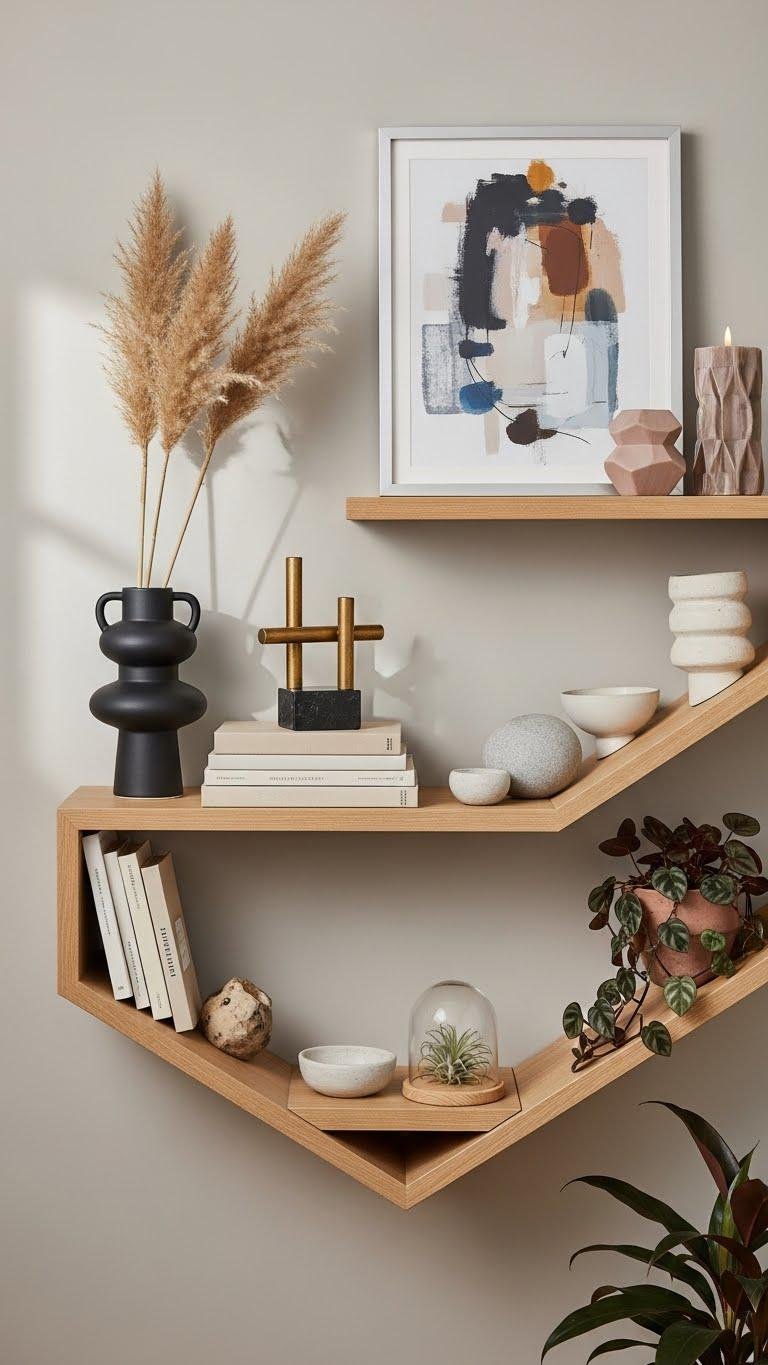
When you arrange objects on a shelf using the zigzag placement strategy, you guide the eye in a deliberate, rhythmic path that makes each vignette feel intentional rather than accidental.
You place a diagonal object, then counterbalance with pieces at alternating heights, creating motion without clutter.
Embrace negative space, trust asymmetry, and let each choice feel liberating and purposefully curated for a modern, free aesthetic.
Layer Items by Depth and Height

Although it might seem subtle, layering items by depth and height is what gives a shelf real dimensionality—you’ll place taller pieces at the back, mid-height objects slightly forward, and low or flat elements at the front to create a deliberate foreground, middleground, and background.
Embrace varying depths and staggered heights to craft airy, intentional vignettes that feel liberated, balanced, and modern without rigid rules.
Group Objects in Odd Numbers

Odd numbers feel instinctively right—three, five, or seven pieces create a rhythm that your eye can dance through without getting stuck.
You’ll favor odd arrangements and asymmetric clusters, placing varied textures and heights so each item breathes.
Mix ceramics, books, and a plant for movement; let negative space sing.
This approach feels liberated, modern, and effortlessly curated.
Anchor Shelves With Large Back Pieces
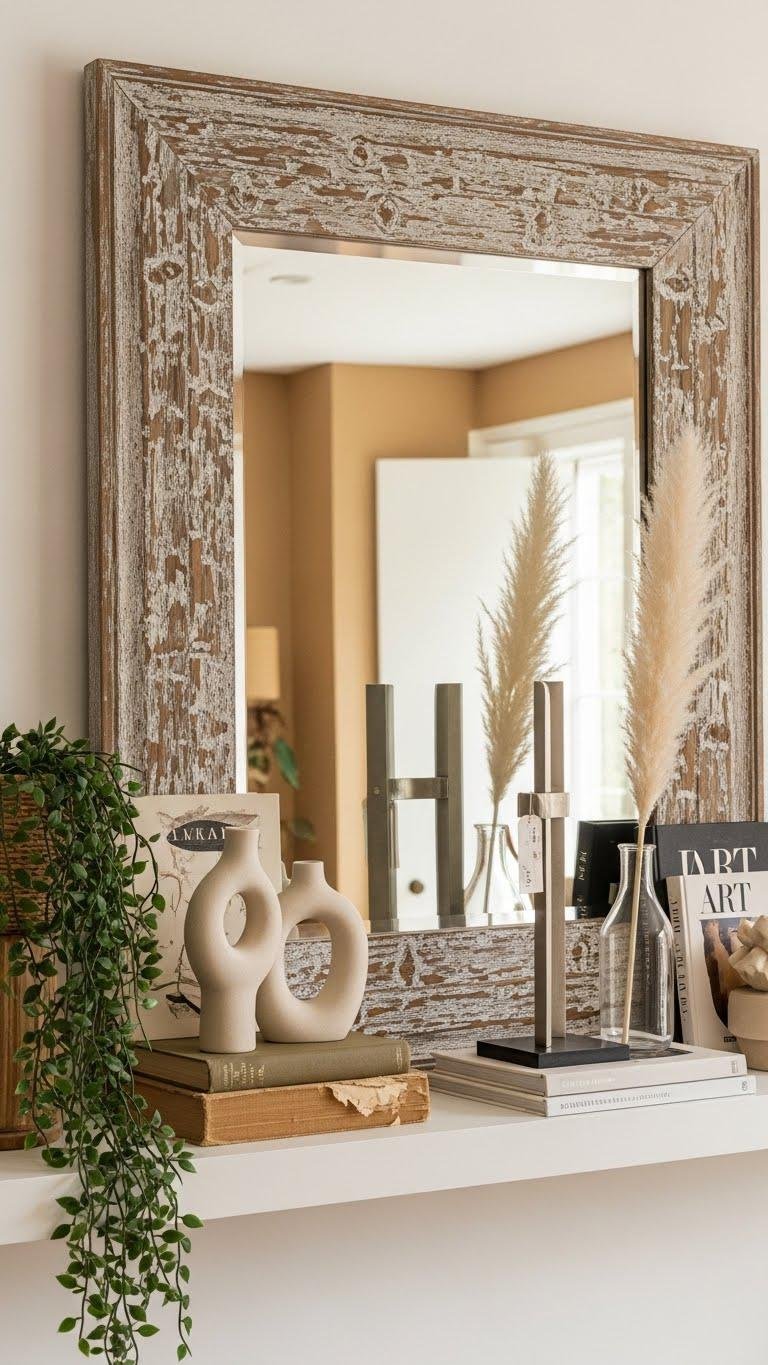
Leaning a large backing piece—whether an oversized framed print, a textured mirror, or a sculptural panel—instantly roots the shelf and gives your eye a clear focal plane.
You’ll use oversized headboards or backdrop panels as bold anchors, letting smaller objects breathe. Place them slightly off-center, layer minimal accents, and lean into modern boho or gallery-driven looks that feel free, curated, and deliberately effortless.
Mix Textures and Materials
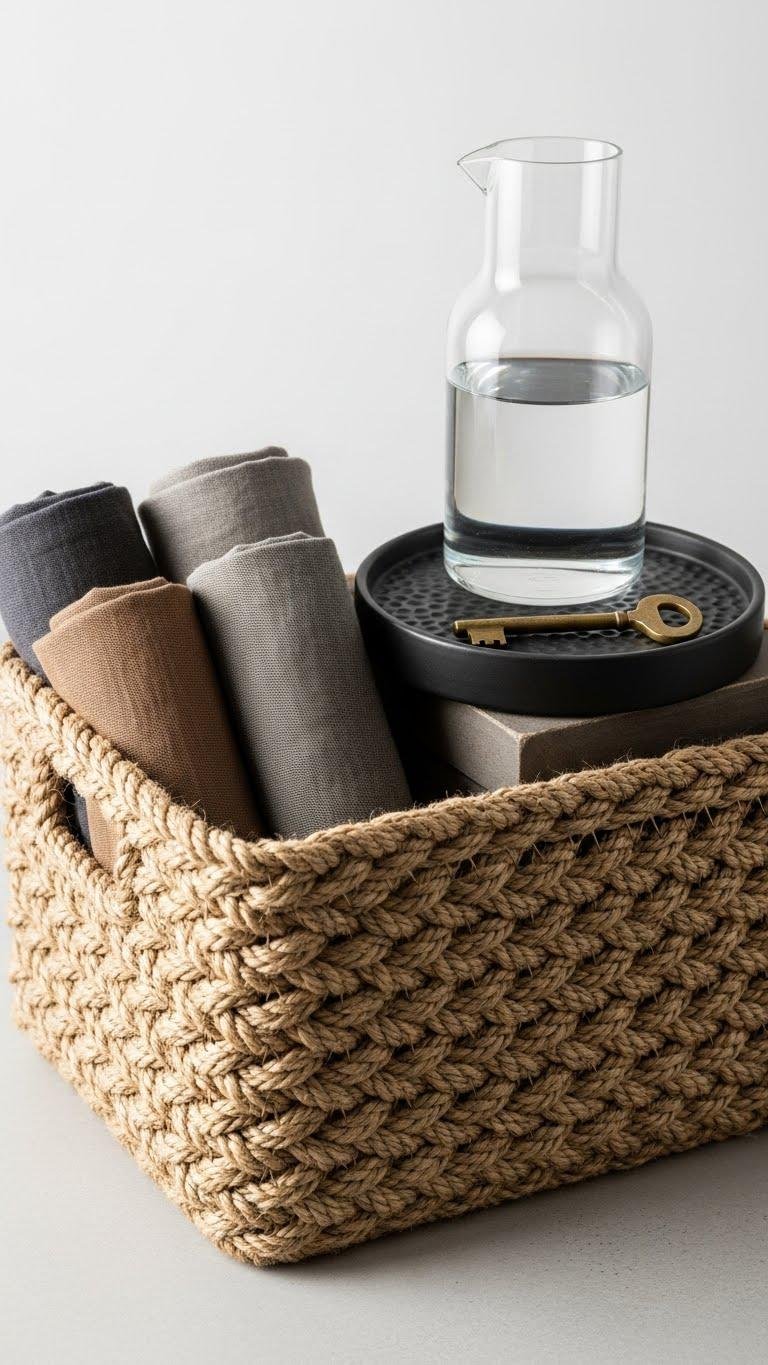
Layer varied textures and materials across a shelf to create depth you can both see and feel; mix matte ceramics, warm wood, sleek glass, and a touch of woven fiber to keep the composition lively without cluttering it.
You’ll balance textile contrast with smooth surfaces, add restrained metallic accents for sparkle, and arrange pieces so each breathes—free, deliberate, and effortlessly curated.
Introduce Functional Decor Elements
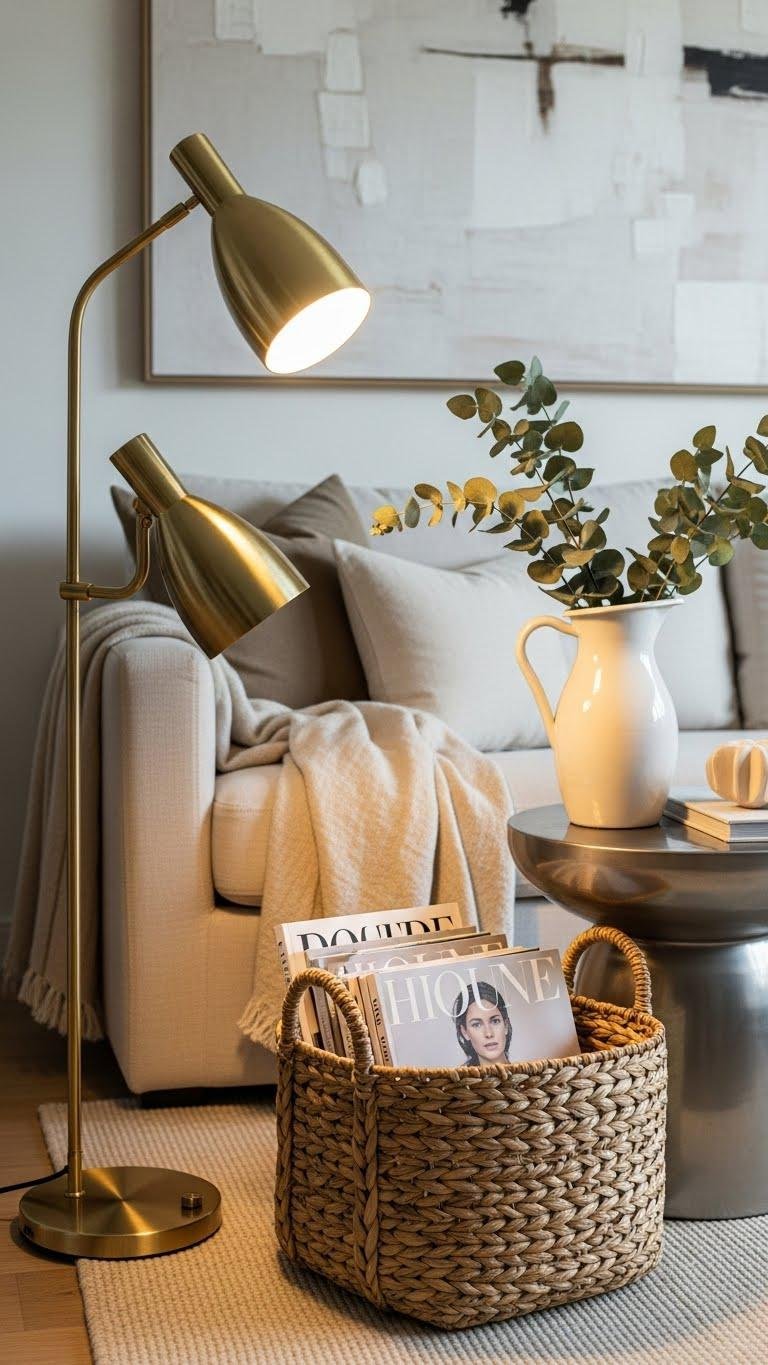
When you introduce functional decor, think of each object as both useful and beautiful: a sculptural lamp that casts flattering light, a woven basket that corrals magazines, or a ceramic pitcher that doubles as a vase.
You’ll choose durable accents and multiuse pieces that free your routine, layering tactile neutrals, polished metal, and organic forms so every item feels liberated, intentional, and effortlessly chic.
Create Visual Triangles With Heights
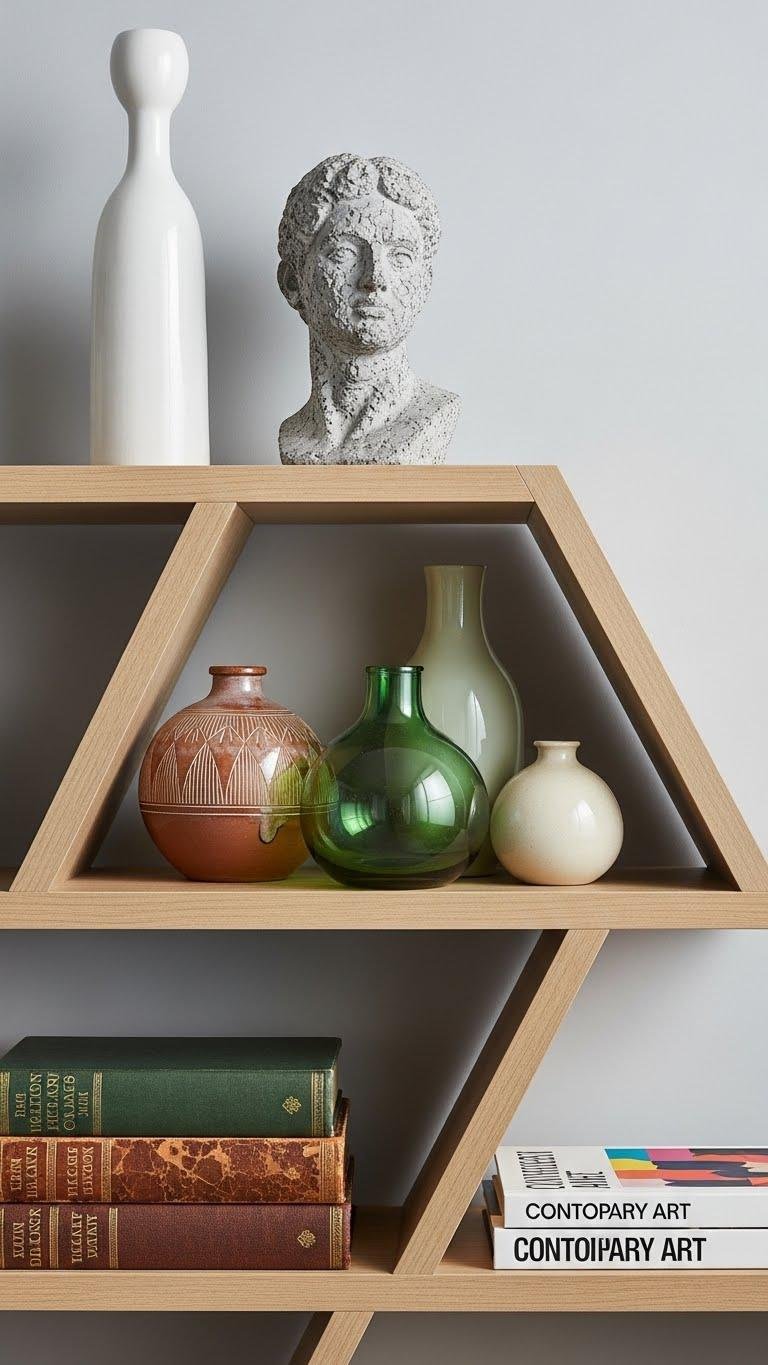
If you vary heights deliberately, you’ll guide the eye around the shelf like a practiced curator—tall sculptural pieces, mid-level vases, and low stacks of books form silent triangles that feel balanced rather than staged.
You’ll embrace vertical tiers and staggered heights, mixing scale and texture so each triangle breathes.
Trust intuition, edit ruthlessly, and let freedom shape refined, effortless arrangements.
Repeat a Signature Accent Color

Often you’ll find the room snaps into focus when a single accent color threads through a shelf — a cobalt bowl echoed in a vase, a throw folded nearby, and the spine of a book — creating a quiet, curated rhythm.
You’ll repeat monochrome accents across objects, letting signature accessories anchor mood and movement so your shelf feels intentional, playful, and utterly free.
Employ Negative Space Purposefully
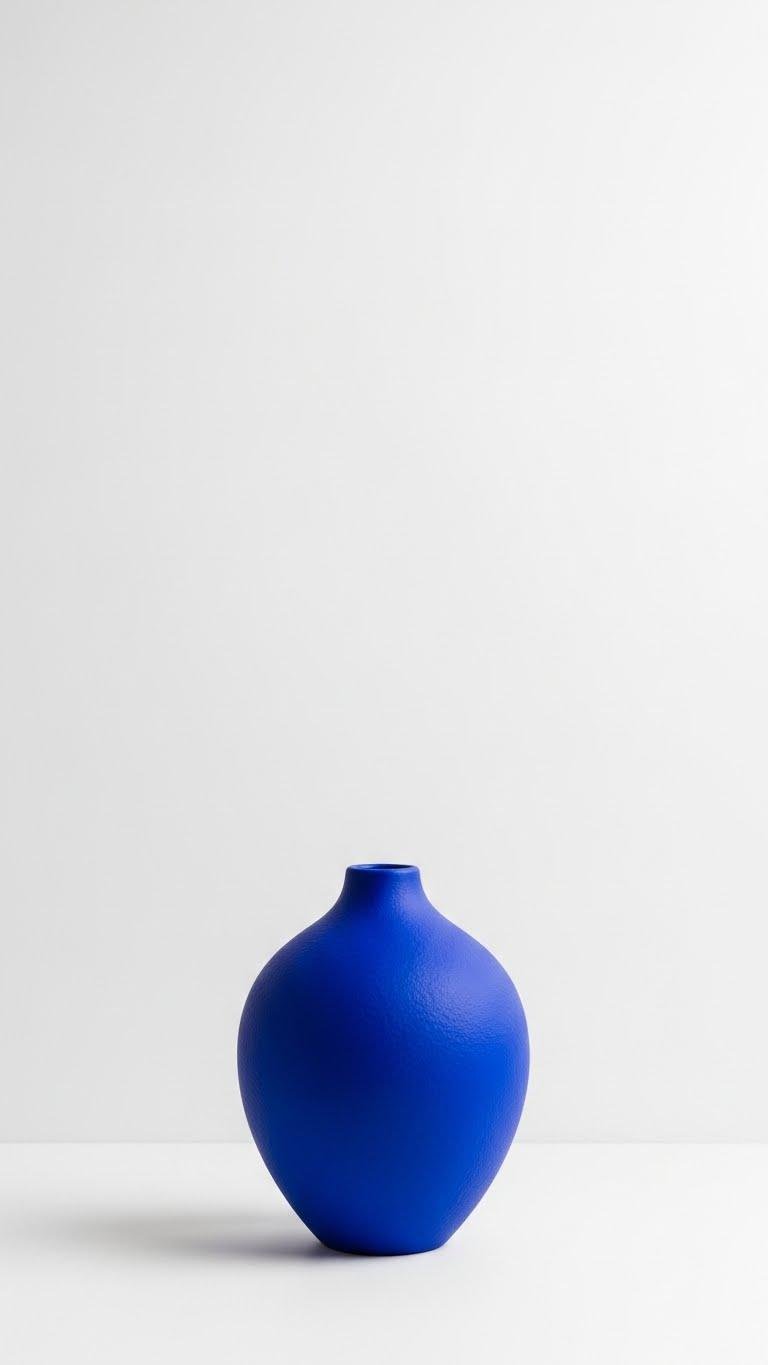
Let the rhythm you’ve created with that repeated cobalt breathe by giving it room to stand out—negative space is the quiet partner that makes your accents sing. You’ll choose breathing room as a deliberate compositional tool, carving visual pauses that let each object claim presence.
Embrace restraint: intentional emptiness amplifies texture, color, and movement, and frees your eye to wander without constraint.
Balance Symmetry With Asymmetrical Groups
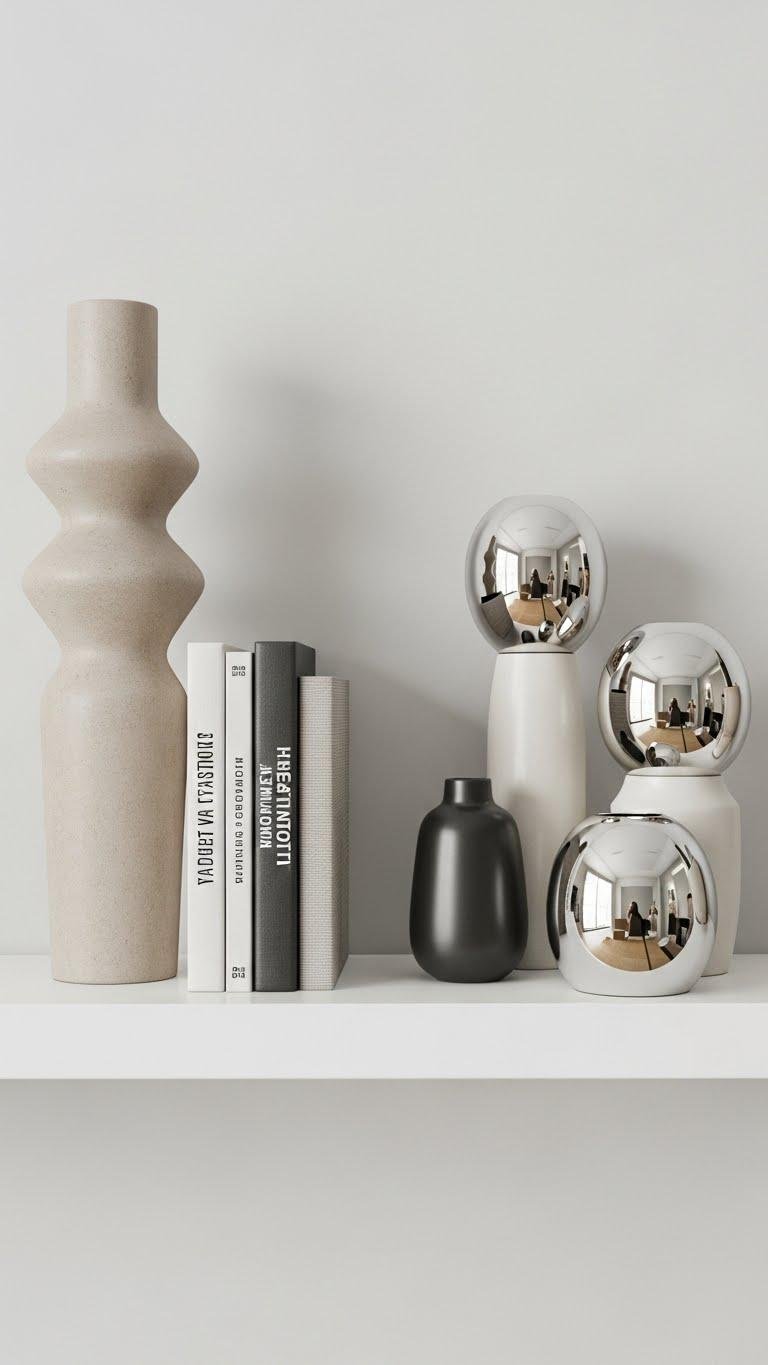
While symmetry gives your shelf a calm backbone, you’ll spark interest by arranging objects in deliberate, off-center clusters that still feel balanced.
You’ll play with mirror placement to reflect light and echo forms, then anchor groups with varied heights and textures for weighted symmetry.
Embrace intentional imbalance: let a sculptural vase oppose a stack of books, creating freedom without chaos.
Use Trays and Bowls to Contain Collections
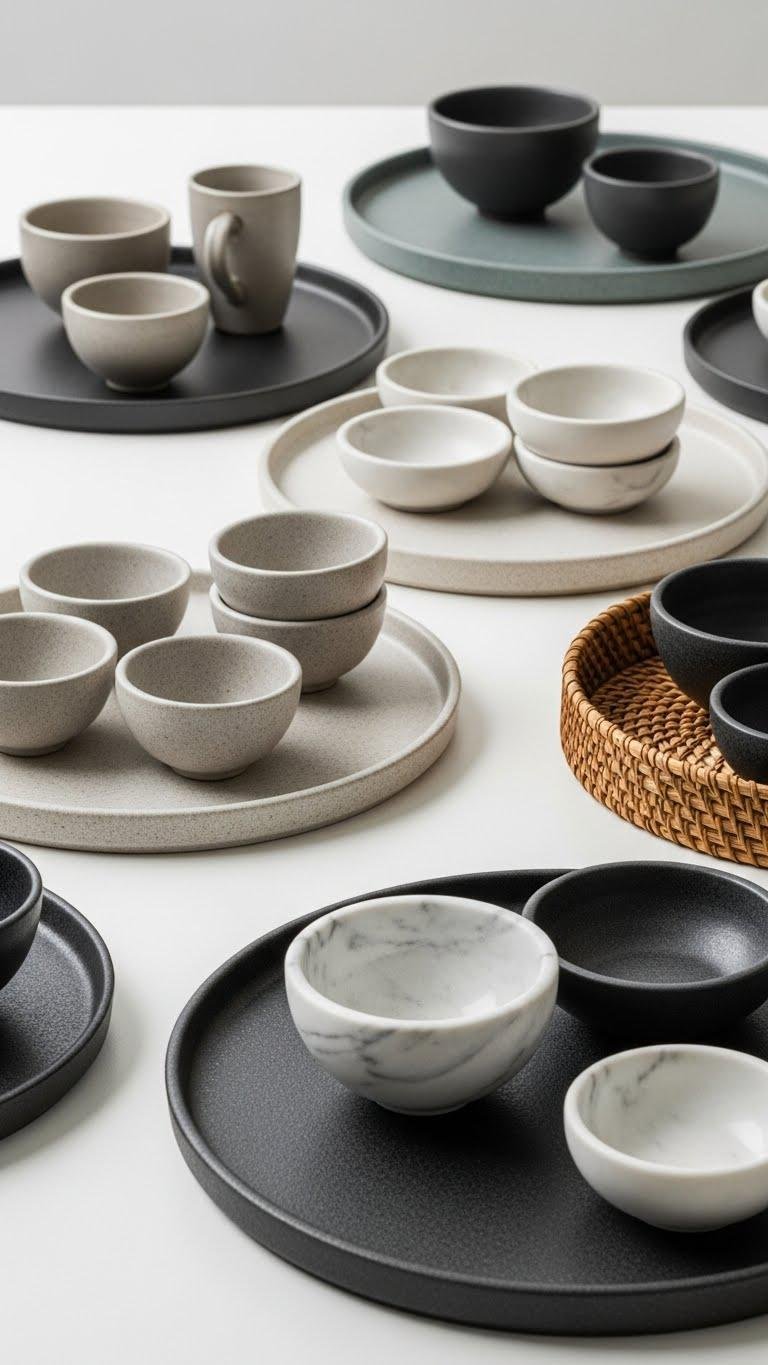
After you’ve balanced symmetry with purposeful imbalance, corral smaller items by placing them in trays and bowls so each cluster reads as a composed mini-installation.
You’ll mix textures—antique ceramic, minimalist marble, woven rattan—to anchor collections, define zones, and calm visual noise.
Choose low profiles, varied heights, and negative space so each tray feels intentional and free, an edited vignette that invites touch and breath.
Stack Books Horizontally and Vertically
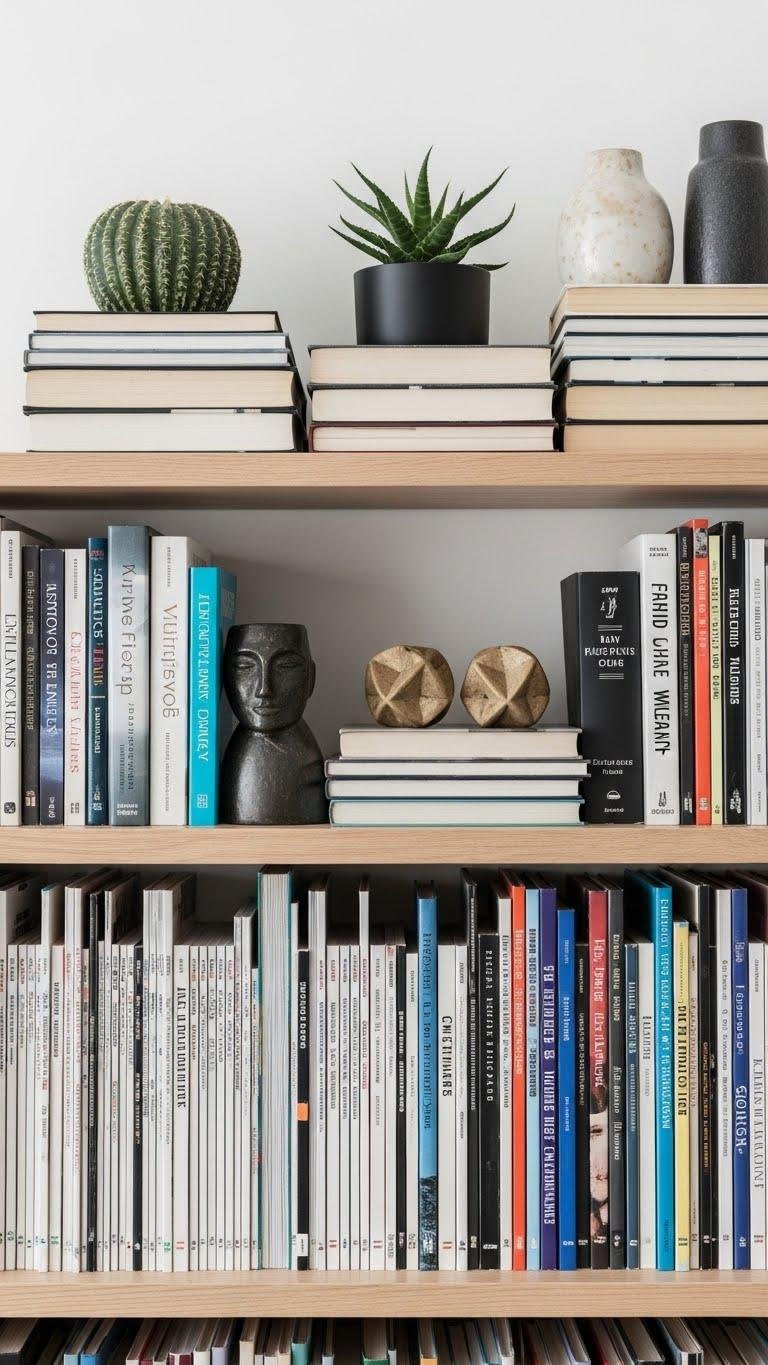
Often you’ll mix horizontal stacks with upright rows to create rhythm and pockets of visual rest; place a low horizontal pile to act as a platform for a sculptural object or plant, then balance it with a few vertically shelved books to give the eye a clear lane.
You’ll tend spine alignment carefully, play with genre pairing, and let negative space breathe so each cluster feels intentional.
Add Pedestals and Risers for Levels
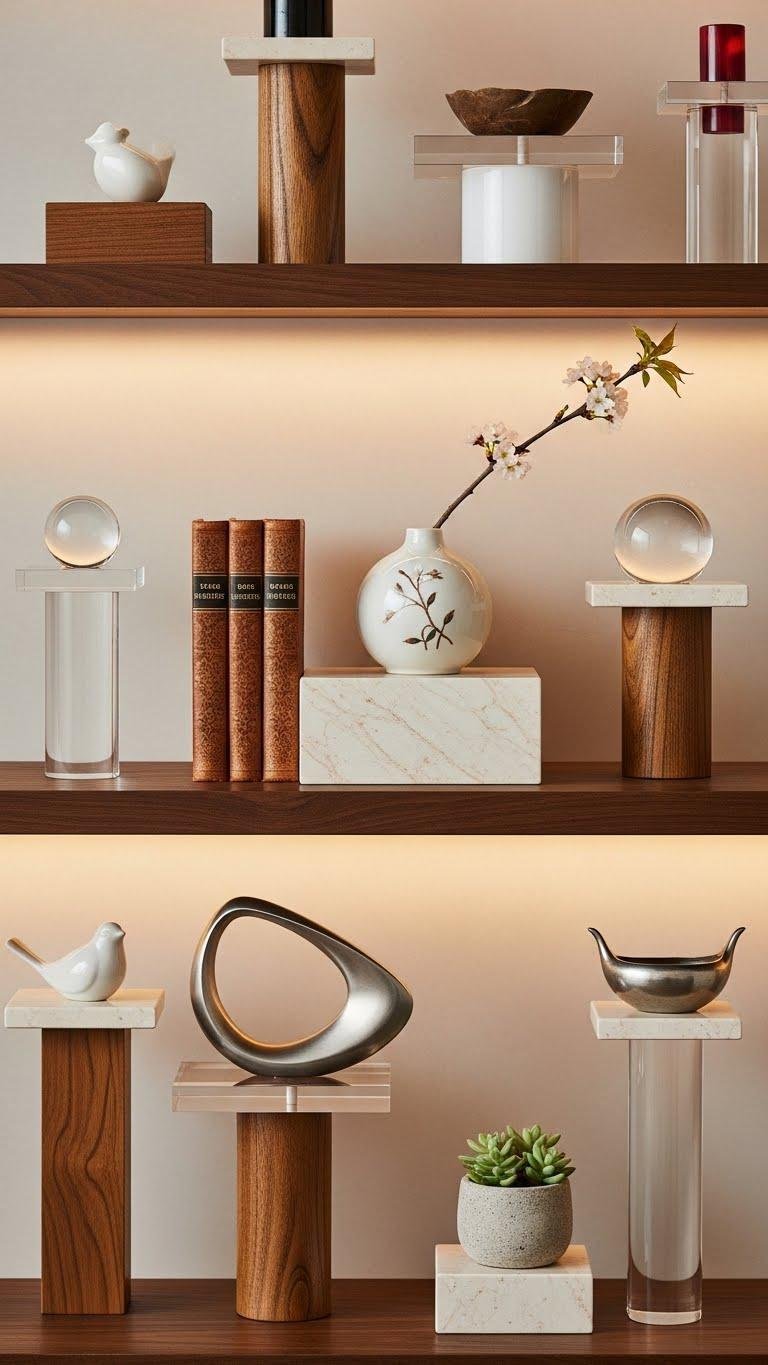
Bring a few pedestals and risers into the mix to lift key pieces and sharpen the shelf’s choreography. You’ll play with pedestal placement to create sightlines, stagger heights, and coax breath between objects.
Choose riser materials—wood, marble, acrylic—for texture contrast and durability. Mix sculptural and functional forms, keep compositions airy, and let each elevated object claim its moment without crowding freedom-loving layouts.
Rotate Seasonal or Trending Pieces
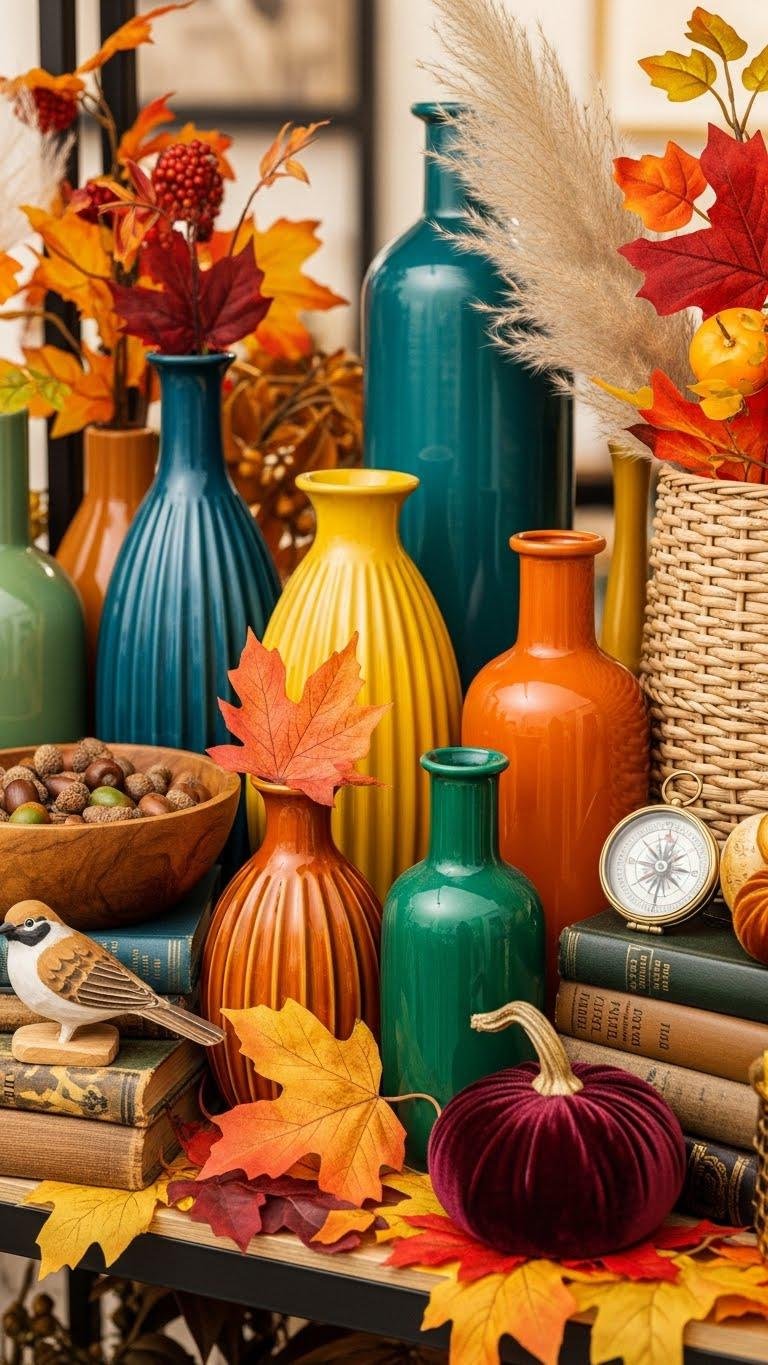
Swap in a few seasonal or on-trend pieces to keep your shelf feeling fresh and relevant, letting each rotation tell a new visual story. You’ll curate with intention: embrace seasonal rotation, lean on subtle trend forecasting, and edit boldly. Choose pieces that breathe — portable color pops, tactile objects, or limited-run finds — so your display reflects the moment and your liberated, personal aesthetic.
Contrast Matte and Glossy Finishes
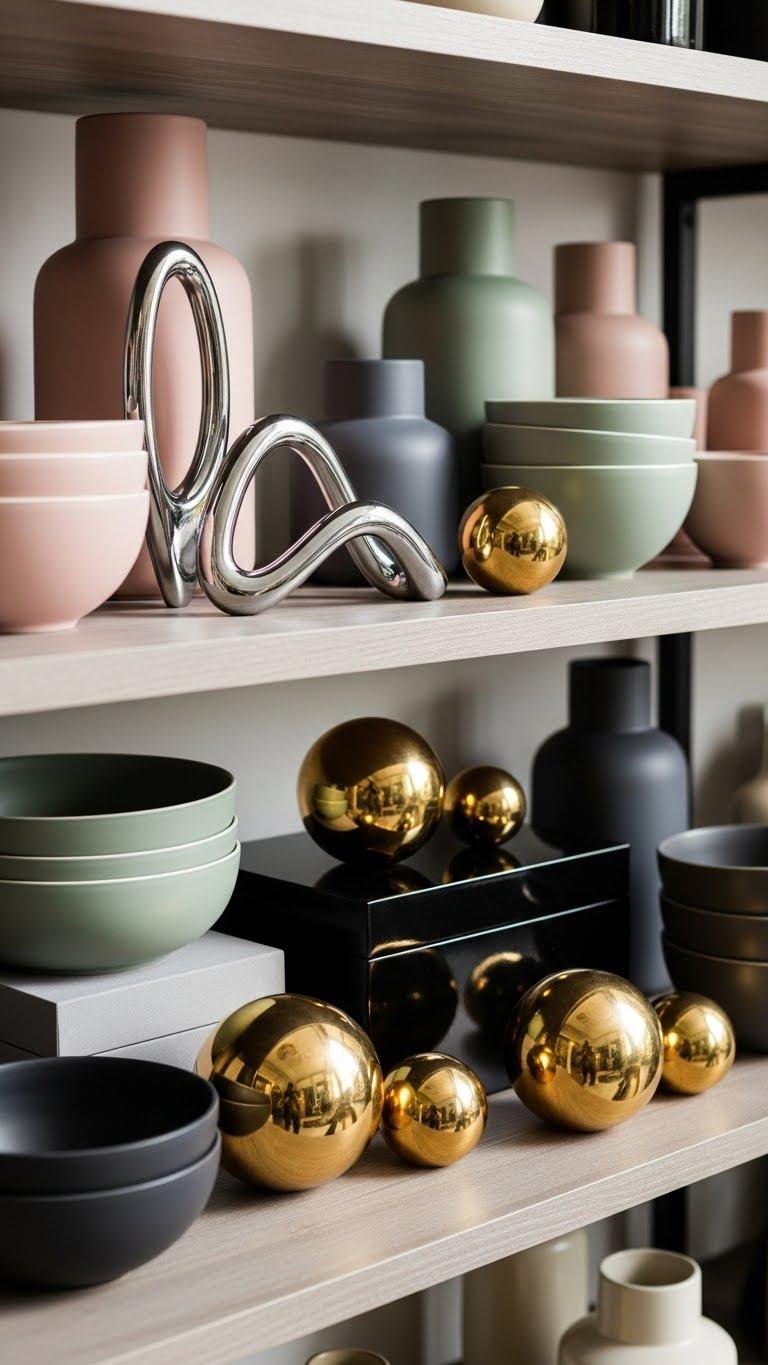
When you pair matte surfaces with glossy ones, the contrast heightens both texture and tone, making each object read more intentionally on the shelf.
You’ll explore matte vs gloss choices, using finish pairing to guide rhythm and light. Alternate lustre to free the eye, anchor with muted mattes, then punctuate with high-shine pieces for movement, modernity, and an effortlessly curated vibe.
Layer Artwork Behind Objects
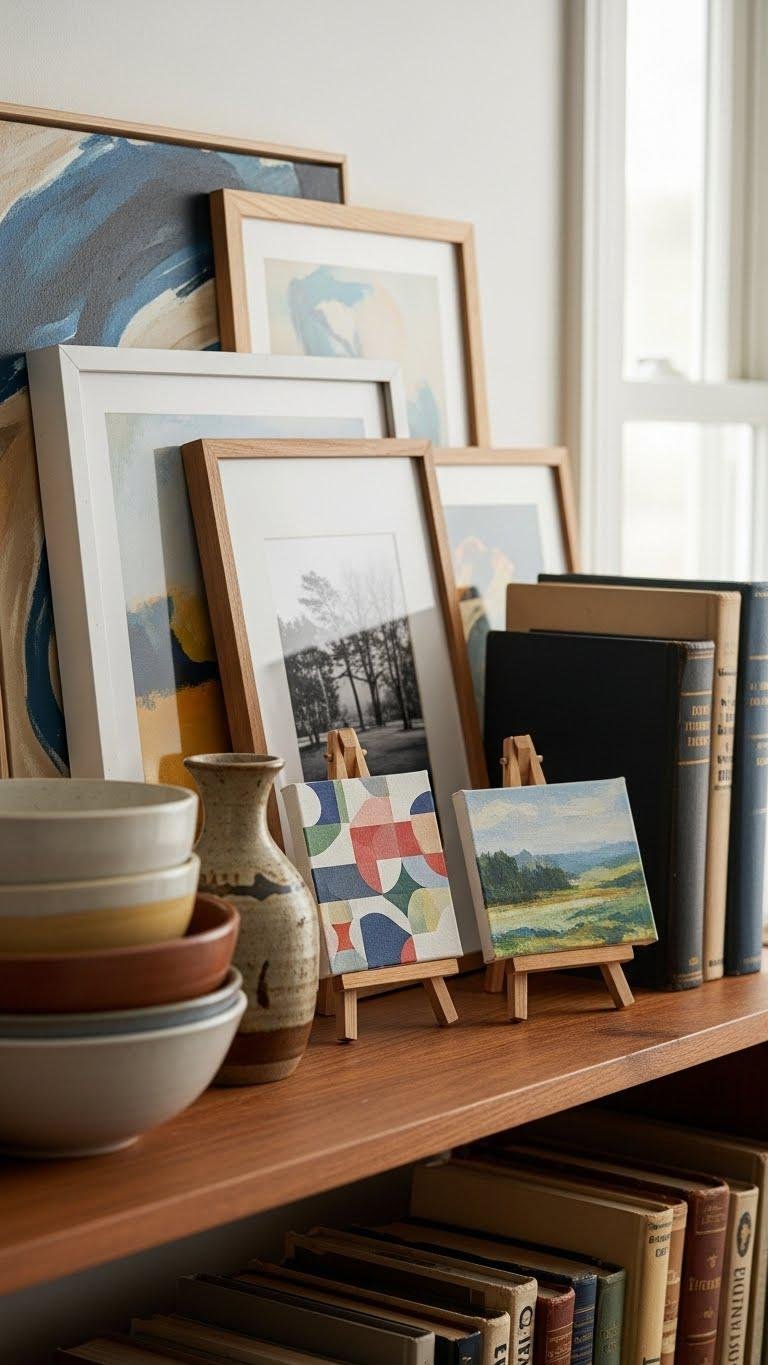
If you want depth and a lived-in look, tuck artwork behind objects so pieces peek out in slices of color and line. You’ll layer floating frames partly hidden by ceramics or books, letting edges flirt with space. Use mini easels to prop small canvases forward for contrast. Keep compositions relaxed, asymmetrical, and intentional so each reveal feels like a chosen secret.
Combine Natural Elements and Greenery

Often you’ll mix textures and tones from nature to give a shelf warmth and movement: cluster smooth ceramic vases next to woven baskets, tuck a trailing pothos behind stacked books, and wheel in a stone or driftwood object to anchor the vignette.
You’ll balance natural textures with sculptural greenery, letting plants act as living accents and gentle air purifiers while keeping the arrangement open and freeing.
Use Decorative Boxes for Hidden Storage
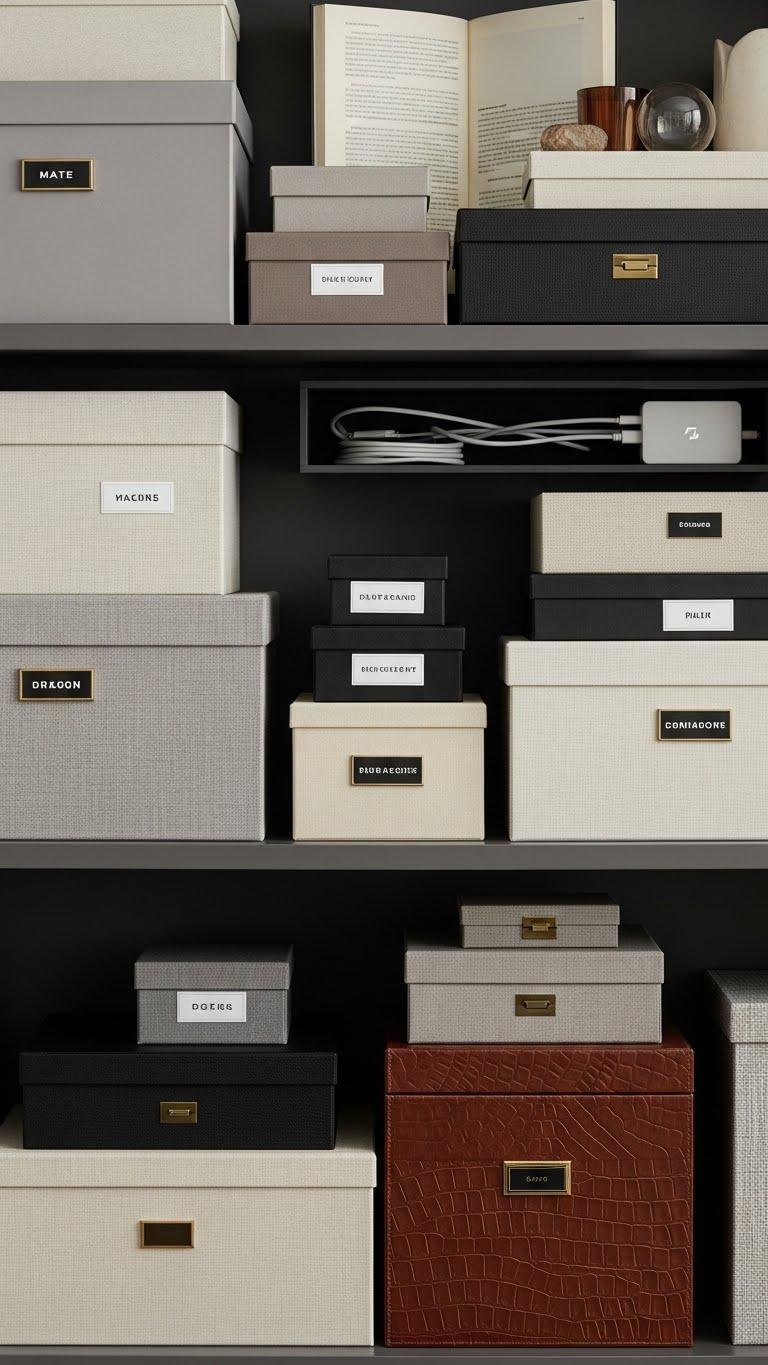
Tuck decorative boxes into your shelving to streamline clutter without sacrificing style: choose boxes with varied scales and tactile finishes—matte paperboard, linen, embossed leather—to create rhythm between open objects and concealed storage.
You’ll hide cables and create concealed charging nooks, keep essentials sorted with labelled lids, and let each shelf breathe—modern, freeing, and quietly organized.
Curate Small Vignettes Per Shelf Section
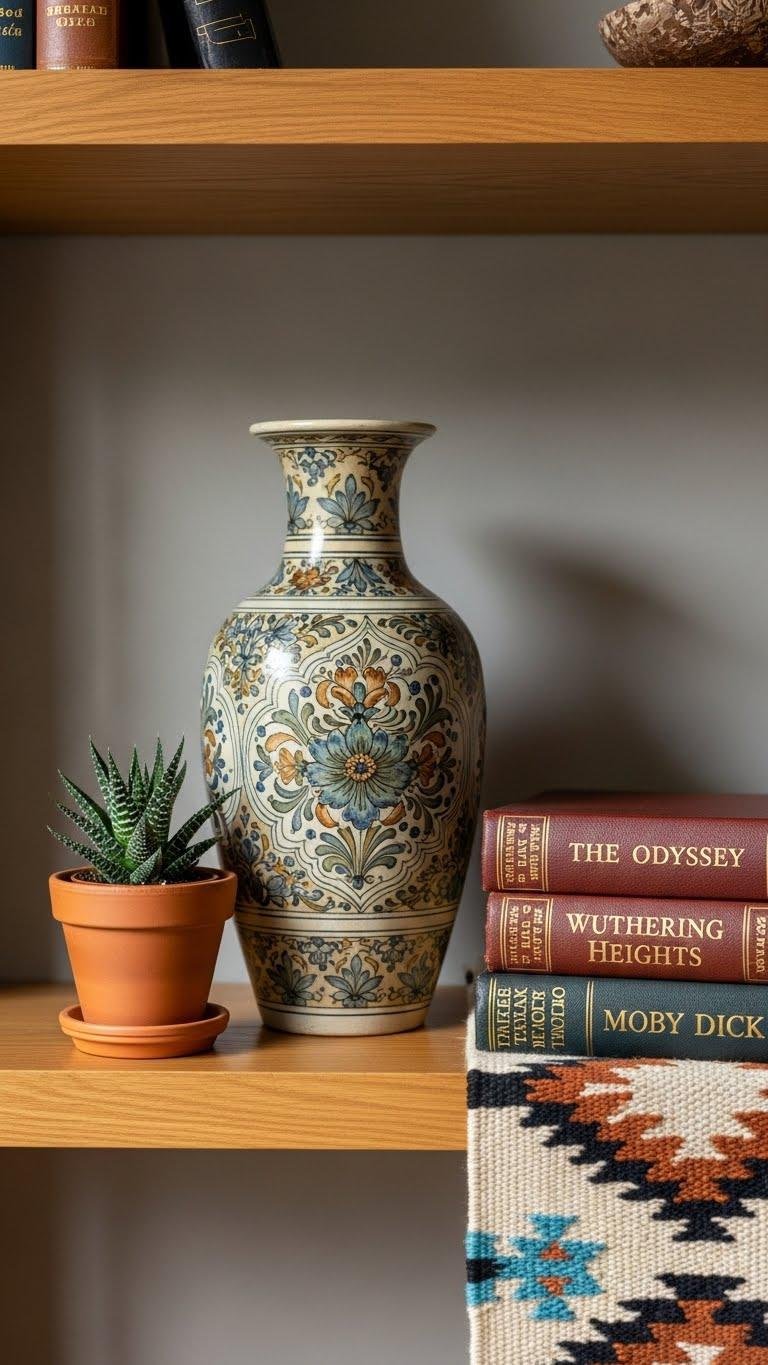
Someone wandering your shelves should find a series of mini-stories, not a jumble of objects; curate each shelf section as a small vignette by pairing a focal piece with two or three supporting items that vary in height, texture, and scale.
You’ll craft mini vignettes that read as intentional shelf narratives, mixing vintage finds, ceramics, greens, and written pieces for liberated, modern rhythm.
Keep One Statement Piece Per Shelf
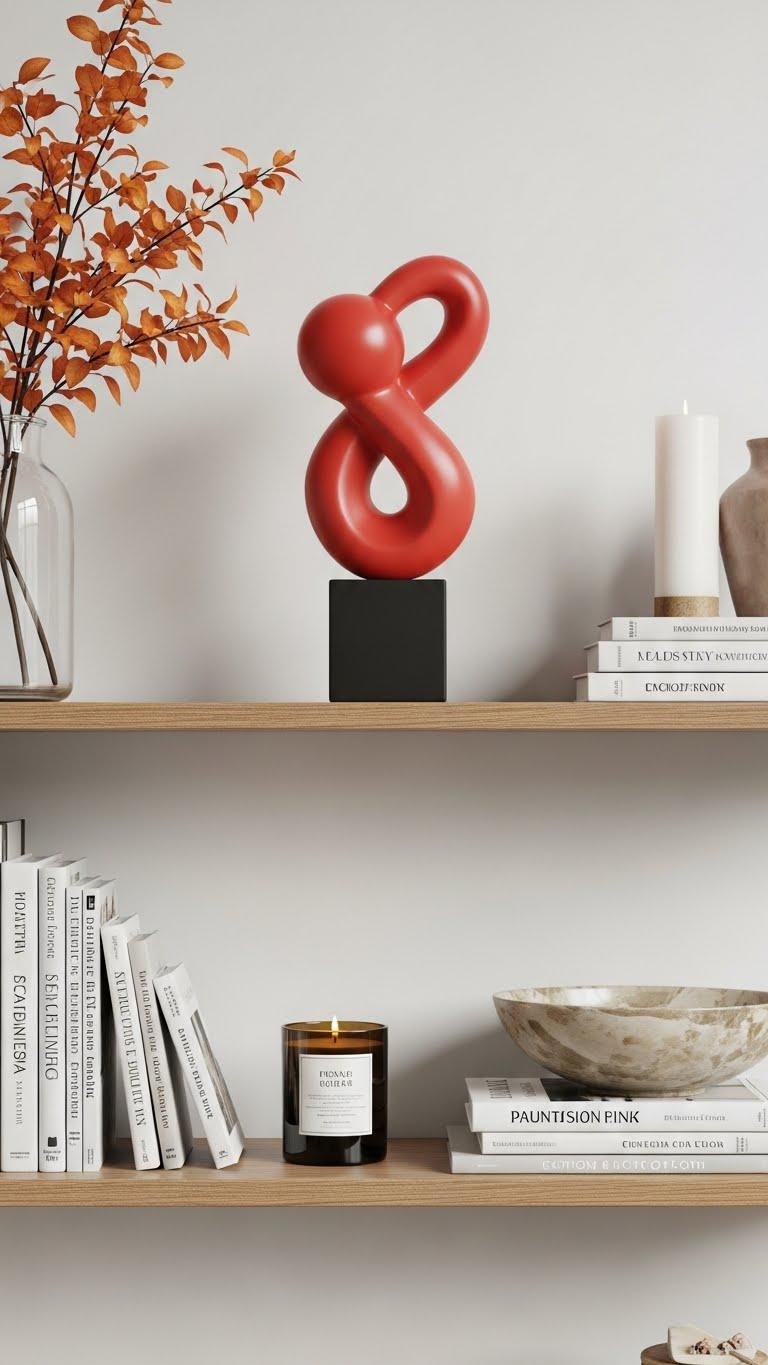
Pick one standout object per shelf and let it breathe; a single bold sculpture, oversized print, or antique vase becomes the visual anchor that the rest of the pieces orbit around.
You’ll choose a bold centerpiece that reflects mood, then arrange lean supporting items so the anchor sings.
Rotate with a seasonal swap to keep displays feeling free, fresh, and confidently curated.
Vary Object Scale for Visual Rhythm
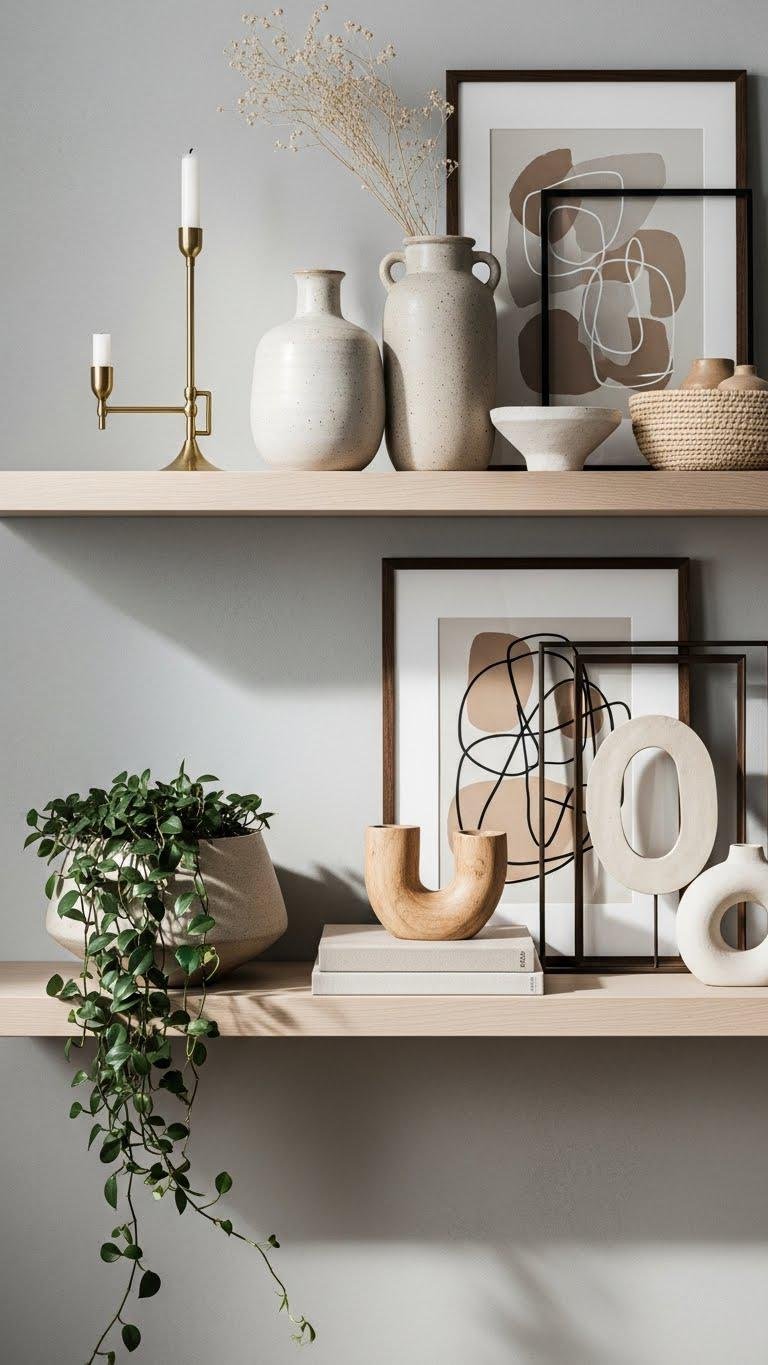
Mix scales deliberately to create a visual rhythm that guides the eye: pair a low, wide planter with a tall, narrow candlestick. You’ll balance scale contrasts across the shelf, alternating chunky ceramics with slender frames so each piece breathes.
Use rhythm anchors—a heavy book or sculptural object—to steady the flow, then let airy items pivot toward negative space for a liberated, modern tableau.
Light Shelves to Highlight Focal Items
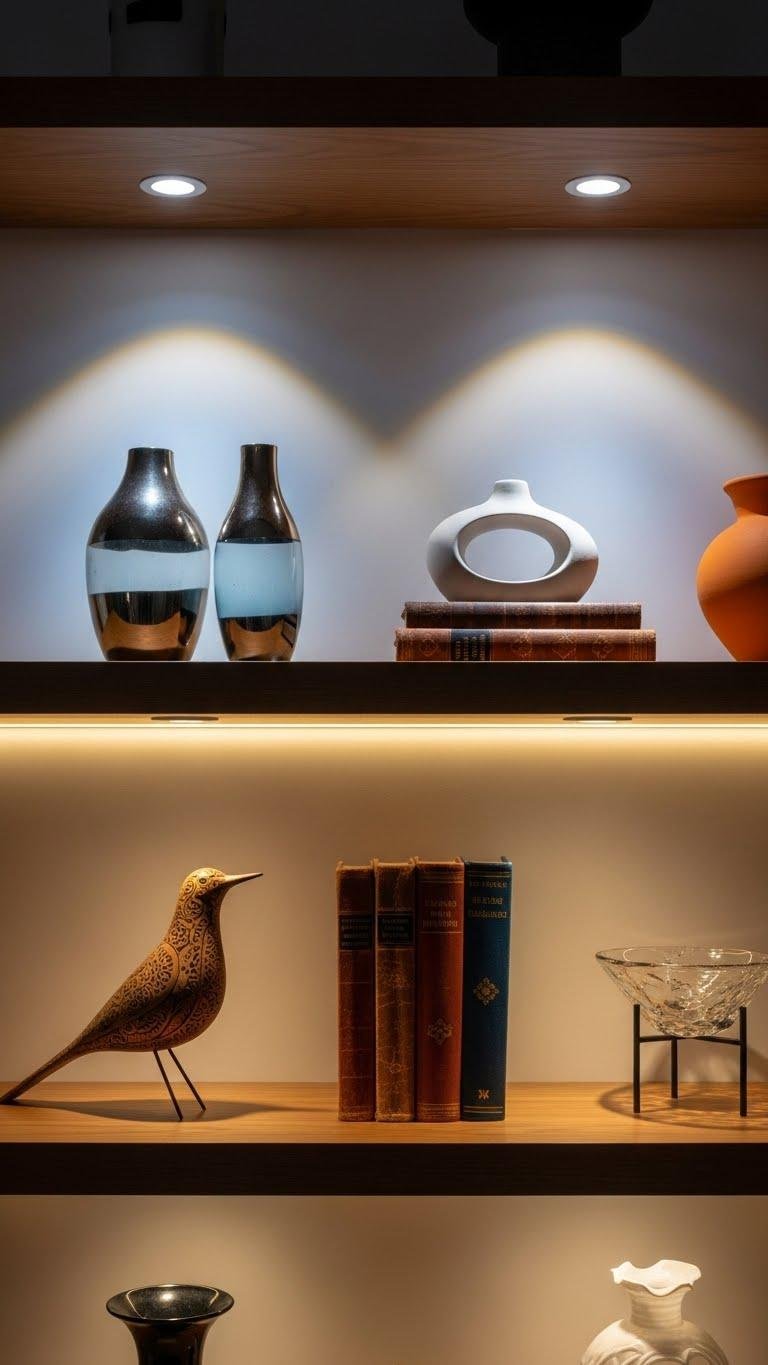
Often you’ll find that lighting transforms a shelf from pretty to purposeful, directing attention to the pieces you want to celebrate. You can layer LED accents for warm highlights, add recessed lighting for subtle depth, and angle beams to sculpt silhouettes.
Choose dimmable options, mix cool and warm tones, and trust how light frees your arrangements, making each focal object feel deliberate and liberated.
Refresh Layouts Periodically
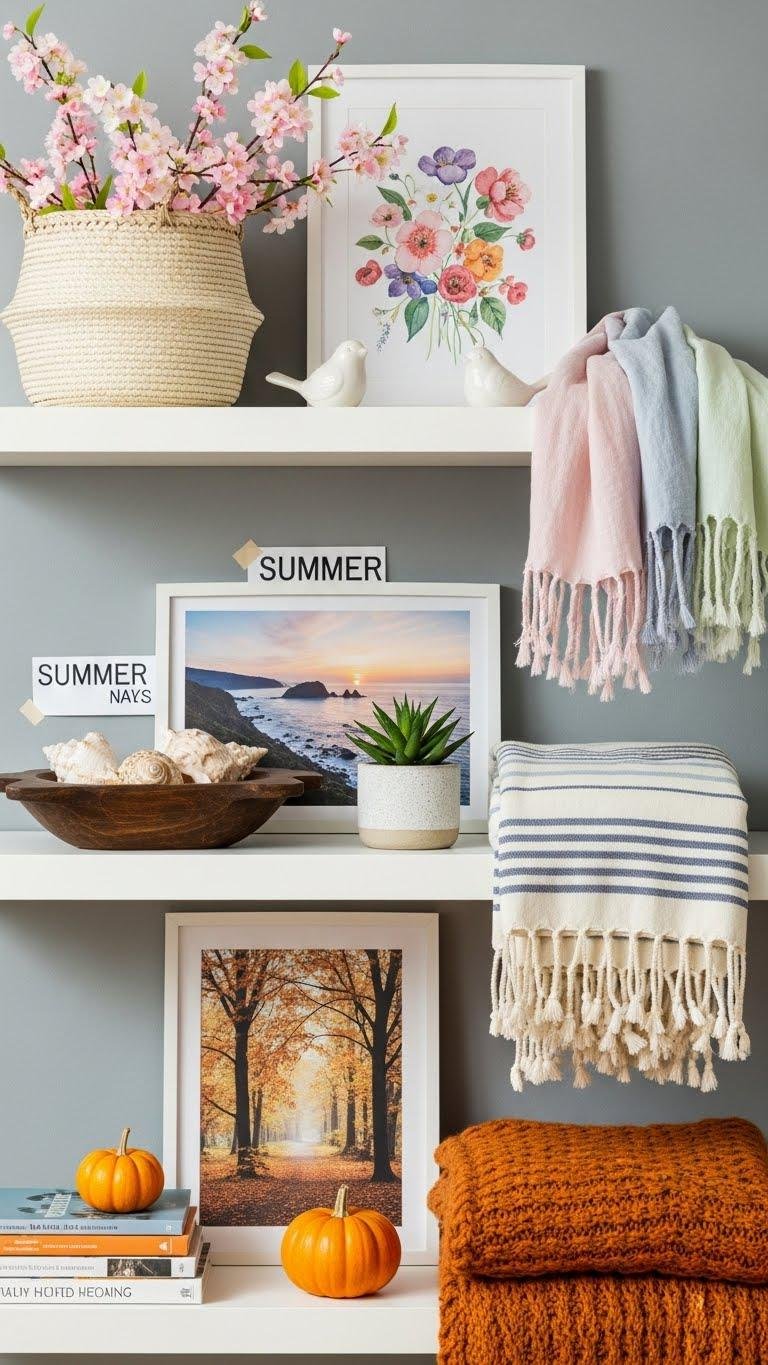
Regularly revitalizing your shelf layouts keeps the display feeling intentional rather than stagnant. You’ll embrace seasonal rotation with a light touch—swap textiles, prints, and greenery to reflect mood shifts.
Treat refreshes as creative habit formation: set simple rituals, note what delights, and edit ruthlessly. This keeps your styling fresh, freeing you to experiment with shape, color, and texture without overwhelm.