
You’ll get more liveable square footage by thinking vertically and choosing pieces that tuck away when you don’t need them. Opt for foldaway beds, slim seating, and built-ins that stretch to the ceiling to keep surfaces clear and sightlines open. Layer open shelves with concealed cabinets, use pocket doors, and pick finishes that make walls recede — practical moves that feel elegant — and there’s a smart layout twist that ties them all together.
Maximise Function With Convertible and Foldaway Furniture
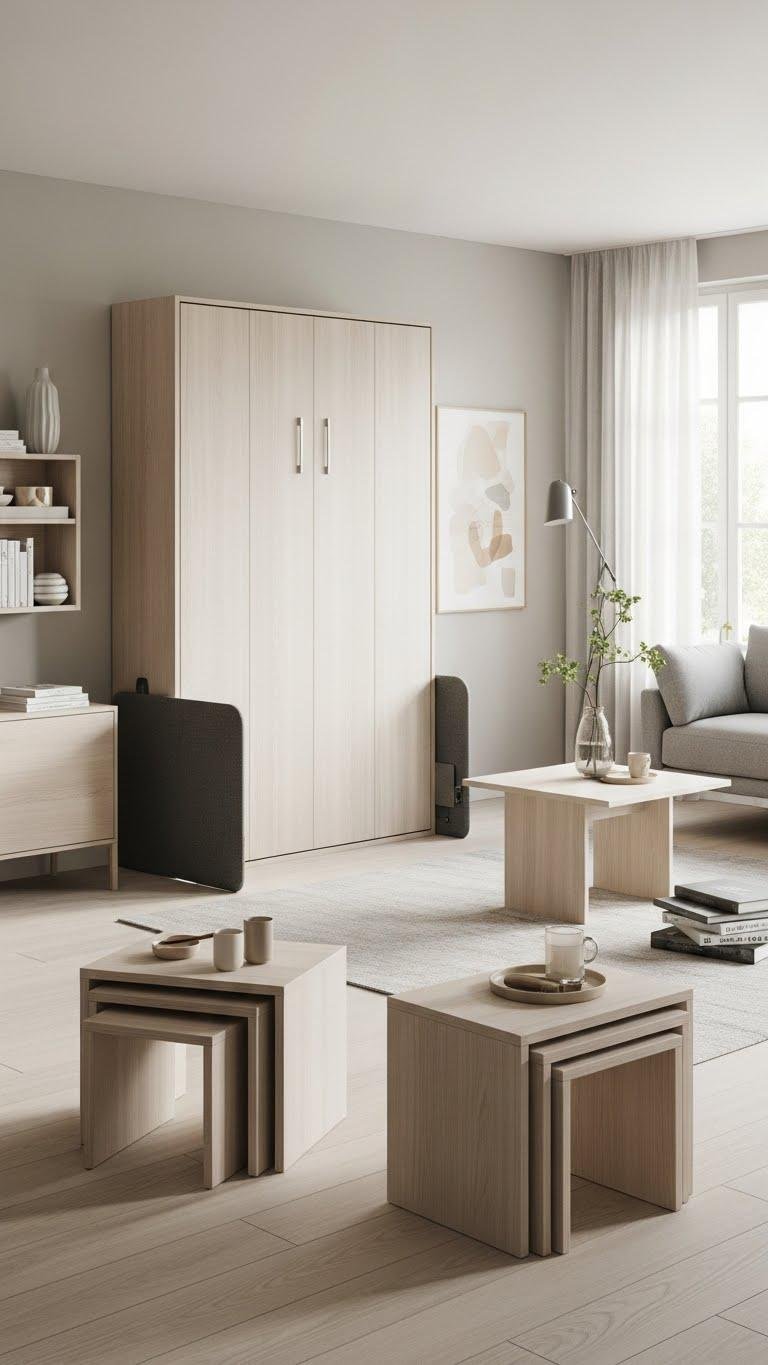
Think modular: choose convertible and foldaway pieces that adapt to how you live, so a single footprint serves multiple purposes without looking cluttered. Embrace wall beds for instant sleeping zones and sleek concealment. Pair nesting tables that stack and scatter as needed. Opt for clean lines, light finishes, and easy mechanisms so you can rearrange freely, keep surfaces clear, and enjoy flexible, uncluttered spaces.
Build Upward With Floor-To-Ceiling Storage

When floor space is tight, go vertical: floor-to-ceiling storage frees up room while keeping your lines clean and surfaces uncluttered. Choose vertically zoned shelving to separate display, books, and hidden storage, and add lofted cabinetry above sightlines to reclaim airspace.
You’ll keep the floor open, maintain visual calm, and enjoy flexible, liberated living—practical, sculptural storage that feels free, neat, and intentional.
Create Zones Using Modular Seating Systems
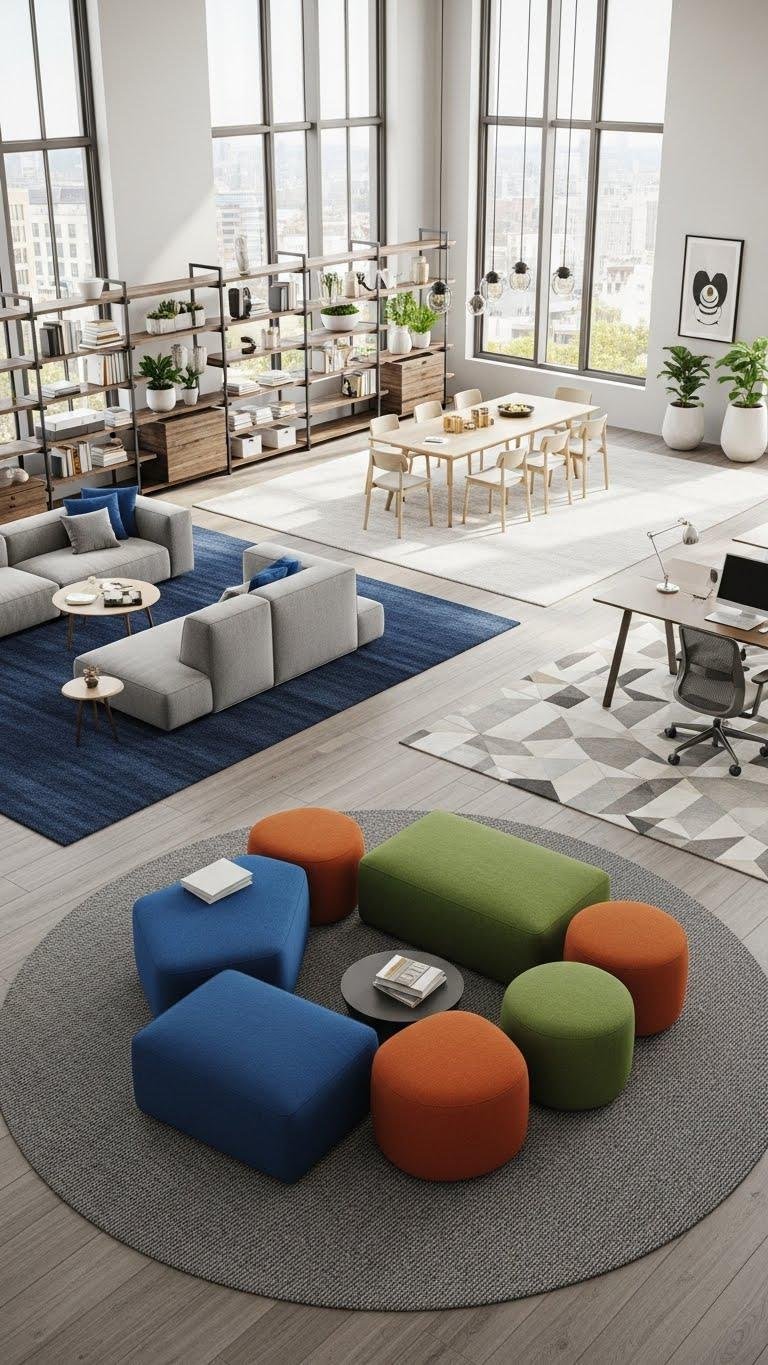
Once you’ve cleared the floor and lifted storage up, use modular seating systems to define areas without building walls.
Choose a modular ottoman cluster to anchor a lounge, place zoned rugs to mark dining or work spots, and orient pieces to encourage flow.
Mix low backs, open shelving, and movable units so you can reconfigure spaces for freedom and function.
Install Wall-Mounted and Foldable Desks
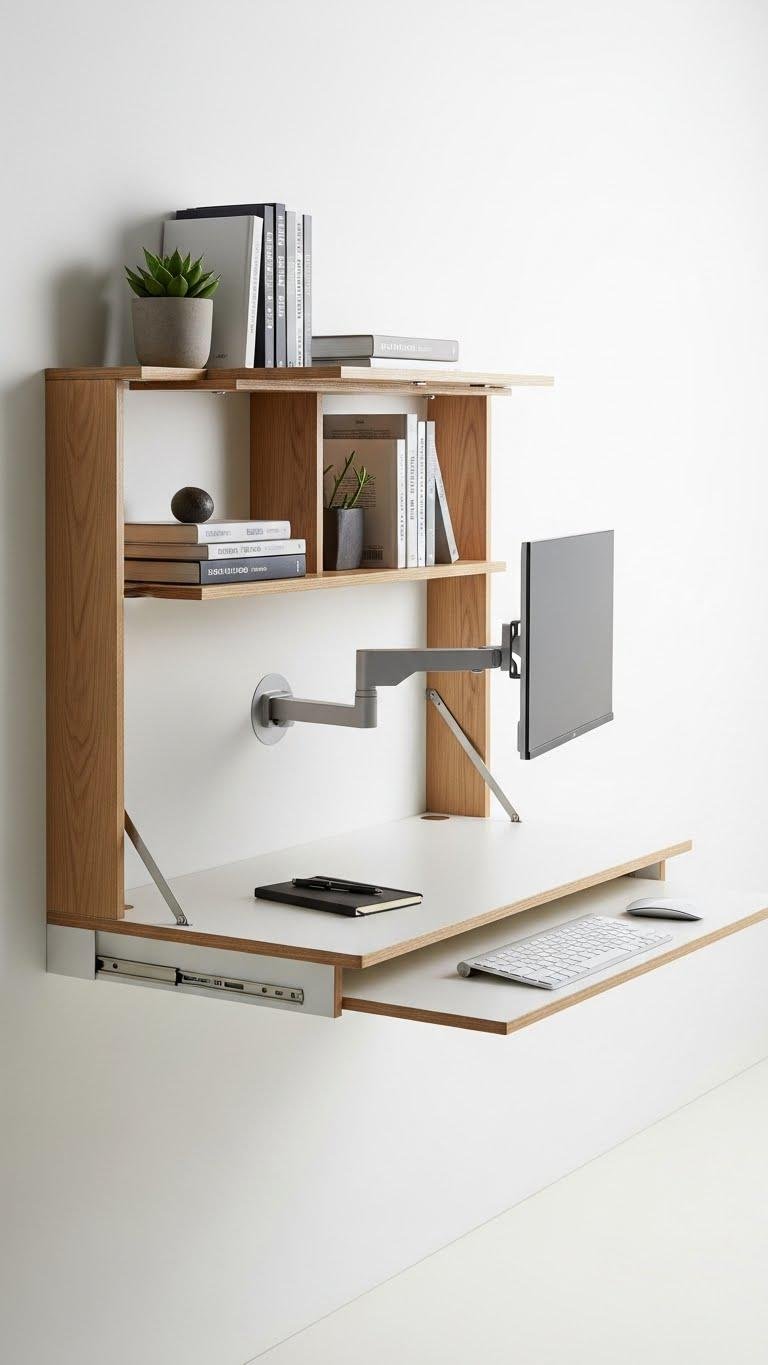
Mounted on a blank wall or folded neatly into a corner, a wall-mounted or foldable desk gives you a full workspace without sacrificing floor area—choose clean lines, slim profiles, and durable hinges so the unit feels like furniture, not an afterthought.
Embrace a floating workspace with a wall mounted keyboard tray, fold down shelving for books, and a compact monitor arm to free your movement.
Combine Open and Closed Layered Storage

Mix open shelving with closed cabinets to balance display and containment so your room looks curated, not cluttered.
You’ll layer open display items with framed storage pieces, use hidden bins for messy essentials, and add layered baskets for texture.
Keep curated surfaces airy, reserve closed units for overflow, and arrange items so you feel free to live, edit, and breathe in every inch.
Use Mirrors and Reflective Surfaces to Amplify Light

Brighten up and open your small space by placing mirrors and other reflective surfaces where they can catch natural or artificial light. Position a large wall mirror opposite windows for natural light magnification, add mirrored furniture to maintain airy flow, and use metallic accents to bounce glow into corners.
You’ll create depth, freedom of movement, and a deliberately luminous, uncluttered aesthetic.
Go Monochrome With Colour-Drenching Paints

Want a simple way to make a small room feel larger and more cohesive? Go monochrome with colour-drenching paints to create seamless expanses that blur edges and open sightlines.
Choose a balanced monochrome texture, layer matte and gloss finishes, and match tonal furniture to the walls. You’ll gain visual calm, freedom to move, and a refined backdrop for art and textiles.
Employ Narrow Tall Cabinets for Tight Corners
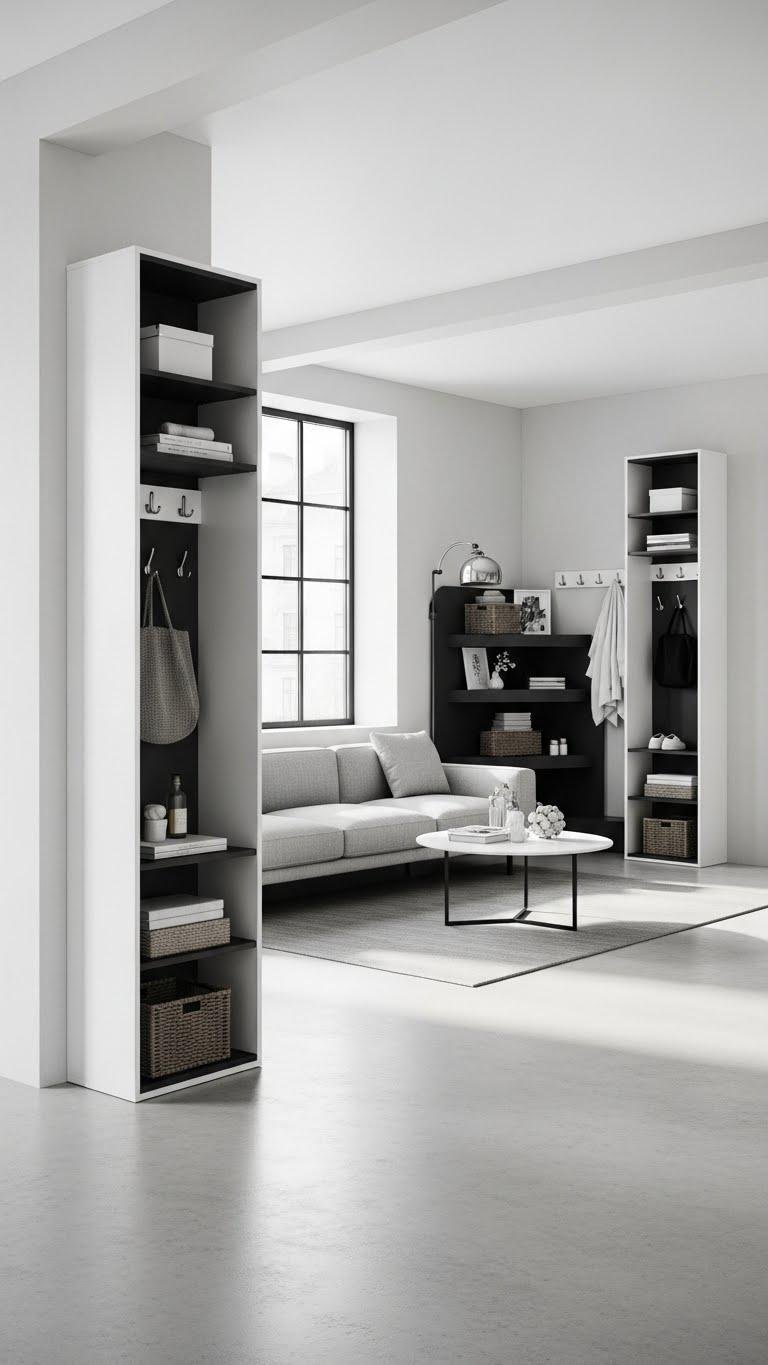
After you’ve unified a room with a monochrome palette, tackle awkward corners by installing narrow tall cabinets that lift the eye without crowding the floor.
Choose a slim pantry or corner linen tower in matte finishes to keep lines clean. You’ll gain hidden storage for essentials, maintain open sightlines, and enjoy flexible styling—hooks, baskets, and staggered shelves for effortless freedom and flow.
Integrate Built-In Carpentry and Sliding Pocket Doors
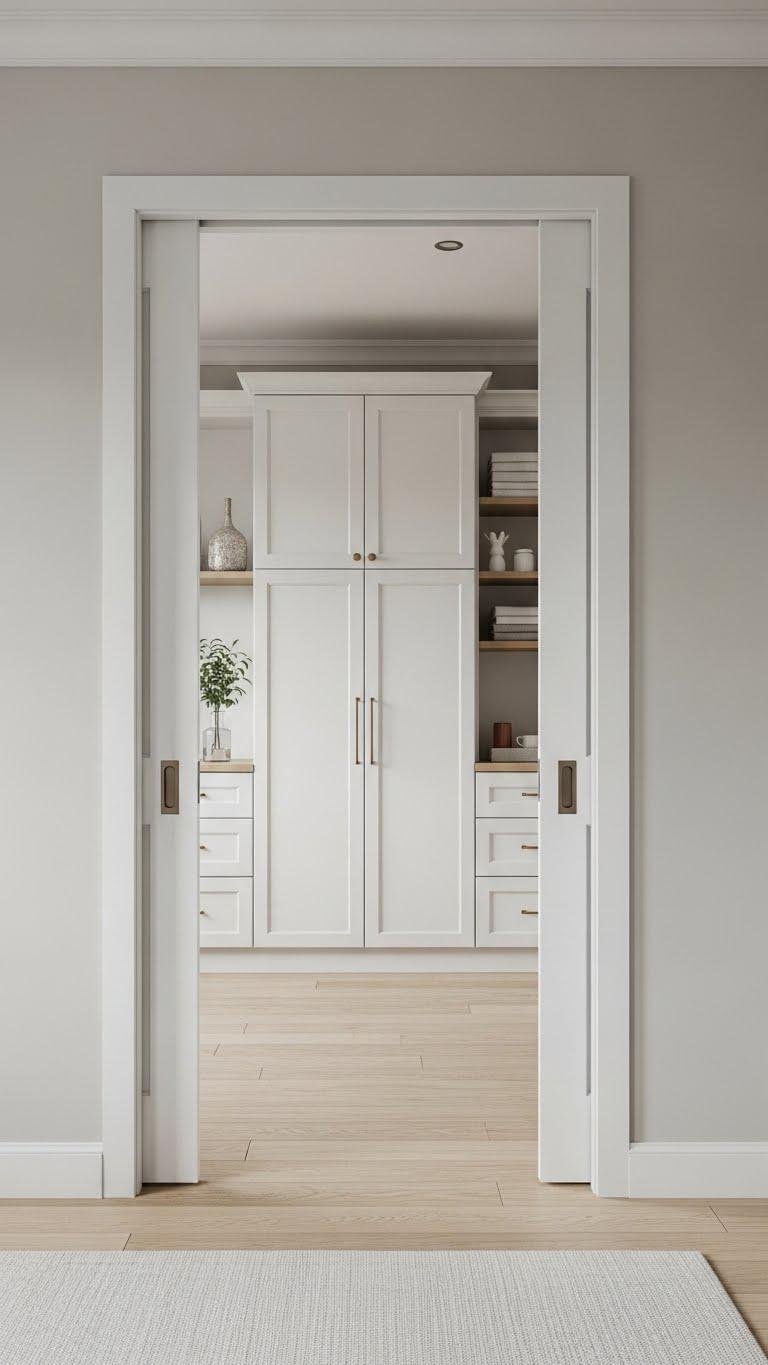
Maximize function and calm by incorporating built-in carpentry and sliding pocket doors that disappear into the wall, giving you clean sightlines and extra floor space. Embrace minimalist joinery and hidden cabinetry to reduce visual clutter while keeping essentials accessible.
Choose durable pocket hardware and seamless finishes so you can move freely, customize storage, and maintain a serene, liberated interior without sacrificing practicality.
Choose Multiuse Hybrid Pieces Like Convertible Sideboards
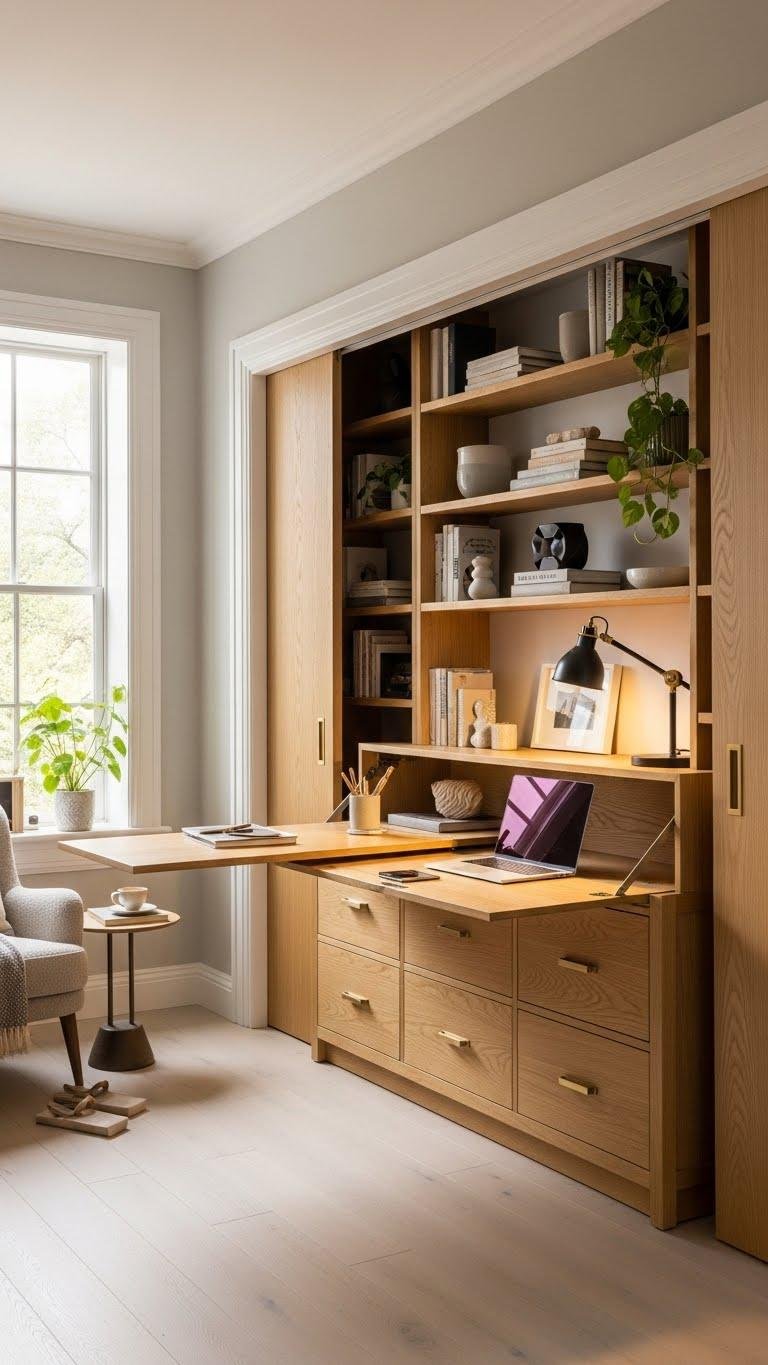
Built-ins and pocket doors give you blank, calm walls that invite pieces to pull double duty—so choose multiuse hybrid furniture like convertible sideboards that act as storage, display, and workspace.
You’ll gain hidden storage and smart organization without clutter. Pick pieces with dual surfaces—drop-leaf counters or flip-down desks—that free floor space, support creativity, and let you adapt layout instantly for work, dining, or relaxation.
Leverage Window Ledges and Chimney Breast Shelving
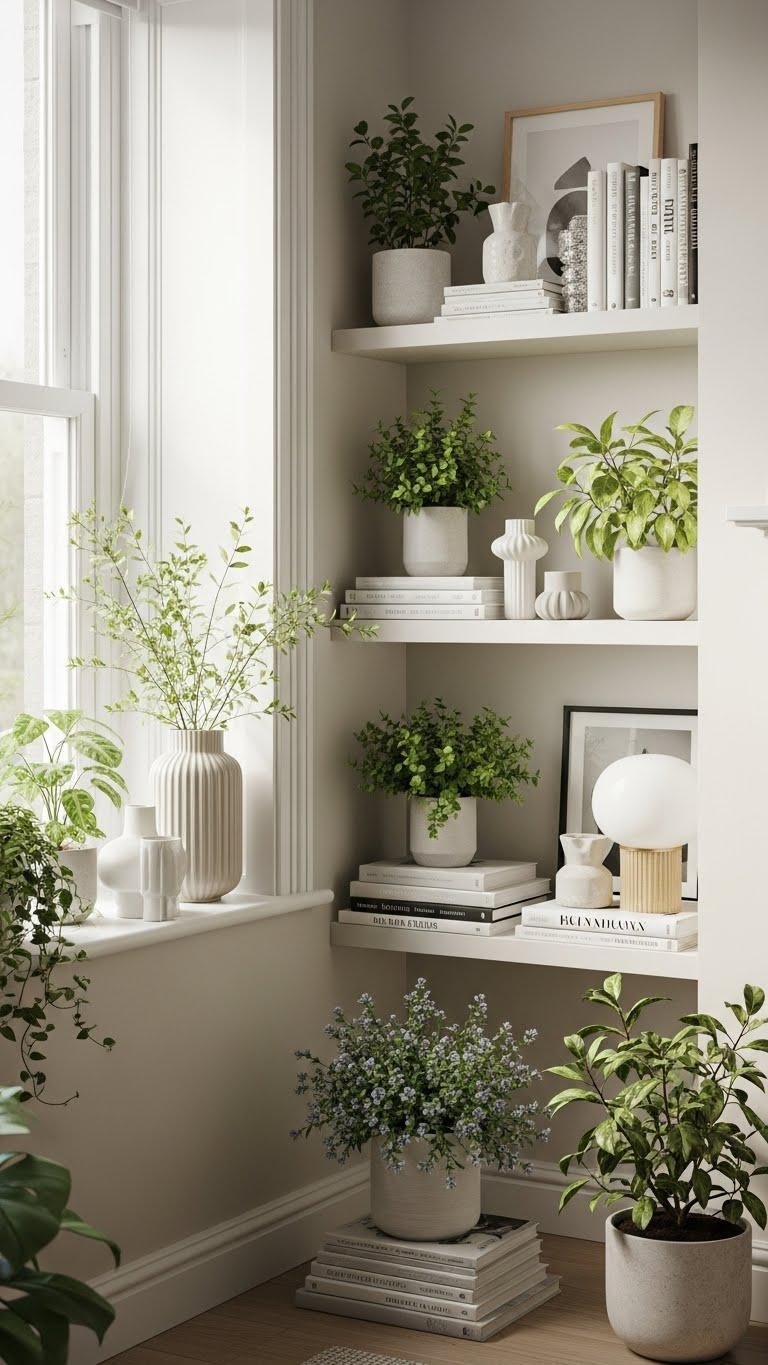
Lean into window ledges and chimney-breast shelving to add depth and function without stealing floor space; you can layer plants, books, and curated objects to create a lived-in focal point that still reads clean and intentional. Use shallow shelves for sunlit displays and transform ledges into plant havens.
Keep groupings varied in height, limit palette, and leave breathing room for an airy, liberated vibe.
Add Statement Lighting to Free Up Floor Space
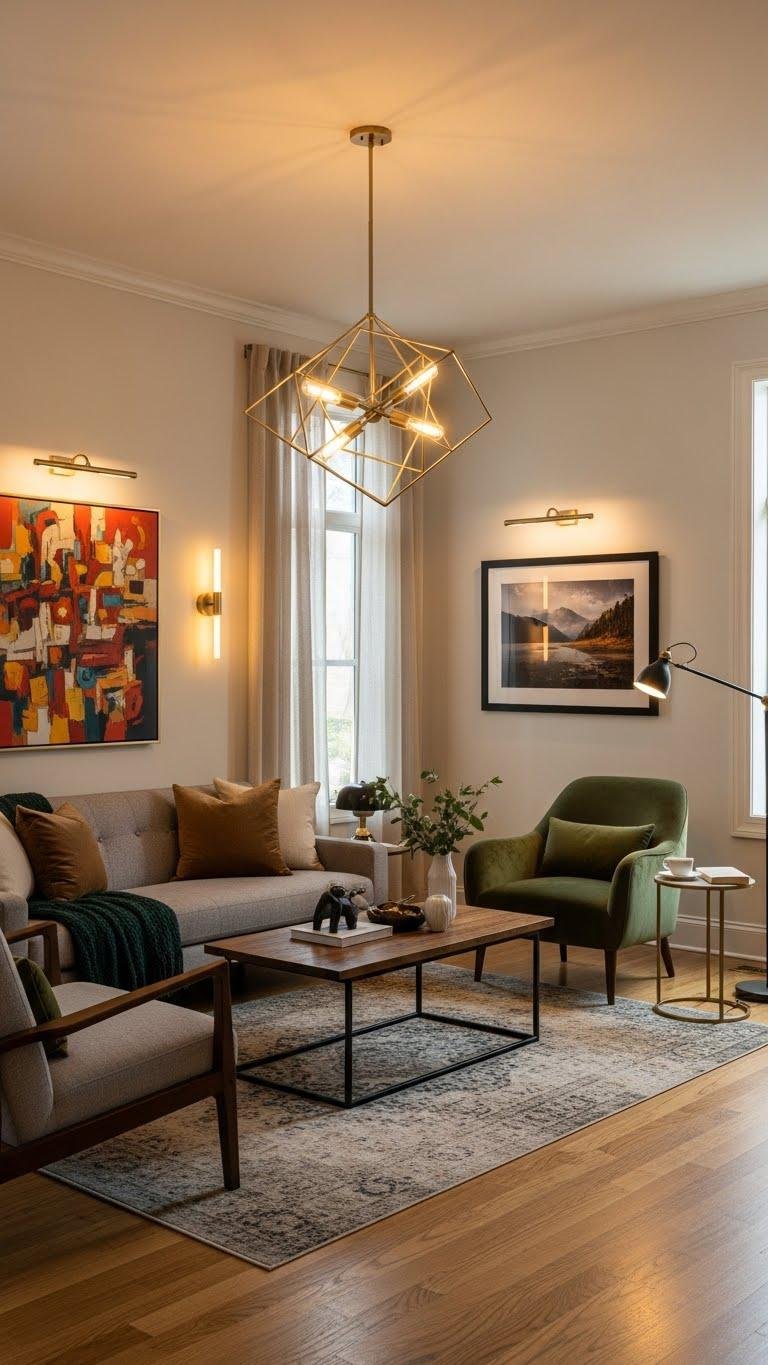
Often, you’ll find that swapping a bulky floor lamp for a bold pendant or sculptural wall sconce instantly frees up circulation and defines zones—without sacrificing warmth or style.
Choose pendant fixtures with adjustable cords and slim profiles to anchor seating or dining areas. Mount wall sconces to highlight art or reading nooks. You’ll gain floor freedom, layered lighting, and a liberated, intentional aesthetic.
Opt for Rounded-Edge Furniture for Flow and Safety

Alongside freeing floor space with wall sconces and pendants, choosing rounded-edge furniture keeps movement smooth and rooms feeling airy. You’ll favor curved sofas, rounded benches, and compact tables that open sightlines and reduce bumps.
Prioritize pieces with discreet safety edges and slim profiles to preserve circulation. Opt for light finishes and low silhouettes so your small space feels liberated, calm, and functional.
Incorporate Sustainable Materials Like Reclaimed Wood

Bringing reclaimed wood and other sustainable materials into your small space adds warmth and character without overwhelming the room; pick slim-profile shelving, tapered legs, and pared-back cabinetry to keep sightlines open while celebrating natural grain and patina.
Pair reclaimed textiles and salvaged metal accents for contrast, choose multifunctional pieces, and prioritize simple finishes so your space feels airy, intentional, and free.
Create Visual Depth With Layered Textures and Rugs
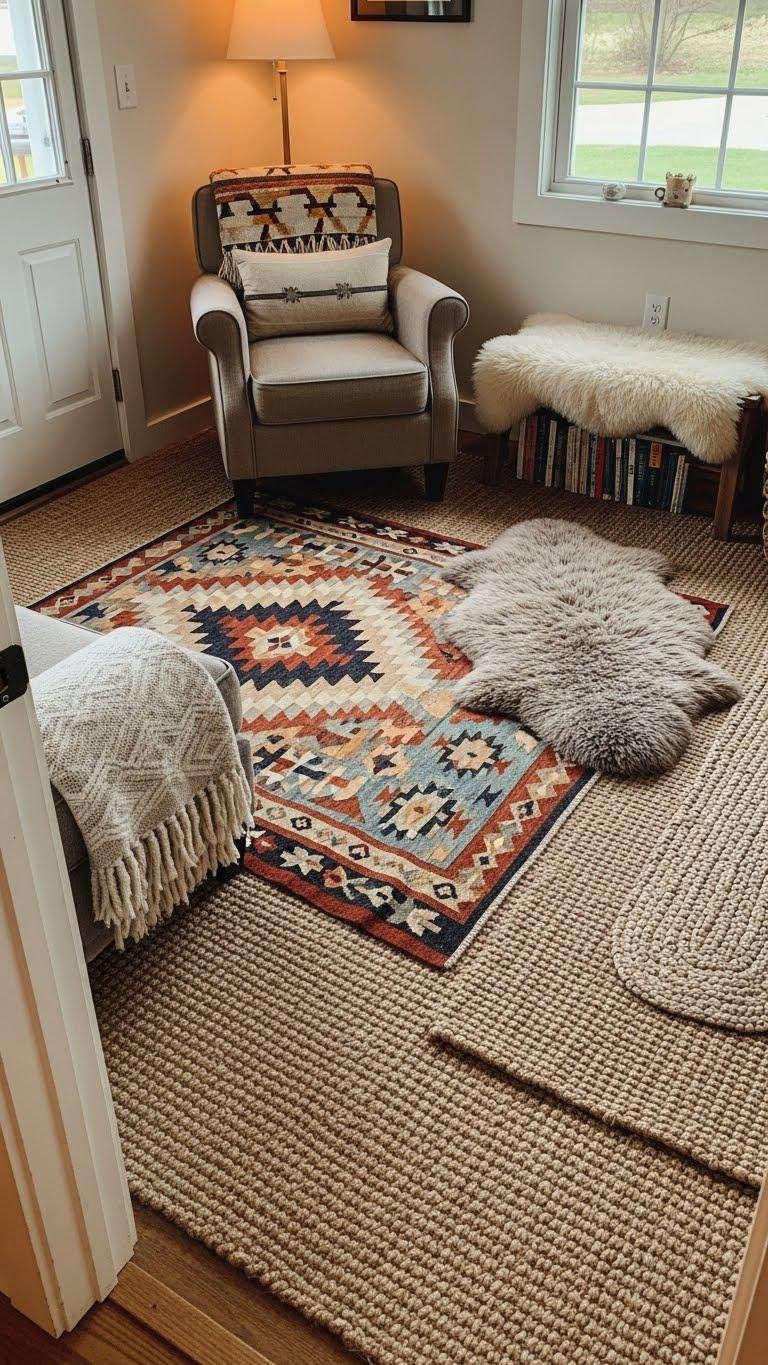
When you layer textures and rugs in a small room, you create depth without crowding the floor—start by mixing pile heights, patterns, and materials so each piece reads at a glance. You’ll embrace woven contrasts, using natural fibers over low-pile anchors and a statement kilim or neutral sisal. Layered rugs define zones, add warmth, and let your space breathe while feeling intentionally styled.
Use Muted Jewel Tones and Bold Accents Sparingly

Paragraphs
Design a Compact Home Office Within a Nook

You can carry the calm sophistication of muted jewel tones into a compact home office tucked into a nook by keeping finishes light and accents deliberate.
Choose a slim desk, wall-mounted shelving, and a comfortable chair that folds. Add acoustic privacy with a textured screen or curtain, and introduce biophilic accents—small planters, natural light—so you feel liberated, focused, and uncluttered.
Use Over-Door and Vertical Organisers for Small Items
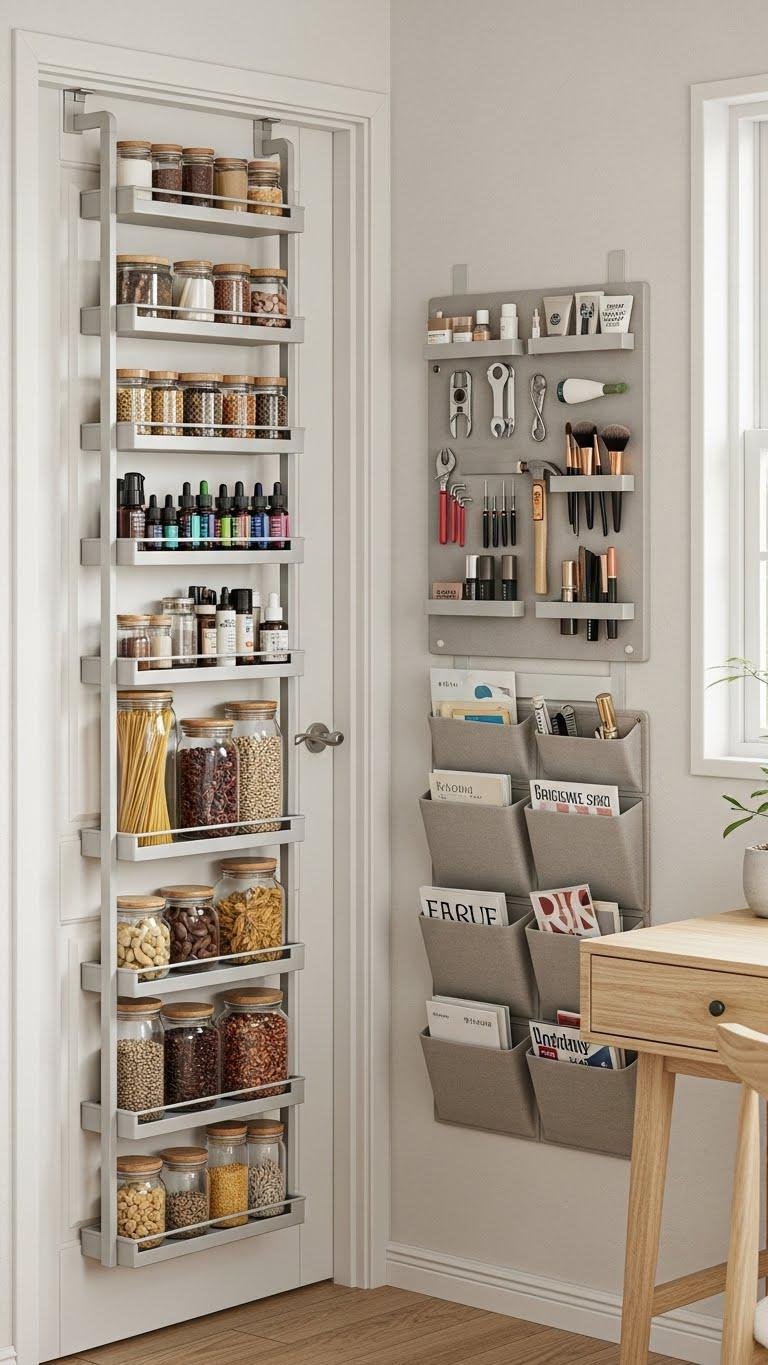
With just a slim over‑door rack or a vertical organizer strapped to a wall, you’ll reclaim cluttered surfaces and free up floor space while keeping essentials within reach.
Use over door spice racks for oils and jars, magnetic shoe organisers for tiny tools or cosmetics, and narrow pockets for mail. You’ll create visible order, easy access, and a lighter, freer living space.
Embrace Scandinavian and Japandi Minimalism

Moving small items off counters naturally leads to a pared-back approach like Scandinavian or Japandi minimalism, where form meets function and every piece earns its place.
You’ll favor a neutral palette, clean lines, and natural textures that calm and liberate. Choose multipurpose furniture, pared-down storage, and tactile accents to keep spaces airy, intentional, and easy to live in.
Mix Vintage and Handcrafted Pieces for Personality
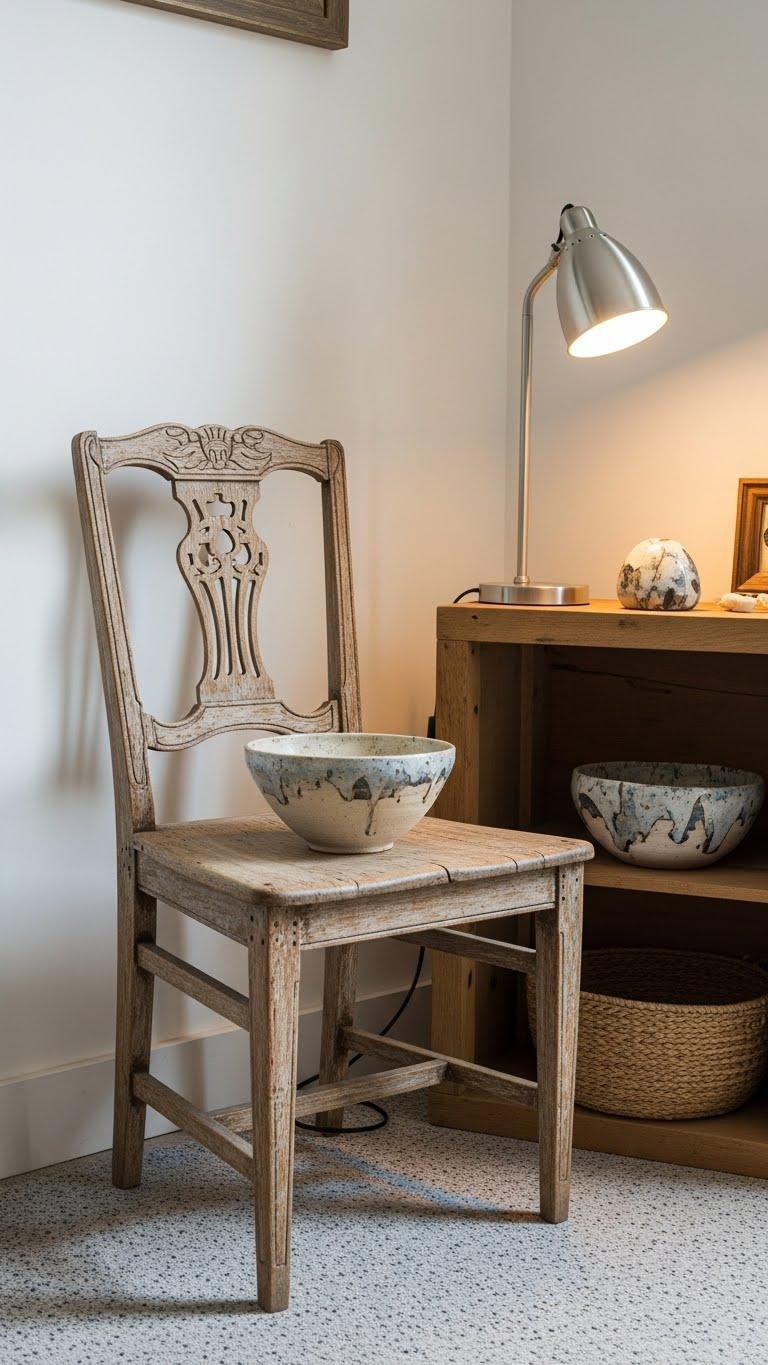
Layer in vintage and handcrafted pieces to give a small space instant character without cluttering it. You’ll balance patina contrasts and clean lines by choosing one statement antique and a few modern essentials.
Opt for artisan pairings — a handmade ceramic bowl beside a slim metal lamp — to create tactile warmth, curated edges, and freedom to rearrange without overwhelming tight quarters.
Install Foldable Dining Tables for Flexible Entertaining
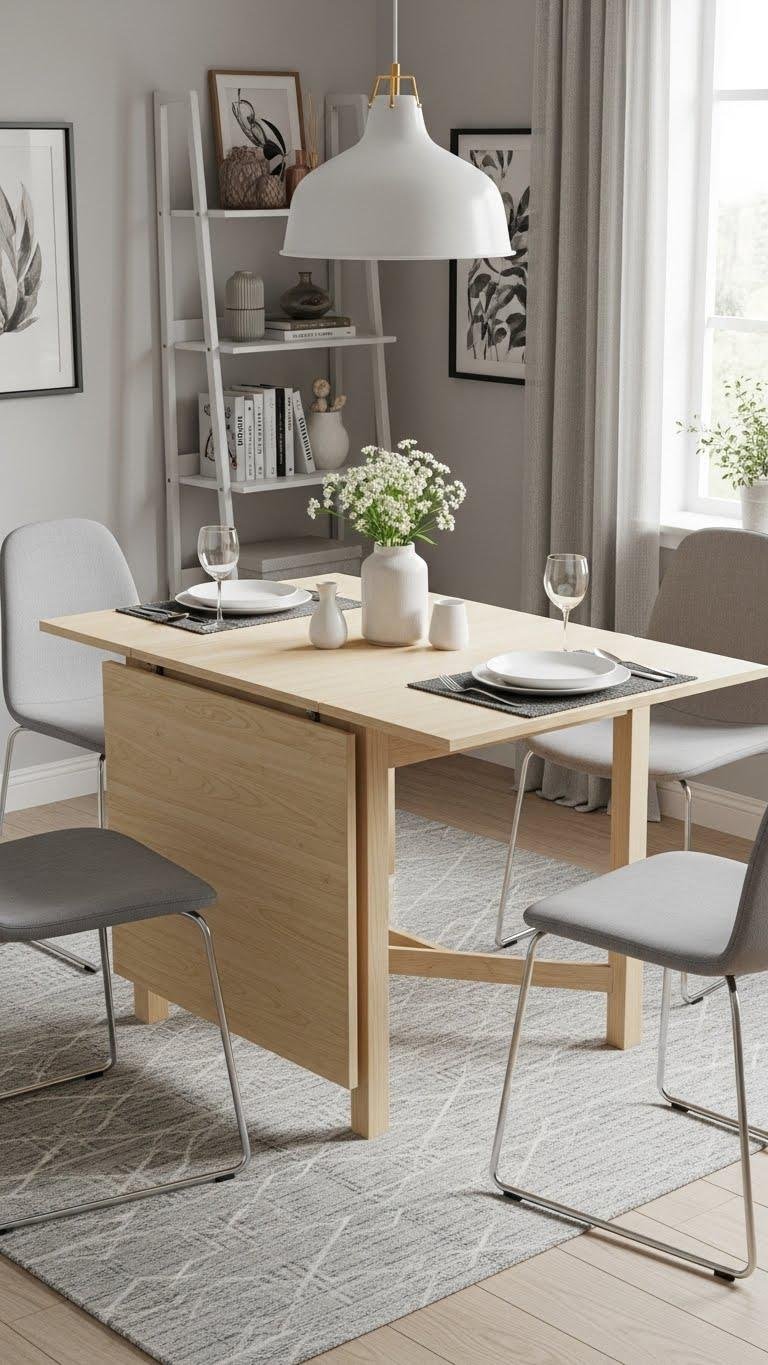
Bring out a foldable dining table when guests arrive and tuck it away the rest of the time to keep your small space airy and usable. Choose a convertible banquet-style piece with a hidden leaf for effortless expansion.
You’ll enjoy flexible entertaining without clutter. Opt for lightweight materials, clean lines, and quick mechanisms so you can host freely and reclaim space instantly.
Paint Ceilings and Woodwork the Same Colour as Walls
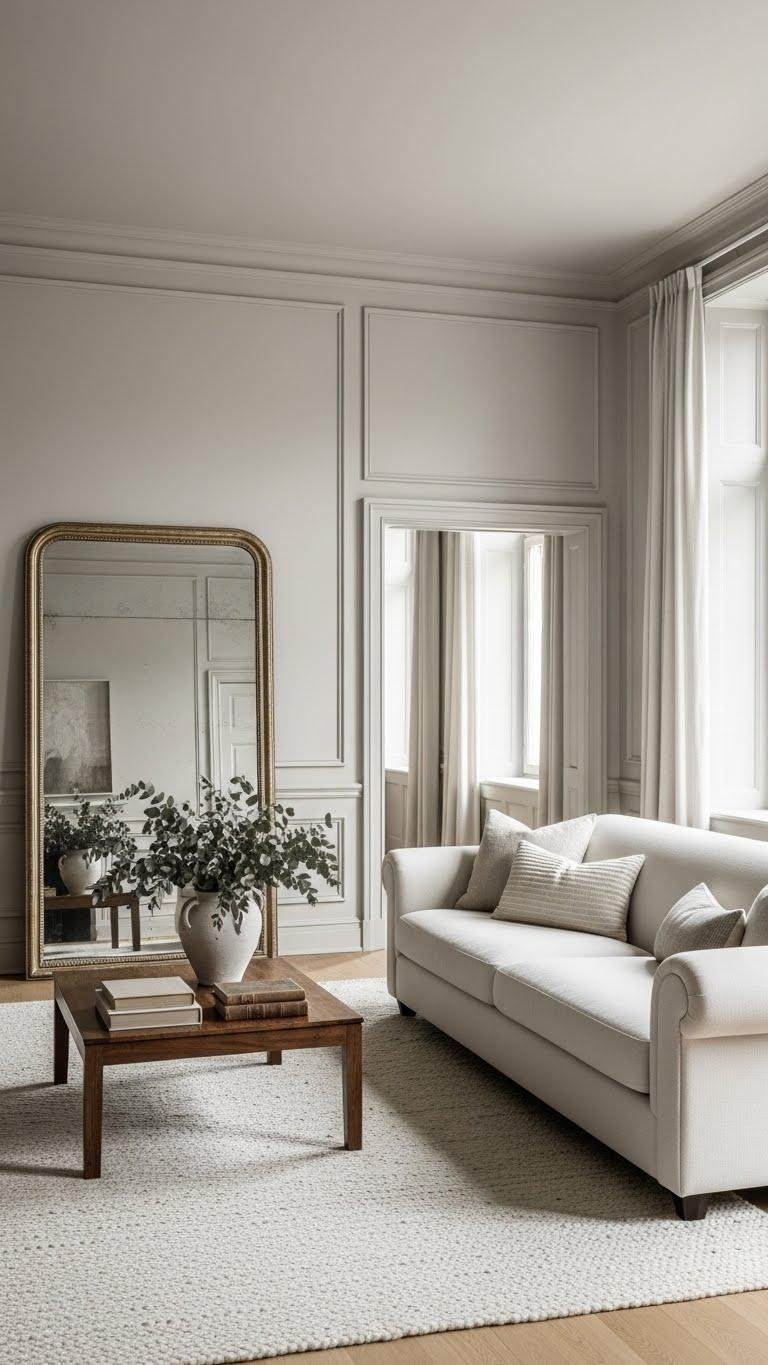
If you paint the ceiling and woodwork the same colour as the walls, you’ll instantly blur edges and make the room feel larger and more cohesive. Embrace monochrome trim to simplify sightlines and foster a calm, liberated atmosphere.
Choose a warm or cool hue for ceiling continuity, use satin or eggshell for durability, and keep contrast minimal to maximize airy, uncluttered flow.
Use Lightweight, Multiuse Seating to Save Space
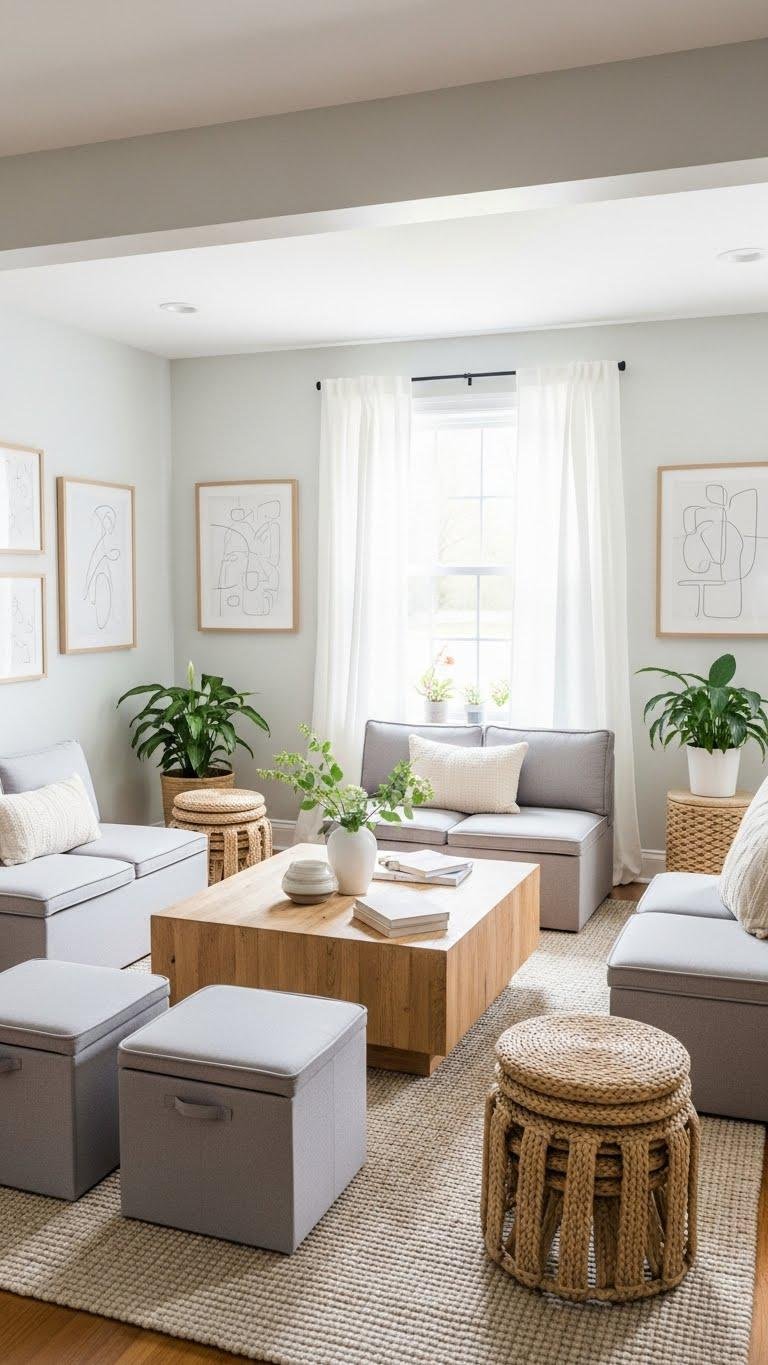
Swap bulky sofas for lightweight, multiuse seating and you’ll free up sightlines and floor space without sacrificing comfort.
Choose lightweight ottomans that double as storage or coffee tables, and keep a set of stackable stools for extra guests. Pick airy frames, neutral tones, and movable pieces so you can rearrange instantly, creating a liberated, functional room that breathes and adapts.
Reconfigure Layouts by Borrowing Adjoining Space

When a room feels tight, look to adjoining spaces and borrow their square footage by opening sightlines or reassigning functions—you can extend a living area into a hallway alcove, dining nook, or unused corner of an adjacent room to create flow and purpose.
Embrace borderless sightlines, align furniture to invite movement, and add shared storage—built-in benches or low shelving—to free surfaces and craft airy, liberated zones.